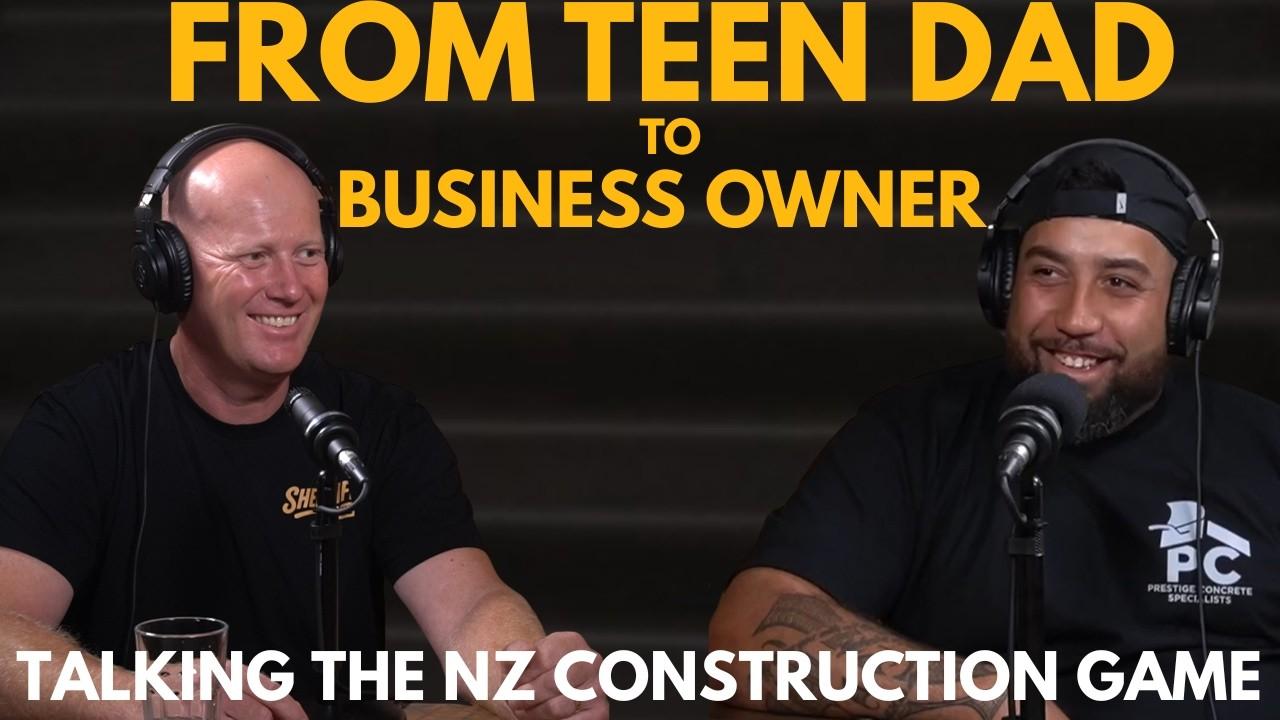
To be a guest on a podcast, pick shows whose listeners would care about your story, listen to a few episodes so you know the tone, and send the host a short pitch: who you are, the one story you can tell well, and why it suits their show now. Have something you have built or learned, be easy to deal with, and turn up prepared to talk honestly for an hour.
The rest of this page explains each part, using how we book guests on ShedLife NZ as the example. We record in a shed in Eureka in the Waikato and have put out around seventy-five episodes since November 2025, so we have seen what works.
What makes a good guest
Good guests have a story, not a message. A message is "we provide quality service". A story is Leighton Cosgrave sweeping workshop floors for free for four months to land an apprenticeship, then running a company. One of those fills an hour and the other fills a minute.
Good guests are also honest about the hard bits. Listeners can tell when someone is skipping past the failure, and the failure is usually the best part. Leighton's episode works because he talks about the panic attack that derailed him and the months of sweeping floors, not just the company that came later.
Finally, good guests answer the question that was asked and then stop. Nervous is fine. Rehearsed is worse.
How ShedLife picks guests
Looking back over our episodes, the people we book fall into three groups:
- People with a story. Boxers, rugby players, a Silver Fern, a BMX rider who lived on a circus train. Their lives are the material.
- People who built something. Ken Pumipi at Prestige Concrete, Mike Cook at Lightwire, Noddy Watts and Beach Hop. The business is the story, but so is the person behind it.
- People who learned something the hard way. Coaches, teachers, a nurse who became an undefeated boxing champion, men talking about mental health. The lesson is the point.
Most of our guests are from the Waikato or have a Waikato connection. That is not a rule, but it is a tilt, and a pitch that ignores it is less likely to land.
How to pitch
Keep it short. Three or four sentences in a message or email is enough:
- Who you are, in one line.
- The one story you would tell. Not a list of topics; one story.
- Why now. A fight coming up, a business milestone, a season just finished, a book, a project.
- Where the host can see you talk: a clip, a previous interview, a video.
Do not send a media kit, and do not say you are available "any time"; suggest a fortnight.
If you want to pitch us, the form at Be a guest asks for exactly this.
What recording day looks like in the shed
Our studio is a shed on a property in Eureka, just east of Hamilton. You will be met by Jason, and usually one or two of the crew who make the show: someone on camera, someone on sound.
We record video and audio together, so dress for a mate's barbecue, not a job interview. A quick sound check, then we start and keep going until the conversation is done. We do not script questions; if something interesting comes up, we follow it.
We can cut a genuine mistake, but the episode is a conversation, not a press release.
How to prepare
- Listen to two or three episodes so the format is not a surprise.
- Pick three stories you are happy to tell in full, including the parts that did not go well.
- Know your dates and numbers for your own story. Hosts ask "what year was that" more than anything else.
- Arrive on time.
- Decide beforehand what you will not talk about, and tell us at the start. We will respect it.
Plugging your business
Yes. Mention the business by name, tell its story, and near the end say where people can find you. Most of our guests run something. What does not work is steering every answer back to a sales pitch; listeners switch off and so does the host.
Guest terms
Before recording, we send you a link to our guest terms and ask you to confirm. In plain language: you consent to being recorded, we own the episode and clips and have final say on the edit, there is no fee unless agreed separately in writing, and you are welcome to plug your business and socials. If something comes up you would rather not have in, tell us during or straight after recording and we will do our best to cut it. Guests need to be 18 or over, or have a parent's written consent.
Ready?
If you have a story, something you built or a lesson you learned the hard way, and a Waikato connection helps, we want to hear it. Go to Be a guest and tell us in a few lines.