Business · · 1 hr 17 min
Leighton Cosgrave: From Sweeping Floors for Free to Running Radix Nutrition
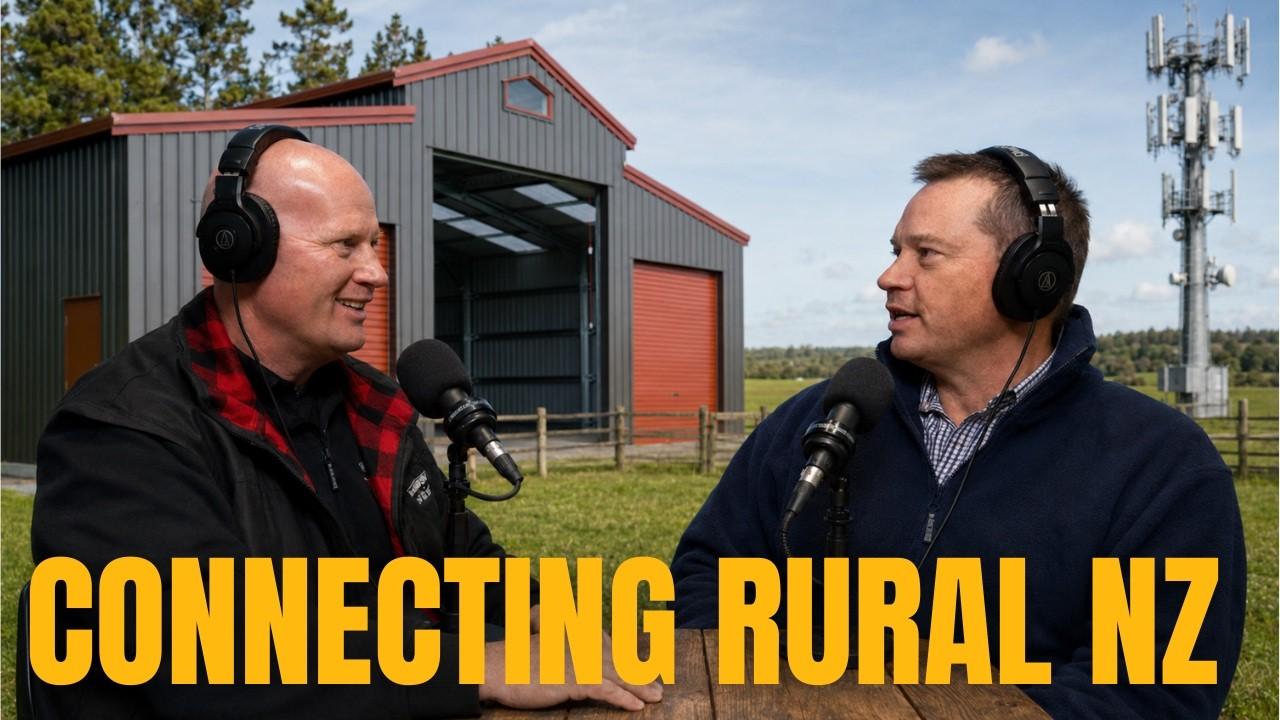
Leighton Cosgrave left school at 16 and swept workshop floors for free to land an apprenticeship. He tells Jason Davis how that led to running Radix Nutrition, the panic attack that nearly ended his sales career, and why New Zealand made should mean more.
Play audio here
“So the knowledge gain and the ability to learn things that excited me was enough of a gain to mitigate that risk.”
Leighton Cosgrave
“I think I spent so much time asking for the next load of work that you just expose yourself to those opportunities.”
Leighton Cosgrave
In this episode
- 00:00Intro and what protein powder actually is
- 03:36Whey as a byproduct of cheese
- 07:36Grass-fed NZ dairy versus grain-fed imports
- 11:52Where the top-selling protein is made
- 15:07Why Radix, and why freeze-drying
- 20:28The three athlete founders
- 22:01Why build the factory in the Waikato
- 27:01Contract freeze-drying for local growers
- 30:02Exporting to Japan, Hong Kong and China
- 35:17Leaving school at 16 and sweeping floors
- 44:13How the boss found him an apprenticeship
- 46:50The panic attack in his first sales job
- 50:01Hire number six at Radix
- 01:03:58Creatine with Liam Messam's 1082 Performance
- 01:06:36The future of Waikato manufacturing
About this episode
Leighton Cosgrave is General Manager of Radix Nutrition, a Waikato company that freeze-dries food and protein and now sells more overseas than at home. He got there by leaving Hamilton Boys' High at 16 and offering to sweep a workshop floor for free. In this episode of ShedLife NZ he talks Jason Davis through what protein powder actually is, why he thinks New Zealand made should mean more, and the career path that took him from the tools to the top job.
What protein powder actually is
Jason opens with the questions most of us have never asked. Leighton explains that whey protein is a byproduct of cheese: when cheese is made, the whey is filtered away from the curd. He jokes that with the price of whey protein isolate these days, cheese is now the byproduct. The point he keeps coming back to is the difference between grass-fed and grain-fed dairy. New Zealand's Fonterra standards require cattle to be almost entirely on grass, while much of the world's dairy runs on grain.
He does not name the brand, but says the highest-selling protein in New Zealand starts with grain-fed cattle in California, is processed there, shipped as powder to India, packed into tubs and imported back. Nothing wrong with any of that, he says, but for a country that calls itself the dairy capital of the world it feels wrong. His answer is education, not blame.
Radix Nutrition: three athletes and freeze-drying
Radix is Latin for source of origin. It started 13 years ago with three athletes, a cyclist, a swimmer and a sailor, who struggled to find good food while training and travelling. One of them had a nutritionist teach him how to hack a McDonald's menu to hit his macros overseas. The idea was high quality nutrition in the simplest form, which led to freeze-drying: it keeps nutrients, lasts on a shelf and is light to carry.
The protein powder came almost by accident. Radix worked with Fonterra's research and development centre to formulate a protein block for its meals, got excited about it and spun it out as a product line. The company itself has about 15 staff, working alongside a research centre with 300. The factory is 4,000 square metres in the Waikato, which Leighton calls the capital of stainless steel and food manufacturing. It also does contract freeze-drying for other growers, such as blackcurrants and kale, and this year Radix's own exports passed its New Zealand sales, mainly to Japan, Hong Kong and China.
Leaving school and sweeping floors for free
At 16 Leighton was a square peg in school, curious and hands on. His dad said he could leave but should not come home until he had a job. He took that to mean he did not need to be paid, so he walked into a workshop he cycled past every day and offered to sweep the floor. After three or four months the boss said he could not pay him, but he knew a mate hiring apprentices. Before he turned 17 Leighton was in a stainless fabrication apprenticeship, later working on jobs for dairy factories and spending six months on a job in Hokitika. His reasoning was simple: the knowledge gain was worth more than the pay he was not getting.
The panic attack and the job that found him again
After around four years in the trade, a business development role opened and he took it. It was a cold switch from tools to car and office, and it gave him his first ever panic attack. His first customer visit was a half-built Radix facility. After four or five weeks he asked to go back on the tools, and his firm let him. The Radix job landed, he was the tradesman who knew it best, and he became hire number six at Radix. Nine years later, via site engineer, facility manager and operations manager, he is general manager. His explanation: he kept asking where the next load of work was.
Why it matters
Leighton is a big advocate for the trades and the apprenticeship route. He also hopes Waikato businesses back each other, which is why Radix has been a Waikato Rugby partner for years and recently teamed with ex-All Black Liam Messam on a creatine product.
For more owner and operator stories from the region, listen to Reon Patterson on going from builder to business owner or Ken Pumipi from Prestige Concrete Specialists. Liam has his own page at Liam Messam's guest hub, and if the panic attack part resonated, the men's mental health in NZ guide collects the honest chats from the show and where to get help.
Questions people ask
Who is Leighton Cosgrave?
What is Radix Nutrition?
What happened in Leighton Cosgrave's first sales role?
How did Leighton Cosgrave get his apprenticeship?
Where is New Zealand's most popular protein powder made?
Mentioned in this episode
Transcript
Generated from the audio, so expect the odd wrong word or name. Timestamps open that moment on YouTube.
0:00Alright welcome to an episode of ShedLife. As we know everybody's welcome in the shed and we're all about the stories of good people working hard and interesting things that are happening across the world of sports, business, local legends. This one's going to be an interesting one today so we're going back into the business community but it crosses over strong into the sports.
0:19We have Leighton Cosgrove, general manager of Radix Nutrition, husband, father, proud Waikato man. And we're going to be talking about the world of protein powders, supplements, New Zealand manufacturing, New Zealand jobs and how that happens. But first off welcome in Leighton. Jase, good to see you. Same to you brother. It was interesting, I'd seen obviously around Waikato rugby and I'd seen Radix Nutrition doing a collab with Waikato rugby and that.
0:48I was like oh that's pretty cool, I'd be keen to find out a bit more about that, maybe get some of my hands on some of those protein. And then you reached out and said hey, fan of podcasts.
1:02And we just got talking and I thought it would be awesome because I know so many of the people that listen to the podcast, they like working out, they like the sports. But I've seen the whole saga going down with NZ Muscle and other companies and what's imported, what's not, what it is, is A, what is protein powder?
Read the full transcript · about 61 min
1:24I think is a key one. What is protein powder and what's the difference between New Zealand grass-fed protein powder and what could be potentially coming in from the other side of the world? Because I want to know. Yeah, awesome, great questions Jase. So protein powder is a supplement in that aspect. I don't think anyone could fault people wanting to get additional protein in their diet.
1:50It's a massive trend at the moment, especially with the Zempick and the GLP-1 kind of going on in the world. But protein powder is a form of supplementing additional protein into your diet. The kind of goal with a lot of protein powders is to do that with the least amount of calories and the highest quality of protein and the ability to have your body actually utilize that.
2:15It's kind of gone from a gym bro buff kind of beaches of Santa Monica Pier and stuff where they're working out and just getting the Arnold Schwarzenegger style bodybuilding into something that resonates with most everyday Kiwis nowadays. How is protein powder though? Where does it...
2:45I've thought about it as much as I've always wanted to look like a Santa Monica Pier type guy. I've enjoyed lifting for 30 years and I used to invest my money when I was a teen into protein powder and that.
2:59Unfortunately into too much other things that negated the positive effects. But anyway, I was like, is it the same as baby powder when I was feeding my kids? It's, you know, free to restore it. But is it infant formula? Weird at like... The moo moo cows get milked. The beautiful milk gets into a Fonterra truck or a similar.
3:18It goes to the massive factories of the Waikato. What is... How do they take out the protein powder and what actually is it? Like I... I just don't know. You know, like I hear it. I imagine the cows are pumping weights and that's the powder. But that's not really how it is. The really interesting fact on that is whey protein powder is a byproduct of cheese.
3:40So when you're manufacturing cheese, you're actually de-wheying the product and you're taking that whey or caseinate away from the cheese during that manufacturing process. And it's a byproduct. Go back far enough and it was a waste stream that cheese manufacturers were trying to leverage. I joke now with the price of whey protein isolate that cheese is a byproduct of whey protein manufacturing.
4:07Okay. So... And so cheese... Bear with me. Bear with me, everybody. But so cheese, what do they do? They put in like a big vat at it. Or is that butter where they just put it into a vat, spin it, and then they put a bit of salt. How do they make the cheese? And how does the whey come off?
4:23Is it like scraped off the top or something? Yeah, so funny straight into the fact that part of my career has been stainless fabrication. We've made a number of de-wheying screens that filter those out through the manufacturing process. So they, yeah, separate in the case and weigh through filtration process. And then that's shear pressure and different filtration micro screens that pulls it out.
4:53And so then you get the whey protein. And then... Do you know the science? And then... Because it has seemed to have become super popular again as everything is protein powder.
5:05Protein milk. Protein shakes. Protein yogurt. I'm guilty. Love it. It's like, see, protein coffee? I'm like, maybe. But why does the body need protein? Like, there's just an assumption that the body needs protein. And it's... But why does the body need the protein? And why has it become such a big thing? I think as the food industry has evolved into convenience, that protein's inherently been a missing factor of that.
5:39Not necessarily just the protein stat on the front of the bag, the quality and the ability to utilize that protein of it. So there's an amino acid profile of all proteins. And steak, you know, we all love a good steak. And the protein that comes from that is something that's very usable by the human body. And in the supplemented world, there's many different ways of doing that through P derivatives, P protein, farbabeam protein, and then all the way through to the milk proteins and the whey proteins.
6:12So every protein source has a different digestive amino acid profile. And some of them are very useless in that aspect. And as you come into those whey proteins, they become very useful to the body. They've got a more complete amino acid profile in the body's ability to actually utilize that full spectrum of the protein source. Chicken, beef, egg, those are where you really want to be getting it from in those natural whole food environments.
6:45But if you are supplementing, it's very important to look at that amino acid profile and the completeness of that profile. Cool. And now, so what's going on in the industry and the difference between New Zealand whey protein and then what's getting imported from overseas or what can be done? Like what is, if I'm purchasing, and I've always aimed for it, well, not always, but, you know, in the last less of five, 10 years, is wanting grass-fed New Zealand food.
7:20Like realizing the importance of whole food and also being able to trust New Zealand and back New Zealand. But what's the difference when you're getting New Zealand whey protein comparative to potentially overseas protein or what? Because that was the whole drama that I've seen with New Zealand things or it's been part of it anyway.
7:40100%. The Fonterra story is built on innovation and the innovation of those milk-driven inside of New Zealand. And New Zealand is an amazing innovative world of dairy and quality dairy. And the biggest difference between the source of the dairy product is how the cow has dieted or been treated its time. So I think that's the important way of when something's labeled New Zealand dairy, it's also labeled New Zealand grass-fed dairy.
8:15Because in New Zealand, the Fonterra standards are very strict. I believe it's in the high 90s that the cattle are required to be on a grass diet. There's obviously droughts and other bits and pieces that involve some grain supplementation through the cow's diet. But it's very strict parameters of a very much almost complete grass-fed diet. If we look at a lot of the imported products or the dairy industries in other parts of the world, they don't have the lush green pastures that New Zealand have.
8:48No. And therefore, a big part of their cattle are grain or almost full-time grain. So then the grain makers get into that and they start putting all sorts of humanobalancers into that grain. And it's kind of the Wild West then. So not only is your cattle getting an inferior diet, then the quality of output of that cattle is, in fact, they're genetically modifying those grain supplements.
9:17And it kind of just becomes worse and worse as that amplifies. It's been an amazing journey to work with Fonterra so closely on that and understand the strict parameters of any of their suppliers. But not only that, actually connect with farmers and understand what they're putting in place to have happy... Basically, they wrapped it up in a boardroom with a number of our Fonterra partners was happy cows, great milk.
9:48And that is true. If those that are producing something are happy and motivated, even in the cattle world, then their quality of output is getting better. The irony of it all, I think if you go into the steak world, people love a good Wagyu. The Wagyu is rated on its marble grain aspect. And that's actually achieved through grain feeding of a cattle.
10:14So in the steak world, there's this sort of odd concept of Wagyu beef kind of fighting against that grass-fed diet, which is just a little bit of irony in the industry there. Yeah, I'd heard that. I'll go a couple of ways. Yeah, the Wagyu is an interesting one. Because, yeah, once I'd heard that, then it made sense.
10:34Oh, okay, they're just feeding these cows up to get really fat on grain to just make them the marbling on it. But then I think with the push towards deer, elk, hunted meat, you know, like more wild and gamey meat in there, it's just realizing it. I mean, I've got my own small lifestyle block and it's just great.
10:54The quality of meat off your own land is just phenomenal to be able to do it. Do they test for grass-fed or how do you guys know whether it's grass-fed or not? I mean, we're here in the beautiful green meadows of the mighty Waikato, so you can sit cows eat grass all day long. But can they actually test for it or how do you guys know for sure?
11:16Yeah, so that's up to the big Fonterra aspect. So we partner with them for an imported powder. We buy in that powder from them. And then looking over all their testing standards or their strict QA policies of that, their connections in with the farmers, their testing points, both on the farm and off the farm. Very strict compliance involved in that.
11:43And look, it does drive a higher price, but it's all in there for quality. Yeah. 100%. And so what surprised me is that maybe we won't name and shame the brand, but the most popular protein powder in New Zealand. I honestly thought it would be New Zealand made in New Zealand's head. So I was surprised when it wasn't.
12:02But I think maybe people either don't realize or don't realize the difference. But if you're buying at, what was it, it's coming from cattle ranches and like Sam, where did you say? San Diego, California. Yeah, so it is an element of, I guess, frustration being a proud Waikato company and person myself is that as I look at protein industry in New Zealand over the last couple of decades, the highest volume of protein sales has come from a product that has cattle in California.
12:37That's then processed in their California dairy companies. They're all grain fed. It's then shipped as a powder over to India and then packed into tubs in India and then imported into New Zealand. Now, nothing wrong with any of those areas and elements. It's just New Zealand as a proud dairy capital of the world, there's something inherently wrong with that.
13:02I think it's twofold. There's the ability of mass company, mass marketing and being in the right place at the right time to kind of build that name out there. They're partnered with some of the biggest sports teams and athletes in the world and they've got that kind of legacy name. But the other aspect that's really interesting of that is any business that's inherently successful in the dairy industry in New Zealand is typically an exporter.
13:30So your other countries in the world, Hong Kong, Singapore, China, they really value the high quality of New Zealand dairy export. And that makes it more appealing for a company that's doing very well in that space to actually leverage those larger countries of export. The consumers over their value, they're leveraging that New Zealand brand all over the world.
13:53And I believe you kind of see it a lot in the supermarket shelf as well. A lot of our beef is Australian. As a New Zealand consumer, I think our value concept on New Zealand or dairy in general is a little bit less than a lot of the world because that's what we're used to. That's what we're growing up to.
14:12So it hasn't been a call out a lot of the time and a lot of people aren't used to it. I think no one's doing anything wrong by purchasing that or utilizing that. I think there's an education piece that's just missing inherently. And then the more you educate yourself on it, the prouder you are of what we do here in New Zealand with our dairy industry.
14:33Yeah, 100%. I think it was just, yeah, for everybody that's out there looking at protein powder and getting it, is if you can support, there's probably two elements to it. You're going to be able to support the manufacturing process and know the quality that's coming across on it. But it's also supporting New Zealand and supporting all the jobs.
14:49You think of all the jobs of all the farmers, all the manufacturing workers and all the companies. It's just, it's huge. And it's your neighbors. It's the community.
15:00It's part of it. And so, I don't know whether, how did Radix get into it? Like, give me a bit of a background on like, why Radix? Why the name? How did you guys get into protein powder and ready-mix meals? And yeah. Yeah. So, the protein powder actually has a unique interjection point in the Radix journey. So, Radix is a Latin term for source of origin.
15:26So, Radix nutrition, the source of origin of nutrition. The aspect or mission for Radix is how do you create the highest quality of nutrition in the simplest format possible available anywhere in the world? So, those three pillars. That kind of leads us to our freeze-dry technology. So, freeze-drying ticks all of those boxes. Yeah. Doesn't decrogate any nutrients.
15:49It's very shelf-stable and it's able to take anywhere in the world. It's nice and light and just add water and get it to go. During a lot of the development processes, we develop products in an engineering-like manner. Blocks. Blocks of macros and micronutrients. So, one of the most important macros is protein. And we break that apart and just geek out on protein.
16:16And again, we like to surround ourselves with people that know everything about that area. And that led us to quite a technical relationship with FRDC, the Fonteo Research and Development Centre, and then being a technical supplier for our protein blocks. And, you know, as a small company in the Wakatau, we have 15-odd staff. We go down to a research and development centre that's geeking out on all the benefits of protein.
16:42300 staff down there in the middle of the North Island just absolutely living and breathing that. And we formulated that block with the highest quality of amino acid profile that we could do. And the idea of that was to bring that into something like our breakfast product or something like our savoury meal product as an engineered block for that macronutrient.
17:06And we got so excited about it and kind of developed something so cool that we were never set up to be a supplement company. But it made sense to then keep that block individual as well and flavour it like you typically would. Obviously, some important aspects of not using any sugar and not using any unnatural flavours in that aspect.
17:27But allowed us to break it off and launch a protein line just to underpin that block that we put all that work and time and creativity into. So when you talk about 25 grams of protein, I like these little ones. My little hint lately is I've said a milk or water. I just like my, I think it's Anka.
17:52It is the Anka Protein Greek Yogurt. So I just dollop that in, get all that. Then I put in my protein powder up. There's actually, shout out my brother, Sean. He gave me that idea. And it's like my dessert or it's my like treat for life. But what is a BCAA, an EAA, a leucine? And I know what sugar is.
18:10So I know what protein is and I know what sugar is. I've paid for BCAAs plenty of times and like spooned them in and had them. But I've never actually had anybody that might know what it is to ask it is. So here's my opportunity to find out what I've been ingesting. Yeah, absolutely. And I mean, caveat on my background is in the engineering space, more so the nutrition space.
18:31But you pick up these things as being involved in the project along the way. And essentially it's those amino acids, essential and non-essential amino acids. They're the important part of profile. So I think there's a deeper kind of area to the supplement industry where you kind of call out numbers are more important than the quality of products.
18:51So you've got things that's 30 grams, 40 grams, 60 grams of protein. But it comes down to the importance of being able to utilize that. And how that's measured is through the amount of BCAAs, EAAs, essential and non-essential amino acids. And the whole thing's kind of summed up as an amino acid score called a diastasis amino acid score.
19:10And where you've got a separate BCAA, that is an industry to kind of offset the fact that there's a number of proteins out there that are inefficient in providing an incomplete amino acid profile. So where you see it on something like that product or other products in industry is the more acknowledged area of measuring amino acid profile rather than the deeper industry term of diastasis.
19:42And so they're all just things that help get the protein to the muscle to build the muscle? Yeah, yeah. So, I mean, your body's using protein for many number of things. And depending on why you're deficient in it or where you're trying to target it would give you probably a different formulation of protein or a different amino acid profile or strength of amino acid profile.
20:06That's your muscle recovery. You've got satiety that's been proven in the consumption of protein, you know, keeping you fuller for longer. There's a big campaign, a brand done on the back of that. And then, yeah, the amino acids being able to actually deliver those through to the body and the muscle enzymes to actually activate. Nice.
20:28So when Radix was set up, so it wasn't founded by yourself. Who founded Radix? So three athletes founded it. A guy called Mike, Matt and Paul. They were each in their own athletic disciplines, cyclist, swimmer and sailor. And they had that inherent problem of accessing quality nutrition in a simple format anywhere they're traveling in the world. And, you know, amplified by the swimmer who's up at four o'clock in the morning, doesn't want to make wake up any of the flatmates or other people in the house.
21:01So basically sneaks out the door. The moment you leave your front door, you're vulnerable to not being able to access nutrition, especially at those wild hours like four o'clock, three o'clock or after 10. Yeah. And because convenience has kind of been built around convenience and not nutrition in that aspect. So I think one of the biggest trigger points was an international trip that Mike, the founder, was on where his nutritionist sat him down and basically taught him how to manipulate McDonald's restaurant menu to get something close to the macro nutrient level that he had been training on and needed to execute somewhere else in the world.
21:45So they founded that on the pretense that accessible nutrition or convenient nutrition should be high quality. Yeah. And so from that, they've been able to build like 4,000 square meter facility, you know, like why bank New Zealand manufacturing rather than just importing it? Because I suppose that would be, where was the inversion there or the decision to do it?
22:12Because plenty of guys or girls, you know, they think, hey, we need to do this. And then they think, hey, where can I either import this or do this or put my name to a label rather than actually going, hey, I'm going to go and create a whole ready-made meal ranges, protein powders, and then set up manufacturing facilities and all that.
22:31It seems like the hard way to do it, you know, hard way to make a doll. Absolutely. So, I mean, the founding family behind it started off in New Zealand. Paul was a sworn in police officer very early, 16 years old in that. And he went from there to have a very successful career in composite materials in Europe and then later in the States.
22:55And now he's residing in the Bay of Islands, mainly in that retirement capacity, but with the strong beliefs that quality in manufacturing is everything. So coming from a chemical and composite background, that control and that ability to control your working environment in the manufacturing space was very important to him. And while the ideas were seeded in the barn in Russell, which is always a nice story or shed in Russell, we should say here, it was important to position the business in an area where it can do business.
23:35And while the pilot plant was put in Waiuku, it was identified that the wakato for them as a full concept, 4,000 metre facility to go fully commercial, was in an area that was well positioned. And in the wakato business community, they talk about the Golden Triangle, the ports of Tauranga, the ports of Auckland, and the wakato being an amazing innovation.
24:01Dairy hub wasn't so much the background of the thought process in those days, but it's played into our favour very well. But even stainless fabrication, the wakato is almost a capital of New Zealand for stainless manufacturing and food manufacturing and innovation. So the absolute perfect opportunity on the commercial business size, you can get two and a half, three square metres for every square metre you can buy an Auckland too.
24:27So it allowed us to future-proof the facility. Awesome. So how did you, I'm not sure whether we go with it, but yeah, how did you guys build, because how long has Radix been going for, 15 years or something? 13 years. So what was the trigger point product in that, or marketing that got it underway, from taking it from an idea, you know, taking it from an idea to be able to fund a facility like that and continue growing?
25:04I think confidence in backing yourself was the biggest one. A lot of that facility had broken ground and was well into play through personal investment prior to having the big break of it and kind of having that confidence that this idea. Yeah. It's, it's, it's, it's very uncommon in New Zealand that, that startups kind of go that deep, I guess.
25:28It's, it's a lot of the New Zealand one, which is fundamentally the great stories that come out of New Zealand is, you know, that, that starting really small and then just continue to build up to that. And while we have essence of that route, we were very privileged to have the ability to front load the, the idea and the, and the concept of bringing this together.
25:47And one of the biggest drivers for it is to do it at scale. It's in the food manufacturing game. You see, you go to a farmer's market and all the, all the little brands have all the right ideas. They're organic and they're handmade and they've got all the right ideas. And you come all the way through to the supermarket shelf where products are fundamentally flawed.
26:12Um, and that's, that's to do with the, the scale up, the manufacturing process, the cog, all of the people that clip the ticket from the time that something's pulled out of the ground to it being processed to it being on the supermarket shelf. Everyone's got to clip their ticket along that journey and for there to be enough room for that and to put into the consumer's hands, the, the quality of product has to be inherently flawed or scaled back in that, in that setting.
26:38Um, and so big, important part of Radix doing what it was, it wasn't just that the concept that convenient nutrition can be high quality. The real challenges is how do you do that at a scale that actually makes a meaningful difference. And in order to do that automation, um, and, and big viable commercial scale of, of things needed, needs to be done.
27:00Um, the underpinning aspect that's really exciting is the ability that that, uh, facility that's put together while Radix continues to grow as a brand into its footprint. There is we open that up to contract manufacturing and the ability to connect other local, um, produce growers, you know, black currants, avocados, carrots, peas, and give them a value add stream by freeze drying their products in that facility and allowing them to export those to the wild wider world as well.
27:29Ah, excellent. Um, yeah, that's cool. So how much, how many jobs and what different sort of products have you guys been able to enable New Zealand to grow or produce to now export? Like what, yeah, what, what are you seeing that's coming through your doors and then where is it going in the wide world? Uh, so, I mean, big, big part of our supply chain is, is knowing the origin of it, knowing who's growing it, knowing, so you've got the, the big partner side of it, the, the Fonteras of the, of our supply chain that, um, you know, there's confidence in that area.
28:06We have that relationship, but then you've got the apple suppliers of us, the black currant suppliers, the blueberry suppliers. Um, and we, we can practically use it. We, we go for New Zealand origin goods. Um, it allows us to be proud of, of what we're putting on the shelf. It allows us to have a relationship, whether it's, it's local to the wakatau or, or just local to New Zealand in that aspect.
28:29Um, we haven't invented anything by taking fruit and produce and freeze drying it. Um, but the enabling factor of doing that at scale, uh, allows those commercial viabilities to, to enter, um, other product lines. So you, you could take a, uh, uh, amazing quality black currant. We've got some awesome partners in Vibri that they're in Timaru. They, they do a huge amount of, uh, organic black currant, uh, growing.
28:56Um, and then they've got their own brand that they export all over the world. Um, with the anthocyanins and the, and the absolute benefits that just a pure black currant does. And then amplified by the fact that it's done an amazing soil down there in the South Island. Um, so radix product line itself, just a little over a hundred skews.
29:15Um, there's only eight different product categories. We just go wide on flavors and other offering sizes and other bits and pieces. But, um, fundamentally through that we're dealing with 60 to 70 different ingredients, whether it's fruit, vegetables, microbrons, broccoli sprouts, acerola cherries, um, even, even kale, taking kale and freeze drying. It is an amazing, um, source of iodine.
29:40So where you're looking to get that micronutrient of iodine to be able to deliver that through, um, fresh kale, freeze drying it, turn it into a powder and then make it accessible or, um, take the fresh and frozen supply chain away. And then by freeze drying it, you've got a shelf stable, um, ambient temperature product that you can export anywhere in the world.
30:01Excellent. How much of the products staying in New Zealand and how much is it going overseas? That's either just coming through the factory or radix in general. So of our ingredient where we, uh, where we are drawing a single ingredient and then exporting it, um, under its own value add principles. Um, that's majority going overseas, majority going into the, um, Japan, Hong Kong, China, where they really value the, the New Zealand image of the strength of New Zealand brand.
30:29Um, but they're also looking for those, uh, wellness aspects. And then obviously you've got the population that then just gives you the, the, the pull through and the, and the ability to, to grow in those markets really back rapidly. The radix product offering, um, we've this year just, uh, exceeded export levels over national levels of that. Obviously over the years we've been fighting to grow New Zealand and, and the international chain.
30:55But, um, I think from this point onwards, uh, it would be a lot of, uh, the, the export growth is obviously far greater. Far greater, the opportunities far greater than the, than the local and that, uh, allowed us to, to step back and really look at. Okay. So in the New Zealand, uh, audience that we're thinking, how are we going to support and how are we gonna kind of bring all of those feats of this business, uh, in the export world, all around the world, back into the, into the community.
31:26And one of the biggest, um, points of that is, is where we've started, uh, with our walk at a rugby relationship of really taking our products and our technology and supporting players on the field, off the field, the teams that are involved in that. And really just getting behind those local, um, those local teams and businesses, sports people doing great and, and kind of taking our successes in the export world back into our local community and trying to, trying to connect that as close as possible.
31:52Yeah, that's awesome. Um, right. It is awesome. It's such a great thing of New Zealand businesses doing well, earning overseas and then being able to bring it back into the community here. Um, in terms of it is everyone, just not everyone, obviously, but so many people smack talk Fonterra dairy farmers and why don't you add value in that to the product and that.
32:14So it's pretty awesome to be able to sit down with someone that's behind the company that's actually doing that. Um, what does it look like in terms of actually getting the market and getting the, you know, getting the product out into overseas markets? Like how do you, how have you guys done that in the startup? Like how do you get into a Hong Kong market?
32:36How do you sell to that? How do you have a brand that people want in Japan? Um, relationships is, is kind of key there. Um, being out there, uh, being present. So, you know, for years we, uh, we're building this, uh, cementing our production ability and, and kind of refining our products. But the moment we got out there and got present food shows across New Zealand, um, even the field days, you know, Radix being a brand that's present at the field days.
33:07Um, it just puts you in front of so many people. So many people around the world are looking to New Zealand. There's, there's distributor reps that are, that are sending their team from Hong Kong over here to, uh, understand the landscape. Look to us for innovation. Look to, uh, the New Zealand food community for the next, um, great quality product that's coming out of it.
33:28So those scouts are actually coming into our backyard to, to look at that, which makes it, I don't say easy. There's all the challenges that come with, um, you know, getting those done local compliance. The, the packaging's gotta be, um, fit for that, that standard of the world. The, the claims on it differ depending on what country shelf you're on, but networking and having those relationships, not only that is you get to share in successes.
33:56So where we, where we partner with someone like our, um, our black current grower, they're out there actively growing that business. And then we're not competing on shelf. I've, I've got a protein powder. They've got a black current powder. Then we can share that distributor. We can share that relationship. Um, and then it goes further than that.
34:18You can, you can share shipping channel. You can share all of those contacts. And I think the moment you kind of get out there and, and, and become one with the network and come on with the community, the doors just continue to open from there. I think the, you, you can, you can fight even, even in the same category, you can be a competitor to a brand.
34:38You can be fighting on a local shelf or in a local supplement store with, with someone, but the, the world is naturally so big that there's opportunity for everyone. And every business in New Zealand to thrive out there in that, in that, um, exporting world, that the more you get out there, the more you increase your roller decks, your, your network, you have those relationships.
35:00Uh, those doors just keep opening. That's awesome. So yeah. Keep it competitive on the local scale here and then team up with each other. Once you're, you know, offshore to work together to grow the brand business and the brand. Absolutely. Um, how did, let's take it, you told me off the air earlier, but I want to hear it on the air.
35:22How did you left high school at 16, Hamilton Boys College to get into a trade? How do you end up going from a stainless steel fabrication to the boardroom and general manager of a export, you know, an exporting nutrition company? It's, um, normally you'd be like, okay, you gotta stay at school, finish it, go get your degree, get your masters, you know, like it's pretty cool to hear.
35:46And I think it'd be awesome for people to hear how the journey of that is from the trade to the boardroom. Yeah. I think, I mean, it kind of starts at that, at that 16 year old level where you become untuned in school. You know, it's, you're a square peg trying to go through a round hole in the schooling system.
36:04And I'll be honest, you, you're not a hundred percent sure of what you want to do. Um, but a big part of, uh, my childhood and career is curiosity. Um, what's out there being curious, being hands on. Um, and I remember, you know, starting to, to get into a bit of trouble, nothing serious, but a bit of trouble at school, just being a distracted teenage boy.
36:27Um, and, and talking that through my parents and the one thing dad said is, you know, you can leave school. You're fine. You're of age at this school, but don't come home until you found a job. Um, and I kind of got creative with that too, because I, I couldn't really find a job, but I knew of, I knew of a workshop that I had biked past, go on the way to school many, many times.
36:48And the doors were open. I was looking on the way past bike bar in curiosity. You'd see something, uh, at the start of your school day that was laying on the ground and then you'd come home from your school day and you'd see it standing up outside looking, you know, they've created this thing while I've sat at school struggling with, with math or English and that aspect.
37:06And, and that seems really cool. So the caveat that the dad had set was until you have a job. Um, I interpreted that as I don't get paid while I'm at school. So. That's no, no necessarily term that for this job, I have to get paid either. I'm in no deficit there, but I'm. It's an interesting thought.
37:27I'm able to do that. So I actually, uh, on the way home to that day, I rocked into that workshop. Um, just so happened unbeknown to me, it was actually a mate's uncle that was, that was running that. Um, I made that connection once I went through, but I said, I'm here to sweep the floor. I can leave school.
37:44I can, I don't want any money. I just, I just want to see this and it's real term come to life. I'd already always pulled things apart. Any old computer or printer that was at home, I'd pull it apart. I'd, you know, knock two by fours together and make trollies, trolley derby races down. I remember the blue light trolley derbies down Gratham street and, um, you know, very curious and very hands on.
38:06So I went into there and I remember kind of three or four months into that sweeping the floor for actually nothing. I think the boss would give me some cash for, for lunch or fuel for the, for the car. Um, in that aspect. But, um, he approached me and said, look, you know, things aren't super strong here.
38:21Um, and you, you could get you, you're working the, what I can't do for you is give you a paid role, but I can give you a reference. And I know of another workshop that is, um, you know, looking for, looking for a apprentice and multiple apprentices. And, um, that again, that was probably the early introduction of networking where, where someone's word allows you to open a door and then go through there.
38:45And I, I, very soon after that, you know, so before I was 17, I was into my stainless fabrication apprenticeship. I was loving it. You got all the, all the tools and toys of teak welding and shiny stainless steel and really enjoyable and, uh, stimulating outside of the school career. Um, so then that, that, that I just ask the, I think this is really powerful as people are, how do I get a job?
39:08How do I get a kid in it? Is what did the parents say and how did you rationalize it in your mind that you wanted to work in this workshop, but that you were just happy to turn up and not get paid? Because these days, well, no, maybe these days, but anyway, is this can be this entitled or this thing.
39:27Oh, I need to be paid X before I'll do anything. You know, the boss is exploiting me or something, but you obviously went in there and it's like, Hey, I want to just learn and do it. And then they gave you a shot to do that, which is obviously lead on. But how did you, how did you set the mind and how did the parents that you're not?
39:47Yeah. Obviously you didn't consider yourself being exploited. I mean, naivety that puts you at risk, right? Yeah. A hundred percent could be exploited in that. I think in my head, I was justifying it from the fact that, um, I turn up at school every day. I'm not financially rewarded for going to school. I mean, my parents are probably paying lots of fees and uniform fees and, you know, it's costing them money for me to be at school where I'm not.
40:10I'm not enjoying it and I'm not fitting in. I definitely was learning stuff, but I guess as a 16 year old boy, I'm, I'm not learning anything here. I'm not gaining anything here. Um, but you know, I imagine if I can make a go-kart out of steel instead of wood, that makes a hell of a lot more.
40:29So maybe I could put an engine in it one day. Um, and the ability to kind of, um, I guess respect a privilege there where, um, I'm not going to be a good job. Um, you know, I, I don't have any costs as a 16 year old. I'm, I'm, I'm fed and housed by my parents in that aspect.
40:47So I guess there's nothing to lose really at the end of the day. Um, and then you, you come in industry and you know, the, the conversations that some of those tradesmen are having a probably quite cool concepts to a 16 year old. Um, very sponge like person in mind, you know, and then there's, there's even the, the, the, the Friday beers where there's, you know, old war stories of, of industry and trade.
41:12It just kind of, I guess as a, um, as a, as a young man, that's just kind of seemed like a fun environment to, to be in. And, and, you know, no one, there was no teacher telling me where I could go for lunch or I had to eat the lunch on my lunchbox. They, you know, jump, jump in the car, we'll go down, go down the bakery and eat, you know, you kind of, I think the financial aspect, like I say, there's privilege that I didn't need to bring any financial, um, stimulation back through.
41:38But, um, just kind of for the first part of my life, I felt there was a purpose to what you turned up to do in that day. Even if it was sweeping the floor, you can see that when you first turned up, it was dirty. It was dirty. And then when you left, it was clean. There was, there's a sense of actual progression.
41:55And I think in those early days, um, in my career, that was very visual. Um, but at, at school, it isn't, you know, maybe you start at the start of, of a, of a test paper or worksheet and you work to the end of it, but ultimately you close the book, put the book in the back of your bag.
42:10You, you don't see it, you don't recognize it. Um, whereas there's these, these physical attributes and then that curiosity just grows. You go from, from not sweeping the floor to, oh, can you just give me a hand lifting the eye lifting that? Or do you, I just watched you sham for the edges of that steel. Do you want me to do the next one?
42:27Do you want to go and just kind of keep asking and applying yourself in that curiosity? And I think, um, for me, I, I'd never had financial gain for my time, uh, in that area. Um, so the, the knowledge gain and the ability to, to, um, to learn things, uh, that excited me was, uh, enough, enough of a, again, to, to mitigate that risk.
42:50So, no, that's awesome. I think that's, um, awesome to hear it. And I've heard so many people have got their apprenticeships via that and via that path and just taking advantage of you. If you've got, you know, parents that can support or do that at that time is just take that opportunity. Cause there's such a limited window.
43:11Massive. And like, even I think I've done very well with that window, but I mean, you, you think about it now where, um, you know, I, I was into kind of, um, BMX riding and freestyle, dirt jumping. And the moment you got, you got a mortgage, you start assessing the risk of bike riding in the weekends, no longer fun.
43:29Cause if I fall off and break my leg, then I can't work. And then I can't pay my mortgage. So very quickly life kind of has these risk profiles that, that take all the fun out of it. I think, I think even though I took advantage of it, there's still a massive amount of opportunity that, that possibly didn't or missed in that, in that aspect.
43:48And then what's cool is good people always, not generally, good people always trying to hook up other good people. So the boss there, he goes, Hey, I can't give you a job, but I do want a mate that is looking for an apprentice. Yeah. I've got this kid that's just turns up to every day to work for me for free.
44:07You know, sweeping the floors, I bet he'll be pretty good if you pay him. Um, cool. So that's how you got onto the fabric. So whereabouts was that? So it was a company called Hendel Murray engineering. So, um, longstanding Wakato business. Um, that, you know, uh, that was in the, um, days of Ron Hendel, um, in there.
44:28And I got to, got to work with both Ron and Noel, his son and that aspect. It's very cool. Um, you know, I'm still in touch with them frequently. I still pop down there on a Friday and stay connected, uh, in that, in that industry. I still got, um, mates that, that are still there after their apprenticeship as well.
44:44Um, and, uh, even cooler to see that, uh, there's now a third generation in there with, with Ron, Ron passing during my time. Um, Noel now has his son, Oliver. So it's a very much a, a local family worker to business. And, um, the opportunity there was fantastic. They, they had contracts in Australia, they had contracts in, um, China.
45:05They sent me to Singapore to look at equipment. Um, at one stage it was, uh, it was an awesome trip and just that exposure. Um, and then even right in that kind of fruition of 18, 19, the living away opportunities where you're doing big jobs down. And, uh, I mean, it's many, six months in Hockaticka and, um, you kind of, you still got very little, um, life responsibility.
45:26So you can just go all in on that and kind of soak up those experiences. So that, that was, um, just an awesome journey over those years. And the one thing I always said was give, give back what they put in. So I, yeah, the princess three and a half, four years. Um, and I, I said very early on that in my head, no matter what, I will give that four years back.
45:49They've given me four years of training. They've paid for that. They pay for the block courses, you know, um, the engineering was quite a unique training. It was quite a unique trade where, um, a lot of your, almost all of your, um, costs were covered, um, in that aspect, you know, in the fantastic, even, even opening up the ability to have a.
46:07They have use of their credit account to get the tools to start the trade. They're just super helpful in that area. Block courses. I know other trades where you've kind of got to pay for your training, pay your way through it. You are getting paid per hour, but, um, very unique, uh, that time. And that very privileged that, um, you can turn up earn every hour.
46:25And as a business, they were supporting you to, to get your ticket, get your trade. Um, so I always said, I've got to give that four years back. And, um, it's kind of really interesting how, I guess, when you look back on it, some of, some of the doors opened and closed. So, um, three and a half years out of my trade, four years out of my trade, um, I started kind of thinking, well, what's, what's next?
46:50I'm running an autopilot a lot of the time. Um, and what's next and discussing that with the, with the team and, uh, business development role for that business actually opened up. And that was this massive cold transition from being on the trails every day to is a car is an office, go out and sell the product. And, um, it, I couldn't do it.
47:14I, I, um, the first time my life experienced panic attack in that aspect, I felt it was actually a massive, um, dark period for me in the sense that, uh, I was so sure that I wanted to do something else. Is why I was starting to be sort of unhappy in that autopilot aspect that when that finally the door opened, it felt like all the walls closed in.
47:37Cause what I had put all of that down to wasn't that. And I was, I was extremely uncomfortable in that area. I didn't, I didn't love the sales aspect. I hadn't kind of come to terms with putting down the tools and then transitioning straight to that. Um, part of a journey, um, aspect of it, the first customer that I went out and visited or opportunity that went out and visited as a business development manager was this Radix facility that was getting built in.
48:06I thought it too. And it just so kind of happened, um, probably to the detriment of, um, of Henle and Murray, cause it's kind of, it set me up to, to leave was I was across that job. We had priced that job. I knew had all the relationships with that from the business development manager role, but I, I, I just went in and said, like, I can't do this.
48:26I waved the right flag. I, I gotta go back on the tools. I just, I'm, I'm super uncomfortable here. And, um, again, a fantastic company. They said, that's, that's fine. Yeah. Just, just go back to where you were four weeks ago and, and walk into that workshop and just, and just go, go back to work. And that job got landed at Radix for Hendel and Murray.
48:46And it just so happened, you know, who's the best tradesman to go out and do that job is the one that already knows all about it and, and it's been out there and had those relationships. So from that kind of weird, uncomfortable transition period of four or five weeks, um, unlock that door. I went in, um, and the, the unique aspect of, I guess, some of those bigger jobs, uh, doing bits of kit for large facilities like Fonterra factories up and down New Zealand was you are only ever involved in a very small part of their capital expenditure on site.
49:19You know, maybe five or 10%, even a hundred million dollar project at a, at a dairy factory is, is a tiny little component of that, of that factory. But this Radix, um, opportunity was 85%, 90% of their total facility infrastructure, all the stainless steel components that install. So instantly you kind of had this deep connection with what they're putting together there and the, the vision and the idea and how fast it was coming together, the quality of, of components that they were putting in there.
49:49You know, as someone had been around the industry for, for 10, 10 or so years by that time, I could appreciate all the quality of, of assets that they were putting into the site and just, it just seemed like a super exciting opportunity. And then, um, naturally from there, it was, uh, higher number six for Radix. Uh, that was me.
50:08Um, and it was probably the easiest way rather than training any new hire to operate any of that equipment that was installed. I just stayed on and done that. And then, so from the nine years that I've, I've been involved in the Radix project, I've jumped between a site engineer, facility manager, operations manager, and then, and through to general manager, I kind of joked that, um, yeah.
50:31By just staying in, in the same room over and over again, you just, you just keep getting those opportunities. But I think you, the deeper thought process is that curiosity. So, uh, I think the big one was you've commissioned to the site. It's all up and running. Um, and I think, you know, I think the big one was you've commissioned to the site.
50:45Um, you could have clipped your hands again. So right now, what are we making? Yeah. And, and as we kept achieving the manufacturing target, like, you know, I'm, I'm hanging up upstairs and the offices, there's that, well, where's the next load of work? Where's the next load of work that we're doing that? And I think I spent so much time asking for the next load of work that you just expose yourself to those opportunities.
51:05So that curiosity is kind of that key from going from, um, sweeping the floors unpaid, um, to, to kind of, um, running, running a business. Uh, yeah. And what is, you know, fairly short incessant part of, of your life. Yeah. No, it's cool. It's, um, what was it that drove the anxiety when you moved from the tools to the sales role?
51:29Um, because, and then right now we're doing a part, you know, like, have you got, you know, like how did, how did that work through, you know, or what was the driver behind that? I, I think it just, uh, kind of that, that self voice, that self thing, you know, um, right. Right. I'm here now. And probably having that concept in life that every day, even if you made a major mistake, when you're manufacturing, you know, you're, um, fabricating something the next day you, you come and you cut it up and you, you fix it in that aspect.
52:05So even if it's wrong, there's, there's physically something sitting in front of you that you can, you can ponder on, you can think about, you know, often take a picture of something, um, and then, and then go home and just look at picture for hours. Actually, okay. So tomorrow I'm going to, we're going to do that. And that's how we're going to, we're going to fix it.
52:22Um, to, I guess that, that fully pledged sales role, we are a bad day or like, I just couldn't, it kind of felt like being back at school. You, there's nothing that I could pin to see if the date was good or bad. So then that inner voice is just beating on you. Like, okay, well, yeah. And, and I think about it now with, with the experience that's under my belt is, well, well, it's not a good thing.
52:47It's well, what, what kind of naivety it was thinking. I went and met this person, what they're going to send you a six figure purchase order the next day. You know, I didn't even give it time to, to ferment, but I think it just that self voice that, that probably too stark a transition. You go, you go from that to that.
53:05Whereas the, the radix journey, um, was very much, uh, day one, you know, still a hundred percent on the tools. And then as that it's, even if it's in quick succession, you know, maybe week one is a hundred percent. Week two is 90% week three is 80%. And you, and you kind of doing that transition over a, over a period of time.
53:23Um, but at any point in time, um, I think you, you still validated by the fact that if something goes wrong, you've got an inner knowledge of that area. So it's kind of that, yeah, I think comfort and out of comfort zone and just that area. This, um, still feeling uncomfortable in that aspect. You just, it's, it's part of it, um, is, is just getting out there.
53:47And, and the same has been with food shows, same students with network networking. I'm still, you serve my days where I'm, I'm very shy in a room or if I'm passionate about something, I'm going to be the loudest person in the room. You've got that, that, um, kind of inner voice that you, you battle with in that area.
54:03Mm. No, that's, that's cool. I, I push it a little bit or I ask cause I have a, um, everybody I speak to has different things that they're going through. And I think it's just good for people that are listening to realize, Hey, it's not unusual to have an inner voice that's saying, Hey, you can't do this.
54:21Or why is this? Or, you know, any number of things is everybody sort of battles with it. And just because you can look at someone and say, Hey, you've achieved this on a field or in the business or, you know, it doesn't mean that you're not still like, Oh man. Um, yeah. That internal cricket, cricket, critic. There you go.
54:41See, I don't mind. I just laugh at myself now. My inability to say the right things. Um, with that then in terms of running a business, um, what would, what did you have to learn or what, what was not in the toolkit that wasn't provided by a stainless steel fabrication apprenticeship and then working in the workshop that you needed to pick up in terms of skills to run a business.
55:11That's, you know, a New Zealand retailer, um, international exporter, uh, you know, uh, yeah, that business acumen. I mean, I've been again, privileged to kind of be around family that have done well in those areas and kind of that exposure growing up. I think, um, the reason for going down the trade route was, was very much in those earlier years of me, very introverted, very much.
55:38Um, you know, kind of just want to keep myself, not, not get out there, get in front of too many people. Um, once I've fixed that, I think a lot of those ideas and the creativity and the kind of entrepreneurship or hustle comes through, you know, um, even in, even in early years of trade becoming about, I'm buying and selling wheeling and dealing before I'm even sort of 16 in that aspect.
55:58But, um, getting out and getting in front of people is, is probably the biggest challenge that was over overcome there. Um, and was that reps that you overcame it with just. Yeah, pretty much. Um, I think, I mean, probably slower than I should have in the sense that I would approach safe environments to do that in, um, leverage areas that, you know, I felt like I had a bit more knowledge and, and, and, you know, kind of just maybe follow the past.
56:27Maybe follow the passive leaf resistance, but reps very important because you, you go on that. And I think the other one too, is, um, when you, when you have success or you have that, that, when there's always something in my mind that I maybe have lacked the confidence to do. And, and by writing that down and having that identified where I go and tackle that is when you're on that kind of high, maybe you've just got a new, a new distributor set up in Hong Kong.
56:54Um, but you've been, you've been a bit nervous about approaching another opportunity. So the moment you've got that kind of influx of, of winning aspect, um, is that fairly dangerous because the aspect of, you know, you're on this high of, of, of winning and success. And then you go and do this thing that you've been absolutely nervous about and that doesn't go well.
57:14It quickly kind of dampens, dampens that positive mood. Yeah. But, um, I think even just this year I've come more to more to terms with kind of not abandoning, but if, if you have a bad day in business, staying inside that day and trying to fix that day. It's probably the worst thing you can do, uh, rather than just kind of parking that and saying, well, how can I make next week or how can I make tomorrow or next week or next month?
57:43Uh, the winning one, you know, just kind of calling it early. And I, even, even this year, March was a super high for us business and April started out massively weak. And I got so obsessed with the fact that April wasn't working for us that that actually killed June, um, as opposed to just saying, well, April's been tough, but how can we make June and July the absolute success stories of, of this year?
58:08Um, and the moment kind of zoomed out and done that again, it just kind of, it, it drove you, drove you to do that. Yeah, no, that makes sense. I think there's, there's a couple of things there is yet following up a win with a more challenging situation. The more challenging scenario works well, um, rather than necessarily pushing it when it's not working, but yeah, sometimes just leaving a bad day in the past or a bad experience and just like, it is what it is.
58:34That sucked. You know, that didn't go well. Let me focus on what's going to be tomorrow is going to be a better day. Um, and then you got the life aspect of it. You know, my, my inner critic, my inner voices is super loud, but I've got, I've got an amazing wife. Who's just the, the anchor point of that, the positivity of that, the, the, the realist in the room that can kind of, that help me guide through that as well.
58:57So that's, you know, that's also, also a massive, um, area. And I, and I think I, I see that replicated in other people or other successful, um, business endeavors is, is you've got the, the person that's kind of responsible for it, but then their support network that sits behind them is, is just as critical. I watched it with, you know, mom and dad as well, you know, dad's winning an amazing amount of awards, but over the years you come to appreciate just how much.
59:22Mom done in that aspect to allow that, that business career to do that. Yeah, no, that's awesome. Yeah, it is. It's often always a, a partnership and it's always worth recognizing that one. Um, one of the ones I used to think to myself, I picked it up, maybe in my twenties, but will this matter in five years and will this matter in 10 years?
59:42And sometimes I'd be like, shut up, Jase. I don't care what about 10 years. I care about this day sucks today. But by and large, I could always use that to be like, let's put this into perspective. Yeah. And when you could do that, you're like, okay, keep pushing forward because you're wallowing in a bad day or a bad month.
1:00:01Um, especially when you're competitive, I can do the same with what goes on in the business world. And like, oh man, it's like, okay, zoom out a little bit. Let's just focus on, you know, focus on it going forward rather than just trying to pull apart what's sometimes just out of your control or sometimes just the, you know, the peaks and troughs of life.
1:00:21Very privileged, um, to, to have, uh, one of our, um, well, chairman of a board, Paul, who's kind of seeding those notes, you know, um, in the, in the cunst. Yeah. This is going wrong. Well, mate, things can always get worse. Yeah. That's it. We've got Brian, uh, and soul who founded, um, like the sheds and the orchard and he'll often be like, Hey man, he did that with very well for us over, um, post-COVID period so we had this boom and had this belief that everything was going to be like this and everyone was like oh man 2021 new zealand's greatest country in the world everything he's like
1:01:03oh he's like he wasn't being negative he's just like oh this is going to be over so there's no way this is going to keep going like this he's like i've been through 87 i've been through deregulations 91 crashes oh i and you're like uh what goes up will come down it will find an equilibrium i'm like i don't know man it's all pretty uh and but because of that we set it up we never over we never ever capitalized we came up with a marketing plan we invested actually all of our so much into marketing and building thinking okay well if it does i was like okay i'll humor you
1:01:38if the market does turn let's put all our effort into our marketing thing so then everybody knows us and comes to us when it's a small market and when i was thinking that the market was already turner you know like the market was turning before it so it's always worth taking the um yeah the advice of those that are wiser and have gone before was there anybody that you would listen to or books that you would have read when you were coming up as well that provided an outside influence uh i mean podcasts have just been fantastic in the in the kind of more recent years as podcasts have
1:02:13grown in popularity because i think going back to that uh school uh aspect um i i didn't read like i didn't i i actively avoided reading i guess the the itchy itchy feet in me sitting down and reading a book was not not use of of time it's it's it's caused issues uh with you know the ability to to write and grammar and spelling and all those areas and later life um and and interestingly enough um i've got a couple a couple of girls and uh reading to them all the time even even those uh really simple children's books i actually feel like it's made a difference to to my ability to um to to read and
1:02:52write in those areas obviously ai mitigating a lot of need for for those areas now but um podcasts allow me to to do that and i think um a big one that i've listened to over and over again it's kind of that that more common cheesy one of uh dale carnegie how to win friends and influence people and i've had to listen to it you know five or six times and still pull out those nuggets and still try and do that i'm not certainly not perfect so we've got a long way to go in that area but um for me it's probably less about the mass consumption of more and more and more and and they'll just keep um keep repeating uh those
1:03:29those areas of you know just keep keep rehashing it till it sticks yeah interesting yeah that's cool um yeah there's so much this it's really democratized or opened it up the ability to podcast and audiobooks are sort of great for people to be able to learn but yeah dale carnegie i've read that book a few times um it's just great how to relate to people how to be a more effective person um it's awesome um one of the things i saw lately that you've done a collaboration is the 1080 performance uh creatine had come across liam meesom so how did that 1082 performance 182 yeah um so that's his all black
1:04:12number 1082 is all black numbers the business named after that again um relate back to the earlier um aspects of the network um so we went deeper into the wakato rugby um relationship this year uh signed up for a couple more years this that'll bring us to five years of collaboration with them and obviously he's a he's an ex all black but he's a ex wakata rugby boy yeah and um he kind of just puts you in those circles get you get you know one in those in those areas of it and um watched creatine be a boom market i believe in the product myself but again the the radix aspect is not a not
1:04:49positioning as a supplement um product so we don't want to bring out a huge number of supplemented products in that in that category but sitting down with liam um hearing about what what his envision is there the connection of that um and and the use uh case of kind of that cognitive health um benefit of of creatine and and relating that back to the the the rugby background of the kind of head injuries and knocks and other bits and pieces um was awesome um and you know he's a big advocate for us and what we're doing and how we're um positioning our protein into industry and supporting
1:05:24the the local rugby teams and and whatnot in that um that just felt like synergies there um and him being a proud uh waka to boy um although the the creatine itself is coming out of europe um done a fantastic job of finding best supplier in europe for that and bringing that over he wanted that um more localized production more localized control uh over there and and for me a big part of that's that transparency that being a part of it so you know being able to come down the facility and see it being made or have it stored there or um have us uh ship it out for people it just made sense it was a it was
1:05:59good and then ironically kind of probably what a lot of uh wakato business relationships turn into i realized uh they're they're residing about six houses down from from where my family is so um i think in the the more recent times we we haven't been bothering going going into anyone's office for for business i just popped down and you know in the weekend and between kids naps he's got he's got the young one too and um between kids naps and between the family aspect and just shaping um or further searching some of those relationships there that's awesome it's a cool way and it's a cool collaboration that happens
1:06:32within the waikato community um i suppose what it would be is what is the what do you see the future for new zealand manufacturing the waikato business i sort of um going forward and then radix like and how would that fit into it like because there's there's a lot of doom and gloom out there um or people say it but when you're in the waikato business community when you see what's happening with agriculture manufacturing medical school so many good keen young kids people are young people i'm like man young people i meet i'm not sure if you've come across this are often way better informed way
1:07:07sharper pushing harder um you know i i talk to teenage kids now and they're talking about their shares that they're talking about it you know share market investing they're talking about their macros and the micros you know downwards otago a couple of weeks ago and all those boys there and that they're tracking all their food they're tracking that the monitor talked about whether it's um yeah share market all these sort of things so anyway there's so many good people out there but what do you see that um that's been coming across here in the waikato and then particularly yeah manufacturing export the the it comes to collaboration networking that that ability you know get uh areas like the
1:07:47wakata chamber of commerce or new zealand trade and enterprise that's just connecting everyone and and the moment you kind of get into those circles and collaborate you know business is just collaboration um and we're so fortunate to have that diversity of industry and the wakato but not only that the access you know our facility um in order to is is on a good day uh 40 45 minutes into south auckland where there's a whole another realm of of industry down there um and um with the port connection as well uh export um there's no kind of better feeling um for for me in business as uh taking
1:08:28waikato products and putting them on the world stage i mean that the vanity aspect of it of of receiving that money back um you know getting a getting a purchase order from hong kong and getting those uh us dollars um back and you can you can look at the doom and gleam aspect of a weak new zealand dollar or you can spin it on its head and look at the opportunity uh you know we might have a weak new zealand dollar but that means the us dollar or the euro is is strong and a great thing even aussie um i you know even in our short time of being present in australia um i remember when it was dollar for dollar and we're
1:09:06at a exchange of dollar 21 at the moment um that just makes it 21 more motivational to go out to australia and and bring that um custom back into our products so i think export is is a big key uh the new zealand manufacturing aspect of it um it's just it's just fantastic we can take that that uh new zealand brand and showcase it to the world um and then i don't there's ways of leveraging local manufacturing in in that positive light and like i said just being able to exchange international business with others um and and then probably double doubling down on that you know where we use
1:09:48apples in our breakfast we're we're bringing them from nelson we're putting them in our product we're manufacturing worker that's creating jobs and now since demand and nelson for those uh those athletes of blackcurrants out of timaru um the more we can do of that the more volume we can put through the facility the more stimulation for the wakata and new zealand economy that that's exciting um and and a lot more exciting than sort of saying here here's our brand we're everywhere in the world it's it's we're actually taking our brand and and our wakata manufacturing capabilities to the world and showcasing it which is really exciting yeah and so yeah when someone's backing a new zealand made product
1:10:30like yourselves realistically they're also backing is there they're going to be helping the story get sold you know like to the rest of the world and you think about that from a kiwi perspective if we're taking our products and maybe you could talk about it because you're sort of the grandparents farms so we're milking the cows we're building the factories you but we're taking the you know from the factory we're producing it we're adding value to the product the cheese but the whey protein then we're sending it overseas and then they're sending that money back that's been providing jobs for the you know jobs for the kiwis farms then we're able to take a little bit off the top of that and be able to
1:11:07support the wakata rugby you know like and help out the community it's such a positive cycle yeah i think it's um i can understand that stimulation or cash flow i think but in business cash flow is is key right at the end of the day you you're you balance you can say one thing you pin out and say another thing but as long as things keep moving that's that's probably one of the biggest um success of it and the same goes with the economy the the more that's going out that's coming in that aspect um obviously there's a there's a long-term detriment to all of new zealand's dollars going offshore and all
1:11:39of its products coming into the country from that because you're you're basically stripping um stripping that economy out of country but spin it on its head have control of it and just and kind of really um put that in a positive light i think there's that area of um you can have rose tinted glasses you can always have you can have you know dark tinted glasses as well um in that in that area
1:12:02and yeah so do you see any cap to it or what's going to be the what's going to push it over for um more value add to it because um of new zealand manufacturing it's like what what kiwi's got to do to get in behind so that we can just have more of that because obviously that pays for hospitals roads everything you know the more the more we're manufacturing and the more we're adding value and actually working here in new zealand and then sending it overseas just a one-win for me touched on it quite a bit there with um the the youth of today having that access to
1:12:41information that that knowledge and i think actually that's that's key right if you actually actually peel apart a number of layers and fully understand industry i think the the supermarkets are really interesting one there's there's um a guy i follow who does a lot of kind of delving into that you know he's he's 80 of new zealand's popcorn shelf and it's it's owned by two brands but hold on you know x brand is also owned by by x so there's there's a number of deceptive tactics in the new zealand manufacturing game where you can you can have new zealand manufacturing um but not new zealand ownership um but that's still positive right creating jobs creating the economy um sometimes
1:13:23that's actually needed to weather the storms that that that foreign investment that foreign money is able to actually um weather some bigger storms that there may be a bootstrap new zealand company but i think that knowledge is going to be the key to driving that out there's the first the acknowledgement of of how good local manufacturing is the next is the knowledge of how that's come about is is this a is this a real new zealand business or is this just a ticket clipper who's actually importing everything from from overseas and kind of just positioning it as a as a face brand and there's no real
1:13:58depth of that and i think um kudos to everyone who's investing in actual infrastructure and ng and that and that's something we see a lot in the wikers i think we're very privileged to have the the land to do that so i think naturally that comes with um the ability to grow out the ability to get um
1:14:17assets built here is is obviously to our advantage and you see that um across the area and then basically yeah you just that's success compounding um success is is key yeah no it's awesome it's um um it's been great to catch up and understand how that is but also here you explain the story and it didn't come easy but it's being able to go from leave school at 16 get it work on the shop floor do it give things a crack and then end up here running it because i hope that it gives a hope to a lot of kids and people and adults it's like hey it doesn't need to take the standard path through and just the
1:14:58power of the trades and manufacturing produce such i think such great jobs i mean i'm you know stuck in great characters i mean yeah you produce i also think the value of producing something is so undersold and maybe the education system or what people see is how cool it is whether you're producing saying it's stainless steel corrugated iron whether it's whey protein whether it's filling the milk fats but there's something going on so many people get such a satisfaction out of being part of whether they're a big part or a small part of the chain but it's like producing something and doing something productive for a living and i think um i mean big trip big advocate for the trade big advocate for the
1:15:43apprentice route i think because it's it's served me really really well in that aspect but the layer of curiosity that really kicks in and helps but then you know new zealand's got an effectuation effectuation with um property in that aspect diy and doing it up and all of those stuff and by positioning yourself in a trade by positioning a lot of areas where you can do it yourself to a very high standard you you kind of release the gates you get street smartness in it you you get exposure um to a number of areas number of different projects you know um you touched on it yeah uh early
1:16:17days uh grandparents had a farm in dargaville um they were we were milking cows and they're in the school holidays and then you you kind of connect that back to when i start building stainless steel vessels or pieces of manufacturing equipment for for the dairy factories that then do that and then skip forward to um selling that that powder that's come through that entire process over to the likes of hong kong or singapore um i think just exposure and curiosity is so key yeah no that's awesome it seems like an awesome place to wrap it up from going in for a kid from yeah helping build the cows to
1:16:53build the factories to seeing it go overseas and actually being a part of that is just yeah i know that's what new zealand's all about so that's awesome is there any of you if people want to find out more radix nutrition.com.co.nz fresh.co.nz radix.co.nz radix.co.nz nice and easy yeah um it's all over instagram all over facebook there's heaps of cool stuff 10 82 performance for the career team yeah that's it um you'll see us out in balp supporting the mighty moolus there's heaps going on this is going to come out after it so who knows whether we get the shield or not but you know up the moolus anyway great jace awesome cheers mate
Get ShedLife World every Friday
The week's episode, Sport, Garage and subscriber deals, free. What's in it
You might also like
Ashleigh Hoeta: First Woman to Bench Press Over 300kg
Ashleigh Hoeta ·