Rugby · · 18 min
Dwayne Sweeney: 20 Years With Waikato, From Schoolboy Debut to Attack Coach
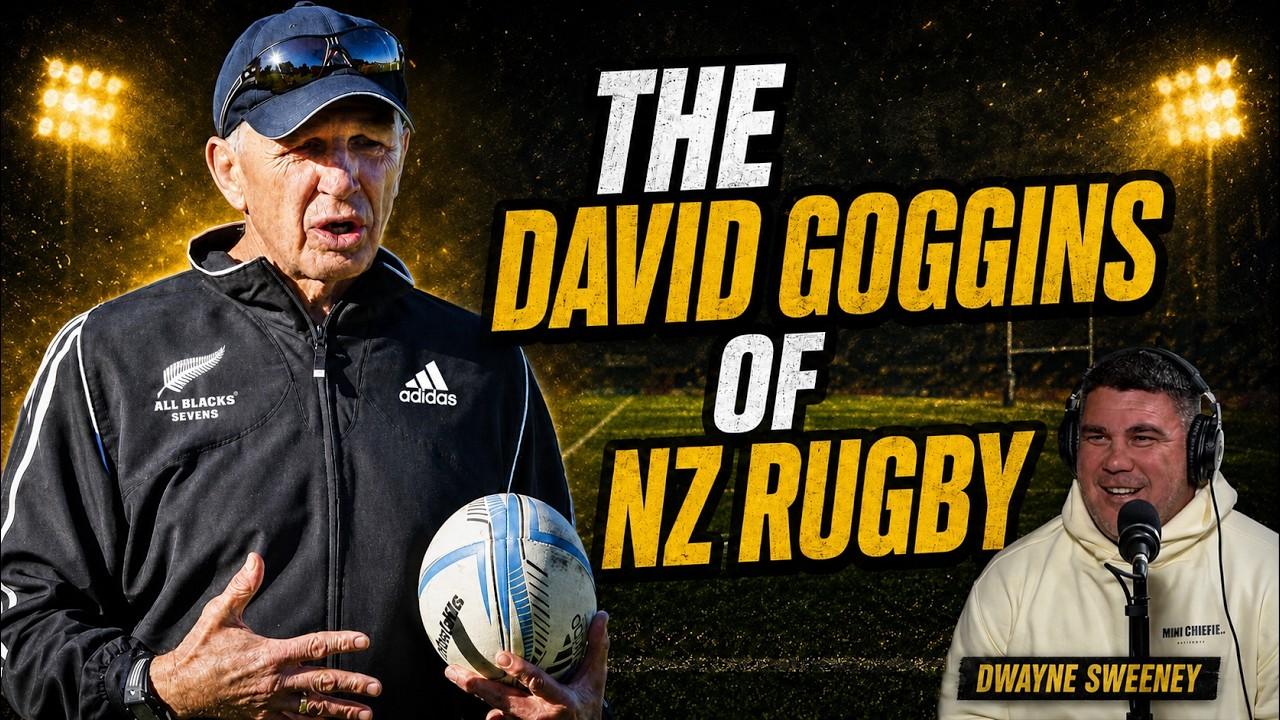
Dwayne Sweeney walks Jason Davis through 20 years with Waikato Rugby: the phone call from Ian Foster at 17, the years he barely got paid, turning down Japan money to become a Centurion, and the awkward step from captain to attack coach.
Best bits
“In my head I'm thinking that's the best kick I could have ever kicked in my life.”
Dwayne Sweeney
“I want to play for a team that I love again, so that was my decision.”
Dwayne Sweeney
In this episode
- 00:00Intro and the schoolboy debut question
- 00:40Sitting in mass and the principal's note
- 02:17Ringing Ian Foster from the school phone
- 03:23Gate five at Waikato Stadium and the Hawke's Bay debut
- 05:15Getting paid only if you made the 23
- 05:54The kicking drill that hit John Mitchell
- 10:032004, the year without a game
- 10:35Training with Regan King and Brendan Leonard
About this episode
Dwayne Sweeney is a Waikato rugby centurion, a former captain of the province and now its attack coach, and this episode follows his relationship with Waikato rugby from the first day to the last. Jason Davis opens with the puzzle: how does a 17-year-old playing first 15 at Hamilton Boys' High in 2002 end up making a debut for Waikato? Dwayne, who calls himself a chubby kid from Morrinsville, tells the whole story.
The note from the principal's office
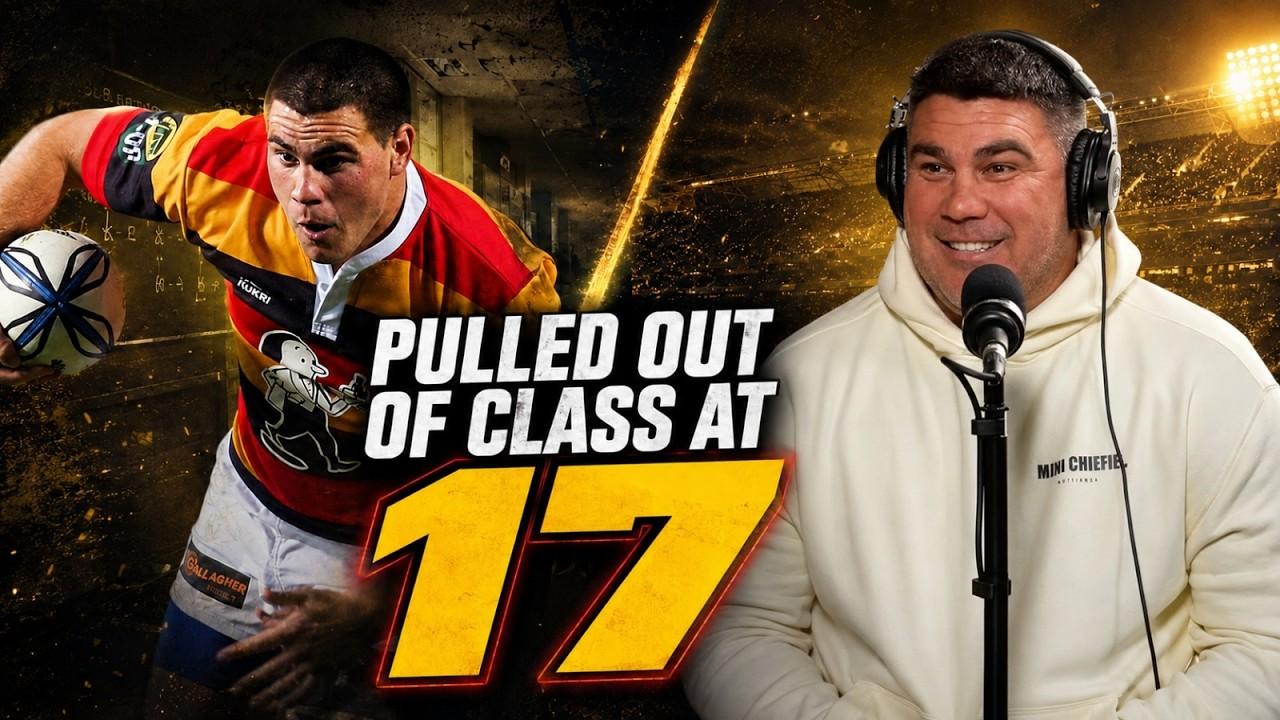
He was sitting in mass in his last year of school, mostly ticking the box of turning up so he could play first 15. He already had the sixth form certificate he needed to study sports science at Wintec. Then a note came to go to the principal's office, and Dwayne spent the long walk across school trying to think what he had done. The principal handed him a piece of paper with a number on it and told him to ring.
He used the school phone, answered with his full name the way his dad taught him, and heard Ian Foster on the other end. Could he get the afternoon off school? And the rest of the week? The principal and the manager already knew. Foster told him to come to gate five at Waikato Stadium, train with the NPC team and debut on Friday against Hawke's Bay. Dwayne grew up a Mooloo supporter, and his dad played for Thames Valley. Twenty-four years later, he says, it is still vivid. He cried, hugged his principal and rang his parents.
Getting paid only if you made the 23
He did not get contracted until 2004. Before that he played in the development side and was called up when needed. The pay was around $1200 for the week, but only if you trained and then made the game-day 23. Some weeks he trained and missed out, so he did not get paid. That is just how it was.
The kick that hit John Mitchell
The story he promised comes from a wet, windy July night at the old training field at Rugby Park, just before the NPC. John Mitchell, fresh from coaching the All Blacks, had the midfielders catching a pass and kicking a left-foot spiral into a box, and he loved a points system. Dwayne was having a shocker and then, from nowhere, hit what he reckons is still the best left-foot kick of his life.
Mitchell was standing behind the box with his head down, writing on a paper under his jacket because of the rain. Dwayne yelled heads, Mitchell looked up, and the ball hit him flush in the forehead. Papers went everywhere. Mitchell let him have it in front of everybody, said that if he were not such a useless player it would never have happened, and sent him home. Dwayne was 19 and not in a good headspace afterwards, and 2004 was the only year of his Waikato career that he never stepped on the field in an official game. He sat on the bench once, and says the year shaped him, training alongside Regan King and Brendan Leonard.
Japan, the dinner and a two-minute decision
After six years in Japan, he was finishing with one team and had options to stay. He had gone for the money and the culture, but he wanted his boys schooled in New Zealand and wanted to play for a team he loved again. Then he was told his contract would not be renewed, only about four months after the big boss took him and his dad out to dinner and said he would be there for a long time. He rang his dad from outside the office, and by the time he walked the two minutes to his car he had decided: come home and become a Centurion for Waikato. His agent called him an idiot; Dwayne says it was the best decision he made. He does not like talking money, but as an example of what he was willing to do, he went from well north of $250,000 a year after tax in Japan to $40,000 before tax. He then captained Waikato from 2017 to 2019.
From player to attack coach
His first coaching was with the Waikato women's sevens side. He had played sevens in 2018 and won the national title, mainly to prove he still could, then watched the team's physio coach the women on her own and decided to stop playing. When Ross Filipo, a former teammate at the Māori All Blacks and Chiefs, needed an attack coach, Dwayne had agreed terms to coach in Bay of Plenty, but the head coach there moved to a Black Ferns role and the timing worked. After the messy end of his playing career he had plenty of robust conversations about going back. He decided he loved the team for what it gave him, and that many of the players had been his teammates. The early stage was awkward, because players still saw a peer, but he is proud of the way he handled it.
Why it matters
For a quieter lesson in loyalty, this one is hard to beat: a career in which a schoolboy debut, an unpaid stretch, a year without a game and a contract that was not renewed all led to one decision. If you follow the Mooloos, the Waikato Rugby guide covers the NPC, the Chiefs and club footy.
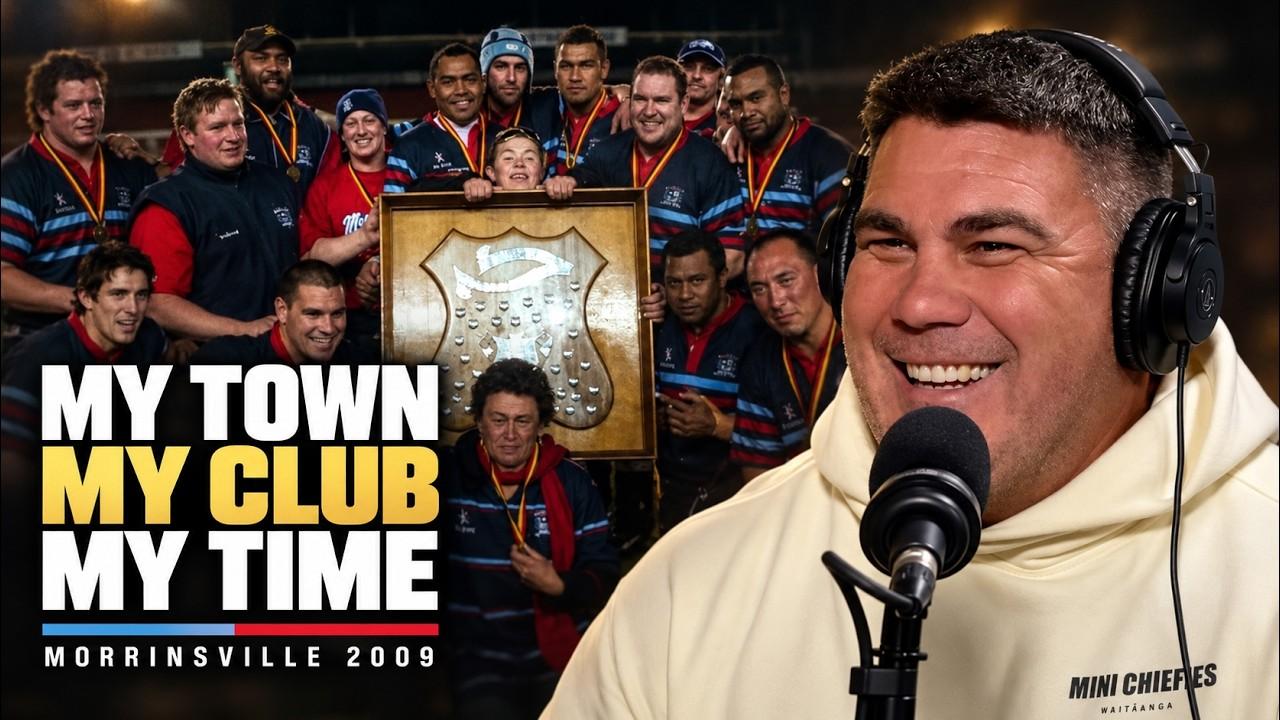
You can hear more from Dwayne in his earlier telling of the Ian Foster call, My Town, My Club, My Time: Morrinsville 2009, and on the Dwayne Sweeney guest page.
Questions people ask
Who is Dwayne Sweeney?
Why did Dwayne Sweeney leave Japan?
What is the John Mitchell kicking story?
When did Dwayne Sweeney debut for Waikato?
What does Dwayne Sweeney do now?
Mentioned in this episode
Transcript
Generated from the audio, so expect the odd wrong word or name. Timestamps open that moment on YouTube.
0:00Because this makes my mind hurt, is you're 17 years old, Hamilton Boys High School, playing for the first 15 and this is 2002. And Ian Foster decides that he needs you to make a debut for Waikato rugby. How does a 17 year old that's only playing high school rugby end up there? Give us a story. Yeah, first of all, thanks for the intro. Yeah, it's pretty humbling, I suppose, sitting here and thinking that a chubby kid from Morrinsville achieved all of those things.
0:37So, yeah, but I guess going back to that moment as a 17 year old, yeah, I guess the story in itself is quite interesting. And the fact that I was sitting in mass, not doing a lot, you know, sort of my last year of high school, I was, you know, I'd already sort of, I suppose, qualified for what I wanted to do post high school, which was I wanted to go to Wintech and study sports science.
1:02And my sixth form cert had got me in. So, yeah, I was kind of ticking the box in terms of turning up so that I could play rugby for the first 15. So, yeah, I was actually in mass and I got a note to go to the principal's office. And as you could imagine, I wasn't at school for school so much at that stage.
1:21So I was, I was actually thinking I was in trouble. And was it the first time that you'd had a note to go to the principal's office? Yeah. Yeah. Yeah. To go to the principal's office. Yes. I've been to the dean's office a few times and the deputy principal's a few times as well. But in terms of, yeah, the actual principal, yeah, going to Susan Hassel's office was, you know, pretty daunting.
Read the full transcript · about 16 min
1:45And, yeah, I remember just walking across from Mass Block and it's, you know, sort of on the far side of the school too. So it was a decent walk. And I was like, oh, man, like trying to think of every excuse of like where I could have been, what I wasn't at. And I sort of walked in there and Barb Clark, you know, pretty special woman, was the manager of the first 15 for a long time.
2:07She was a receptionist and she had a big grin on her face when I walked in and I was like, oh, that's a bit odd.
2:13And so I sat down and was waiting and then, yeah, Susan came out, well, Mrs. Hassel, and said, oh, you can come in my office. So I went in there and she handed me a piece of paper and said, oh, you have to ring this number. And I was like, okay. So I used the school phone and rang the number and was like, hello, Ian Foster speaking.
2:31And I was like, whoa. Whoa. Yeah. And he's like, how are you? And I said, oh, hi, it's Dwayne Sweeney speaking. You know, good habit that dad taught me is always answer the phone with your full name. So, and he's like, oh, hey, Dwayne, how are you? Yeah, no, good, thank you. And a little bit of small chat.
2:47And then he asked what I was, you know, if I could get the day off school. So I was like, oh, hang on a minute. So I asked Mrs. Hassel, and unbeknownst to me, they'd already had a conversation.
2:58So she knew exactly what was coming. And so did, obviously, Mrs. Clark or Barbara, who was at reception as well, because they'd obviously talked about it. So that's what the big grin was all about. And then, yeah, I said, so I asked, and she's like, yep, yep, that's fine. I was like, yep, I can get the afternoon off.
3:17And he goes, oh, what about the rest of the week? And then I was like, oh, I can have the rest of the week off. And she was like, yep, that's fine. He goes, okay, cool. I need you to come down to Wakata Stadium.
3:27Meet me there at 12 o'clock or whatever it was. He goes, I'll just meet you at the front, just on the steps, outside, come around to gate five. I was like, okay. And then he's like, yeah, and you're going to train with the Wakata MPC team, and you're going to make your debut on Friday against Hawks Bay.
3:43And I just like, I can't explain the feeling like being a proud, you know, Mulu supporter from, I don't know, as I couldn't even tell you when I started supporting the team. It was, rugby's been a big part of my life.
3:59Dad played, you know, for Tens Valley when I was younger. So, yeah, for me, it was a bit of a surreal moment and quite a numb feeling. And, yeah, sitting here now, what are we, 24 years on? Yeah. But I can, it's like I'm still there. Like, it's that vivid in my mind. So, yeah, it was a pretty, pretty amazing moment, I guess, and really cool to share it with, you know, my principal at school and with, you know, Mrs. Clark as well, being my First 15 manager.
4:34It was my third year in the First 15 at that stage. So, I'd formed a really strong, you know, sort of bonding relationship with her too. So, yeah, to, I suppose, to break into tears and to, you know, hug your principal was a pretty kind of surreal moment. And then to ring mum and dad and fill them in, you know, on that kind of news was pretty special.
4:57I was kind of in and around the MPC squad. Didn't officially get contracted until 2004. Okay. Yeah. So, like 2000, no, 2005, I think, actually.
5:132003 and 4, I played a bunch of games, but generally called in. Okay. It's like, yeah, so I was playing in the development side and then we'd get called up. And so, would they just give you a bonus for the game? Yeah, yeah. Back then you'd just get, I can't remember what it was, like $1,200 for the week, I think it was, if you went in and trained for the week and then made the game day 23.
5:33So, yeah, there was some weeks I went in and trained, but didn't make the game day 23. So, you didn't get paid. Yeah. But that's just what it was. Yeah. So, yeah, played a few games and around then got my first official contract. Nah, it must have been 2004, I think, because John Mitchell was the coach. It's quite an interesting story with that one that I'll share.
5:54But I remember the old rugby park number two used to be out on the roadside there. It's like a bit of a park now. Yeah. There used to be a training field and that used to be where we trained and it was like a winter's night. It must have been like July before, just before MPC had started.
6:11So, it was like kind of those pre-season trainings. We're training at night time and we're doing this kicking drill and it was like the midfielders had to catch from a pass and do a left-footed wipers spiral down and try and land it in the box. Mitch was real big on creating like games and point scoring systems and that was kind of how he coached.
6:30And he'd obviously just come back from being the All Blacks coach. Yeah. And then, yeah, so we're doing this drill and I was having a shocker. Like I couldn't hit the side of a barn. They were going sideways backwards. It's like wet, raining, windy. And I was just, it was terrible. And I just got in a downward spiral and a rut and it was just going no good.
6:52Then I just hit out of nowhere this pearler. And I'm just like, probably to this day, probably the best left foot kick I've ever kicked in my life. And I remember looking up and just watching this perfect spiral fly through the air. And I'm just like, man, and it's going right at the box. And I'm like, oh, this is wicked.
7:08Like, how good is this? And then I just was, it was like the whole thing in slow motion. And then I looked down to see like, you know, watch where it was going to land. And I was like, oh shit. And Mitch was standing behind the box. But because it was raining, he always used to ride on his refill.
7:24And he had his like head down and he had this like perfect shiny old dome and the lights and at nighttime. And he's trying to ride on his paper under his jacket. And I'm just like, oh shit. And I was like, oh, it's a, you know, I remember for a split spec and thinking, oh, he's behind the box.
7:40It's fine. It's never going to make it there. And I kind of looked at it and I was like, holy shit, that's going to go over. So I yelled heads. And as I yelled it, he looked up and it hit him.
7:50Lush in the forehead, like, and paper went everywhere. And I felt like I was about that big. I was like, oh my God. I just couldn't believe it had happened. I was just, I was obviously in a bit of a hole because I'd been so bad and he was watching and I was just like, he'll be like, what is this guy up to?
8:14And then I just do that out of nowhere. And he, I've never, ever been sprayed by a coach like that in my life. And he, yeah, he actually sent me home from training. He was like pretty, it got pretty heated. Like he was like, there were so many swear words that came out and he stormed down the field.
8:34Cause he was like, who the fuck did that? And then they all just went and I'm standing there like, oh, sorry. And then, yeah, he just let me have it in front of everybody and told him, you know, basically it was like, if you weren't such a useless rugby player, it never would have happened. And in my head, I'm thinking like, that's the best kick I could have ever kept in my life.
8:52Like, but obviously it just got him in the rage moment. And Mitchell was pretty good at that. He used to get pretty angry sometimes. So yeah, I remember he actually sent me from training and then I went to walk off and then the boys were like, bro, don't go. Like he's just overreacted. So I kind of like just stood back in the drill and kind of hid behind the boys and stayed there.
9:12And then he like sought me out and was like, what are you doing? I told you to walk off home. So I was like, oh, okay. So I actually went, so I actually had to leave. So yeah, it actually led to, you know, I guess the kind of flow on effect of that was like, I was pretty, pretty down about things.
9:30I was still a kid. Like I was 19 at the time. So yeah, I was not in, yeah, I wasn't in a very good mental state after that. Like, you know, being told by your coach that you're useless in front of everybody and in that kind of context, it's quite hard. And you look back on it now and you can laugh at it because you're like, oh man, that was actually the best kick I could have ever kicked.
9:52But in that context, you don't think like that. You know, I was thinking I was useless and all the things that he had said because I had so many insecurities as a, somebody that I still didn't believe I was good enough to be in that environment.
10:06You know, so yeah, that was a pretty, pretty interesting sort of moment. And I didn't play a game that year. So 2004 was the only year of my Wakatul career that I didn't step foot onto the field officially. I played in preseason and I sat on the bench once, but he didn't put me on. But it was actually a really cool year.
10:26And the fact that in the development team, I really kind of really established myself and had some really, there was some cool players that come and played for us. So Regan King was coming back from injury. So he played a bunch of games in there. Brendan Leonard, obviously we were both together at Morinzo Sports. And we were, you know, both in that team together.
10:47So our friendship and bond, you know, really strengthened through that period of time because we spent a lot more time together and went away on trips and all that kind of stuff. And Roger Randall was coming back from injury too. And yeah, he played as well. So having, you know, guys like Regan King have been in all black two years prior and Roger Randall had also been in all black and around that team for a sustained period of time.
11:12And, you know, their good training habits and they're just kind of them instilling that confidence in you that you are good as well. Like playing alongside them and then being like, oh, bro, he had a mean game today. It's like, oh, really? Like, yeah. So it was actually quite a, even though it was probably a hard year, I look back at it now and think, oh man, that actually probably really shaped me to do what I did just moving forward.
11:36So when I finished playing, you know, I got to the point that I got to in Japan and I was finishing with one team and I had some opportunities to go to others and would have made some good money, like a lot more money than, you know, I was making back in New Zealand to come home. But I remember thinking at the time, I was like, okay, what am I working for now?
11:55Because the love of the game was not, like in Japan, it's different. Like I was there for money. That was what I went for, an experience to live in a different country, experience a different culture. But I'd done that for six years. Yeah. And it wasn't somewhere I wanted to stay for the rest of my life. So I was like, well, I ultimately want to go home, I want the boys to be schooled in New Zealand.
12:18I want them to have a Kiwi upbringing. What am I going to stay for now? Because I've got a boat. I've got a house. Nice. Yeah. My boat's little, but well, maybe I'll get a bigger boat. Yeah. And I'm like, oh, they need a bigger boat. No. So I was like, I want to love, I want to play for a team that I love again.
12:37So that was my decision. So I walked out of that meeting and then within, I found out I wasn't going to be contracted. I walked outside. I rang my dad. Yeah. And it was a shock. It was a big shock because I kind of thought the team I was at, I would end up taking over as an assistant coach because I was kind of playing coaching at the time.
12:59And the big boss had always spoken to me. He had actually taken, my dad had come over and months prior to that, he'd taken us out for dinner. And he was saying, you know, like your son will be here for a long time and all this. And then, you know, within four months I was gone and I was like, oh, okay.
13:15And I remember walking outside, ringing dad and we're both like shocked. And he was just like, oh shit. He goes, oh, I didn't expect that after the bloody dinner we had and what we'd spoken about. And I was like, oh, well, it is what it is. It's a business. And then he's like, what are you going to do?
13:30And I was like, no, I'm going to come home and I'm going to be a centurion for Waikare. And that was like, I'd made that decision from walking from the office to my car, which took, I don't know, two minutes. Yeah. And I was just like, nah, that's what I want to do. Like, cause you know, I've weighed up all of those things.
13:45And then I had some contract offers come through for some other clubs and my agent was like, what are you doing? You idiot. Like you're going to cost me a lot of commission if you go home. But yeah, I came home and that was the best decision I made to come back and probably, you know, coming back in and I'd never been a captain, you know, before.
14:05So coming back in and captaining Wakato for 2017, 18 and 19. Yeah. Becoming a centurion. You know, all that came with that was, you know, it was a pretty awesome, you know, sort of time of my life, I suppose, that came out of what most people would call probably a like hardship or like, not hardship because that's the wrong thing, but feeling like your career is over at a professional, you know, sort of kind of standpoint and then being at a real crossroads of what do I do?
14:35And, you know, just as a, I don't really like talking about, you know, sort of money, but if you think about, I was in Japan and, you know, making well north of like $250,000 a year. Yeah. After tax to come back and pay for 40,000 before tax. So that's an example of what I was willing to do to come home.
14:58And like I said, from that conversation that I had with Wayne Ormond in 2003. Yeah. That was, you know, a big catalyst. I guess why I got into coaching, I actually coached women when I first started. So I was still playing for Wakato as the captain of the MPC team. And our physio, Teresa Tatamaki, who's now an assistant physio for the All Blacks, she was coaching the Wakato Women's Sevens team.
15:25And I played Sevens in 2018 and we won the national title and the girls, the women's team played Manawatu in the final and they lost. And I watched T and T coached them just on her own. Like she was doing it all by herself. And I remember watching them play and I was like, I'm not going to play Sevens anymore.
15:42I kind of just did it to see if I could prove that I could still do it. And I ticked that box, but it wasn't something that I wanted to keep doing. I was, yeah. And then the opportunity came up when Ross Filippo was the head coach of Wakato and they needed an attack coach. And I had agreed to terms with Bay of Plenty to go and coach over there with Mike Delaney.
16:05He was the head coach there. And we had spoken about that, but then Mike ended up getting the Black Ferns assistant role. So he stepped out of that head coach role. And it just, yeah, the timing kind of worked that the Wakato job was open and Floss and I had a really good relationship. We'd played together in the Māori All Blacks and the Chiefs and we'd actually worked together in the community space at Wakato Rugby because when I was playing in my latter years, I was an RDO there as well.
16:33And Floss was doing the same. So then, yeah, when he was looking for an attack coach, he spoke to me about it. Obviously, I alluded to the fact that my, I guess, end of my career as a player there, that wasn't smooth. It wasn't, you know, it was a pretty, you know, kind of ugly scenario and situation.
16:51And like I said, that was what it was. So it was a little bit of like, okay, am I going to go back? What does that look like? Like we had some pretty robust conversations and around that and ultimately like that I love that team for what it gave me, if that makes sense. And it's not, I'm not blinded by the jersey because, you know, as I alluded to earlier in the podcast, I understand that it's the, it's not the jersey or the color of it, it's the people that were in it.
17:17And I looked at the team and a lot of those guys were my teammates when I was their captain two years prior or three years prior. So I was like, man, I could teach and I could help them a lot. So yeah, I decided to, you know, apply and jump in, you know, boots and all. And yeah, it was a really cool, you know, the last three years being involved with that group was awesome.
17:45And the fact of managing that transition from player to coach, I think I was ready for that transition because I'd stepped out for a couple of years, but I think the players, especially in the early stages, probably struggled to see me as their coach and still saw me as a pair.
18:01But I was proud of the way that I handled that scenario. And yeah, ultimately I thought, you know, we got to a really good working position with the players, playing group and the, and you know, that, that kind of having that real deep connection of really understanding them as players because I played alongside them and then ultimately coaching them like really helped.
Get ShedLife World every Friday
The week's episode, Sport, Garage and subscriber deals, free. What's in it
You might also like
Dwayne Sweeney: My Town, My Club, My Time, Morrinsville 2009
Dwayne Sweeney ·