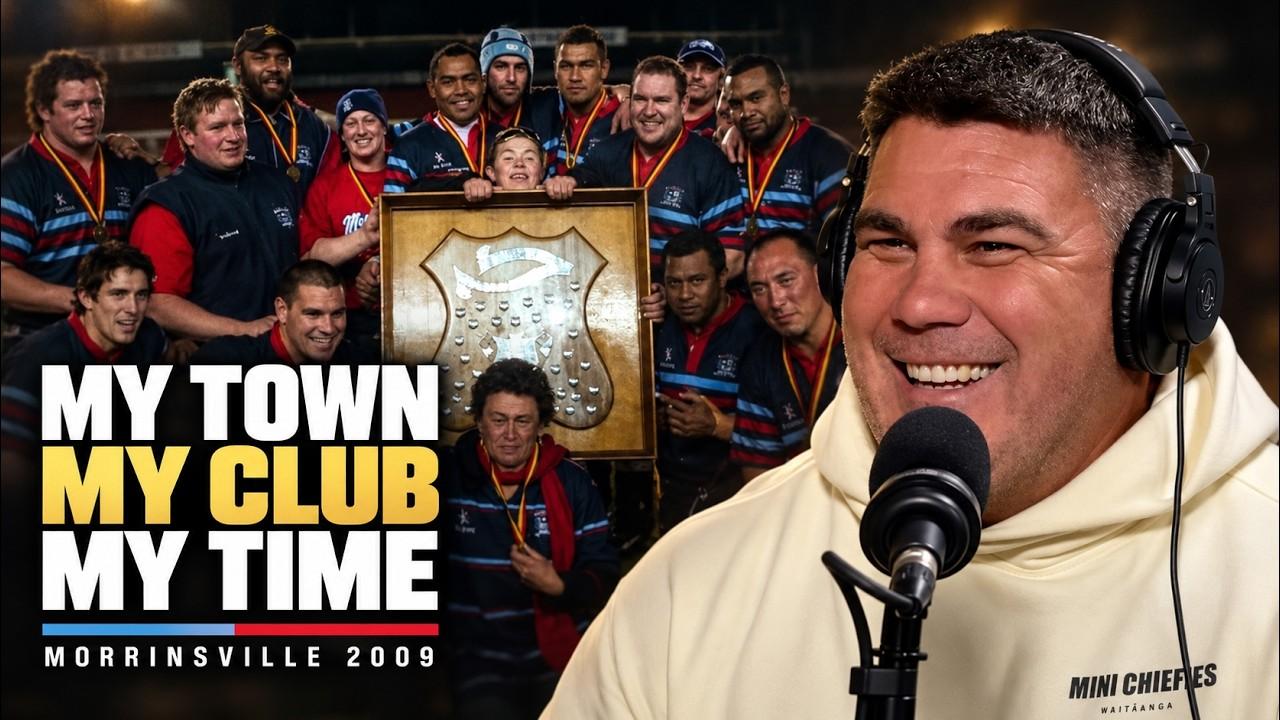
Dwayne Sweeney: My Town, My Club, My Time, Morrinsville 2009
Dwayne Sweeney ·
Rugby · · 10 min
Dwayne Sweeney on what earning a Māori All Blacks jersey meant: a two-day scramble to learn his pepeha, learning the haka in his first week in camp, nightly kapa haka, and the legacy of Fetu and Luki Crawford.
“I'm just going to live really proudly as a Māori.”
Dwayne Sweeney
“It's the only team in New Zealand that is bound by blood.”
Dwayne Sweeney
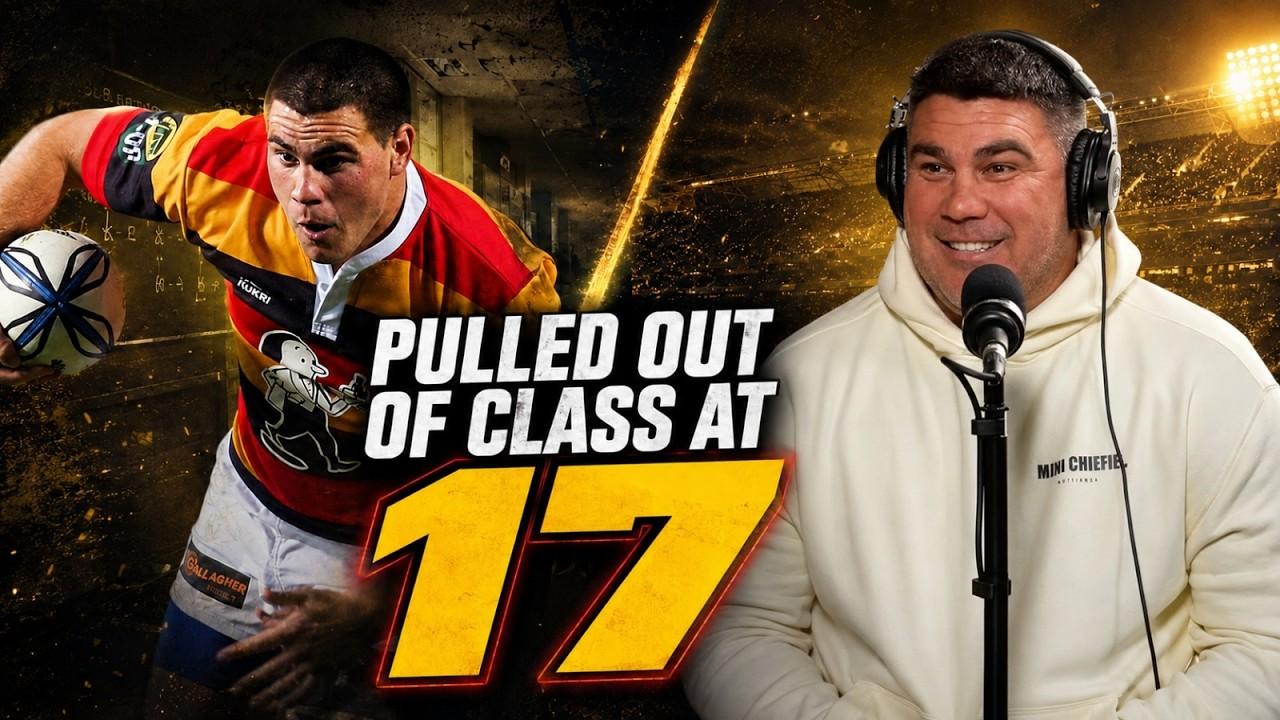
Dwayne Sweeney, the long-serving Waikato rugby player who went on to wear the NZ Māori All Blacks jersey, always knew he was Māori. What he did not have growing up was the culture. He tells Jason Davis he looks back on that part of his career with a huge amount of pride, and this short chat is about the crash course in identity that came with it.
Dwayne's mum is Māori and looks it, but he calls her "plastic Māori" because she did not grow up with the culture, and neither did he. Apart from school trips he had never visited a marae. He was still proud to be Māori, and he always wanted to play for the New Zealand Māori side, because it was what he identified as and a team he loved watching.
When he made the team, they assembled in Auckland for camp. Before he got there the kaumātua, Fetu, rang to say he would have to present his pepeha when he arrived. Dwayne had no idea what a pepeha was, and no idea what his own was.
He had two days. His mum's older sister had gravitated towards the culture through her Māori husband, and his mum's younger brother, who lives on the Gold Coast, had dived into his identity after being away. Dwayne leaned on them to pull it together, learn it and practise it. Then, on the first day, the whole team sat in a meeting room and he stood up and said it in front of everybody.
He had been there and watched fluent teammates stand up and speak te reo. It was cool to listen to, and a bit sad too, because he wished he could do it. It never pushed him to learn the language. What it did was make him decide to live proudly as a Māori.
Players are in a match within a week of joining the team, so learning the haka is a crash course. The rookies are broken into groups, senior players lead them, and it narrows down until you are up in front of the whole team going one-on-one with another rookie. Dwayne says if you had told him on day one he would have frozen. The environment and the belief it builds in you make it possible.
He remembers a Japan test where the team did a big haka and had a poor first half, helped along by a big Thursday night, then won by 50 or 60 points. Online comments said they should spend less time on the haka and more on rugby. He thought those people had no idea what the environment is like.
The reason, he says, is that it is the only team in New Zealand bound by blood. Anyone with residency can play for the All Blacks, but you cannot play for the Māori All Blacks unless you are Māori. There is a team with identity and connection and nothing else like it, and it is hard to explain without being in it. Kapa haka every night sounded odd to him at first, but it is how the group learns to relate to each other.
Jason asks him to explain both. A pepeha is an introduction to who you are and where you come from. Dwayne gives his: the Waikato River, Taupiri mountain, Tainui as his iwi, Ngāti Mahanga as his hapū, and the Tainui waka that brought his people to the area. He compares Tainui to Waikato in rugby terms and Morrinsville as the sub-tribe.
Kapa haka is where the team practised haka and songs. Fetu would tell stories of old battles that connected to who they were about to play. They set aside a couple of hours every night, before or after dinner. At after-match functions the captain would speak and the team would sing, then move from the song straight into the haka.
Dwayne finishes with the two men who guided him: Fetu, their kaumātua, and Luki Crawford. Both have since passed away. He says everyone who went through the team under them is extremely grateful for how they connected the group, and each player individually, to their culture.
For more from Dwayne, listen to Morrinsville in 2009, or his career story in 20 years with Waikato. Everything he has done on the show is on the Dwayne Sweeney guest page.
Generated from the audio, so expect the odd wrong word or name. Timestamps open that moment on YouTube.
0:00Yeah, and what was it like getting into the Māori All Blacks? Yeah, I think for me, like I look back on that part of my career of like a huge amount of, you know, like sort of pride. Because I always knew I was Māori, my mum's Māori. And if you see my mum, like you, you know, she very much looks Māori, but I call her like plastic Māori because she didn't grow up with the culture and neither did I.
0:24So like I never had visited a marae or anything like that apart from school trips, you know. So, but I was very proud to be Māori and I always wanted to be, you know, play for the New Zealand Māoris because that was what I identified as. And it was a team that I loved watching them play. I loved the way they played.
0:46I liked all of the players, you know, that played in that team. So I was like, yeah, that'd be cool to play for them one day.
0:56And yeah, I made the team and then we had to assemble and camp in Auckland. And I remember getting a phone call and a message and then the kou matua fetu rang me and said, OK, well, you've got to present your pepeha when you get in. And I'm just like, what? What is that? Like, I didn't know what a pepeha was and I didn't know what mine was, that's for sure.
1:15So I went on this real crash course of trying to learn my identity and my marae and all those sorts of things. And luckily my mum's sister, older sister, had really, you know, kind of through her husband, like he's Māori as well and quite strong in his Māori upbringing. She had kind of gravitated that way as well.
1:38That's cool. Yeah. So then, and also my mum's younger brother who lives in the Gold Coast, he had sort of dived into his identity a bit, you know, after probably being away and, you know, understanding that he's Māori and wanting to be a bit more connected to that.
1:53Yeah. So I kind of leant on them and had like two days to try and pull together my pepeha and understand it and practice it. And then, you know, you walk into camp and it's the first thing you do. You go into a meeting room and the team's all together and you stand up and you say your pepeha in front of everybody.
2:10So super daunting. But what, and, you know, I've kind of been there as well and seen guys like Tamidi Allison, who's a fluent in Tereo, stand up and deliver and Hika Elia as well. And just listening to them, you know, be able to stand up and talk, like, you're just like, oh my God, like, how cool is that?
2:31And then it, like, also a bit sad at the same time, because it's like, man, I wish I could do that. It never really sparked me enough to dive down and go, okay, I'm going to learn Tereo Māori. But I was just like, okay, I'm just going to live really proudly as a Māori. And that was kind of like, you know, what my kind of, I guess, take on it was and how I wanted to be off the back of being in that team.
2:55But then also like kind of seeing and understanding to the Māori people what that team means was really cool. And, yeah, it's, there's some pretty cool traditions that kind of exist in there. So like going in and learning the Haka. And obviously you play within a week of, you know, being and joining the team. So it's a bit of a crash course.
3:17And, yeah, it sort of starts off and all the rookies kind of get broken up. And then you get a few of the senior boys will teach you and lead it. And then it kind of whittles down. And then you get to a point where you basically will Haka one-on-one with another rookie up in front of the whole team, you know.
3:34And that's pretty. And if you told me that we were going to do that the day that I stepped in, I would have got, I would have froze. You know, I would have been like, there's no way I'll be able to get myself to a position like that. But the way that the environment's fostered and the belief they instill in you and your identity and your culture.
3:52Like you spend so, a lot of the time while you're in there. I remember seeing a comment, we played Japan, it was in my second year in Hawke's Bay. And we did a really amazing Haka. But we had a really poor first half. We didn't play that well. Little did it know, the boys actually went out and we had a pretty big night on the Thursday night.
4:11Which, you know, kind of lended to a bit of a slow start. But we ended up winning by 50 or 60 points. But it definitely wouldn't happen now if you played the Japanese test team. You know, the levels improved a lot. But, yeah, I remember seeing a lot of comments thrown out around, oh, they need to spend less time on their Haka and more time around rugby.
4:33And I just remember thinking, I was like, man, you've got no idea what this environment is like. And it's actually, it's the only team in New Zealand that is bound by blood. Like the All Blacks aren't. Like, you know, you can be from anywhere in the world and play for the All Blacks if you have residency. But you can't play for the Māori All Blacks if you're not Māori.
4:52So, in terms of like a team that has identity and connection, there isn't anything like it. And it's hard to explain that without being in the environment and seeing it. And, you know, we have kapa haka every night. And, you know, like if you told me that, oh, you're going to be in a rugby team that has kapa haka every night.
5:12I'd be like, okay, why? But then once you get in and you do it, it's all of that connection and understanding of how you relate to each other as people is what makes that team great. Can you just explain? I'll just jump in. Yeah. Pepeha. Oh, Pepeha. People might not understand it. Pepeha. And then kapa haka. Yeah.
5:35Yeah, nice. Because both things are people like, oh, yeah, I know what you mean. Yeah, yeah. So, Pepeha is basically like an introduction. Yeah. And it's your identity like as a person and where you come from. So, like, I'll say mine because then it's easy to, I can explain off the back of it. But like, ko Wakato te awa.
5:59So, like, my river is the Wakato River. Ko Taupiri te maunga. So, my mountain is Taupiri. So, the Taupiri mountain is like obviously here just out of Hamilton. Yeah. For those people that don't know that. And the Wakato River runs through our region. So, yeah. So, my river, my mountain.
6:20Ko Wakato te awa. Ko Tainui te iwi. So, my iwi is Tainui. Ko Ngati Mahanga te hapu. So, my hapu is my sub-tribe. So, when I say my iwi, basically, like the, I guess, Tainui being basically the Wakato region is kind of like the main iwi here. And then my sub-tribe underneath that would be like, if I played for Waikato in the rugby terms, Tainui being Wakato.
6:48And then Morrinsville would be my sub-tribe. So, like, yeah. Ngati Mahanga is my sub-tribe. And then, yeah, Tainui te waka. So, you always like kind of finish with your waka. So, what brought you here? So, our Tainui waka brought my people originally to this area. So, that's my pepeha and like where I, how I identify as Maori and how I came to be where I am now.
7:11So, that's basically the best way to explain it. So, my Tainui waka brought my people here originally. They founded on the Wakato River under the Taupedi Mountain. So, that's where they kind of based themselves or established themselves. And then, after that, my people then went into sub-tribes Ngati Mahanga being my one. And that's where my, you know, I guess my Maori or Maori side of my family originated from.
7:37So, that's where, how I identify as Maori. Yeah. And then, kapahaka is basically where we practice, I guess, haka or songs or like even wetu, our kaumata would often talk to us about, you know, ancient battles or wars and different things that, or different events through our Maori culture that we could relate to. And he would, like, storytelling is really big in Maori culture.
8:09And that's one thing I love about it because I love stories. I love talking as people probably are figuring out. And I love conversation. So, like, yeah, Fetu would quite often share stories about particular battles and often they would relate to, you know, where we were at that point in time or who we're going to play against or, you know, something like that.
8:28So, yeah. So, that's what kapahaka was. And we would do that every night. So, we'd set aside a couple of hours either before or after dinner. And that would be where we would practice our haka, practice our team songs. Because in Maori culture too, when you speak, you always follow a speech with a song. So, like, if our captain spoke at an aftermatch, our team would stand up and we would sing after.
8:52And we used to sing a song that actually was kamate, the All Blacks haka, the New Zealand haka that we do. And it would lead into, we could sing it and then lead it into the haka. So, like, a lot of, you know, when you go into foreign countries and you're at this aftermatch and there's all these dignitaries there.
9:09And they're like, oh, man, this is, and we're not great singers, but some of the boys are really good. So, it sounds semi-decent. But then you go from this beautiful song into bang, into a haka. It's, like, quite a powerful, you know, sort of thing in a moment. And it used to be, used to bring a bit of wow factor into our aftermatches.
9:26So, yeah, it was a really, really cool journey to, one, connect myself into my Maori culture, take a bit of a dive into, okay, who am I and where, you know, how am I Maori? And what does that kind of look like for me? And then for Fetu, our kaumatua, and then Luki Crawford, who both of those men have passed since, which is, you know, obviously extremely sad that they're no longer with us.
9:52But the impact that they left on, you know, not only myself, but anybody that had been through that team under their guidance, you know, all of us are extremely grateful for, you know, how they connected us collectively as a team. And in those moments, but also individually into our culture as well. Yeah. Yeah, powerful. Powerful.
The week's episode, Sport, Garage and subscriber deals, free. What's in it
Dwayne Sweeney ·