Rugby · · 17 min
Dwayne Sweeney on Gordon Tietjens: Inside the Toughest Training in NZ Rugby
Dwayne Sweeney spent a year inside Gordon Tietjens' NZ Sevens programme. He tells Jason Davis what the fitness testing, the death drill and the Singapore punishment session were really like, and why the lessons stuck.
In this episode
About this episode
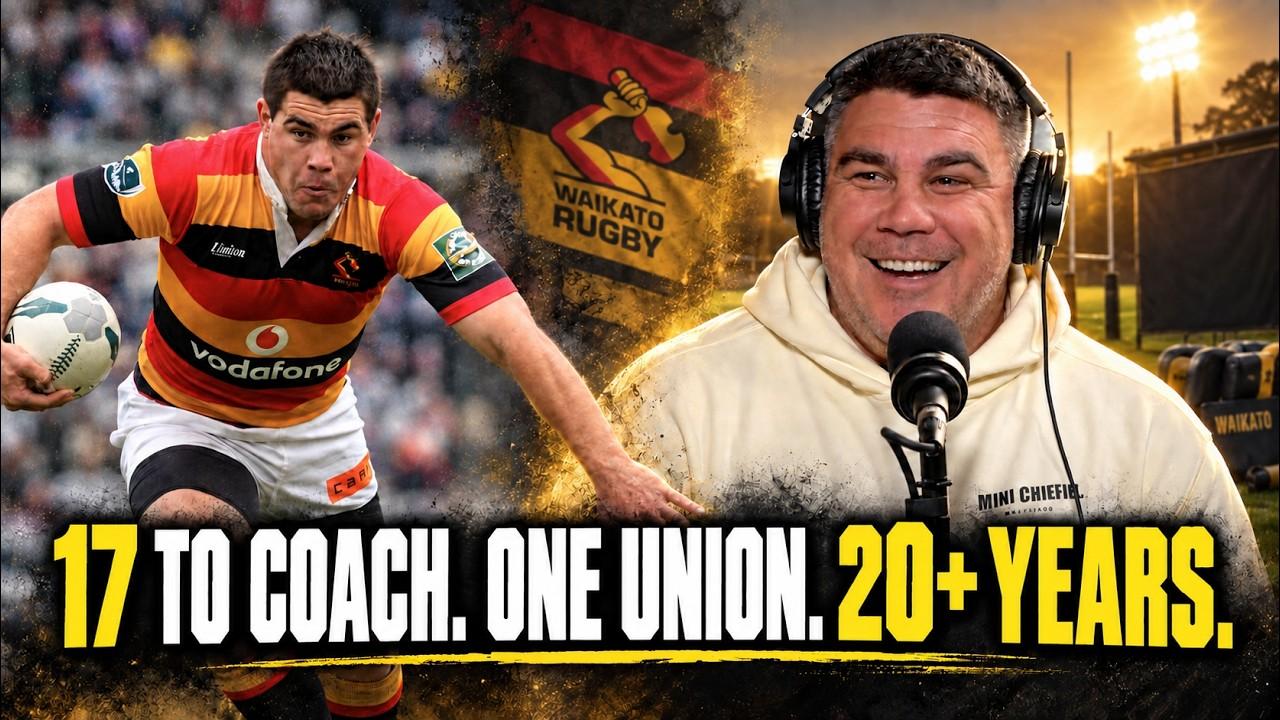
Dwayne Sweeney is a former Waikato captain and centurion who spent a full year living inside Gordon Tietjens' NZ Sevens programme, one of the toughest training environments in New Zealand sport. In this episode of ShedLife NZ he sits down with Jason Davis and pulls back the curtain on what it took to survive under a man he calls the David Goggins of New Zealand rugby.
It is a short, sharp chat, and most of it is about the sessions themselves. If you have ever wondered why the Tietjens era produced so many hard-nosed sevens players, this is a decent place to start.
The Gordon Tietjens fitness tests
Dwayne starts with the testing. The fitness tests under Titch were brutal enough that, in his words, they would break modern GPS trackers. One of them was the phosphate decrement test, which he describes as feeling like your throat is bleeding. Another was a time trial through the redwoods, where the squad was racing a time Tietjens had set himself decades earlier to prove his own fitness. The point was never just the number. It was finding out who would keep going.
There is also a Commonwealth Games setback early in the chat, which gives some context for how much was riding on each campaign and why the programme was run the way it was.
The death drill and the Singapore punishment
Two stories stand out. The first is the death drill, a session that left only three of 14 players still standing, the rest having dropped with cramp. The second is the day the balls got left behind in Singapore. Rather than call training off, Titch ran the whole squad into the ground in 40-degree heat for two hours. Dwayne tells both without much drama, which somehow makes them land harder.
Kicking is for karate
The philosophy side is where the episode gets interesting. Every player had a love-hate relationship with Tietjens, but Dwayne is clear about what Titch valued. He did not care about your fitness numbers. He cared whether you would quit. If you never quit, you were his guy. The other mantra was that kicking is for karate: hold onto the ball, run, and do not give it away.
That approach broke players down to see who would get back up, and Dwayne is honest that it came at a cost.
Balancing sevens and 15s
The last section covers the mental toll of bouncing between the sevens programme and provincial 15-a-side rugby, and the dark moments that sit behind the highlight reel. Then he moves to fifteen-a-side for good, which is where his long Waikato career picks up. Even after everything Titch put him through, he says the lessons stuck well after he hung up the boots.
Why it matters
Tietjens is a name most New Zealand rugby fans know, but very few people have described from the inside what a year in his programme was actually like. This is one of those accounts, told by someone who came out the other side and went on to coach. It also pairs well with Liam Messam's episode, where Liam tells the story of coming nearly last in every fitness test at a Tietjens camp as a 16-year-old.
For the rest of Dwayne's story, including his schoolboy debut, the Japan years and his move into coaching, go to 20 Years With Waikato. You can find all of his appearances on the Dwayne Sweeney guest page, and there is more provincial footy in the Waikato Rugby guide.
Questions people ask
Who is Dwayne Sweeney?
What happened when the balls were left behind in Singapore?
Did Dwayne Sweeney find it hard to balance sevens and 15s?
What was Gordon Tietjens' sevens training like?
What did Gordon Tietjens actually care about in a player?
Mentioned in this episode
Transcript
Generated from the audio, so expect the odd wrong word or name. Timestamps open that moment on YouTube.
0:00So yeah, that was a pretty cool year and then the year 2006 I made New Zealand 7s under Gordon Titchens. So he's always been just like this legend of Gordon Titchens, the 7s training, there's nothing tougher, there's nothing harder than 7s training. Is that true? That is the truest form of true. It could be like, oh my god. It's really funny now because obviously I coach and around the professional era and all the players are GPSed at training and they have all these arguments with trainers about training load and oh the players are running too much or they're not running enough or whatever.
0:44Man, if there was GPSs on us when Titch was our coach, they would have broken. The numbers wouldn't have gone high enough. It was crazy and some of the sessions that I had done talk about a test in mental resilience and if I hadn't have had that experience of my rowing, there's no way I could have put myself to that position.
1:07But there's elements of feeling like I'd felt in races and then you just find a way to finish it. And I talked about this the other day with a mate and we were talking about hard trainings that you've done or training sessions and especially once you're not in a team environment and you're doing it on your own.
1:25And I just remember like, man, imagine how many times you've told yourself, oh, you can't do it. Like you can't do another rep. Like, bro, just like fake a hemi injury. Like, oh, your car, I reckon you should just stop. Like, just do one more and then just stop. Like, and just be like, I just can't do it anymore or whatever. Like the amount of times you must have told yourself that, but then you just go, oh, fuck it. I'll do it anyway.
Read the full transcript · about 15 min
1:46Yeah. Yeah. Like pretty much live there for a year of my life with Titch, you know, like some of those sessions were crazy and I'll, I'll give, yeah, a couple of examples, the training side of things. And I spoke about the Commonwealth Games being a thing. So what actually happened was those boys dropped back into the squad, which actually pushed me out of the squad.
2:11So I was a non-travelling reserve for the Commonwealth Games. I actually got called into the Chiefs as injury cover in the training camp week. So I was really excited, obviously, that I was going to get an opportunity, maybe get an opportunity to play for the Chiefs. So I went in and trained with them and that was cool. And, you know, Sam Toitapo was at the Chiefs at the time who was like, I really liked him as a player.
2:35So, and he's an awesome dude. So that was cool to, you know, meet him and train alongside him and stuff. And then camp. So because I was a non-travelling reserve, Titch released me to go across. Doug Howlett ended up pulling his hamstring at training. So I was the only back that was on standby. That was the non-travelling reserve. So we had one back, one forward.
2:58So I was like, oh, like found out that Doug had pulled his hammy. So I'm like, holy shit, I'm going to go to the Commonwealth Games. But then I didn't get released to go across to training the next day because I was still in contention to play for the Chiefs on the Saturday. And just how all the contracting stuff worked, it kind of was what it was.
3:18But then because I didn't go across to training, Titch took Orlando Soakai, an extra forward, it was the forward non-travelling reserve, and he just put an extra forward into the squad.
3:28So it was a bit of a like hard luck kind of moment that I didn't end up there. But it is what it is. And, you know, what will be will be. And that there's nothing you could really do. There's nothing I could have done about it. It would have been nice to have gone because they won a gold medal.
3:44And it was the only thing we won all year. So, you know, again, going back to feeling like you're the problem. Yeah. But off the back of that, we trained in Rotorua. And we normally always trained at the Mount, but we trained at Rotorua. And we were getting ready for the Hong Kong Sevens. So they come off winning the gold medal.
4:09And that, you know, was obviously an awesome high. All of my teammates had, you know, had gone. And they'd won and that was cool. And then we go into this camp. It must have been a week or two after. And I remember the first day of camp, Titch is like, oh, when I was a player. Because that's when he played, he was super fit.
4:30And that was his thing, you know. So that's why he coached that way. And then he was like, oh, I used to do this run in the Redwoods. And it was 3Ks or whatever. And he could do it in whatever time it was. It was fast. And he's like, that's when I knew I was fit. If I could hit this time, it was sweet.
4:45And then back then, the way camps worked, the first day was always fitness testing. So you would turn up and you would do, you'd always do a beat test and then the phosphate decrement test. And you do them back to back. So you do the beat test first. You'd run in two groups. So one group, half of the group would go first.
5:02And then you'd rest. And then the other half would do theirs. Then from there, you go into the phosphate decrement and the same thing. And the phosphate decrement is a 40-meter sprint on 30-second turnaround. But it's through timed lights. So you do your speed testing first to see how fast you are. And then you've got to run your first rep within 90% of your speed time.
5:26So basically, so you can't bluff it. So you don't go in there and go, oh, yeah, I ran 40 meters in 5.6 seconds when you can run it in 4.9. And they measure your drop-off. So it actually doesn't sound that hard, 10, 40-meter sprints, like going every 30 seconds. But, man, when you do it and you're doing it through timed lights, it is the worst, probably, in all honesty, probably the worst fitness test I've ever done in my life.
5:53Because, you know, like you do a yo-yo or you do a beep test and that's hard. And you do a bronco and that kind of stuff. But it's that real high end. Like it feels like your throat's bleeding. Like it's so incredibly tough. And you've just done a beep test as well. So, yeah, we do that. And then we went back recovery.
6:16And then he was like, oh, we've got field training in the afternoon. So he's like, oh, I used to do this run in the woods. Like we'll go and do that. So off we go down to the Redwoods and we do this run. And then we obviously have got this time that he used to hit. And we're all New Zealand 7s players.
6:30So you better be able to hit it. So away we go. We do this run. And it's fast, like proper fast. So just for an example, at that point in time, like I've never been so fit in my life. But we used to do for the trials when you're trying to make the squad, you do 1K time trials.
6:51And you do them on 10 minutes. So whatever you do, you do the first one. Say it takes you four minutes. You've got six minutes rest and then you do the next one. And you do three. So you do three 1K time trials. I averaged 3.01 for my three. So that's how fit I was at the time.
7:12And I was fourth. I wasn't even top. So I think the Tanito let him, oh, no, he wasn't in the team that year. I'm trying to remember who it was. Somebody averaged 256. That was the, you know, across the three. So really, we're fit, like proper fit. And we go and do this run. And we literally just make it in time, basically.
7:37Like a few didn't. Yeah. So we get there, do it, whatever. And then he goes on to tell us, well, this is what I used to do back in the day. And I'd rest for 10 minutes. And then I'd try and beat my time on the way back. And we're just like, what? Like we've been like, we've done a yo-yo this, like a beep test this morning.
7:54And the phosphate decrement. We've just emptied it as hard as we could go. He's like, all right, you've got 10 minutes recovery. And then we're going again. You're going to run back to the vans. And we're just like, oh, okay. So anyway, run back to the vans. Try and beat the time. And, you know, some do, some don't, whatever.
8:12Then we get in the vans. And then we go down to the stadium in Rotorua. And then we train for like, oh, I want to say probably an hour and a half.
8:24And Titch always had this game called death. And like it is literally that. It's like you die for as long as you play it. And it's basically sevens, seven on seven.
8:37And there's no kicking because kicking is for karate. That's what he used to always say. So whenever you have the ball, you don't kick it away. That was the one big thing with Titche. You never kick like kickings for karate. No chip kicks, no nothing. Like hold on to the ball. The ball was everything. And to be honest, it is.
8:54Like in sevens, possession is key. Like, yeah, defending sucks. You burn a lot of energy on D. You can use the ball well and attack. Like it saves you. So, yeah, there was method to his madness. But we played death. And I remember at one point in time, I was cramping. Because we were all cramping. Because we'd done.
9:14We'd been. It wasn't a flat run. We were in the bush. Like running and jumping over tree stumps and all sorts of stuff. So we were doing this training. And it was like intense. And we played death. I don't know how long for. But a long time. And at one point, I remember I was just down on the ground with cramp on my calves.
9:34And I remember like sitting up and looking. And there was three people playing. So out of the 14 that were out there, there was only three. Two from one team. One from the other. Everyone else was on the ground with cramp. And he would just. So how it worked is you just play. And then he would just yell turnover.
9:52And if you had the ball, you just had to put it down. The other team would get it and just go the other way. So it basically created like just constant movement. Because he could dictate things. Even now and then he'd let you score. And then go back and reset or kick off and away you go. But if he just wanted to keep you running, he would just blow a whistle.
10:09Turn over. So he'd make a run away. And you'd be running to score. And you'd go turn over. And you just put it down. The closest person run picks it up and go. And then it's just creating chaos the whole time and a lot of running. And he can dictate the whole thing, you know. So, yeah, I remember just looking up and seeing there was like two people.
10:29And then one. Like, you know, two on attack and one on D. Trying to stop these two. And then he'd just blow turnover. And that one person would get it. I remember lying on the ground. And then my team got the ball because we were the one on D. And he got it. And then he gets up and starts running.
10:44And he's like coming past. So I get up to try and like join him. Take like two steps. Fall back over with cramp again. And then he yells turnover again. So they get it. They come running. I remember getting up off the ground, diving, trying to make a touch. Because it was just touch. Or sometimes it would be live contact.
11:00But a lot of the time it was just touch. Because, again, it kept us running where the contact would slow it down and whatever. So he was just like, nah, you need to run more. Yeah. And I remember like diving, same thing, cramp. But he had this thing at the end of training. So we played that game until basically there was nobody left.
11:18And then at the end of training, we'd always run 100 meters in pairs. That was his thing. So you'd always finish training with a 100 meter sprint in pairs. So you'd partner up, one corner, run to the other corner. And that's where he'd wrap training up. Yeah. And he'd wait there. And I remember we were running down.
11:34And we, like, we're falling over because we're cramping. Like, it was just the shambles. And he's just in the corner. Biggest grin on his face. Just loving it because he's just like, I broke you. Yeah. And that was his thing.
11:49And although he was a stickler and he was, like, really hard on fitness, it was, if you could empty the tank and you could keep going, like, that's all he cared about. So he didn't, it wasn't so much about numbers and what you could achieve in terms of, like, oh, man, you ran a whatever on the beep test or the yo-yo test or whatever it was.
12:10Like, it didn't actually matter what you ran, but if he saw that you didn't quit regardless, like, then you were, he, he, you were his guy. So, like, it was, there's plenty of guys that, because there used to be this myth that if you don't hit 13 in the beep test, you don't play. I seen plenty of guys not hit that, but they just had dogged determination and no quit in them.
12:32Like, Nigel Hunt was one of those guys. And he just, you know, really poor in fitness testing, but put him in a game scenario or any hard training and he would just get up and go again. And he'd die. Like, he would be well out the back in the fitness, but he would never stop and he had no quit.
12:47So Titch was just like, oh, I'll play you because you won't quit when it gets hard. And that's all he looked for, basically. He would look into your eyes and be like, are you going to quit? Are you going to stop? Yeah, so that's, yeah, that's what it was like under him. And another scenario, we're in Singapore and you always have one guy that's on ball duty for the week.
13:07And Orlando was on ball duty and he left the balls at the hotel. And we was like, I don't know, maybe a 45 minute bus ride to where we trained. And we got there and was like looking around for the ball bag. And we're like, where's the balls? And then Sox was like panicking. And we're like, oh, did you forget the balls?
13:24And he was like, no, no, no, they're under the bus. I was like, are you sure? Because we always used to make sure we put them in the bus so they were visible. Yeah. Because that was the thing is like, you do not forget the balls. Like, because you know what's coming if you do. And he was like, no, I put them under the bus.
13:38And we're like, but we never do that. Like, why would you have done that? And he goes, no, no, I did. And then we look under the bus, no balls. And we're like scrambling around and Titch hobbles out because that was when he had his bad hips and knees and that too. So he used to hobble a lot.
13:51He comes hobbling down and he's like looking around. And he's like, oh, you didn't forget the balls, did you, boys? And then he's on office. It's like, oh, it's all right. I can get some. He's like, no, no, no, no. The boys don't need balls. Hey, you don't need balls, eh, boys? And we're just like, oh. And then he's like, all right.
14:09Oh, well, you guys might as well start warming up. Do some passes. Oh, no, you can't. Oh, well. And then, yeah, he just thrashed us in like 40 degree heat for, yeah, probably an hour and a half, two hours. Just no balls, so all we did was run.
14:24And he also loved the crowd. Like if people turned up, you know, to watch or observe, it was just like, he had this like, oh, yeah, watch my boys go. Watch how fit they are. And it would just be ridiculous. Our sessions would be so hard. We just prayed that people didn't come watch. Because if they did, like it was just like, uh-oh, here we go.
14:43Like he's going to show off how, you know, how hard we can run or how hard training can be. Yeah. But I remember in Singapore too, like going and doing some work with kids, like just at a school, like we did a school visit. And we ran skill rotations with them and whatever. And Titch had a group and he made them do shuttles and down-ups.
15:01It's like, these kids are like seven or eight, like just like trying to spark their interest in rugby. And he's got them doing shuttles. I was just like, oh, at least he's consistent. Oh, yeah, man. He just, he seems like the David Goggins of New Zealand rugby. Yeah, yeah, yeah. And it was really funny because you have formed like a love-hate relationship with him.
15:21Like I really, like you looked forward to tournaments because they were easy compared to training that on the Monday after the NPC final. So Titch had rang and said, oh, I'm going to give you and Corey the week off because you were in the final. So you just can come, no, the start of the week off, you can come on Thursday or whatever.
15:45And I remember thinking, I was just like, that's the last thing I want to do is go back into sevens kind of thing. And obviously if you make super rugby, you get the option to opt out of those final tournaments. Or you can still go if you negotiate with your super rugby coach. So I could talk to Fozzie and go, I really want to play in Dubai in South Africa.
16:09So I can do that as part of pre-season. Yeah. But I opted not to go because, yeah, I was very heavily, I saw my future in 15s. I love, although I love the sevens environment, in terms of the tournaments, I found the balance really hard, especially in the position I sat of trying to put weight on or, you know, get bigger in one camp and the other.
16:35That was a real big mental toll. And, yeah, I didn't really like some of Titch's methods and, like, he'd have me doing intervals on the treadmill after dinner and all sorts of stuff like that, you know, which in hindsight was really good for my mental resilience. But, you know, at the point in time, like, yeah, there was a, like, there was some pretty dark moments.
16:56And, you know, I didn't, I'd kind of lost a bit of respect as well because. Yeah.
Get ShedLife World every Friday
The week's episode, Sport, Garage and subscriber deals, free. What's in it
You might also like
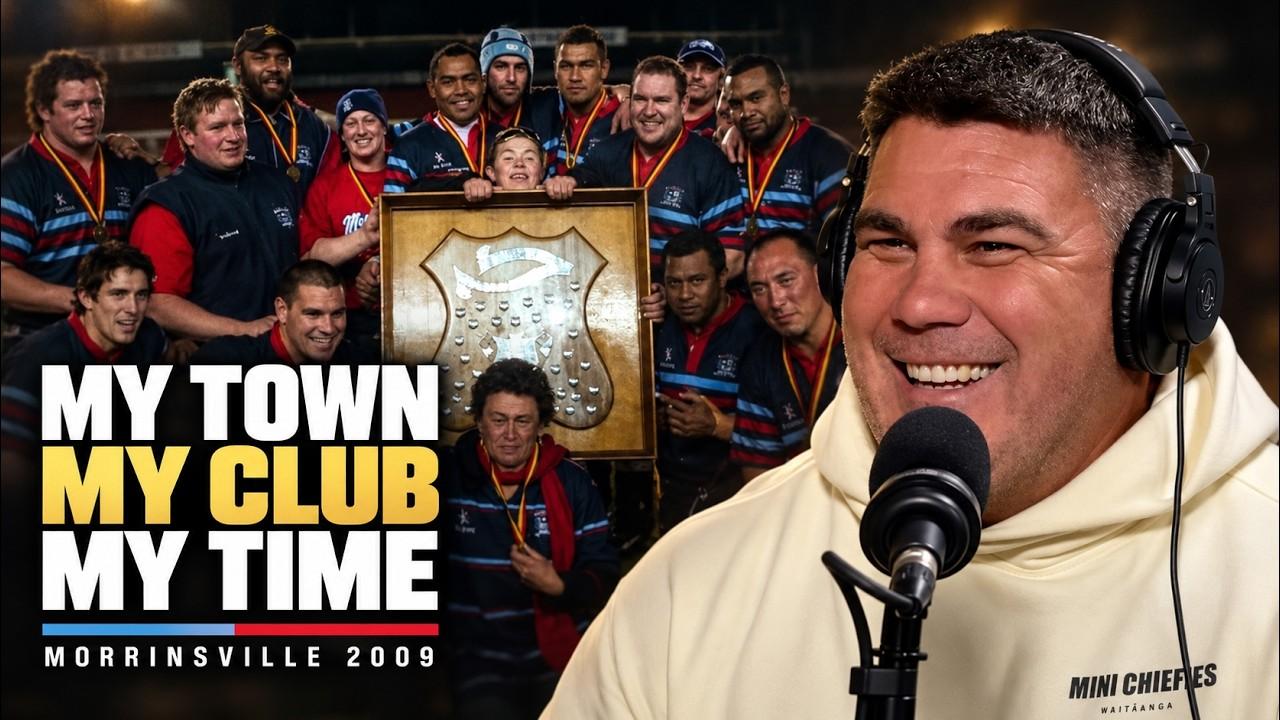
Dwayne Sweeney: My Town, My Club, My Time, Morrinsville 2009
Dwayne Sweeney ·