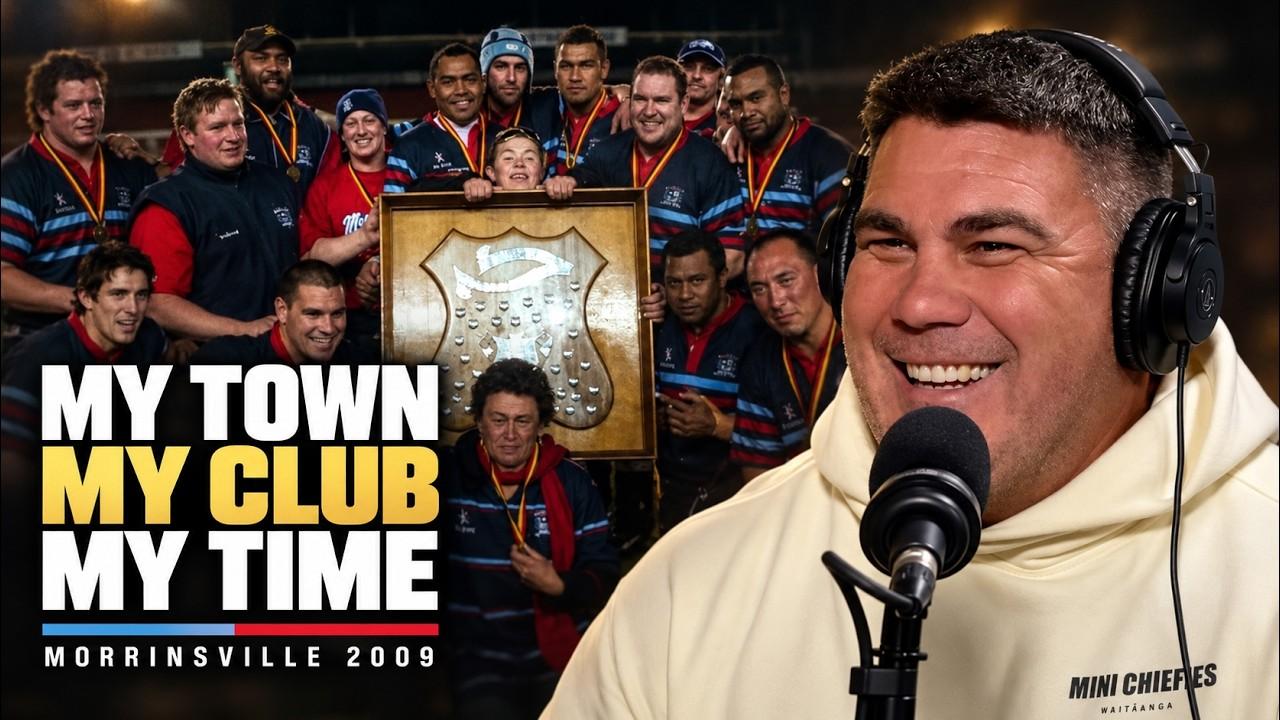
Dwayne Sweeney: My Town, My Club, My Time, Morrinsville 2009
Dwayne Sweeney ·
Rugby · · 1 hr 49 min
Former Highlanders prop and Waikato captain Ayden Johnstone tells Jason Davis about the 'worst Baby Blacks team ever', his sparky apprenticeship, five seasons in Dunedin, the concussions that ended his career and life after pro rugby.
“The person on Facebook who says you can't scrum, they don't know what they're talking about either.”
Ayden Johnstone
“While you're doing what you love and it's paying you, figure out what your other passion is.”
Ayden Johnstone
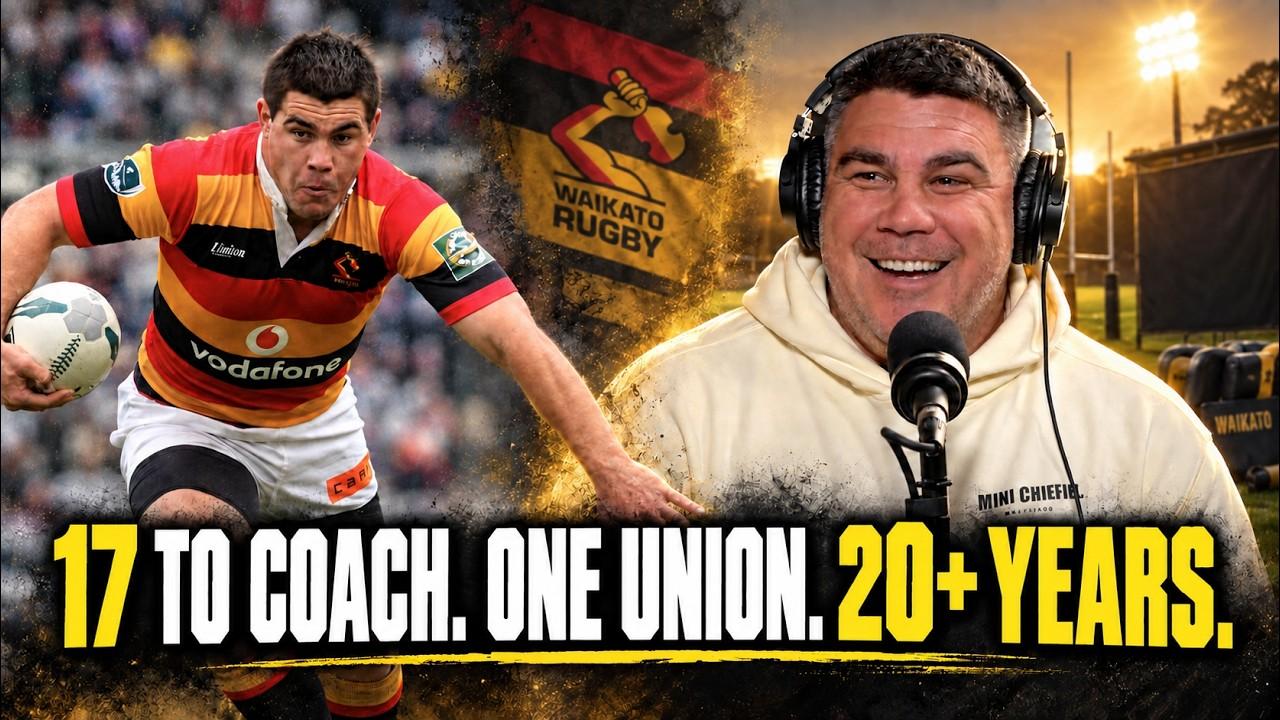
Ayden Johnstone is a former Otago Highlanders prop and Waikato Rugby captain who was labelled part of the worst Baby Blacks team ever, then spent five seasons in Super Rugby anyway. In this chat with Jason Davis he takes the Highlanders prop story from the start: a country kid out of Hamilton Boys' High, an electrical apprenticeship, a run of concussions, and what comes after the final whistle.
The episode opens with Jason springing the headline on him. Ayden played for the New Zealand U20 Baby Blacks at the Junior World Cup in Manchester, aged 19, when the competition went straight to semis and finals. The team lost its pool game to Ireland in cold, wet northern hemisphere conditions, the scrum got touched up, and the coverage called it the worst Baby Blacks side ever. Ayden opened the comments, found out strangers thought he could not scrum, and calls it the lowest point of his career.
What he took from it is useful. Feedback matters, but the person on Facebook may not know what they are talking about, and you act on it over years, not tomorrow. He went back to club rugby with Hautapu, started his electrical apprenticeship, and spent a couple of years crawling under floors and through roof cavities, up at five for the gym and home after training at half past eight.
Ayden was born in Hamilton and grew up on his parents' lifestyle block in the country, where they still live. His dad is a builder. He was an only child for five and a half years until his twin brother and sister arrived. He was always big for his age, too heavy for the weight-grade tournaments by ten. His dad captained Waikato hockey.
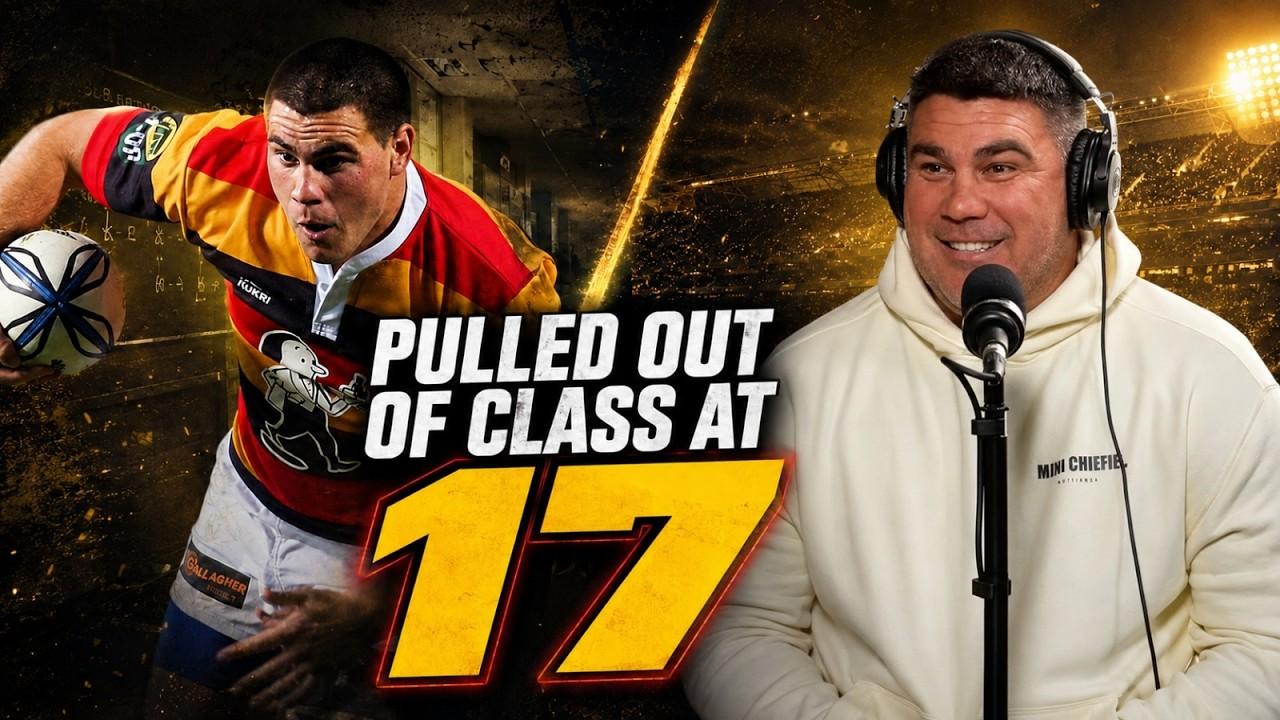
At Hamilton Boys' High he rates the discipline, even though he hated it at the time: the same standard for everyone, no double standard. Two seasons of rowing built his fitness, and a talk with his deputy principal, who was also the first XV coach, about the mates he was hanging out with turned his behaviour around. At 15 he was called up to the first XV when an injury hit.
Ayden made the Waikato team in 2017. In 2018 Waikato won their division under a young team with Dwayne Sweeney, now the coach, as captain, and the Highlanders needed front rowers. He loved Dunedin and the Highlanders' culture of having a good old crack without big names, and the way players from all over became each other's family. He played from 2019 to 2023, about fifty Super Rugby games by his count, in a set-up with famously humble facilities, where fifty blokes shared three showers.
The travel was part of the appeal. He tells the story of coming home from a South Africa tour right at the start of COVID, sick and being tested at his back door by people in hazmat suits, and describes the wealth gap he saw there: tin shacks beside luxury shops, walled complexes with armed guards. He also talks about what separates a player like Aaron Smith, whose professional habits he says are no accident.
Ayden had seven or eight concussions, some lasting nine, seven and four months. He had vestibular and ocular problems, where the connection between brain and eyes did not work properly, and some days he could make breakfast, manage an hour and then head back to bed with a headache. His two young boys did not realise, and his wife knew how to manage him. His advice is to treat it like a broken leg: give yourself time and space to heal instead of fighting it.
The Highlanders had already told him they did not want him back, and he tried to find a way to play on in Japan or France before accepting it. He calls the process an early midlife crisis, and says the key is working out your other passion while the rugby pays you. His is people and leadership, which is why he studied a leadership and management degree, with fishing charters as the dream for later.
Now he is on the commercial side at Waikato Rugby, shadowing a senior colleague and learning sponsorship from the ground up. He talks about why the NPC feels like it is having a moment: national viewership up about 50 per cent in the first four rounds, a thirst for local, tribal rugby, and free-to-air coverage coming next year. He also praises the growth of the women's game in Waikato, with 14 club teams.
It is a straight chat from a bloke who got knocked down early, kept grinding, and is working out what is next. If you want more Waikato rugby, try Dwayne Sweeney on ShedLife or James Tucker on resilience, 22 surgeries and refusing to quit rugby, and see all of Ayden's appearances on his guest page. The Waikato Rugby guide covers the Mooloos, the Chiefs and club footy.
Generated from the audio, so expect the odd wrong word or name. Timestamps open that moment on YouTube.
0:00Alright, welcome to ShedLife, we're telling great stories with great Kiwis. So Aidan Johnston. Go Joc. Welcome in. Aidan, co-captain Waikato Rugby, Otago Highlanders, New Zealand under-20s, the Baby Blacks, the Mighty Hauhtapu Rugby Club, Big Rugby Man. We're just talking off here, I'm going to spring on you, you managed to be in the worst performing under-20s Baby Blacks team.
0:26Tell me about it. I was, thanks Joc. It is a hospital pass. Yeah, thanks very much for having me, it's always good to catch up, but yeah, you're looking at one of the worst ever performing Baby Black players. Not anymore, I will add, we've managed to shake that nickname.
0:48But no, we did, we, and you know, as we were saying, it was, the way the competition starts with an excuse, as I do, you know, every person does. The way the competition's formatted, it goes straight to, so it's a Junior World Cup, and it goes straight to semis and finals, there's no quarterfinals, and there's four pools.
1:07And so they do this every year, right, this Junior World Cup? Yeah, yeah, yeah. So what year are we talking? I think it was, when did I leave school 2014? So it was either 15, or it must have been 16, 2016. Yeah. So we played in Manchester, England, so I was a young, I was 19 at the time, it was pretty exciting to go over there.
1:28But one thing, well actually, the weather, traditionally in the UK, you think, terrible. So we got there, and the weather was exceptional, it was like a heat wave. What time of year was it? It must have been coming into their spring. Okay. It must have been coming into their spring, but the weather was meant to be bad, and then all of a sudden a heat wave turned up, it was like 22 degrees, and you've got these English guys walking down the main street of Manchester City with their shirts off, like they're dying.
1:59All the pubs are just packed because the sun's out, so nothing better to do on the weekday than go and have a beer, which, yeah, good old English pub culture. But anyway, off-piece there.
2:13So yeah, we were in Manchester, and top four teams go through to semis and finals, and we unfortunately lost to Ireland in our pool. And Ireland, as we've seen lately in the top international side, are really good. So a lot of those guys that are playing now, were playing in that team.
2:35So it was a heat wave, and then when we started playing games, turned back to traditional UK weather. Raining, windy, cold, not a nice place to be.
2:48So we were playing Ireland in that weather, and they just played traditional Northern Hemisphere rugby. Scrums, malls, pick-and-goes, everything that a Kiwi player, well, we do enjoy it as a prop, but you'd rather be in open space throwing the footy around. And they beat us. And in that, our scrum got touched up a bit, so I'm a front rower.
3:13So it wasn't the worst scrummaging performance I've seen, but it wasn't great. And so we came back from Manchester with our tails between our legs, and basically the paper, the headline reads, worst Baby Blacks team ever. And so, and we'd finished fifth, and won all of our games except for one.
3:38And so, as you do, 19, you're already opened the comments. Yeah. While we're picking front rowers that can't scrum. And I'm sitting there going, jeez, I thought scrummaging was my strength. Yeah. I can't do anything else well, but I could hang my hat on scrummaging, apparently not anymore. So, yeah, so from that, came back your poor scrummager, worst Baby Blacks team.
4:04Jeez, it was like the highlight of my career so far, and now I'm... Yeah, so in the career, it probably been going like this up until this point. Yeah, yeah, it had been. Yeah, yeah. It was, I wasn't an amazing rugby player at the beginning of school, and then I knuckled down, and I started going right to school, and it was all going well.
4:21Well, yeah, so this point was, I guess, probably the lowest point I've been in my career. And then after that, and I guess the developmental pathway stage of rugby, you're finished. Yeah. So you go into men's, senior men's. Yeah. That's your level now. That is the end. So you'd reached the pinnacle in age-grade rugby. In age-grade. Yeah.
4:45So then I went back. I was, you know, given all this feedback, negative feedback. And to thrust into men's club rugby, and then you start playing against men, you know, generally big, strong guys. Yeah. Your scrumager doesn't go too well there, so you're probably even further down. I started my electrical apprenticeship, so I was in hot roofs and under floors and all that, crawling around up at five to go to the gym, filled out work, back at training, finish, you know, 8.30, make your dinner, go to bed, do it all again.
5:20Yeah. So just in this grind for a couple of years until I sort of made the Wakatal team. But I think for me, that kind of grind and, like, rebuild development phase in my rugby journey was actually really vital to set me up to go on to do what I eventually did. Yeah. And how much did it, and we'll get, you know, through it, we've got time, plenty of time, but how did it affect the mindset?
5:48And did it give you, like, am I really going to do this? Can I keep going with it? Like, the motivation to keep training and keep pulling it off? Like, did it really hurt the comments? Or do you think, ah, I can sort of brush it off? How was the coaching or anything else? Or is it sort of like the game finished and the team splits apart?
6:08Like, were you left to yourself? Or, like, how was it? Yeah. As all good rugby teams at the end of season, there was a good end of season do. So, you know, it wasn't a direct, right, see you later. But it is very much, once you finish a campaign, it's boom, chop it there. We're on to the next.
6:27All the players go back to the other teams. The coaches go back to their other teams, their other jobs. Yeah. And it's, you know, radio silence. You're on to the next. But I guess, like, mentally myself, it was just so impressionable at that young age. And you take everything on board like it's God's word, you know. And you've got to go and work away at it.
6:52And that's what you need to work on. One thing, I guess, in reflection I learnt from that is that, yes, these are, this feedback is, you know, you've got to take it on board. And you've got to put a plan in place to action it. But actually, the person giving it may not necessarily know what they're on about either.
7:12The person on Facebook who says you can't scrum, they don't know what they're talking about either. Yeah. You know, I did get the feedback from, like, the coaches at the time who was Razor, Scott Robinson. So, you've just got to take it on board. But action it over a period of years, not tomorrow, if that makes sense.
7:33You can't, unfortunately, progress takes time. You can't just say, okay, well, this is what I've got to do. And I'm just going to go and do it. And, yep, I'm backed up to that high level. Yeah. And I guess through that process, it was a good two to three year period where I had to hone my craft on my scrum, work on my technique, work on my strength.
7:52And just slowly grind away while also completing life in terms of my apprenticeship and still hanging out with my mates. It's never a good time and doing what young guys do. Nice. And when did it, so was that the end of the season completely for you? Like, so, I'm just trying to put it into a time stamp is when did the under-20s tournament end?
8:16Did you then have any more club rugby to come back to or was it like? Yeah, we did. We came back to club rugby. You'd had, like, a bit of a break because you played a lot of games in a short period of time and then back into club rugby, which was Hotope for me. Yep. So, at that period, we had quite a young Hotope team.
8:34It was going through a bit of a rebuild phase. So, we were, like, all the young guys ready to go at the start of the season, win the first round, and then all the men who have done this for years and years, and they usually slow build and then start peaking towards the end. We just went early and then just fell away.
8:52So, it was the same. Got back. Started getting pumped in the scrum around the line out and around the field, and then we just slowly dragged down and finished in a screaming heap at the bottom of the pack. So, yeah, that was pretty much that season. Tough 2016. Yeah, it was. Yeah, yeah, yeah. But, hey, you can't complain.
9:13No, man. You managed to go to Manchester and play for Represent New Zealand. So, that's the way you've got to look at it. Absolutely. And we were saying before, it was just, at the time, it can seem like, but it's just an epic achievement in itself. So, that's awesome. But, hey, let's wind it back a bit and where, you know, where from, where did you grow up?
9:35What was family like growing, you know, early life for Aidan? Mm-hmm. Where did you grow up? So, I'm a local lad. So, I was born, well, in Hamilton, in the hospital. We were originally, my dad's a builder, so he built a place in Didstale on Aberdeen Drive. So, we lived there till I was two. Yeah. And then we moved out to the country, out to Tkawfi.
10:04Oh, nice. So, we had a, my parents had a lifestyle block out there. They still do, still there. Yeah, cool. And that was awesome growing up there as a kid, like, a bit of a land to run around on. Yeah. You know, you've got cows, farmers next door. Yeah. Go to the stream, Ealing, local country school. Cool.
10:21Just really good place to be for a kid. Yeah. Local rugby club? So, I played for Frankton. Oh, yeah. So, I was, well, my dad, I'm from a hockey family. So, my granddad was a good hockey player, played prem hockey. Dad actually ended, he played for Waikato hockey for a long time. I think he ended up captaining Waikato hockey before they went to turfs.
10:49So, he was big like me and they used to play on the grass. Oh, yeah, nice. So, he used to be a bit of a slower game. As soon as I went to turf, it was game over for him. So, yeah. So, I ended up playing for Frankton. That was our kind of dad played for Frankton Squash Club.
11:05Nice. Played all of our junior rugby at Frankton, which was awesome. We met some great guys that still meet and catch up with now.
11:17Yeah, I guess it was a good place to really just have some fun and form a month with, you know, what rugby's about as a kid. Yeah. Bare feet, Frosty Field. Yeah. Pie after the game. Yeah. You know, that was, that's my core memory of, of Swalbrook Park and, and Frankton rugby. Yeah, man. Yeah. Back on, yeah, my school boy rugby.
11:42I was not sure. Yeah, I just, I used to like the trainings. Like, the games seemed to be a bit of a blur, but I used to just love hanging out with the mates, tackle bags, holding bags, doing it, scum work, trying to push those big machines around. It was, yeah, it's good times. Yeah. So brothers and sisters running around on the lifestyle lot?
11:59Yeah. So I was an only child for a long time. I guess what was the gap between brother and sister is five and a half years. Right. Um, so, you know, my life was absolutely amazing. Yeah. And then they showed up. No. I'm joking. Uh, so they were, they're twins, twin brother and sister. Um, and then, yeah, so I guess I was always that older brother.
12:21Yeah. Um, yeah, tasked to look after them. Yeah. I relate. I was oldest. I'm the oldest, like five. So yeah. Yeah. That's it. I could still see those little early pictures. My parents were so happy. Just little Jace were all wonderful. And then why, why'd you bring these other crying children into my whole wonderful life?
12:42Um, high school? Uh, yeah. So as I was saying before, it's the local primary school out at, uh, to Corfai. And then, uh, I actually ended up doing, I did like a year prep at, at Southall. Oh yeah. So that was, that was pretty like interesting going from a like local. How many kids did to Corfai? Oh, when I first started, there was just over a hundred.
13:05Yeah. Um, I don't know what there was when I left there. Yeah. Um, but it was just a complete different like culture shock. You know, I used to never wear shoes to school. Yeah. And here I was going in a blazer tie, uh, lining up to go to Chattel. Like it was just complete. Yeah. Um, turnaround. Yeah.
13:24Turnaround for me. So, but it was good. Like it was really like set me up to then going to high school. Yeah. Um, yeah, no, it was, it was a great school. Um, yeah. And then I ended up going to Hamilton Boys. Oh, nice. Uh, so yeah, it was cool. Got to catch up with a few of my mates that went, came from, um, to Corfai.
13:44Yeah. I had to Hamilton Boys and then the mates that I was with at the moment. Uh, yeah. And that was, that was pretty cool. So we're just bussing in each day? Yeah. It was a local bus that used to go. I used to start in Huntley actually. Huntley, Narawakia, used to pick us up at Horatou. Yeah.
14:01And then through into town. So, and what's the, I know Brian, lots of guys, um, Hamilton Boys, you know, and they, and people just speak so highly of it around here in Waikata. Like, and it's, I mean, it's renowned nationwide as one of those sort of top, you know, schools, boys schools. But what was it like going through, like any sort of secret sauce or things that you look back on now that you're like, oh, what were they doing that seems to produce such teams and like such a desire to, you know, get your kids into Hamelin boys?
14:33I think like the discipline side. So, uh, you go there. Yeah. And you hate it because you've got to have your hair, can't touch your eyebrows, can't be on your ears, you have your shirt tucked in, your socks pulled up. Yeah. Um, and so it's like this continual process of unrelenting, like standard. Yeah. So there's no hiding it.
14:59Uh, and I think it's good because it's like, it removes the risk for, I guess, parents to let standards slip because kids can manipulate their parents in a different way. Whereas at school, no, this is it. There's 2000 whatever boys here and you all have to do the same thing. So you either step up to the line or you, there's plenty of guys on the waiting list that'll come take your spot.
15:25So, um, I think that for young men is actually quite good. Yeah. Um, the same in, in the way they do their sports and in their classrooms. It's like, well, no, actually this is the standard. Are you either live it or you don't? And if you don't live it, well, you're going to end up getting a load of detentions to try and persuade you and then, uh, if you don't, well then we need to start talking about whether this is the right place for you.
15:54So, um, the standards are the same. Yeah. There's no, some standard for that person, some standard for that person. There's no double standard, which I think is really good. The way they deliver it is debatable in terms of, hey, is the hard nose approach the right approach for everyone? Yeah. Um, for me at the time and where I was, that suited, that was, that was brilliant for me.
16:20Where I am now and the guys I've met through rugby and the way I've had to craft my leadership to help grow other people, uh, it's definitely not the right way for everyone. Yeah. So, um, yeah, I think it's a little bit harder at a school when you're dealing with two and a half thousand people. I think it's great that the, you know, there's the standards, non-negotiables, um, there's different ways to, to craft greatness, I guess.
16:46Yeah. Yeah, it is. It's a real, it's such a conundrum, the discipline. It's interesting. When I was at school, I went to Tachypana Grammar in the nineties. It was pretty liberal and pretty loose. And I was actually just having a chat with my old mate Ben and just got away with anything, you know, like it was. And I realized that at the time it was lots of fun.
17:06And then I got really into Taekwondo, uh, later on. And my old instructor, John, just loved discipline. And Taekwondo is fundamentally just training you to be in the Korean military. You know, like, it's like liner, uniform, snap straight, do this. And I just loved it. I thought it was cool and just immediately got through to it. But then I was chatting to Francis and it's like, he was kicked out of his school at like 14 and had a year off.
17:31And then he went back to another school and made it. But it's, it's so right if it works, the discipline, but you just, yeah, your sort of heart goes out and you know that if it, someone's kicked out, you know, or they don't make it at that point, 13, 14, 15 is, it's just such a, I don't have the answer for it, but it is just such that conundrum.
17:51If you just don't want any of the boys, you know, to go through, you know, slip through the cracks and I definitely lean towards discipline. I love discipline, you know, like not over the top, but just like keep it tight, keep it square. This is what the rules are. Let's follow the rules. If you know the rules, it's so much easier to go and pull it back.
18:13I think it's probably easier to teach us rather than too much on it. But it is interesting that obviously they do that and they've just maintained this popularity. Yeah. And then it just maintains the sporting culture and this other culture. But then what would you assume when you're captaining teams and trying to lead other guys? What do you think?
18:32Is it the discipline that they haven't had or that doesn't relate to them? Or leave? I think it's the personal connection. The way you connect like the individual to not necessarily like the team, but the like ethos and the values of what you're trying to do. So as I say, that's why it's really hard with lots of people to be able to like meet everyone, learn what makes them tick and then craft like the connection piece, if that makes sense.
19:06Yeah. As I say, you've got to be able to like realize if there are like yourself who's like or myself who's like disciplined guy. Right. This is the facts. Yeah. This is what I expect. Yeah. Anything less. And like I'm going to like you're going to get in trouble. Yeah. And then you've got to work out like who's a feel guy.
19:30Yeah. How are they feeling? You give them space to talk. You like really include them in all the plans and make sure they're feeling good about it. And then like that's how they get connected. Whether they are other guys just need to be like, like they just need to see everything happening. They're just standing in the back.
19:49They might be quite introverted. Mm-hmm. And then like they build trust that way and you start bringing them in. So, there's like so many different ways to skin a cat. And I'm not great at all of them. No. But then it's also understanding. Right. Okay. I know. I understand that guy now. He's perfect with so-and-so from our leadership group who I trust.
20:10Yeah. Like how do I connect them, get them together? And then so you're like growing bits individually and you come under this one umbrella of like a team. Mm-hmm.
20:19And it's also, it's changed a bit now. You know, it used to be like you're in this team now. You got names in it. Yeah. You owe the jersey something. You owe this like province something which I'm like, yeah, like I was born here. Yeah. This is like, I love the strong arm. Like this is where I'm meant to be.
20:39Yeah. Whereas we've got guys from Auckland, we've got guys from Wellington, we've got guys from the South Island. Mm-hmm. So, what they're trying to achieve might look completely different to what you're trying to achieve. So, it's, as I say, relating to them, connecting them to the journey and then that's their connection piece as to why they would bleed for the jersey.
21:04Yeah. So, it's, that's the way I look at it anyway. Mm. It's, it's, you know, there's no one size fits all. It's just about trying to bring everyone into the understanding the same core values and ethos. Yeah. Interesting. Um, yeah, it certainly applies. It applies, you know, that applies in business. It applies in all these, you know, different ways.
21:26Um, bringing it on. But, let's back up the card a bit. So, Hammonal Boys, um, so you're playing Franklin Rugby. Mm-hmm. Were you killing it at the age grade? Were you like, player of the day? You're scoring all the tries? Yeah. It's like, kicking all the goals? Like, what's junior Aiden looking like? Is he just untouchable on the field?
21:49No, no. I used to look for contact. Yeah. Um, yeah, I was always into it. But, uh, how do I say it without sounding, like, I was, I was good at, uh, junior level because I was always big. Yeah. So, um, they used to have these tournaments, uh, which they've changed for Power Farming Cup now, which is great, great concept.
22:10Um, but it used to be, you're either under 45 or you're under 55 kg. Yeah. And if you weren't under those, you, uh, you just weren't, you're out. There's no place for you. Um, so Power Farming's changed that. So, now they've got up to under 60 and then there's no open grade. So, it's more, it's more inclusive, which is cool.
22:28Um, so I think I was 10 years old and I couldn't make it under 55 kg. Yeah. You know, you've got guys who are going on 13 and they're under 45. Yeah. Um, yeah, I was running over kids. Basically, like I was just an early developer and. Yep. And that's, yeah, how, how it sort of was. Um, Frankton, we used.
22:49Was it age great? So, when was your birthday? What month are you? Uh, 24th October. Okay. That's my birthday. Yep. Yeah. Okay. Cause I just noticed there's this catch 22 often in sport. You've got to have an age cut off, you know, and it's often first of January, but then you often, there's a big difference between a kid board on the 10th of January.
23:07Mm. Comparative to the 27th of December. Oh, yeah. So, you can get this whole year in between. Um, but I'm not sure if that was it or you just, yeah. No, I was just fat. Yeah. I just enjoyed the food. Those first five and a half years, all the games were coming on. Yeah. Well, I was saying before, his favorite thing was a pie after the game.
23:27So, yeah. Yeah. No, yeah. So, that was my junior rugby and then, uh, and then into high school. Yeah. You know, that's a big period. Mm. 13, 14, a big period of change. So. Yeah. Now, other guys were growing. Yeah. The same size. I went to a school with 2,000 kids in it. Yeah. Holy, there's some big, there's some big boys around.
23:50So, um, yeah, it wasn't that great to be fair. Like, um, at rugby and, in those first, um, instances. So, just paying for one of the, must have been dozens of teams then, Hamilton boys. Yeah. And, uh, yeah, so there, and then it wasn't until, I guess, under 15s, under 16s, where I started to get, get looked at as, as half decent.
24:16I'll probably attribute a bit of that. I went into the rowing program at school. Oh, yeah, nice. Uh, and that was just like, for me, ultra discipline. Yeah. Uh, ultra fitness. Exactly what I needed. Mm. At that time to. Yeah. To help me get fit and become an athlete, basically. And how many years did you do rowing for?
24:36I only did rowing for two seasons. Yeah. Uh, so Glenn Ross was our rowing coach at the time. Yeah. So, ex-Wakato coach, coached the first, or am I going to get there right? No, the second Highlanders team. Yeah. In 97, I believe. Uh, so a well-established coach. Yeah. And I remember having this conversation with him, and he did it rather politely.
25:01I came to him, I said, oh, look, Glenn, this is after my first year. Um, I don't know whether I'm going to keep, keep rowing anymore. And he sort of sits back and he goes, hmm, uh, I know what you're saying. Uh, you're, cause I was really good my first year, cause I was a bit bigger than anyone else.
25:18Um, you know, you've definitely got the body type of the front row forward. Yeah. There's no way to say I'm like, you're going to be too fat. Um, you know, just give it one more year. It's going to be good for your rugby. Uh, it's going to get you fit and just give it one more year and we'll reassess them.
25:35And so I gave it one more year and then, then that was it after that. And he was like, yeah, okay. Yeah. You're at your peak now. This is up for you. And rowing, you're, um, you're starting to upset the balance of the boat.
25:46Uh, but no, he was great. He was great. So, um. Were you just rowing in the quad or the octa? No, I was rowing in the, uh, in the eight. Yeah. And then the four. Yeah. Uh, and then we did a little bit of pier stuff. Yeah. But we were never, never that strong with that. But we had a really good rowing program.
26:05We won national titles, top four in the eight. And there was second in the quad, in the four. And then our under 16s, we were, we were okay, but not that great. But yeah, it's, um, I've really been more exposed to rowing just the last few years. So Jasmine did it for a few years at Hauraki. And it was awesome.
26:26I'll be fine. I used to be like, why do people care about going backwards down the river? That's dumb. Like, but I would just say it hadn't really added exit. Is the amount of training, I must say it though. It's like people like ice coach hockey and they're like, you expect the first 11 to train twice a week.
26:44That's a lot of training. I'm like, oh yeah. I just train them all. And then you go into rowing and they're making like a junior train like eight times a week. Then after the second year, it's like 13 trainings a week. Like, what's the difference? But anyway, bless New Zealand rowing. Oh yeah. But it was just phenomenal.
27:02I love the discipline. I love the days down in Katapiro. I, you know, I mean, my, um, another father, Stu would always be having the kids off the water or the boats and doing it. And I realized, oh, this is one of the things I can, it's one of the secret sources of Waikato is rowing is so many people have done it.
27:20They've learned this discipline, but they've learned that it doesn't matter whether you like the person or not. You have to work together. You know, like you can theoretically, you can have a championship rugby team with people still not necessarily working together, especially in a lower age group. If you just got a team of studs or you're doing it, but I'm right.
27:37It's just all about synchronization. It's all about working to the strengths. It was, um, yeah, it's cool. And it's just the grind. And it's like, when I saw it, I was like, oh, this is, yeah. If you, if you like discipline, you like the grind, you're like, it is tough. It's cool. Um, yeah, it's, if you can get the chance and obviously there's a cost involved, but yeah, I think rowing, rowing is epic.
27:59And friends for life too. Like all my best mates, uh, guys that I rode with, um, and we're still, still good mates because you'd end up spending more time with them than you do with your family. Yeah. As you say, you're Monday to Saturday morning and night, and then you only don't see each other on a Sunday.
28:19Yeah. I think that's it. And often best friends and it's going through adversity together and, you know, bless us, so many of that's might just be having too many drinks. Um, but is yeah, the adversity of the rowing, oh man, just those eggs and just the relentless nature and watching it. It's, um, yeah, there's a shared trauma, but it's a good one.
28:41Yeah. That is cool. All right. That's cool. I get, I get that. Okay. So the rowing is certainly a secret sauce. It's going to be putting on strength, fitness, discipline, and then that starts feeding back and towards the rugby. And so when did those start looking at you for first 15? When do you start getting noticed? I mean, Hamilton boys, that's, you know, to get into that sort of level of rugby, like that's big deal.
29:06Yeah. I guess I was lucky in the fact that, so probably through that, um, I got into a little bit of trouble at school with the disciplines where I was talking about, like, you step up to the line or you don't, um, and basically I wasn't stepping up to the line and, uh, ended up having to have a meeting with, uh, Mr. Kirkham.
29:31Yeah. Uh, so Greg Kirkham, who's still deputy principal. He was deputy principal at the time and the first 15 coach. Uh, so he calls me into his office and my mum, cause they're going to stab me down just for being a. What are you doing? Talking back? Oh, just a like variety of things, little, um, detentions, not listening.
29:51Yeah. Um, one of them was like a bit of a fight, um, which all, you know. Yeah. I imagine. Young guys do things. Yeah. Uh, and he basically said to me at the time I was probably not hanging out with the best crowd. So I was like doing all these things and the rowing and it's probably the rowing and my best mates.
30:10Yeah. Um, they helped me cause they were that, um, they were there. So I was hanging out with this friend group, got getting me in trouble. He said, uh, I see who you're hanging out with. You need to change your mates and then your behaviour will change. At the crux of it basically. Um, so I took that on board, probably one of the better things we've ever done in my life and moved and hung out with my own mates.
30:34So I sat with them at lunch and it was like, at school, you've got your, got your posses. Um, and then, yeah, from there he saw me do that. Behaviour changed. And then that was at the time when I was playing under 16s, I think. So I was in like the third, 15 and maybe up in the seconds a bit.
30:55Um, and there was an injury. So I was 15 at the time. There's an injury in the first 15 and he asked me to come up even though I probably wasn't next in line. Yeah. But it was more his way of saying this is. Yeah. Well done. Yeah. Like I don't know if a reward's the right case, but you know, if you make positive changes in your life, positive things happen.
31:22Yeah. So he called me up. Um, I wasn't meant to play. It was more just come and train and go, all right. Then another prop went down and then he's like, okay, well, right. You're here now. You know, you're in there. Um, and that was the start for me basically was sort of, um, yeah, when I was 15.
31:40Yeah. And so that would have been year 11 for fall. Uh, yes. Yeah. Year 11. Yep. Um, and it's at this point, are they still, are they televising like first 15? Yeah. I'm pretty sure they do. Yeah. Yep. Well, yeah. So they would have been televising when you would have been there. So when are we going? Cause we, we wind in this one back 15 years.
32:00So what? 2010. Yeah. I'm old now. Yeah. It would have been. Depending on who you're hanging out with. You're young to me. No. Yeah. It would have been 2012, I think. Yeah. So. Okay. Cool. Um.
32:14Yeah. So I think they were just starting to put the, like, start to televise. Yeah. It was all kind of taking off around that. Yeah. Cause I know that I feel like they've had to pull it back a little bit lately. It's a, pretty much has become too popular. It was first 15 rugby. Yeah. You know, like televised it.
32:31So, um, okay. But that's pretty cool. Just speaking to it is. Was it. I'm going to just talk a moment and just feel free is. You start playing up a little bit. Like, my guesstimate, or, you know, you're hanging out with, you're trying to, were you trying to impress these sort of naughty boys or get into the net?
32:51Like, what, what was sort of. Yeah. I don't know. Cause were you, were you causing trouble at TKO Fire? Were you crudy crudy through? I think I was just a country kid as a, yeah. I was saying, like, I'd turn up and be a feeder.
33:04Um. Cause you obviously got the rowing mates that were, you know, they're all, you know. Yeah. They're legit. They're on the path. Yeah. You know. Yeah. Then there's another one. But. Yeah. It was a bit of a, what was the 10 to, you know, cause it's great that you made that choice. And I think lots of people have it.
33:18And it's not just at 13 or 14, you get that choice. You can get that choice at 23, 24, 33, you know, like 44. You can have that same choice. It's like, Hey, do I want to hang out with the guys that are just pretty much at the pub every night? Or, you know, there's always an excuse for one more beer or a shade, go home, go to the gym, you know, like.
33:38Yeah. What was it? Was it a hard one to say, Hey, I should go on that path or. Um, no, I think it was probably.
33:49The, like, it was a life that they, a different life that they led. Yeah. That, I guess, draw me. Yeah. I drew me to that. Cause I know like, Oh, that's new. Like, Oh, what's that? You go out drinking and your parents don't know. And yeah. Like you do that kind of thing. And from a small country kids, um, I was like, Oh, that's different.
34:14You know, try that. And I guess you get mixed up and, Oh, this is cool. Come here, I'm a man. Or. Yeah. I wasn't literally thinking that, but probably on reflection, that's maybe what I was looking for. Yeah. Um, and then I guess the change that I made probably was influenced by, uh, maybe a little bit of a, like, punch on the face.
34:38Yeah. And in a metaphorical sense of like, Hey, look, I've been saying this in your behavior. Yeah. This isn't right. I've seen this countless times cause this is my job. Yeah. Like you were heading down a path that's not great. Um, and I guess the maturity to be able to, and like, I've got to be, I'm pretty grateful for, like, I've got awesome parents.
35:01Yeah. Awesome grandparents. You know, like I'm like, my family is great. Um, so I've got awesome role models, great support networks. Yeah. So, I mean, it's much easier for me to make a change in my behavior than someone who doesn't. So that was probably part of it. Um, it's that change. And I think, yeah, probably upon reflection now, learning who you are, knowing who you are, um, like your history of your family, you know, the people that have come through, what they've done, what they've achieved.
35:34That, a lot of that is really important to know too, cause that's your character. Yeah. Um, and your values, family values. So yeah, that's looking back at it now, but yeah, I guess that was part of that change. Um, those guys that I rode with, um, were big on that, like into that too. Yeah. They shared values, worked hard together.
35:54Um, so it was, you know, at least I had somewhere to go. Oh, well, we're back. We had some technical difficulties. We kept talking, but they weren't recording. Um, so under twenties, we're pretty much back to where that story was, I suppose. So the Jockhoffs, Canterbury, they take you out and you get selected for the baby blacks in there.
36:15Yeah. Um, we talked through that. Is there anything else to add to that journey that we didn't cover off for them in the first few minutes? No, not really. I guess it was in that time again, when you leave high school, like it's another period of change. Yeah. So just talk to me. So what, what did you choose to do once you left high school?
36:36What was sort of, what were the options in front of you? I started my electrical apprenticeship. So I don't know if I see it, but my dad is a builder. Yeah. Uh, and he always swore black and blue in the face, like, do not be a builder. Yeah. It's, uh. Why does he say that? Uh, oh, he said.
36:53He said, the ownership of all the tools, all the gear, you're the main contractor, anything like fails, it's back on the main contractors here. It was all like about just all the processes and everything. It's like, just turn up with your cable, put some wires in the walls and walk away. That was what he used to say.
37:13Yeah. I get it. I can see it. Yeah. Obviously there's more to it than that, but in, in a way he's right. Like it's the overheads away less. Um, you know, you're working with, you're not, so he's not plumbing. Like it's generally. Yeah. Well, until you're calling in roofs and floors. Like it's, it's generally a lot less gear that you've got to, you got to bring to sites and, and put in.
37:36But, um, no, that's what I ended up doing that also. Um, he was the builder and the family. If I was going to do a building apprenticeship would be under him. Yeah. And I wasn't doing that. So yeah. Yeah. No, it's, I ended up doing my sparky apprenticeship. I got that through Hotopu Club. They're great. Like that.
37:57They just connected me with, um, Mike Shaw out in Cambridge. Um, just me and him would roll around in the van and go and turn lights on. Nice. And he's still out there doing it? Yeah, he is. Yeah. Nah, he's great. He's, um, he's good too. Like he's very fussy. Yeah. Nice. Um, so it was a good place to learn from because you're working direct with the business owner.
38:20Yeah. It's his name literally on the company, on the van. So, um, oh, he, he knows he's a hard ass. So, you know, he'd tell me when I, when I mucked up and, and put me straight. So it was a good, good for learning. Cool. So, um, and would he normally have an apprentice? Cause it's, you know, one man band.
38:42It's a pretty big commitment to then take, you know, take on the apprentice. Was he normally running that or is it? Yeah. No, he, he did have an apprentice and then, uh, the apprentice, uh, left. I think he ended up moving to Aussie or something. Yeah. And then, uh, he was just by himself for a bit. Yeah.
39:00Probably got lonely in the van. So I decided to get someone else. Um, it's, it's a lot easier to have two. That's for sure. Absolutely. Yeah. That's for sure. So, um. Yeah. Two on sites often the equivalent of three, you know, like you got someone to hold it, someone to fetch it, someone to do it. Yeah. Um.
39:18And with the added bonus of me is that he gained another builder to get work from because obviously my old man had his own business. So that's what he tells me. And he was, I already got you so I can get the work from your old man. Yeah. And was your old man good stuff? Yeah. He's always, yeah.
39:38He's always supported me. So of course he was going to use us. Yeah. Good man. Um, cool. So you're, you know, you're doing the sparky works. Yeah. I mean, as you said, you'd waking up, you're waking up early, going to the gym, doing full day on tools. Um, I suppose in terms of being on the tools, you know, bless them.
39:57We love us, all our sparky mates. Um, but it's hardly constant. Concrete English scaffolding or something. So, you know, it's not that, but you know, still full day on the tools, um, and then playing right, you know, and then training, you know, and so straight from school into heart attack. Yeah. Um, yeah. Yeah. Out there. Yeah. I can't speak to how tough it is for, um, like, or not just rugby players, but people who are really trying to make it sporting wise and then have to continue their careers as well.
40:29Yeah. Um, and like a lot of, um, walk to, like the FPC girls, they're fully amateur, so they do it their whole careers. Whereas, and rugby, if you manage to make it to the, the MPC team, at least you get four months full time paid professional to, to play. But yeah, as I was saying, like you're in the gym at five, you're at training at five 30, you go till eight 30, you get home, you cook your dinner, you pack your bag, you make your lunch, you're up at five o'clock the next day.
41:01Yeah. And you just do it Monday, maybe a day off Wednesday to Friday, play Saturday, um, drink all night Saturday night. Sunday's a ride off, you mow the lawns, you do your laundry and you're back into it. And it's just rinse and repeat until, um, yeah, until summertime and then you get a little bit more time, but it's, uh, you still got to train just as hard in the summer to keep, keep fit, get stronger and, and things like that.
41:29So yeah, it's a real, a lot of, a lot of people, that's where a lot of drop off happens. Yeah. Professional, professional sport is, it just becomes too much or they get really, they've got really good careers that they want to excel in. So they drop, drop sport and, um, I guess all the more importance of having a cool club and just like real community, you know, Tuesday, Thursday night training and that's your, your place.
41:58Um, whereas some people just lump it, no, I'm going to be pretty professional, otherwise I won't play sport. Yeah. It's probably the wrong mindset. Mm. And so what was your mindset when you were going out? Was it like, Hey, I'm going to do this. I'm going to be a spark and I'm going to give it a good nudge with the rugby.
42:12Mm. But was it like, Hey, I am going to make, I'm going to go pro with rugby or just sort of see what happens. Um, I, and also I just might ask is like, what was the temptation to go? Cause there was a sort of third option, I suppose, which is pick a uni. I said, you know, that if you're smart enough to be a smart, a sparky, you definitely would have had the grades to get to a, you know, one of the unis and you, you know, a New Zealand uni, he didn't pick the, Hey, let's go to a uni.
42:43Cause it's sort of continuing on that school, you know? Mm. Um, no, I always, I, at that stage, I probably didn't understand the world, like the world as in, in terms of careers and maybe like where I'm heading will want to head now. Uh, and I had watched all the, um, men in my family, none of them had gone to university and it was always, you go get a job, you stay at that job your whole life and then you, that's, you retire and, and that's generally a trade or, or some sort of sales role.
43:22Um, yeah, so that was, I, I didn't even really think of it too much. And I always wanted to play for Wakato. That was my dream as a kid. Yeah. That was my one, like, you know, I didn't even, I guess I dreamed of being an all black, but it was like, no, I just want to play for, for Wakato.
43:42That was like, hands down what I wanted to do. Um, and so, uh, I had an inkling that I could potentially do it after high school, after making, cause I made New Zealand secondary schools. Yeah. So I was like, okay, well this could actually be, yeah. Uh, you know, yeah. It could come to fruition. Uh, and then by then I had the, like the discipline and stuff like that to be able to set my week up and understand what I wanted to achieve.
44:10And I managed to go, go and do that. Yeah. Cool. Um, yeah. Interesting. I just, I know, that's what this answer. Do you think it was any difference because you're a Sparky and you're working as you're forced to go to work every day? Mm-hmm. It was just in the first few years. Do you think that would have been potentially advantageous for training that you weren't drinking?
44:33Like, whereas if you'd just say been in Otago or Parmy or somewhere is that you could have lent more. Do you think that would have been maybe helped the training in a way? Mm-hmm. Like looking back, is it, did it prevent the partying or did it just like, who knows? You always put it in, don't you? Yeah.
44:49No. But never quite at the level that you could if you were just like, hey, I'm just going to go and do a basic arts or, you know, a sports site. If you really just thought, hey, I'm going to go rugby. Yeah. No, I've, I've always been really driven to succeed. So, um, I never, like that was never, I, to go and have a good time wasn't my goal.
45:11It was always like, right, what do I want to do? You got scared straight by Mr. Kirkland. Yeah. No, that was it. I had my phone. I was like, that's the wrong guy. No. So I was always really driven. Um, yeah, that's what, like, don't get me wrong. Like I would love to have gone and enjoy it.
45:30And I actually look back now and the, my, like, I don't know, like role model, even though he's younger than me, which I think young athletes and kids should look up to as, um, Christian Leo Willey. Right. So, uh, did his degree, fully qualified dentist, um, then played for the Crusaders, then made the All Blacks. That's like, you're winning.
45:57Yes. You know, because he could, um, fall over tomorrow or just decide, you know what? I don't like rugby anymore. Yeah. Um, and then he's got something to fall back on and be, probably do better in that than what he want. Um, rugby. And he's like, he's a great dude. He's really good guy. So, um, yeah, that's like looking back at my mates that went to university, got awesome degrees, you know, lawyers, um, so on, so on, engineers.
46:27Um, they're really set now, whereas I'm going through this transition phase. Yeah. Uh, but don't get all in changing anything about how I do anything. Um, but I'm going through a space of transition phase in my life, retiring from rugby, uh, into, um, like new careers and so forth. Yeah. There's sometimes I don't feel like need is go, Hey, if I could have gone and done something different, I would have done it, but it doesn't mean you don't want to change what you were at at the moment.
46:56Yeah. I, I, I wrestle with that sort of statement a lot. Cause I'm often like, Hey, if I'd have known what I know now, I'd have done this, this, this, and this is different, but I wouldn't change where I am at, you know, like in the life.
47:08You don't know. Also you could have gone and changed that, but then I might've never achieved what I achieved in rugby. Yeah. And then, um, if I look at my rugby careers, uh, it's why I've got two kids, the wife I've got, like, you know, it all flows into one action leads to the next. And, you know, so that's why you'd never change it.
47:30Absolutely. Um, but I think it can't go without saying is don't put all the, you know, for the young people that would be more likely, you know, listen to this and listen to you. It's like, Hey, don't put all your eggs in one basket in terms of just backing out. And even if you're finishing the pro career is everybody wants a career after it.
47:49You know, I think sometimes people assume that, and speak to me with this is people need something to do. You can't just sit around home and do nothing every day. Don't expect that if you're going to be a pro rugby player that you're going to suddenly wind up and be like, you know what? I'll just do nothing.
48:03You know, like it's, um, you got to do it. You see all the guys. And even if you're talking the top of the top, they might put out the book, they might be on the TV, but they're still running other businesses. There's still, you got to keep yourself interested. So, um, I think if I was to give advice, it would be, um, while you're doing what you love and it's, it's paying you, which, you know, in my case was, um, professional rugby, uh, figure out what your other passion is.
48:33Yeah. Um, but probably to do that, you have to learn who you are, what you're about, what you stand for, and then figure out your other passion and then start putting steps in place to move into that. So, you know, um, my passion is like fishing, for example, like I love fishing. I mean, I know it's never going to be my career.
48:59Yeah. Um, but I guess what I'm saying is you've got a long period of time that you could spend setting yourself up to move into that, that next thing. My other passion is also like people. Yeah. Connecting with people, like leading people, um, like seeing other people succeed. So I did a degree in like leadership management while I was, while I was playing rugby.
49:23So that was kind of generic. So I guess in my older, when I get to 60 or whatever, once I've, you know, got massively rich and I don't know if Lotto got one last night or not, but it wasn't me anyway. Um, I'd love to go and have my own charter, you know, and take people fishing. Yeah.
49:42You know what I mean? So it's like you have your passion and reverse engineer it. And while you've got this period of time playing professional sport, that's how you, how do you start setting yourself up? How do you start, um, understanding yourself and, and where to go? Yeah. That's a cool one. Let's spend it. It's, you know, I talk to lots of younger guys and that, and I want to do this, but it's like, Hey, what do you really want to do?
50:07Let's take out being uber rich, you know, like that would be nice if it happens, but you know, like pretty hard, pretty unlikely, like not, but you can be successful. You know, like, what is it? Yeah. Is it the charter and the fishing, you know, is it this, is it like wife, you know, lovely wife and kids, you know, like, which is obviously a great thing to have, but it's like, what is going to put you in that position?
50:32Do you want to live in the country and do heaps of hunting? Do you want to live in the city and do art, you know, like, cause there's certain then choices that you can make that'll lead you down one path or do the other. But if you've got some level of vision that will make you happy in the song, go, Hey, I'm, if I'm 60 years old, I'm, you know, I'm just talking for, you know, I'm the car man.
50:50I've got this, I'm going to feel pretty good. The kid's done. What's happened? You know, you can reverse engineer that. And that's, if you look at it, say it's a 50 or 60, it's a lot easier to reverse engineer that over a period of a couple of, of a few decades and it would make it then, oh, I'm just going to be uber rich and retire.
51:10And you're like, cool, but not, not quite the reality of it. And all the dudes that I've actually met that have become uber rich, generally they love business so much that they're still sort of doing it anyway. And so they never had retiring as the thing. So whenever I hear that, I'm like, Ooh, you're missing a key point.
51:30So if you're thinking that I want to be uber rich and lazy and retire, it just doesn't really work. Okay. Let's just jump through it. But how did you then get, so under twenties, how did you make the Waikathurugby team? When did that sort of, when, how did that, when did that happen? Was it the first year, second year, third year?
51:51So I made the team in 2017. Okay. Was like when I decided basically two years of. So two years as a Sparky apprentice. Yeah. Well, I still did it till, I guess it was 2015.
52:07Went to Wintech, did six months for the pre-trade course. And then I started the apprenticeship up until 2018 when I went professional into the Highlanders. Okay. So, cause the MPC is semi-professional. Yep. So you're only assembled four months of the year and the rest of the time you're, you're working. So I guess I got through in that, what was it, 2015 to 18 when I finished, what's that four year gap?
52:35I got through about three years of my apprenticeship. So I finished my level three and then had started my level four, but then cause I went professional. So I didn't, didn't finish the full thing. All right. And so had you played many seasons for Waikato before you got picked up by Father Highlanders? Yes. So I played 20, yeah, what did I say?
52:532017, 2018. Okay. So those, I played two seasons and then I was into it 2019. Nice. And what was the Highlanders like? It was awesome. Yeah. Loved it. Loved Dunedin, loved just the culture of, we're down here at the bottom of New Zealand. We haven't got the big names. Yeah. But like, we're just going to have a go and we're going to like take you down to the depths and beat you.
53:21Yeah. Cool. Yeah. So it was, everything we did was just built around, like we don't care. Yeah. We're just going to have a good old crack. Yeah. There's not, yeah, there's not the level of expectation on the Highlanders that's going to be on the Crusaders or the Blues or something. Yeah. Externally. Yeah. Internally, you're still. Yeah. You're still aiming.
53:43Yeah. And then Dunedin was awesome and the people were awesome because people would come from all over. Yeah. All over the country and they'd turn up or in the world, you know, we don't have internationals come and they'd turn up to Dunedin and have no family, no, no one. And it's like, okay, this is your family. Yeah.
54:04Partners would, you know, get on really well. Players would get on really well. It was like this really cool, like family. Yeah. And so did they, where were you staying down there when you were in Dunedin? Were you guys? We, um, we started, we first rented, um, on just up from the student area. Yep. So just above Castle Street or just.
54:26Yeah. Well, we were up on the hill. Okay. So you're watching down on the. Yeah. So there's like Maldi Hill right at the top. Yeah. It's like really nice. We were like just down a bit. Yeah. So we weren't like up, up in the first area, but we were just up out of the students. So, you know, it's literally like a, like a level climb.
54:43Like there's the pinnacle and here's the depths. You know, we were like, we were just, you know, we like to keep a foot in both worlds. Yeah.
54:51Um, yeah. So yeah, we, obviously that was a wicked experience, not being able to do that, um, at university, but then ending up down there to play rugby. Yeah. You know, get down, go down Castle Street and go see the flats and mates that live there and all that sort of thing. Yeah. Um, and what was it like then ending up, obviously, semi-pro at Waikato, but in the pro scene in Highlanders, what was that like, you know, being another level of expectation and training?
55:24Mm. Yeah, I think it was. It was. You feel like you'd been sort of growing into it and you were ready for it? Yeah. Initially, I think for me was, uh, a sense of like, cause I was born, uh, Waikato lad, um, in the Chiefs region. Mm. That was like what I thought it was all about, this loyalty of this is where you're from, this is who you represent.
55:51It's almost like your identity and now I was down at the Highlanders and this is, no, I never pictured this. So initially it was kind of like, oh, this is different. But then as soon as you get in there, you get accepted into the group. Um, well, not that you have to be accepted, but like, it's just like, welcome to the family.
56:09You're a Highlander now. Um, really open and, and cool, like from the top to the bottom. It's awesome. Um, and then that becomes your family. It's the same thing with, like I was talking about with my leadership before is, um, just cause you're born there, uh, doesn't mean that someone comes into your environment, um, just loving the Jersey as much as you do.
56:34Uh, so that was that process for me. I was on the other hand, it was like, okay, this is my connection. This is, I'm, you know, we're in the trenches. I'll die for that guy cause he's my best mate. Yeah. And that's why I love the Highlanders. You know, that's, yeah. So that's, I fell in love with, with that sort of, um, but the team ethos and values.
56:55Uh, and then when you're playing, it was just a whole nother level. You can't leave a space on defense because they've seen it and they're coming at it. Um, they watch, everyone watches all the games. They're finding the weak links and it's just like, that is who we're going to target. Yeah. So it's like, there's nowhere to hide.
57:15No. And then I'd never played international, but you know, I'd imagine then from what I hear international is that, but like on steroids. So yeah, that step of intensity was, um, was pretty cool. And ownership too, from the coaches is like, no, you're at this level. It's like, you either step up to the line or you fall away.
57:34Same, same, um, at Boys High. And so how, what, how was the, how did the opportunity present itself for the Highlanders? Um, so I played, we had a really good season for Wakataw in 2018. Um, Jono Gibbs had come back to coach us. Um, he'd assembled this really cool young team. Yeah. Uh, we had Dwayne Sweeney, who's our coach now, come back from overseas and he captained us.
58:00Um, so that was a lot of really good leaders. Yeah. Uh, we won the, ran for the shield. We won the, uh, division we were in. So it was like the second division. We won that, um, which meant we got promoted. So we had a lot of good, we had a good team, which got some good results, which, you know, I was part of.
58:20So, you know, it was easier to play well than the team's going well. Um, and got, got noticed, me and Joseph Scott, who was the tight end prop at the time. Yeah. And the Highlanders needed front rowers because they had a big exodus. Mm-hmm. Um, like a natural sort of, people move on. Uh, and basically the Chiefs were full.
58:40Um, Highlanders rung up and were like, hey, don't come down. And I was just like, yeah, of course. Yeah. A hundred percent. Get me off the tools. Get me out of the roofs. Like, I'm, I'm down there. Professional rugby player. Yeah. What sort of, I think you said, like you've been, you've trimmed down since you've stopped playing.
59:00Mm-hmm. At what point, like, cause, you know, I do look at the Sparky, they're all that Sparky mates, shade out to AE Electrical. But, you know, like lots of Sparkies are sort of there, they look like a piece of wire. So they can fit into, like, you don't fit the normal, you know, size. No, yeah. You're very chill for it.
59:17Yeah. And my boss was a prop as well. So. Okay. Yeah. It's just like, yeah. And I've, um, under floors, like dug under, like take a trowel under and. Give yourself some more room. Yeah. Dig under and get, um, get into like a line of joist where you can like shimmy down. I got stuck once cause I got like hot.
59:38When you're hot, you expand. Yeah. I was like trying to get under a beer and I thought I'd dug under enough and I got stuck and my boss came and pulled me out. So it was good. Um, yeah. How long were you under them? Were you? Oh, not long. I just yelled out to him cause he was, he was like, he did call me fat.
59:56So that was good. Um, uh, and then yeah, roofs, like tiny, oh, shout out seventies houses. Yeah. Awesome roof cavities. Thanks. Um, for that. Uh, and the old bats and yeah. Oh yeah. It was just nightmare. Um, yeah. Yeah. It's yeah. We can, I'm definitely not built to, to do that. And yeah. But Hey, you're going to do what you're going to do.
1:00:23You find ways to solve problems. And it's amazing what a long stick, some tape and a nail can do. Yeah. Awesome. Um, and then, so in terms of the facilities, was there much of a step up in the facilities between Waikato and then the Highlanders or was it pretty similar? Like what you were used to? The facilities of the Highlanders are notoriously humble.
1:00:45Yeah. So that was kind of part of it as well as you got like, don't you're wrong, it's very modern. It's good. Yeah. Um, but we had, we had a team room, which was great. Yeah. Um, that was cool, but it was literally like a team room. And then we had a shoe cupboard was our changing room.
1:01:04So, uh, well, it wasn't a shoe cupboard. I guess it was a store room, which would have been probably the size of this room. And we had 50 guys that had to get changed and out of this room, um, on the side of the gym and the showers, there was three showers, 50 guys. And then this is in the pre-season, 50 guys that trims down maybe 40 in a squad or 38 or whatever it is.
1:01:27Um, yeah. And then one of the showers is on the gym and like has this like see-through glass and except for like this like shaded bits. Like see people walk down on the gym and be like, Hey, I'm just in a shower. Um, yeah. So, so they've actually renovated. So I think what happened is, uh, literally the year I finished, um, they renovated.
1:01:49So, uh, I never got to see the, the renovated. I have to go down actually and have a look, but, um, so it is a lot better now. Nice. And then, so how many years were you with the Highlanders for? Uh, once I do the back, uh, 20, 19, 20, 21, 22, 23, 23. Yeah. 23. So yeah.
1:02:09Five years. Nice. Yep. And what was it like? So it's predominantly just obviously Australia, you know, New Zealand, Australia. Was there any of the, were the Japanese in the super rugby at that point? Yeah. They had, they had a period of the Japanese. Yep. When I first started, uh, the Japanese. And the South Africans were already out of that point?
1:02:29No, the South Africans were on. Okay. So you were traveling. Oh, wicked. Yep. Yeah. That was really cool. We went to sort of two tours. One was in the back end of COVID actually. Yeah. Um, which I thought I was the first ever case of COVID in New Zealand. Oh, what? Yeah. Which was scary. Um, yeah. It would have been at the time.
1:02:48Yeah. So we were, we were, we traveled to South Africa, uh, and we flew into Joburg, Johannesburg. And there was, cause it was going off in Italy first. Yeah. So it was like China and then it spread to Italy. Yeah. And then these South African tourists were trapped to be the ones that had been to Italy, came back to South Africa.
1:03:11And we were in the airport at the same time as them. Oh, shit. Is that? And cause the incubation period was like two weeks, whatever. Yeah. And we were there for two weeks. Yeah. And I was literally on my way to the airport. Yeah. To leave. And I was like sore throat, runny nose, like, yeah. Yeah. I was like, seriously, like, I'm pretty sick now.
1:03:31Yeah. But then I was, and I was like, cause you watch people. Yeah. At that stage, there was just like people dying in China. Yeah. In Italy, there were pop up hospitals. Oh, this is it. Yeah. This is how I die. And so, anyway, I get on the plane, get, like, I'm just sick on the plane, um, headaches, real, you know, sweats, whatever.
1:03:52Get back to New Zealand and I'm like, right, like, fine. I've brought it on. Yeah. And so I end up ringing the dock. He's just like, hmm, that's not good. Uh, hangs up. Next thing I know, uh, yep, uh, there's someone coming to your house. They're going to do a test on you. Hey, sweet, thanks. Hang up.
1:04:11Ring up. Oh, hi, it's, uh, like, National DHB or whatever. Someone there. Um, can you please go to your back door? Um, leave everything. Like, lot, don't come out until we tell you they're coming in full hazmat suits. Like, full, like, holy, okay. Um, so they come do the test and I'm just like, oh, no, I've been on a plane.
1:04:35They just asked me, like, whereabouts, contact tracing. Um, I've been on a plane, blah, blah, blah. Ended up, I didn't, I didn't have it. So it was all just like a big thing. I just had a cold. Yeah. It was worse than a cold. It was pretty bad. But, um, yeah, so that was, that was cool. Yeah.
1:04:53Jeez. That's my, my job big story. But South Africa was awesome. Yeah. I'd like to go back there too. Yeah. Cool place. What was it like playing the, you know, South African teams? Like, what are their sort of crowds like? And they sort of. Uh, ruthless. Yeah. They're just into you. Yeah. Um, yeah, they call a spade a spade.
1:05:11They, yeah, love, love, you know, when you're in their fortress. Yeah. Oh, we played at Ellis Park, which is really cool. Working. Um, we played, um, uh, Bullfontein, because the Bulls. Yeah. Which is really cool. Really hard to breathe there. Okay. As you're up, I think, uh, in Pretoria, you're 1,400 metres. Oh, yeah. Yeah. Above sea level.
1:05:31So, it's actually like. A lot thinner. Yeah. Thinner, yeah. Difficult to breathe. Bull just flies. Yeah. Not that I ever kick it, but. Yeah. I'll watch it.
1:05:42Uh, yeah. Yeah. So, no, it was, it was pretty cool. Cool experience. Yeah. Just to see. Just the disparity in wealth. Yeah. It's crazy too. Mm. Um.
1:05:53Yeah. Like, people just, you fly in, and you look over, and it's just, like, shanties, tin shacks, and then you land, and there's, like, the Rolex shop. Yeah. Of, like, you get out, and there's flash Mercedes, BMWs, so on, and then you walk past, and there's people with, like, missing arms and legs begging on the street. Yeah.
1:06:13You roll into this big, like, walled complex that looks like Italy. Yeah. And it's got casinos, fountains, restaurants, uh, guys on the back of, um, Ford Rangers with machine guns. Machine gun nests at the top of these walls. Very heavy. Just to, like, stop people. And this is more like a suburb, or like a mall? Uh, no, this is, oh, so we stayed there.
1:06:38Oh, jeez. So, it's, like, got a hotel off it. It's, like, a gated complex off. Yeah. Just, wow. Yeah, it's, like, it's crazy. Africa's just a whole other, another beast. Yeah. Yeah, no, I've never been, I think.
1:06:52Yeah, lately, I think, in New Zealand, sometimes we get so caught up in the negative that we forget how good it is, you know? Not perfect. But, you know, like, it's, like, man. Yeah, you hear that, and you're like, wow. Yeah. Yeah, no, it's crazy. And we had a security guard, and I won't say his name, but awesome guy, great guy, but he used to work in the South African IS.
1:07:16Oh, yeah. And I remember asking him, I was like, oh, did you ever do any tours or anything in the South African IS? And he's just like, what for? And I'm like, what do you mean? He's just like, mate, it's all here. We've got it. The worst of the worst is right here. Like, we don't need to go nowhere.
1:07:31Yeah. Yeah, so that was kind of like, whoa, okay. And yeah, and he said, like, people will just, like, it's easier to steal your stuff when you're dead. So they'll just come up, shoot you, take your stuff, move on. There's just no thought about, like, human life. It's just. Yeah, I've just lost that. Yeah.
1:07:55Yeah, that must be tough in a society when you lose that innate, what's the word? I don't know, dignity of human life. You know, like, I think we certainly have it here. You know, like. Yeah. I mean, like, that's probably a generalization in the fact that, like, everyone's like that. Well, not everyone. It's only a very, you know, slim of few.
1:08:16But that's that if a chunk of people are even thinking that, just what that will do to everybody else's mindset. Like, knowing that that's out there. You know, like. Walls, machine guns. Yeah. Dang. Yeah. That's buzzy. Yeah. Sorry. It's gone. No. Who said? It's interesting. I love it. It's.
1:08:37Last week or so of doing this, I've had more interesting stories that I've never thought I would get. Um. So. And then. So that's cool. I go to Africa. What are the Aussies like? You go over and. Um. Yeah. Was it. What was it just a travel toll? Did it take? Like, how much did it take out of you having to travel all the way around to play rugby like that?
1:09:01Um. It was. It was hard. I mean, like. It's not as hard as pouring concrete and. Yeah. That sort of stuff. I mean, it's just pretty sweet. But, um. When you're dealing with, um. Professional sport. And. You're. In the 1% of what you do. Yeah. Every. Half a percent counts. Yeah. So. Um. Travelling from Dunedin. To. So.
1:09:25Because it wasn't an international airport. So. No. When you went overseas. It was like. Dunedin. Auckland. Sydney. Johannesburg. Um. Wherever you went. Because that was the international airport. So. Or. Are you guys business or economy class? Uh. For the long haul. Yeah. You get to go business if you're lucky enough. Yeah. Um. Because obviously the whole team's not enough business seats.
1:09:52So. Um. So. If you were named in the starting team. Or you were going to play. You'd probably get the business. Oh yeah. They'd look after you. Um. Which was pretty cool. Yeah. Uh. Otherwise you're just in the back. Yeah. Uh. Yeah. So I mean. Like. Travelling from Dunedin. Having to go to that extra flight. Used to.
1:10:09Yeah. Be a little disadvantage. But. Um. I used to love to travel. Like. It was something I always wanted to do. And it allowed me to see the world. Yeah. Um. Did you guys see. Did you get to keep the frequent flyers on all those? Yeah. All the airports. Yeah. So that was cool. Yeah. I've still got some.
1:10:27Which. Yeah. Like it. Yeah. Um. Cool. And then. What were the sort of highlights of just being playing. And you know. Like. It has been the dream. Five years Super Rugby. Mm. You know. So. What were some of the cool things that you got to do in that? Uh. Like what stands out to you? I don't know.
1:10:45Probably. Like the Stefka. Yeah. Uh. But probably. Just the place. And the people. Yeah. Like for me was. Um. So we ended up. My wife. She's from Tone. Yeah. But we got like engaged in Dunedin. We had our kids in Dunedin. We brought our first house in Dunedin. Nice. So like Dunedin. So did you meet in Dunedin?
1:11:06And meet in Tone? No. We met. Met in. In Hamilton. She was at Watson University. Oh. Nice. Yeah. And then. And she followed you down? Yeah. Nice. Go on. Yeah. So. Uh. Yeah. And then the people. Like. We've got mates around the world. Yeah. We're always. You know. Going to be really good mates. Because of our shared connection down there.
1:11:26Yeah. Um. And I think that's probably a metaphor for. Life in general. You know. Yeah. You can do all the things. You can. See all the sights. But really. What makes. Life important. Is those people. And those connections you make. Yeah. Along the way. So. That's probably more so. Like looking back. And reflecting. Yeah. Is like. Understanding that.
1:11:49Uh. Yeah. I might not have achieved. All black status. Yeah. But. What I did was still. You know. Awesome. Yeah. But really. It doesn't actually. Matter. It's all about the people. Yeah. And. The cool. Stuff. We did along the way. I think that's. Um. That's quite an epic. Sort of way to look at it. And. If you can do your 20s right.
1:12:10I mean. Do your 30s right. Do your 40s. But it's like. How are you going out? Are you getting to have some adventures? You're doing your craft. You're making new friends. You know. And you're setting yourself up for like. How do I set myself up for at that point? Because nothing's guaranteed. You know. It's like. We only think everybody gets to live a long life.
1:12:30Because we don't. You know. When someone passes. You know. We. Yeah. You mourn them. And yeah. But then they're gone. And so. We're only surrounded by people that are alive. You know. Like we're only surrounded by everyone that's made it to that point. But certainly not everyone gets it. So. Yeah. It is those friendships. It's those times.
1:12:46And those things to look back. What did you have to do to make sure that you could keep performing. To be able to maintain the spot on the team. Like. So every year. So every year you have a season with the Highlanders. And then every year you're going back to Waikato. Yes. Yep. So. Yeah. So. Yeah. To and from.
1:13:05So. The four months assembled. In Waikato. In Hamilton. Yeah. Then depending on when the pre-season started. We'd stay. Catch up with. Because all of our families up here. Yeah. Things like that. Then back down to Dunedin for their pre-season. And then the season.
1:13:22What did I have to do to stay at that level? Yeah. Like mentally. Was probably. That. I guess. Not the hard. Like it's not. It is hard. Not everyone can do it. But. It's.
1:13:39The level you can go to. Like if I look at some of the top level All Blacks. Yeah. Achieve a hundred games. That is no accident. No. Like those guys are just. Beyond. Like my comprehension.
1:13:53Of. Professional. Habits. Driven. Beyond. Like. Sacrifices. They make. Like. Yeah. And look at. I've seen. What some of them do. And I'm just like. Actually. There's a reason. I didn't do that. Because I. I just couldn't. I couldn't do it. Yeah. Who would stand out that you've played. You know. Been alongside. That you've seen that. Aaron Smith.
1:14:16Is the. Like. Is the big one. Like. He's. Like. Obviously. He's had a career. Like. To get there. But it's no accident. That he achieved. What he achieved. Um. Yeah. And so.
1:14:31Like. Probably. There's different. There's like. There's levels to this game. In terms of. And it's the same in business. Yeah. Um. Yeah. There's a reason. Why people are. Where they are. So. Mentally. I was pretty good. Because I was never.
1:14:47Athletically. Massively gifted. Yeah. Like. Genetically. And because when you start getting into that top. Yeah. Genetics count. Like. You know. Uh. You know. Your athletic ability becomes even more important. So. Uh. I'd work. My techniques. Like. In my scrummaging. Um. The way. I was really good. I was prepared. I was organized. I was diligent. Um. That's what.
1:15:12Like. That was my point of difference. Um. And then. Also. Like. For those guys. Aaron Smith. It was just like. Another level of that. Yeah. Um. And then another level of athleticism too. Yeah. Mm. Work it. Um.
1:15:28Then. Let's see. For the 2023. Back at Waikato. Mm. Um. Anything. Any lessons. That you learned. You know. Any lessons learned down there. That you think. Wow. You know. You should share like that. Say like Aaron Smith. Like. If you could pick one or two things. That he's doing. Like. What. You know. What.
1:15:49What do you think that he was. Pulling out. Was it. The mental game. The physical. The discipline. The. Mm. It was everything really. Competitiveness. Yeah. Competitiveness. Ability to.
1:16:03Sorry. Um. Ability to continually. Go. Yeah. You know. It's like. He did it for how many years. Yeah. And just like. Absolutely nailed it. Mm-hmm. And like. He would still. He could probably come back to Japan. Play for the All Blacks. You know. Like. Yeah. Um.
1:16:21Yeah. So like. Professionally. That's just. Yeah. We. Like. You just have to go to that place. If that's what you want to do. Yeah. Thank you. And so.
1:16:30Final season. 2023. With the Highlanders. Yeah. Yep. And then. 2024. So my. Career. I guess. Was plagued with concussions. Yeah. Really. Um. So I had. Oh. I've had like. Seven or eight. But like. Quite long term ones. Yeah. So like. Nine months. Seven months. Four months. Mm-hmm. And so on. Um. And like. Progressively. Would get longer. Yeah.
1:16:59Um. So. I think. I ended. Uh. 23. With a concussion. Uh. Did I. Come up. To play. Yeah. Into the. NPC season. Did I play. 24. Highlanders. I can't remember. Like. It's all just like. Probably the concussions. Yeah. But yeah. It was around that. I don't know the exact. Like year. But um.
1:17:27Yeah. I finished the season. Uh. And then came up. Oh no. I came up to NPC. And got my last. Concussion that I've had. That's all sort of. Lingered on. Yeah. Even to now. Um. Yeah. So I guess it's been like. A journey of. Like. Uh. Play. Get a. Quite a long. Decent injury. Uh. Have to like.
1:17:51Repair myself. Um. And then with concussion. Like there's like. All the. You know. It's not necessarily just physical. It's like the mental. Yeah. So you've got to get back to your level of playing. Get your confidence back again. Knock down. Go. Regrow. You know. That sort of thing. So. Um.
1:18:09And that must be tough. You know. Like. Yeah. I can. There's a level. I. My afraid. Freda was in a car crash. Maybe four years ago. You shouldn't really have walked away from. I could show you. Like. And now. One of our Hiluxes. Or mine. Full noise. Front on. The other lady fell asleep. Crossed the center line.
1:18:27And smacked into Freda. What was it? Completely rode off the Haval. She was. Yeah. Smashed the. You know. Craziness. Thank God. We. You know. I was in the Hilux. Rather than the people mover. Yeah. And then. Thank God. As well. That they. To be honest. That they hit Freda. Because behind Freda. It was just this. Like. Full family.
1:18:44And a little. Hatchback. So. It would have been. You know. Terrible. But. Yeah. It took. A couple of years. Really. To come right. With the level of. You know. Like. I would be like. It's like going 12 rounds. With Mike Tyson. All those airbags. You know. Saved. Physically. But just. Full noise. So.
1:19:05With the concussions. So. Was that. What sort of. Training. Or what did you have to do. To be able to. You know. Repair the mind. Because it's different. To like. Ripping the shoulder off. And you're like. Okay. So. Back on. Yeah. Start like. You know. Yeah. For me. It was a little bit of. That. So. Because I had.
1:19:29What they call. Vestibular. Ocular. Issues. From that as well. So. Where your eyes. The connection between your brain. And eyes. Isn't quite functioning right. Yeah. It's like a glitchy computer. It's getting mixed messages. And then it's trying to process. And then. You're getting headaches. And. Concussion symptoms from. Your eyes. So. Basically.
1:19:50I'd have to. Do some exercise. Or some movements with my eyes. At. 20% capacity. Yeah. Have a bit of a rest. And then. Over months. Build back up. To. Try to get. Back to 100%. So. It is. Like in that case. It was a little bit like. Do these exercises. And you'll see. Progress. Which was cool. Um.
1:20:12The hard thing. Was. Is performing. At such like. As everyone does. Like. You know. You function well. I mean. There's a period there. Where. I'd wake up. Make my breakfast. Be all right for an hour. And then it's headaches. Back to bed. And that was. Like the day. So then. Going from. Where you're at. Usually running around.
1:20:31Training twice a day. Because you're the mates. Like. Just living life. Yeah. Like with your kids. Uh. To not being able to do that. Was that. Was like the mental adjustment. That you gotta try and make. How is that on the wife and kids? Because obviously like.
1:20:47Young kids. It's not. You know. They don't care if dad's got a. Yeah. Well my. Like. My kids are still. Like my boys four and two. So they were still pretty young. So they didn't really realize. Uh. And my wife's really good. Like she. She understood. I had a few. So. Yeah. She knew how to manage me.
1:21:04Um. Yeah. So like. They were great. But. Yeah. It's more. They still can't. You don't know. Unless you've had. That. That type of concussion. Or. Mm. I think so it's hard to explain. What it felt like. Because even before. My issues. I was like. Oh you got a concussion. Oh. But you know. Come on mate. Yeah. You'll get through.
1:21:25Like it's. It's not that bad. But. When you're in it. Your brain's a pretty powerful thing. Mm. Like it's telling you other things that. Um. And giving you feelings that. May or may not be true. Yeah. Um. Yeah. So I think you're like. You're wrestling with your internal. Self as well. Mm. Um. Yeah. So. Yeah. For me it was.
1:21:46Uh. Yeah. The physical. Like how I could be. And the mental. Which. I look back now. From a place where I am. Uh. Like really healthy. Yeah. Like really good. Like day to day. Sweet as. A little bit of symptoms still. When I get up into that. Like. Max. Max heart rate. Yeah. Um.
1:22:04Then. You know. Which. Uh. Fortunately. I don't have to go there. Yeah. Too much. Which. You know. I try and avoid. Yeah. All that sort of thing. So. Uh.
1:22:15Yeah. So. Like looking back. That was actually a really good growth period. Mm. Because it was. All right. Okay. You have to continue with yourself. And like. Be really disciplined. Yeah. Uh. About around how you think. How you think about yourself. Mm. Um. Goal setting. Like. Okay.
1:22:32Today's. I'm actually just going to do half an hour of this. And then I'm going to go. To bed. And then. Have a brain break for 20 minutes. And then I'm going to come back. And do this. And then I get to the end of the day. And I'm like. Oh. Actually. Look at all I achieved. Yeah.
1:22:47It's literally like. Not much. Like. Got up. Made your breakfast. Did this. Did that. But then. That's positive reinforcement. So then that's good for like. Your recovery. Yeah. As well. So.
1:22:57Yeah. There's all like. It's very unique. Very different. Mm. And you. You obviously stuff in the media. Yeah. Um. Which. Yeah. Is. Not great. Um. Yeah. So it's a pretty interesting sort of thing. Still wouldn't change anything though. Yeah. Still wouldn't change. Um.
1:23:16Yeah. It is. It's just. It is. I think that. I love it. I love. Like. It is. I've done. Not to the same level. But obviously. But boxing. Rugby. You know. All these things. So it wouldn't change it. I think. You know. And Joe Rogan says it all the time. It's like. He loves. The UFC. You know.
1:23:35Like. Fighting contact sports. But free to hit it in a. You know. Mm. Like. Life is a contact sport. Yeah. You know. Like. There's nothing. It's guaranteed about it. You know. Like. And so. And then it's also. I think. One of the biggest things. You can. Do. And the success. And probably. Somebody. In the sports scene. Is do the rehab.
1:23:56You know. Like. Do the. You know. Do the thing. How do I train the mind. You know. How do I look after it. So what would you do. Because we. We noticed. Amongst a lot of friends. Is people would have massive head knocks. You know. Even more so with the ladies actually. As lots of times. As you know.
1:24:10Whether it's a slip. It's a car crash. Or something. Would get it. They would sort of have the same level. Of symptoms. That you're talking about. It would seem. But. You know. Not get any help. Or not understand what's going on. But whether. Is there any exercises. Or things that you do to. You know. Mm. that sort of help train uh oh like it's as i said it's so unique to everyone um i think the biggest thing that i had to overcome was uh like yourself and your expectation and just giving yourself like time and space to heal yeah so um yeah not having the expectation that you'll go
1:24:51and today's going to be a good day like you have that mindset yeah but it's just like oh okay i got a headache um that's my brain telling me that it's not doing that good you know yeah um that's what i'd say to myself is like oh yeah i had a knock my brain's still hurt yeah i just need to give it some time to heal um same way i would if i had a broken leg i wouldn't be getting up to run on it yeah and just be like that's okay yeah like it'll get better yeah it's kind of like allowing your space to allowing yourself to be hurt yeah because the more you try and fight it
1:25:26the more it stimulates your brain which then the more it's gonna hate it yeah yeah so it's kind of like separating your brain your health and yourself yeah it's like yeah once you have it have that it makes a lot easier to recover yeah i think yeah interesting i think even if once you when you want to keep pushing yourself is just accepting that you can't just and you know as much as you know some of us watching my old goggins and he stays hard but he's also i'm not sure he has such the balanced lifestyle um but is giving yourself time you know like is to just you know and like i do i
1:26:10want to push myself and go and try and work out every day and do these things but you're like hey also listen to yourself and don't blow a gasket just because in one sense it's easier for the mind once you've got a hard mind in terms of hey i can push myself it's like hey but is it the right thing to do you know like because um and i imagine that's probably been the conundrum within the rugby and other communities is like hey this ain't not right but i could push myself physically to keep going and do it anyway yeah um and so that so that led to retirement yeah yeah fundamentally yeah yeah
1:26:46yep so yeah all done now and and so what is it and i don't like what's and it must be tough because it's from any virtually every very few professional sports people get to go out on the shield you know like they get to go out winning the rugby world cup it's perfect yeah i'm gonna sign off at the pinnacle yeah and i've still got a year or two left in the tank but i'm not gonna do it almost everybody it's an injury it's getting cut from it you know like what was that like on a career that just sort of you know um yeah i didn't worry me too much yeah i was just had seen heaps of people come in come out
1:27:26uh the what i'd done through from the start to finish my growth yeah um i knew how that that's how things rolled yeah um yeah i guess i was just thankful for um you know i was gutted yeah wrong yeah of course but i was thankful for and to be feared like the highlanders had already told me like they didn't want me back so it wasn't as if yeah was that it wasn't as if no it wasn't due to like they were just they wanted to go in a different way i was another guy yeah sweet that's that's all good um so it wasn't as if it was the concussions yeah i mean taking me out like i was
1:28:04you know at a different point of my career too um yeah but it was like kind of like oh okay i've actually done pretty good like yeah you know i've played 50 super games for the highlanders 50 for what uh what's all yeah the junior stuff it was being able to reflect give myself space separate my ego all that sort of stuff i've got two kids i've actually you know i've got a house yeah i've done this degree oh yeah that's right you know like life life happens yeah no it is it's pretty impressive and i suppose it's yeah it wasn't hey i'm gonna chase something i try and pick up a
1:28:45you know a japanese you know a b-grade japanese conjure because i mean like i sure you might have finished up with the highlanders but there would be plenty of semi-pro or pro rugby to still go but you thought um oh it was kind of like i went through that so don't go wrong it's went through the phases of being like oh shit like i've got this concussion i probably shouldn't play any longer um but that's how i make my money yes so it's like oh can i get to japan can i get to france so i was definitely trying to because i don't know where to go i don't know where to turn
1:29:18it was all i really knew um i didn't really want to crawl around and and the ceilings and floors anymore yeah um and you know i loved what i did so went through all the emotions of it especially whether concussion yeah makes it uh harder um it's hard like it's hard already yeah yeah so it was yeah trying to figure out and i'm still trying to unroll the retirement process it's almost i call it like a early midlife crisis because you literally finished a whole career yeah um that you knew really really well yeah and you performed at really really well yeah and now you're stepping
1:30:00into the real world so to call it um but in saying that lots of really good transferable skills um things i learned along the way that you know starting to put into place yeah and so let's it starts it's bringing us up to the modern day so i get an email halfway through this year um at waikato sheds and we'd semi-engaged with waikato rugby a couple of years ago so it must have been on a database i'd looked and i thought no not really i'll be honest you actually put in there hey i've heard a concussion and i didn't know like i hadn't followed enough you know like i follow
1:30:41i said it i like i skim along the waves of lots of sports i like lots of sports obviously i know the waikato i support the highlanders but i'm not a tragic i've also to be blunt i probably do more now but till my kids don't live at home and they're off at uni you know like i was like well not my kids were going through i was like i just want to be obsessed with their sports you know i actually did that 12 years ago when we moved to the country i cut sky sports i was like i'm focusing on the kids sports that's what's important yeah i've only got sky sports back again this year because it's like
1:31:13jasmine's only got one more year to go and i'm like all right i've got some time now to follow some other kids teams you know um so um but i was like i had a sympathy for it and we reached out and you pitched me you would come on 80 waikato sheds waikato rugby you know yeah that sounds pretty cool it's our 20 years in business you know they could do number 20 but did they offer you like hey come and what was it like come and help out on commercial intern you know sort of thing yeah how did that opportunity come about um so in my process of being um in that what am i doing
1:31:56with my life now uh i came across a guy uh grant me cuff who's um good guy yeah great guy he's a commercial manager here but he had done you know sports marketing commercial um he's been ceo of companies he's really really gifted yeah he's incredible um and he saw me training in the gym yeah and he's just like oh this he told me this lady so i was just going to try and play rugby again with his like soft marshmallow melon and uh uh and so he said hey how about you just come and you follow me around on commercial and i'll teach you a little bit about um about what i do yeah see if you
1:32:35like it uh and then so i went out with him just followed him around i was like oh this is pretty cool yeah and then he's like oh well have a go like yeah just get out there he's a real can-do attitude just shooting fire and you know hope for the best and ask questions later so uh yeah just went out and that's where i started being like okay well how do i make this work yeah um and just followed my nose really and uh they were great like amy um marfell who's our ceo yeah she's like massive she came from sport wakato so uh she really gets the community the development um
1:33:12space and she's like well if we can have a guy come from our well or or girl like um we've had uh some of the fbc girls yeah intern before as well um come through our space gain knowledge and have a career um from what we can offer them then awesome but that's what we're about uh so yeah she was um has been really like um like positive about my um my involvement and what are we seeing i'm gonna i'm gonna skim some highlights it was great we came on sponsors it was great we won the ran for the shield we lost ran for the shield uh it was cool i got to meet the man yeah quickly but it was
1:33:55cool for rugby in new zealand i think um yeah it was so cool and it's actually back down in otago um good on them for taking off canterbury i think the whole country was like yeah it was so cool yeah so good on you boys um but yeah we have had lots of fun with it it's cool um but what are you looking for like let's just talk about i was with kj we're talking about the future of rugby in new zealand and i'm just you know very on the sidelines of it all but i think i'm actually over on the hot occupations and say thames valley and the swamp foxes do good as there's
1:34:37a real passion towards the heritage there's a passion towards where people are from and the thing but what are you guys seeing in terms of the stats are people engaging with it more is it the end is the npc coming back next year yeah yeah yeah yeah no i think um i see it and people have had a lot of choice yeah lately um and the product of rugby's being like awesome yeah and still is awesome and there's all these other sports that are just like awesome products yeah uh everyone's competing for everyone's time like marketing businesses marketing sport um social influences like it's just there's so much noise out there of really good quality content yeah um what i think
1:35:32is happening is people are making connections with where they're from and where they are in the real world yes i think we've had probably we've got a generation of kids now that have grown up with technology yeah and uh like that's just second nature to them uh they've got parents that see that as well and potentially this is all just my theory is um everyone's kind of going geez this thing in my hand i've i've some of the screen times i've got the kids that i've seen it's like they're working a full day job on their phone a screen time like i think people are starting to realize that holy our time is
1:36:20getting stolen yeah this like phone yeah um so and then i think because there's all these high level products which will always be really appealing people are looking to their local yeah club their local business i'm not on everyone's telling me they're how amazing they are online but who's actually out in front of me um that's going oh yeah i know so and so and he works with so and so and i'm going to the rugby or i'm working with walks of sheds like come along and there's this connection back to local where you're from where you're born tribal passion yeah and i think it's really starting to um come to fruition and mpc
1:37:02uh like our numbers like we were talking about the numbers um before like our social media has done really well the national viewership is up um and our first four rounds was up 50 percent on the season before um same as our fpc was up over 50 as well in the first four rounds um all of our social media like we've put a lot of um effort into trying to connect with our local community nationally uh nzr has gone hmm maybe this is npc what we've all been saying basically maybe mpc is the secret source of new zealand rugby um it's been promoted a lot better
1:37:49um like advertising uh the bunnings provincial page has done an awesome job of like telling stories great great page to follow yeah yeah they do some fun stuff yeah yeah um so we're starting to see the effect of uh like that maybe a thirst for a bit of tribal local action we played taranaki for the shield 8 000 people in the crowd in new plymouth yeah i know the population of new plymouth is yeah um but like it was awesome yeah it was awesome to see and they don't they they've got a super rugby team and the chiefs but they that that's their that's their top the top of the level rugby that gets
1:38:29played in new plymouth is npc yeah so they're all about it yeah um yeah so there's as i said like there's this really i think wave coming of i think tribal supporters i think where i saw it is pre-2020 people didn't really care that our the products idea was when new zealand made it was like hey i'm just talking about price it wasn't that big a deal as people realized hey let's back backing the community matters you know like backing new zealand made where are the jobs from who's built that it's hugely thing and i think that's ties in it's like hey let's back our local team
1:39:06and it doesn't matter you know like hey it's cool if you played rugby it's cool if your dad played rugby but if you didn't get behind it if you're a new immigrant you know you just come over here back the local team you know like you don't have to be a rugby player but you know yeah yeah to back the team i think it's um that's what's sort of happening and the all blacks have always sort of had it as you know the only people you ever see wearing an all blacks jersey are like new immigrants to the country and bless you because you know it's important but i think it's cool and there's this
1:39:34real undercurrent of love for the little provincial teams i think what they've done with sky nzr whoever's but free to air next year yeah that's going to be gold i can't wait for the kids to get to see it um even more because it's hey it's cool if you've got sky but we only know that's only whatever it is 10 20 of households have got that sky connection so once everybody's watching the games then they're all going to be talking about the games yeah that's right and i think it's going to be great for um little small town new zealand uh you know you think about when you're a kid on a rainy day or
1:40:12you're eating your breakfast before school yeah you flick on the tv and there's infomercials on yeah like imagine if that could be replaced with rugby like good replays or something you know like yeah like that i reckon it's going to be awesome for uh hopefully for kids wanting to get involved their community clubs yeah um because that's what's missing i know looking back on my life this is all personal um like in terms of like what i learned um is being able to lean back on like your traditional values your community in terms of my family friends that's what gets you through those hard times so
1:40:53uh what were clubs traditionally for why do you think there's so many community halls that just underutilized now yeah um you know my grandparents were from a small farming region yeah it was like they go to the local golf club local rugby clubs all the social outing aspects um because otherwise they were just looking at cows and sheep you know yeah absolutely well the golf clubs have boomed since that but yeah i think being able to tying it in with the local clubs yeah i think it's going to be yeah i think it was well i'm only said outside it seemed to be relegated so far down the bunnings
1:41:29npc or this might you know the npc but i think it's the you know i think it's a crown jewel and that is and i don't see why they do it right it shouldn't be like the nRL it couldn't be it should be an international product like why not why not get the japanese supporting and picking a team like it's like everyone seems to support an english football team yeah like why not support you know probably the greatest domestic rugby competition in the world you know like it's it's going to be very cool um yeah interesting to see where it goes and even like you got the curry cup yeah in
1:42:02south africa which is their like domestic competition like it'd be cool to see like a crossover i think so yeah something like there's so much scope yeah there's so much yeah there's so much cool scope to do it um and just yeah that pride of being able to play for the province and hey if you're good enough and you can make it to the highlanders or you know like that's cool but i think that's just bringing it back man if you can make it to the province that is just an epic level yeah in itself um and it also provides this level of connection i think for waikato is hey if you might have played
1:42:36for waikato hockey you might play for the netball you know you might play for the league i know when they did the march pass it was very cool you extended it out to the league clubs and we were saying something and we actually saw it with the nathia rugby league and this is haoreki north rugby club and it's they're over 100 years old and they hosted the first ever game of rugby league on the grounds this year because they were had so many kids playing it and they do it a cool way over there in thames valley shout out to adam and tete and those all the crew is rugby plays one chunk of the
1:43:08season then rugby finishes and then they switch to league you know like and it's the fact is it's the same kids that play rugby and league you know like so let's not worry to you know so it's cool that they're doing both and sharing it in but it's just kids having fun those haoreki tigers that came along in the march pass they were just as pumped yeah yeah oh 100 yeah and all those kids they're all chiefs fans they're all waas fans they're all wakata you know like they're just fans so yeah yeah and that's that's it we just want to see more because and we're you know talk about the phone
1:43:40it's almost like we're more like we're connected yeah um but we're isolated yeah you know it's so being able to sports one of those ways where you don't you can go and watch a sport game by yourself but generally you take one person with you yeah well like it's a way to connect um you watch it even when you watch it on tv it's generally done it's one it's the only thing that you can invite your mates over to watch isn't it you don't like hey bro i've watched this new netflix show i'm up to episode seven do you want to come and snuggle on the show yeah it's like hey if you do cool but
1:44:18yeah it's definitely come over watch the game you know like and it's just a great yeah it's great it's cool um so any plan you know so you're the man to talk to if you're in the wakata you're watching it and you want to get involved we did it it is markably affordable it was very cool for us in terms of sponsorship and that is yeah reach out and see what can do because you guys have got you guys do heaps is which must be a challenge in itself because you're looking after like a pro team that's four months anyway wakata rugby the men's you've got the amateurs that are the
1:44:53current champions the fpc so the farah palmer the ladies but then you're also looking after all the club rugby all the junior rugby and everything else so tons of way to get involved and supported yeah absolutely yeah no it's the two like the mpc and the fpc is i guess what you'd see yeah um but there's a huge amount of work that goes in uh through our like community team into the development of like growing rugby and yeah in the region um and like with that everyone's on the same page the clubs walk to rugby it's just about how we like resource it we strategize it and like really grow something
1:45:38pretty special which you know starting to take effect yeah we've got a really good strategy that i think we've seen some really good steps and positive steps um especially in the women's game like yeah that's phenomenal like the women's space has just gone nuts like we've got 14 club teams yeah i think the next closest is auckland they've got four yeah um and a lot big part of that is um the effort uh that like a community team is putting in and then the backing we get from waitomel yeah but they are avid supporters of the women's game and they are awesome yeah and it's people like
1:46:14that uh that but they're a family-owned yeah business they wear their heart on their sleeve they've you know they're disruptors and in the business industry uh they just back it they get behind it and they just go hard and that's what we're starting to see the effect of now is great results for our FBC team so yeah that's i guess one way an example of how business really helps drive community rugby and these are the girls that are in lots of them are nurses um we've got some studying uh we've got others we've got one that's still at school like high school um you know they're just awesome girls
1:46:53they're in your community they're literally helping look after you in the hospital um you know and then they just have to be amazing athletes too so um yeah yeah and vice versa the same with uh with the men and the npc we've got an amazing set of partners that really like make uh what could a rugby tick yeah yeah and out of the team like at a rugby how many of them are going to be guys that have been playing super rugby maybe have like come over and maybe playing overseas and how many are just coming up through the club grades like is it a 50 50 in the squad or is it in the 20 30 we're probably um
1:47:31oh i don't know how to say i guess like a victim of our own success yeah i was gonna say it might apply more and work through you know because you got five you only got five super teams and you got yeah 14 18 i don't know npc seems a lot more yeah so you might have a yeah yeah i suppose like be skewed here in canterbury and auckland less and yeah i mean like a victim of our success in terms of the fact that we actually i think it was when i looked back not this year's team but uh last year's team by the end of the year we had uh 30 players that played super rugby the following season so um
1:48:08if you're a club player trying to break into the scene yeah you've got 30 super rugby players above you it starts to become really hard and then like i guess like line and gets gets um blocked uh we're probably like ross filippo's leaving the season so like as all things come to a natural conclusion and like shout out floss like he is the man yeah he's a phenomenal coach and uh we love him wish him all the best for japan but um who's he going to shoot japan uh kinsetsu liners yeah yeah so they've picked up a good one there um yeah it'd be great if you took me with him but anyway it's different
1:48:47but um sabbatical yeah yeah yeah but uh no so and then there's um you know so there's going to be a lot of change change there so it's going to be interesting to see how that process plays out yeah um exciting exciting i think exciting times awesome why should we wrap it up there yeah it's been a good chat man yeah oh thank you adan no thank you very much um it was just all mine awesome yeah uhara which is unify was so much fun let's go
The week's episode, Sport, Garage and subscriber deals, free. What's in it
Dwayne Sweeney ·
Leighton Cosgrave ·