Beekeeping in NZ has a long history and a big public profile, helped along by the international fuss about manuka honey. But a hive does not need a farm or a business plan. Plenty of New Zealanders keep one or two hives in a backyard or on a block, for the honey, for the bees themselves or because someone showed them how and they got hooked. This guide covers the basics of how that works, with one Waikato beekeeper's story along the way.
Mark Davis and the bees
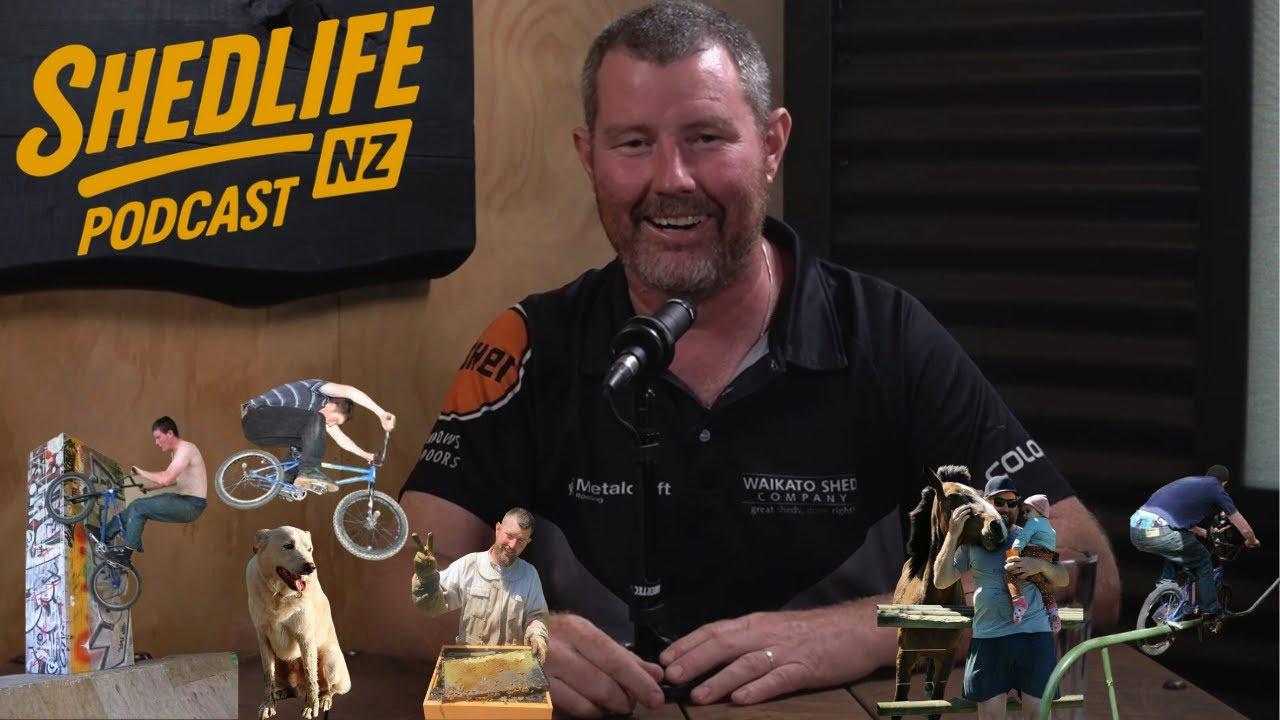
That beekeeper is Mark Davis, the Waikato Sheds shed builder and brother of ShedLife host Jason Davis. In his ShedLife episode, Mark takes Jason through a very mixed career. He grew up riding BMX in Devonport, spent eight or nine years fixing watches on Queen Street in Auckland, drove round the South Island for a few months, dairy farmed for a season, built walkways and bridges for DOC and did pest trapping.
Bees come into the story along the way. Mark kept them in the middle of all of that, and what makes his version useful is that he picked it up between other jobs rather than as a grand plan. There is no secret to it in the episode. It is just a bloke who kept bees, among the other things he did, before he ended up building sheds in the Waikato. If you are curious about beekeeping as a sideline or a way of life, it is a good reminder that you do not have to start as an expert.
The episode is long, at almost two and a half hours, and most of it is about other things, including a robbery he stopped on Queen Street and his BMX days. It is a good listen for the person behind the hobby, but for the practical side, read on.
Honey bees in New Zealand
The honey bee is not native to New Zealand. It was brought in by European settlers in the 1800s and has been part of farming and gardens here ever since. The country has a large number of hives, used for honey production and for pollination of crops and orchards. Honey bees are also a big part of why New Zealand honey, and manuka honey in particular, is known overseas.
Because bees matter so much to the primary sector, there are rules about how they are looked after, and the main one is registration.
Registration and disease
Anyone who keeps bees in New Zealand has to register as a beekeeper. This is not a formality. It is how the country tracks hives and manages American foulbrood, a serious bee disease that is controlled here through a national management plan. The plan is run through the industry body, Apiculture New Zealand, with the government's Ministry for Primary Industries involved in the regulatory side. For how to register, what you must do and what has changed, go to the official sources: apinz.org.nz and mpi.govt.nz. The rules are updated from time to time, so check them rather than relying on any guide, including this one.
Varroa
Varroa is a parasitic mite that feeds on bees, weakens colonies and spreads viruses. It is established in New Zealand, so every beekeeper has to deal with it. In practice that means monitoring your hives for mite levels and treating when needed. It is one of the biggest reasons beginners are told to learn from someone experienced, because the details of monitoring and timing matter and depend on your area.
The beekeeping season in the Waikato
In broad strokes, the year follows the weather.
- Spring. Colonies build up fast as the weather warms and flowers appear. It is a busy time for checking on the hive's health and making sure the bees have room.
- Summer. The main honey flow. This is when most honey is collected, and you will want to keep an eye on space and water.
- Autumn. Honey harvest wraps up and beekeepers get colonies ready for winter, including checking food stores and doing mite treatments.
- Winter. The bees cluster and mostly stay in. There is less to do, but it is a good time to repair gear and plan.
The exact timing shifts with the weather, the local flowers and the hive, so the best guide is a local beekeeper who knows the area.
How beginners start
There is a well-trodden path.
- Join a club or find a mentor. Local beekeeping clubs run beginner days, and many pair new people with experienced ones. This is the best single thing you can do.
- Do a course. Short courses are available around the country and cover the basics of bee biology, handling and disease.
- Register. You need to be a registered beekeeper before you keep bees, so sort it out first, using the official sources above.
- Start with one or two hives. Two is often suggested because you can compare them, and learning from two is faster than one. You do not need many.
- Get the basic gear. A hive, a bee suit, a veil, gloves, a smoker and a hive tool are the starting kit. A club or mentor can help you buy sensibly.
- Check on the bees regularly. Look at the brood, the food stores and signs of disease. Over time you learn what normal looks like.
What a backyard hive involves
A hive does not take up much space, but it does need some thought. It should be in a spot with morning sun, shelter from the wind, and a flight path that does not run through the washing line or the kids' play area. Bees need water nearby, and neighbours are happier when you tell them first. Time-wise, a hive does not need daily attention, but it does need regular checks in the season and prompt action if something looks wrong. You will also need somewhere to store gear and, if you collect honey, a clean place to extract it.
It is fair to say that bees are a commitment. They are living animals with their own seasons and problems, and they do best with someone who shows up.
Honey, manuka and what to expect
Most backyard beekeepers are surprised by how much the bees do on their own. The colony makes its own queen, builds its own comb and decides where to forage. Your job is mostly to give them space, keep them healthy and take a share of the surplus honey without leaving them short.
Manuka honey is the one everyone asks about. It comes from bees working manuka flowers, which grow in particular regions and bloom for a short window, so it is a specialist product. A backyard hive in town will usually produce a mixed-flower honey that tastes of whatever is in flower nearby, and many beekeepers think that is the best part of it.
More from the show
If the shed-building side of Mark's story caught your attention, he is on the ShedLife team, and all his appearances are on his guest page. For the rest of his past life, try the NZ BMX and action sports guide, where Devonport BMX gets a mention.
Do you keep bees, or have an odd trade or hobby that surprised people? We would love to hear about it. Have a look at how to be a guest on ShedLife.