BMX · · 1 hr 21 min
Mark Davis from Waikato Sheds: BMX, Bank Robberies, Beekeeping and Watchmaking
Jason Davis sits down with his brother Mark to talk BMX, watchmaking, beekeeping and the unconventional path that led him to Waikato Sheds, including the afternoon he stopped a briefcase robbery on Queen Street.
Play audio here
“There's probably less than 100 watchmakers left in New Zealand, where every town used to have several watchmakers.”
Mark Davis
“As Paul says, you never work a day in your life if you're doing what you enjoy, and that's not completely true, but there's a lot of truth to it.”
Mark Davis
In this episode
About this episode
Mark Davis is a shed builder and site manager at Waikato Sheds, a former Queen Street watchmaker, an old Devonport BMX rider and Jason Davis's brother. Over about an hour and twenty minutes the two of them go through the jobs Mark has had, the people who taught him and the stories that came with each trade, from watch repair and a robbery he stopped to helicopter-flown bridges, kiwi trapping and beekeeping.
Fixing watches on Queen Street
Mark always said he would be a builder, left school at sixteen to do a building course, then worried about getting sunburnt. His mum had met a watchmaker on Queen Street, Mark Wild, who needed an apprentice. After twelve weeks learning batteries and straps at Capital Watch Company in Wellington, Mark spent eight or nine years at the corner of Queen and Wellesley, stripping mechanical watches into hundreds of pieces and putting them back together under a magnifying glass.
He says it was too fiddly for him, and that every time he thought about leaving, Mark Wild gave him a pay rise. The best story is the little ladies' watch he assumed was cheap because the owner haggled over a $20 battery. He cracked the glass closing the back, and it turned out to be real diamonds and a $500 replacement. He reckons there are fewer than a hundred watchmakers left in New Zealand.
The afternoon he stopped a robbery
The busiest money exchange in the country sat above the shop, and Mark watched the same security guards go up and down every day. One afternoon he heard a commotion, saw a man wrestling a briefcase off a guard, ran out and stopped him. The man ran off to a car, and Mark went back to work. The briefcase held about $50,000. He tells it flatly, which makes it funnier.
BMX, Devonport and Jed Mildon
Mark grew up in Devonport, with beaches, North Head and Sea Scouts on the doorstep. He saw the X Games on TV around 1995, mowed lawns to pay off a Schwinn and spent his teens at skate parks, riding the ferry across to Victoria Skate Park before dawn. He rode the New Zealand equivalent of the X Games in Hamilton and then Wellington, and picked up the name Ewok at about eleven.
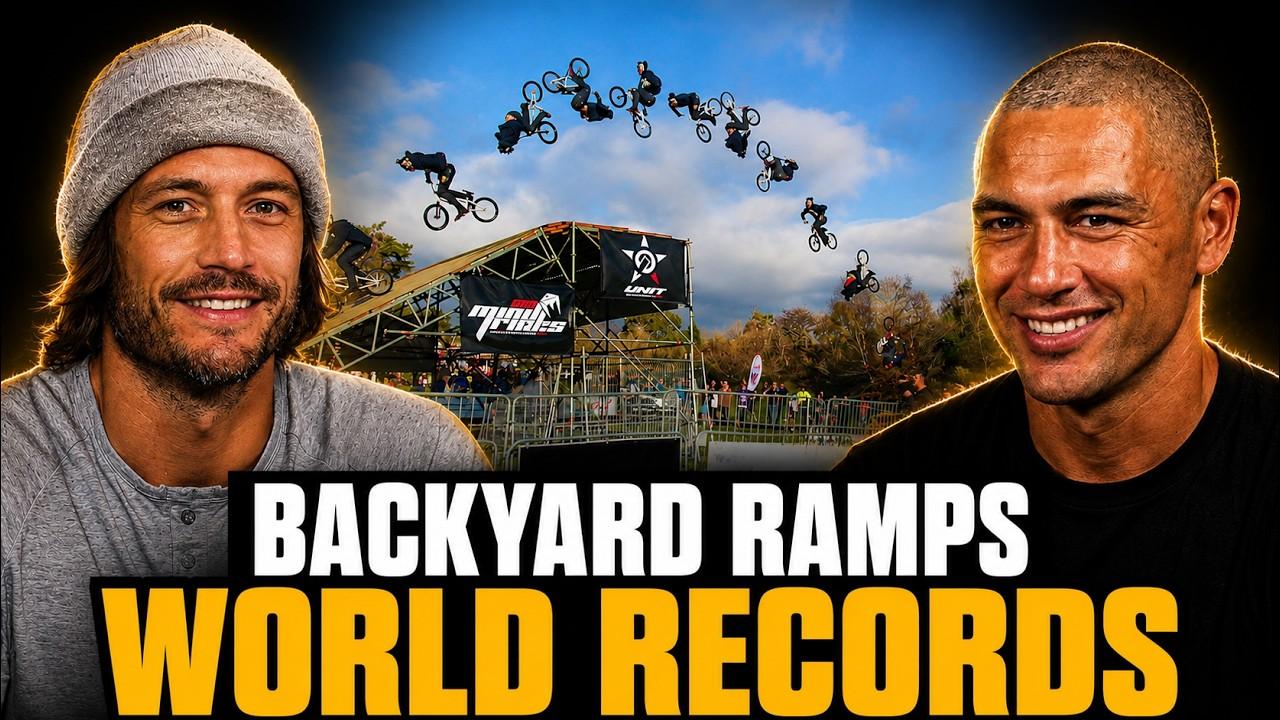
He also tells the Jed Mildon story. Jed, a rider from Taupo, needed something big to stand out, so he built a four-storey scaffold roll-in with Taupo Council's help and landed the first triple backflip in the world. The next morning his inbox was full, and Nitro Circus came calling. Jed later beat a rival to the first quad backflip.
From the South Island to Great Barrier
Mark quit watches, packed the four-wheel drive and headed to the South Island for a few months with his dog Jimmy, diving for paua and crayfish in Bluff. Jimmy ate polystyrene, which ended in a $1,600 vet bill. Back home he did two seasons dairy farming on a 650-cow farm, then moved to Thames and joined Walkway Solutions, building tracks and bridges for DOC and councils.
The first job was on Great Barrier Island: twelve days on, two off, rebuilding seven bridges a storm had ripped out. Mark describes riding the helicopter skid up a valley, a bridge swinging in on a long line and a joyride home with a chilly bin of beers. At Cathedral Cove, a tourist's fire climbed a cliff while the crew were working, and they helped the volunteer brigade with hoses. He also checked a trap line for Thames Coast Kiwi Care, which he says grew its kiwi numbers from about 30 to over 150.
Roofing, bees and Waikato Sheds
A mate called John pulled him into roofing and beekeeping at the same time. Mark helped re-roof the old hut at the Pinnacles, with the gear flown in by helicopter, and spent nights shifting fifty hives on a trailer to National Park. John taught him to keep a sharp pencil for good flashings. Later Mark was introduced to Paul and Stan at Waikato Sheds, worked with them as a contractor and then as an employee, and describes it as a mini shed-building apprenticeship. They built a 30 metre clear-span workshop 50 metres long, the men's shed and a driving range.
Why it matters
Mark's story is a run of very different trades, each one handing him something the next used. It ends with the easy, practical way he now helps kit-set clients get their sheds started, and with Fieldays, a tradie 100 at Waikato Rugby halftime and some NZ pie reviews.
If the BMX stories got you in, Jed Mildon and Nick Franklin talk freestyle motocross and BMX in another episode, and the NZ BMX and Action Sports guide collects the riders and ramps. Jed has his own guest page, and all of Mark's appearances are on the Mark Davis guest page.
Questions people ask
Who is Mark Davis from Waikato Sheds?
Did Mark Davis really stop a robbery?
Why is Mark Davis called Ewok?
What did Mark Davis do before building sheds?
What did Mark Davis say about Jed Mildon?
Mentioned in this episode
Transcript
Generated from the audio, so expect the odd wrong word or name. Timestamps open that moment on YouTube.
0:00Welcome to ShedLife, we've got another great podcast coming at you, got a special one today. We're going to be talking to Mark Davis, my brother, he's a builder, a BMXer, a watchmaker, all-round good guy. So we're all about good people working hard and fun stories. So welcome aboard Mark. G'day James, how are you? Great, great. It's a new year, it's 2026, so we're going to just jump into it and get some stories.
0:27We're going to be covering off stories of Mark's actually been a watchmaker for many years, many people don't know. We've already seen BMXer, awesome shed building stories. We're going to hit life in the bush, working for Dock, building walkways, re-roofing the Pinnacles hut, pest trapping, crazy concerts, travelling around in the four-wheel drive around the South Island, bluff, beekeeping, dairy farming, who knows if we've got enough time, and maybe even Coromandel time. So, crikey, let's get into it.
0:59Before you were the Waikato Shed Company shed builder in another life, another time ago, you were actually a watchmaker on Queen Street. I was. I'd grown up, my whole life growing up, I always wanted to be a builder, always said, I'm going to be a builder. And when I left school at 15, 16, I enrolled in. Requested to?
1:20No, yeah, requested by myself. Mum was like, stick out another year. I was like, no way. It was actually the first week of sixth form, so when I was 16, went back, and I was like, what am I doing? And left to do a building course, so I did that, and once I finished that, time to get a job.
Read the full transcript · about 62 min
1:38But I'd always, I'm pretty white still, always have been, and I'd get pretty sunburned, so I wasn't too sure if I wanted to be out in the blazing sun all day getting burnt. And my mum had met a guy that was a watchmaker on Queen Street, another Mark, Mark Wilde, and he was looking for an apprentice. So I said, oh, it sounds interesting, I'll go in and do that.
2:01Went in for a few Saturdays to sort of learn the ropes, and he offered me apprenticeship. So actually, to start with, I went to Wellington for, I think it was like 12 weeks or something. Went down there, and Capital Watch Company showed me the ropes. I worked for them for 12 weeks, so I learned the basics of changing batteries, changing straps.
2:23So then when I came back and started with Mark, who was just a one-man band, I would automatically be able to do a few things without just him having to take away all his time to teach me. So yeah, I worked on Queen Street, right in the middle of it, corner of Queen and Wellesley, for, I don't know, about eight or nine years, fixing watches.
2:46We're hearing what type of watches? What were the fanciest watches? Like, what were you getting? Well, of course, like, you know, everything from your bottom end. Rolexes, which is what everybody thinks is the fanciest. You know, they're thinking, oh, Rolexes, but there's plenty of fancier stuff than that. Found out sometimes the hard way. Oh, like, this lady had brought this watch in, and it was this beautiful little lady's watch, a glass dial, and then it had glass around it, and it had diamonds in it.
3:19And I was like, it'll be $20 for a new battery. And she was trying to tackle me down for price. So I assumed it wasn't a very good watch.
3:29Did it. Popped the back off, put the new battery in. When I went to press the back on in the press, I smashed the glass on the front of it. And, yeah, so it turned out was Real Diamonds. Oh, no. $500 piece of glass to get a new one. So you can't always judge every book by its cover.
3:50Yeah. I can't remember. That was like a Cartier. No, wouldn't there have been a Cartier? Because I knew Cartier. It would just have been some other, like, there's just hundreds of these brands that it's like, yeah, people know Rolex because they sponsor the sailing. They sponsor motorsports. But there's Patek Philippe's, there's Cartier. There's just all these other brands that are worth an absolute fortune.
4:12We'd have 24-karat gold watches coming in. Nice. And so when you're servicing watches, they're actually a mechanical, most of them are battery operated, and then a lot of them are mechanically operated. So you have to strip them into hundreds of pieces, put them through a cleaning machine that puts them through different cleaning solutions. Yeah. Cleans them all, then we put them back together.
4:34And you're looking through magnifying glasses and putting them back together. So I did that. Didn't really enjoy it. It was way too fiddly for me. Sort of liked it because nobody could believe that I did it. That knew me. But also every time I was thinking, I'm going to leave, obviously Mark could tell, and he'd give me a pay rise.
4:54And I'd be like, I'll stick around a bit longer. So yeah, did that for sort of that long. Any interesting adventures happen on Queen Street? What was that like? You would have been living on the shore, catching the ferry over? Yeah, catching the ferry over, living in Devonport, and for most of the time, Devonport, Balmont, then Forest Hill.
5:14Riding my BMX down to the ferry, catch the ferry over. Yeah, Queen Street, she's a colourful place, lots of colourful characters. I, previously to being a watchmaker, while I was still at school, I worked at a bike shop, which was in the bottom of Queen Street, Adventure Cycles. So you got to know all the homeless people that were around, like, especially then Auckland had like a real homeless population that was just like the core people.
5:42Because that would have been roughly where Britomart is, so the fancy Britomart piece and now were super nice, was super not nice. Super not nice. People that know it would have remembered the Oriental markets, it was just like a big abandoned building, and just, yeah, not very nice. When I went back there last year, it was like, holy mackerel, things have changed.
6:05But, so yeah, Queen Street, there was always lots of funny things going on, pretty colourful characters. One very memorable time, I was sitting there, not working, scrolling the internet, and I, we were in the bottom floor of like a 10-storey building, or the ground floor of a 10-storey building, and above us was the busiest money exchange in New Zealand.
6:28And every day, I'd see these Indian guys walk past with their briefcase, go up and get the money, and you know, you'd wave out, see them every day, and you'd get a lot. Security guards, or just like private dealers? Yeah, it was just, nah, like two security guards, too late, work for Chubb or something, have their van, they'd double park outside, and go up every day.
6:47So, and you'd get a lot of that in the city. You'd see these people every day, so you sort of felt like you knew them, but you'd never actually talk to them. Yeah. And so I'd see them go up and down every day, and then one day, saw them go up, saw the guy come out, and you sort of always see sort of dodgy folk hanging around, but think nothing of it, because you're on Queen Street.
7:07And then I hear this great commotion, and I turn around and look out the window, and there's a guy trying to wrestle the briefcase off this Indian security guard. So I just was like, boom, put my cape on, run out, clocked the guy in the head, and then started wrestling with him, and then automatically you got a massive crowd around, you're watching, and I was sort of on the ground, and we both got up, and the guy was like, and then run off, and I was about to take chase, and I was like, well, what am I doing?
7:40Job's done. And security guard was like, thanks, pretty shaken. And I just was, I was the only one at work, so I went back into work to keep on working. Real hard by the side. Yeah, well, stop work from getting robbed, maybe. And then, yeah, the police came, did it all, and go to the police station, give my turn of events and all of that.
8:04So yeah, that was pretty memorable, stopping a bank robbery, or something like 50k in that briefcase, so you know, some pretty serious cash. Yeah, nice. Did they catch the dude? No, I don't think so, who knows, you know. But you don't have to go to quarters or whatnot? No, so probably not. They just booted her off, jumped in a car, and drove off, so.
8:24And that would have been sort of 2010-ish, maybe? Maybe a little bit later, but not in that, not like in prime security camera times, where you imagine now the whole of Queen's shooting everywhere else is camera, back then not so much, so. And they're probably in a stolen car. Get that, ditch that. But they didn't get away with the cash, so that's what's important.
8:49Yeah, yeah. Save the banks, so. Yeah, save the banks. They're doing it tough. Oh, yeah. So, I don't know, how many watchmakers are there? Because it's an interesting trade. It's so specialised. It's super intense, but then you're getting a lady try to haggle you for a $20 watch battery, you know, when she's got multiple diamonds in it.
9:11Yeah. You'd get a lot of ladies that have been bought really expensive watches. Like, we had another lady come in, and it was $300 to service her watch. She's like, no, no, I'll just buy a new one. And goes home, the husband's like, no, you'll get that service. That's a $10,000 watch. So, you've got a lot of people that had no real idea what their watches were.
9:33Oh, yeah. Interesting. And, yeah, but, yeah, so there's not many. There's probably, I don't know, less than 100 watchmakers left in New Zealand, where every town used to have several watchmakers. When everybody was wearing a pocket watch, and they had to be serviced all the time, that was the only means of telling the time was your mental clock at home.
9:55But because watches, especially for men, are one of the only bits of jewellery you sort of have, they become quite a family heirloom quite quickly. So, there's a lot of people with older watches that want to get them repaired to keep them going.
10:09And then there's still a bit of a, you know, like they say for men, what do you have, your wedding ring, maybe a necklace. What can you go buy to make yourself stand out? A nice watch. And even if, you know, if it's a $500 or $1,000 or $2,000 Seiko, you're still going to get your battery done.
10:28You're going to get them pressure tested, new straps on them. So, yeah, there's still actually a heap of work. But it's what happened to all the trades in New Zealand. In the 70s and 80s, they disestablished all the organizations that trained all of the, it was actually twofold for watchmaking, trained all the apprentices. And in the sort of 70s and 80s, when digital watches started coming in, they all thought, the watchmakers thought, oh, this is the end.
10:55Nobody's going to kind of keep on having classic watches. So, lots of them stopped training apprentices. So, you just sort of end up with this bottleneck now that there's still, you could do with more, but there's not as many people to train them. Oh, wow. Is Mark Wild still running the Auckland Watch Company? Do you know? Is he retired?
11:15No, last time I heard, he'd actually moved to Blenheim. Oh, nice. Yeah, so moved down to Blenheim. Going to still do watches down there. And, yeah, keep doing those. Awesome. Where should we go from there? Should we talk about, let's go, give it a little bit. We grew up in the mighty Devonport. I know this, but, you know.
11:38Let's see you around. Let's see you around a few times. Couple of highlights. What was it like growing up in Devo? Oh, it was awesome. Best place ever. Wow. Yeah, best place ever for me to grow up. You know, fantastic. Had my best mate, Nick Pearson, live across the road. Knew him from kindergarten. Kindergarten, so since I was four years old.
11:57And then you got to go to all the same schools together. Devonport Primary, Balmond Intermediate, then Takapuna Grammar. Yeah. And it was just a small little place that was full of beaches, mountains, like North Head, Mount Verkle, the tunnels you got to go and explore. And just good times. So, yeah, just grew up doing all that. Getting to go to Sea Scouts, sailboats, and just have lots of little adventures, which is really cool.
12:24Heaps of freedom as well back then. It was sort of like just be home at six o'clock, go for it. No phones, no worries. Yeah, just go and have fun. Yeah. And so you play some of the normal sports and everything I know, but what stood out for me as the buzz you got? And how did you get into the world of BMXing?
12:43BMXing? I vividly remember being, I actually don't remember what age I was, but probably seven or eight, and got to see the X Games on TV. And X Games started, I believe, sort of around 95. And in 95, I would have been 10. So maybe I was about 10. 94, 95, I think it sort of started, and seeing X Games on TV.
13:07And back then, they were all full-face helmets, chest protectors, like gladiators just going out there and doing it. And I sort of just fell in love with it from then, you know? So we're talking, they're doing jumps and that. Like on dirt ramps, yeah, doing jumps, dirt jumps, doing tricks, having a good time. Yeah, like I remember when I first got into BMX, and there were so few skate parks or anything.
13:32We rode from Devonport to Albany. Yeah. So they had a few hours ride. And to go to the race course, because they had an open day, and, you know, they're straight away like, where are your pads? Where is all this? And we're like, we're out of here, man. Too many rules.
13:51Let me live my freestyle lifestyle. So, yeah, no, never about racing. It was all about just freedom, having fun with your mates. So, yeah. Yeah. So, yeah, there was a real strong crossover between the skateboard and that sort of freestyle BMX culture, wasn't it? Out there on the streets, don't it? So, but where were you guys riding?
14:12I mean, that is a buzz to ride. So, how did you get your first bike? Who bought you that? Where'd that too? Mowed lawns. I had my first mountain bike, an Interceptor from Hedgehog Bikes, on the corner of Barry's Point Road. Yeah. Staple in a lot of people's lives on the shore. And then I saved up a bunch of money and then mum and dad lent me the rest of the money, had to mow the lawns to pay it off and brought a Schwinn PowerMatic, oh no, an automatic, Schwinn Auto.
14:42Back then there was like, all the bike shops would sell a few brands, but there weren't that many. And my mate Brad had an orange one with mags. Cool. And I got a black one without mags, thinking, oh, this will be different enough. He's still packed to sad, you know, coffee and move. But yeah, brought that from Hedgehog Bikes and had that, and that was my first bike.
15:07Nice. And was that set up to be able to do jumps and that, or was that just set up for free? No, sort of set up for freestyle. Like, back then you had, you know, like you'd have had your amateur models and then your pro models. So it was sort of like, enough to get you into it.
15:22But of course, you'd always be wanting to buy new things to make it better and better. Cool. Yeah. And so where were you guys normally riding then? When I first started riding, I'd have been an intermediate, you're sort of just riding around basically, because I think Devonport Skate Park hadn't been built at that stage. Yeah. So it was sort of, you'd go street riding and you'd just ride around the streets and muck around.
15:47And like, you'd go, and there was like, there was me and my mates that rid, and then there was some dudes that were two years older, and then some guys that were older. So you'd sort of ride around, see them, but it would always be, you know, a bit of distance between. Yeah. But you'd sort of have to like, watch them and like, look at photos and magazines and try to work it out.
16:11But mainly to start with, you'd just jump down sets of stairs and like, just ride around fast, drink big bottles of Coke, have a good time, you know? Nice. And then Devonport Skate Park got built, where the old rubbish dumpers, the Betts brothers, who were Kiwi skaters, and then their old van had moved them all to America, and then they moved back.
16:34So they'd been like, introduced to skateboarding in LA. So they came back and petitioned or pitched the council to build a skate park and just built like, the coolest skate park ever. Only according to Devonport locals, generally. Nobody else really liked it. It was very tight little transitions, but a big bowl. So it was very cool to learn to ride.
16:59But then once that was there, we could sort of rid that. And probably before that, it would have been Victoria Skate Park and downtown Auckland open, so we'd catch the ferry over. One of the first dudes I used to ride with, Kyle MacDonald, his old man would deliver bread, and he'd take us over and drop us off at like 5.30 in the morning, and we'd hang around at the skate park, trying not to get too close to all the homeless people until it was light enough to ride, and then ride all day long and catch the ferry home.
17:30Nice. Close to the 90s. Yeah. And when did you guys do like the jumps? I remember there was like the Barry's Point Road jumps in the bush. Yeah, so Barry's Point Road would have been around when I'd first started, but it was like,
17:47I remember going, the jumps were all too big. Yeah. Like they weren't, they were for the, like Tim White, Steve Post, Nick Ruhl, all these dudes that had been riding for years, so they could ride them, but it was too much. It was too much for us. But they also didn't want Grom's just turning up and ruining things, so you were not welcome.
18:08So they were there and would sort of go and look at them, but it was just, yeah. And then they got bold when the motorway went through, so we rode there a little bit towards the end, but not really.
18:19But then we'd have other spots. So like, we'd, I'd mainly, we'd mainly rid skate parks up until the age of we'd get our licenses, and then we'd go like out West Auckland to PMP, and they'd dirt jumps there and help build and ride, and yeah. The initial crew I started riding with all dropped off. Okay. And then at the skate park I met George and Lewis Boulder, who are identical twins.
18:45Yeah. And they were pretty much the two dudes I always rode with. They were probably two years younger than me, and we'd just go out every weekend riding. Nice. So who were the local, should we give them a shout out, who were the local legends that were going out there and cranking it on the scene, on the VMAX?
19:02Like, when I would first started, yeah, Tim White, Steve Drain, Nick Rull, Steve Post, and Warren Gill, all those dudes, they'd have been out there shredding it. A few of them still are. Awesome. And is, was anyone in competitions? Was there any sort of sponsorship or anything back then, or was it all just? Sort of, but it's like, that would have always been the dream, you know?
19:30Like, where I get sponsored, but it basically didn't exist. There would have been a Haro's bike team. So it would have been like going to Sports and Outdoor Expo, and then I had a box jump and had a contest, which I remember entering, that would have been the first contest they ever entered. That would have been like 13.
19:48Yeah. And entering that, and it was, you know, and that would have been people from Tauranga, Dwayne would have been up from Wellington, Dave the Man Mancone.
20:00And heaps of other dudes riding, so you'd get to sort of see it. And there'd have been some sponsored riders, but it would have been like, you'd get a free shirt and a frame or something, you know? Yeah. You weren't making a living. A lot of the Tauranga dudes were, by being on the dole, building bikes for cash, and then getting like free frames, you know?
20:22That was the Tauranga dream. Yeah, that's so nice. The sunshine dream. How'd you pick up the name Ewok? Everybody in that scene seems to know you as Ewok. Yeah, Ewok. I'd always had this story a bit wrong, but it's still the story I think of. When I'd have been probably 12, or no, I must have been 11, there was a guy above me called Nick.
20:46And I always thought it was Nick McLaren. Shout out DJ3140. I always thought it was him, and I was calling him Nicky Nicky, and then he chased me down, bit me up, and called me Ewok. And then Kevin Brown, Luke Guilfoyle, and all the dudes that were just a year above me were like, oh, that's your name now.
21:06And it sort of stuck. But then I talked to Nick McLaren years later, and he was like, no, that wasn't me. So, who knows?
21:14Some of a dude. Nice. And no real reason, you know? Like, he would have just called me it. Like, Ewok. Not really thinking anything. It wasn't like, ah, because I was swinging around trees, and here he is, I'm sure. Hey, look, it was like, he's believable now. Yeah, that's it.
21:35Yeah, okay, yeah. What is an Ewok? It's a little character of Star Wars, a little furry thing. Had little spears help Luke Skywalker defeat someone. Yeah, that's it. When he was like, in the bush or something. Yeah, keen as to kiss his sister until he found out it was his sister or something. Yeah. Basically, they're just a Star Wars.
22:00Yeah, that's it. So, they were the cute little Ewoks. Yeah. That's awesome. All right. What got you to leave Auckland? So, you didn't actually like being a watchmaker, which I remember. But you decided to just keep doing it anyway. Yeah.
22:17But you eventually thought. Yeah, you thought better of it. I just think I'd gotten pretty sick of it, and I'd saved up a bunch of money. I think it actually corresponds with two things. One, Sean, our other brother, had a party at his flat in Auckland. Yeah. And went to that. And one of his mates, when I was leaving, he was like, man.
22:37And I don't think I had talked to him. He was just like, man, if you don't like your job, you shouldn't do your job, you know? Yeah. And it was like, I was like, oh, okay. And left. And I don't know why he ever said, you know, like. Yeah, why that drop. Yeah, like, I think it was possibly he'd just changed jobs.
22:56It was more something that was relevant to him. But it was just like, I was just over it. And I was just being over it one day, and it was coming up to the break. And I remember Mark came back from lunch, and I was just like, I'm not coming back after the break. I want to go to South Island and have a break.
23:13And he was like, yeah, sweet ass. And then he said he had severe arthritis his whole life, pretty much. And he needed to get both his knees replaced. So he said, oh, you know, sweet ass, do what you want to do. But if you could come back in six months or something when I need my knee replaced and cover me, that'd be good.
23:36And that worked out, and I did. But, yeah, so I just decided, nah, I had enough. Packed bags, packed up my four-wheel drive, had a sweet Toronto. Hold a place in my heart, sweet Nissan. And packed up my dog, Jimmy, and went to the South Island for a few months. And I'd gotten to spearfishing the last few years before that.
23:59My mate Nash had started spearfishing. And so we'd go up north all the time, camp, go spearfishing. So I just packed up all my stuff, go to the South Island and do that. So it was pretty cool. Cool. Before that, actually, I'll probably circle it back down. I know that you guys went over to Aussie a couple of times to the BMX.
24:21But you actually rode the X Games. So you saw the X. X Air. X Air, yeah. Yeah, so New Zealand's equivalent to the X Games. Yeah. Which actually started in the Moody H town, Hamilton, when I'd have been one of my first, like, real road trips. And then, like, our parents were strict. But on the other side, they weren't at all.
24:43Yeah, when I was, like, 13, jumped in the car, went, come to Hamilton. I don't even know. Maybe it was at Mystery Creek. I actually couldn't even tell you where it was. And they had X Air. And I went down hoping, I think, to ride. And they wouldn't, like, you had to have already booked in. But I remember being at the gate on practice day, and everybody got let in but me.
25:09And they're like, well, we can't let you in. You haven't got a rider's pass. Yeah. And I go, oh, okay. That dude's got my keys to get back into the hotel room. And they let me in. There we go. Awesome. And then it stopped being in Hamilton after that. Maybe two years in Hamilton. And it moved to Wellington.
25:27And, yeah, got to ride in that. Dave the Man Mancone let me ride. And that was awesome. Big contest. First year went, like, we'd ride contests. We'd ride little contests and jams and stuff. And this was the first big one, like, seeding, you know, probably 5,000 people watching film for TV and stuff. And first year partied. Like, that was the big thing.
25:54Just partied hardcore. And so it would have been pretty rinsed the next day. But just felt a bit under the pressure of it, you know. Couldn't hack it. Didn't really put very good runs together. And then the next year got to go back. And I was like, I'm just going to have a good time. And had a much better time.
26:13Rode way better. Partied way harder probably. Every year they'd have a pre-party. And all the BMXers and skaters would party too hard. And then the next night should have been, like, the real party. And they'd all ban everybody. They'd be like, nah. So they have to get another venue.
26:33And then shout out to Steve McCarty. He's brought it. He brought the. It had stopped years ago. And then hasn't run for years. And he's brought the franchise. And he's been running it in Tauranga. And with the NZ Drift Nationals. Oh, nice. Yeah. So running it again. So that's really cool. Cool for, like. Like, cool for. Like, at that stage it was massive.
26:55You had Dave Mirra turning up. All the big pros that you wanted to. All, you know, dreamed of riding with. And then you got to ride with them. And got to go and party with them. So, which was amazing. So he sort of brought that back. And last year got a lot of the Aussie pros to come over.
27:14You know, which is awesome. That now young kids get to fulfill their dreams by doing it. Yeah. Cool. Yeah. And so what sort of moves are people just, you know. If someone's listening or they're saying. You know. But what sort of moves is someone pulling off in these sort of things? Are they doing? Yeah. It's sort of hard to just.
27:31Back flips. Double back flips. You know. 540s flares. Big transfers. That sort of thing. Like. At the last one in Wellington. The first 1080 on. Ever got done on a bike. Yeah.
27:46That have vert ramps set up. One year they had the vert ramps set up. In the. Like. Where they do the orchestra. What's that called?
27:57Not orchestra. Like. Yeah. Like a. But. Yeah. Like a town hall sort of thing. And it was amazing. Air conditioned inside. And yeah. Dudes that own 900s. Which is pretty much the biggest trick on vert. And. So would they build big plywood ramps? And then. The vert ramp. Would they have. One that would. You could. To collapse.
28:16And take around. And then the rest of them. They just have. Like. It would be an event center. And they'd build the whole course. And say. Then pack it down. And put it in containers. For the rest of the year. And then bring it back out. Yeah. So the coolest one. So what would have been the coolest jumps.
28:33That you saw live happen? Oh. It's sort of like. Bit double. Like. Yeah. Some of the stuff that went down there. Yeah. It was pretty amazing. Seeing Dave Muradur. A 360 backflip. No hander. That was amazing. But there was. Lots of other stuff. That was like. Equally cool. Yeah. Just being at the trails. And seeing one of your mates.
28:52Do a real nice turn down. Or something. You know. It's sort of like. That scale of. For people that don't ride. It's like. Can you backflip? And it's like. For riders. You're like. Backflips are all right. But there's certainly not. The be all and end all in it. That's a lot of the tricks. That. To a normal person.
29:09They'd see. They wouldn't think anything of. But that was sort of. The cool thing. Okay. And what was your favourite? Ah. Tabletops. Where you'd go up on a ramp. And then fold the bike up. Like that. Or a turn down. I got a few pictures. That might flash out. Yeah. That's it. On the rails. Yeah. But. Or just doing big gaps.
29:30You know. Just jumping. From one bit of the skate park. To another. That you weren't. Meant to. You know. Have you ever seen anyone. Like jump over a bus. Or anything. I haven't. But you know. Like dudes have done that. Yeah. Like Colin Winkleman. And the. The dudes. I think like the records. Like 13 cars. Or something.
29:48And. Yeah. Craziness. Right. And then. Any of your mates. Or the dudes that you ride with. You ever get into doing that sort of thing. Yeah. Well Jed Mildon. So Jed from Taupo. Now Tauronga. Rides for Jump Flex. Awesome dude. He was the first Kiwi to do a double backflip. Yeah. Then he was the first person in the world to do a triple backflip.
30:11Yeah. And then the first person in the world to do a quad backflip. Damn. And then the triple backflip. He wore. Had to wear steel cap boots. Oh yeah. Half in safety. Yeah. Half in safety for the Guinness Book of Records to be all official. And he didn't Taupo. Taupo Council helped him out hard out. And he built a scaffolding thing that would have been like four stories high as a roll into this jump.
30:36And yeah just sent it. The Franklin Farm down in Tekawiri had let him build a big jump and like just down a hill and make a foam pit so he could practice it. Yeah. And he did it all way. Like everybody wanted to be sort of sponsored to differing levels. Yeah. Not everybody but most people sort of you know that'd be the dream you get to do what you love full time.
31:01But Jed really wanted to do it. He'd go to America and he sort of got that he was like he wasn't he was very good but he wasn't good enough to win contests consistently. So he needed to do something to put himself really out there. And that triple backflip is what made it happen. He did that and like the next morning it's you know a thousand emails.
31:27He got on Nitro Circus because of that. And yeah. And then. And was he able to repeat it? Or he must have. Nah. Well yeah. But no. Like he did the triple and was like that's one time. Yeah. He was having dreams he'd died the night before and stuff you know. And he was like it was like a show like a trick to push him into that next level.
31:50But wasn't like I'm going to do this all the time. And he did this to a plot like a scaffold towel with a plywood ramp on the back. And he was looping out at two and a half onto his back. Like half the sky I know.
32:02So it wasn't you know you weren't like I'll give that another go. It was like done. Got the sequence photo. So you know. Sweet. When now they have these big inflatable landings.
32:15So they become like you can kind of do these things and you're not going to kill yourself. Yeah. So no I don't think he. I think he was pretty much like I never want to do a triple again. Yeah. But then the quad was like came out as an idea. And there was a guy an American guy Chris Fox or something.
32:37He was trying to do them at the same time. Oh yeah. So Jed pipped him to the post. And then him and Minnie were trying to do the quad. Minnie got hurt. And then Froster was also trying to do it. And Jed was trying to do it in New Zealand through winter. So like having to clean the ramp down every time to do them.
33:00And there's a photo on the internet. And he does it like three and a half I think. And just slams on his back. And nails himself.
33:09And Nitro Circus was like had a way better set up at Trip Pastrana's place. So he flew him over and they went head to head doing it. And Foster landed for like washed straight out. Broke his collarbone. And then Jed got it. Nice. And yeah. And I don't think anybody's done a quad. Quite a few dudes do triples now.
33:36Yeah. But same thing. Sort of all the big foam. You know. Which is still it's serious. Yeah. You still hurt yourself. But nowhere near as serious as how he did it. Yeah. That's awesome. Yeah. Shout out Jed. Jed's the man.
33:54All right. So we've totally talked enough BMX. Which is fun. I was just thinking. I thought. Tell us a story. So you've finished watchmaking. You've stopped the bank robberies. You're going to the South Island. You've got your loyal mate Jimmy the dog. The golden wolf. Yeah. Um.
34:14I remember the restaurant story. Oh that was a goodie. So I was down in Kaikura. Doing a bit of fishing. Had the surf cast around. And Jimmy. I got Jimmy when he was sort of one and a half. And he was a good dog. But he was not loyal. And he was loyal to his stomach. Loved to feed.
34:34And um. He'd sort of stick around for a while. Casting. And he knew as soon as you were like locked into something else. He knew. And he'd be off. And I. Oh God. Where's the dog? Turn around. No he's not around. Jimmy. And then I just see this like white dash in the distance. And there's a restaurant up on the hill.
34:53So I put my wine in my gear. Put it down. Walk up to the restaurant. I'm like. My dog come in here. And he's like. Yeah. He was running around the kitchen. So I kicked out the back door. And then. Go into the restaurant. And they're like. Yeah. He's out. Run around. And he was out the front.
35:09And then you go out the front. And he's just like. Eating some rubbish or something. So just classic Jimmy. Just up to no. Like harmless. But always up to no good. But yeah. He was awesome. We just go. We just travelled around. Do bush walks. I'd go free diving. Um. With the right winds down there. You'd get a lot of like power.
35:32We'd wash up onto the beaches. Or I'd go and get power. He'd just eat whole power. For dinner. And uh. He was loving it. So yeah. So travelled all around. Down the east coast. Ended up in. Um. Bluff for a while. Hung out there. And then um. Went over Queenstown. For big BMX contest. At dirt jumps. Hung around there.
35:57Partied up large. And yeah. Ended up cruising back up the west coast. And home. Yeah. Top highlights of the South Island. Uh. The diving. Like just. Like. In bluff. Yeah. You wouldn't even have to get in the water. And you'd get a feet of power. Yeah. And then just like. Massive crayfish. Awesome visibility. Nobody round. Yeah. Often.
36:23Um. Yeah. It's just sort of all of that. Just getting to see it. Anybody that goes down there. Like it's like another country. Like another country. You know. Like especially all around Queenstown. In the Lake District.
36:35Yeah. It was phenomenal. So. Just that sort of freedom. Cruising around and doing it. Yeah. Awesome. Um. So then you. Came back. You'd like to hear. Still got the BMX. Still got Jimmy. Did you go back to the watch company? Help out Mark? Yes. So that's how I went back and helped out Mark. While he got his knees reconstructed.
36:57Whole new knees. Cut the bone off at the top and the bottom. And whole new knees. Crazy. Um. So went back. Worked for him for a while. And. Was sort of cruising. Riding bikes heaps. There was an indoor skate park in Auckland at the time. So I was just riding all the time. What was that called? Uh.
37:17Wrong. Which it started in. Wrong. W-R-O-N-G. Yeah. Okay. Cool. It started in. In Hamilton. Then ended up moving up there. And um. Yeah. Just doing that. Hang. Staying with you. Staying with mum. Staying with you. Staying with Sean. And then. You guys. Moved to Kairi. And you were like. You want to come down and give us a hand?
37:41So I moved down to Kairi with you. Yeah. And um. Gave your hand. On the place. And then after a bit. Was like. Need to get a job. Up. Loved Country Calendar. You know. Loved Country Calendar. And um. Got offered a job. Dairy farming. And I was like. Damn. I'm going to be on my real life. My own real life episode of Country Calendar.
38:03Jimmy's going to be a farm dog. You know. What more could you want in life? Well. Not to be a farmer. It turned out. When it did. Straight into carving. Hats off to all the backbone farmers out there. It's tough stuff. Did a carving.
38:20Did a season. Then did another carving. And was like. No way. Yeah. I'm not going to keep doing this. And at that stage. You'd managed to save up. How many cows on the farm? Oh. 650 or something. 600 to 650. 52 bale rotary. I was pretty spoiled as well. I didn't know this. Because it's fresh and dairy farming.
38:40But a 52 bale. Brand new rotary. Electric teat spray. Drafting gates. They had the collars. Yeah. So you could draft whatever cows you wanted. And they'd have heat detection. So they'd get put up for mating. So. You know. It was good farm. Shout out to Campbell. Campbell Clayton Green. New Zealand rower. Yeah. And you know. Good guy.
39:03And Garth. Was the farm manager. Really good guy. And you know. Great experience. One of those experiences. Says good guy. Yeah. Barry Williams. Who owned it. It was great experience. Great to get it out of the system. To have done it. And I think. What I'd actually seen on Country Calendar. And what I'd dreamt of doing. Was being like.
39:24A hill country. Sheep and beef farmer. Yeah. Not a dairy farmer. Yeah. So. How was Jimmy? Was he helpful on the dairy farm? He wasn't really. He was allowed on the dairy farm. But he wasn't allowed to bring in the cows. So. I'd often get a phone call from Garth. And I was off the farm. And Jimmy would have slipped out of his collar.
39:43And been up on the feed pad. Just eating liquid cow poo. And then. If he wasn't there. He was in the. He was. Just lapping it up. He one day. Duck up a dead calf. That looked like an orc. Off Lord of the Rings. And I was just munching down on that. Jimmy had a. Stomach. Absolute steel.
40:07Yeah. He'd eat dead. Maldi stingrays. On beaches. And. He'd eat. He'd eat the polystyrene. That was the one. The one. Yeah. He'd eat plastic wrappers off chicken. All the time. And pull out these nice. Long plastic wrappers. And then. One night. I'd get. Get. Woken up to Jimmy barking. This is years. Later. Get woken up to Jimmy barking.
40:34And I. Go down and see him. And I. Was like. He didn't look that good. But he sort of looked all right. Oh no. That's what I did. So I let him out. And I let. Red out of their cages. And Jimmy went straight into Reed's cage. And ate his food. And I was like. You so and so.
40:51Like. You just got me out. Because you wanted to eat it. And so. It locked him back in. And in the morning. I let them out. And Jimmy was like. Super tight. Like. He'd gotten super fat. All of a sudden. And you couldn't press on his stomach. It was hard. And I took him upstairs. And he wouldn't eat the cat food.
41:08And I was like. There's something wrong. Took him to the vet. And the vet's like. Oh. He's like. Super dehydrated. He's not well. And they're like. We usually. We need to put him to sleep. To like. Sedate him. Not kill him. Put him to sleep. To x-ray him. And. But we reckon he won't wake up from it.
41:29And I was like. Well. Just hold on to him. See how he goes. Went home. And Freda's like. Oh yeah. I saw him eating polystyrene. The other day. And yeah. Because he'd get into the rubbish so often. And this wasn't like. Worth mentioning. Before it. So I ring up the vet. And I'm like. Oh yes. Eating heaps of polystyrene.
41:47Styrene. And they're like. Oh. He's pretty mellow. We'll just do the x-rays. Without putting him to sleep. Yeah. Big blockage. $1,600. And the. The vet was like. Eating rubbish. Like. Looking down at me. Like. What a bad dog. Owner. Um. $1,600. Later. They cut it all out. And she was like. Rings me the next morning. She's like.
42:09Went. Fine. He lasted the night. And he. She was like. Yeah. As soon as I took him outside for a walk. He started eating like. Chicken bones. And other rubbish. And she's like. Okay. It was. You're not so bad. Oh. Yeah. He could. He would eat chicken bones. I remember. When you first got. And you were like.
42:30I don't know. Being a bit of a. Stressful dad. So you locked him in Toronto. No. That was after. That was. Oh. Oh yeah. He ate Easter eggs. He could eat chocolate. Dark garden. It was no problem for Jim. No. That was after. I'd come back from the south. As he spread it all out. Yeah. After I'd come back from the south.
42:50Island. Um. I. Brought tucks. Which I never usually feed him. And um. I was staying at my exact. And. I for some reason. Had left him in the ute. Not. Yeah. Had I left. I left him in my car. And he just squirted. Everywhere. Like a sandy. Tucks wonder dog. And tucks biscuits. Are like a few different colors.
43:15And it wasn't good. Uh. And then. I was back up at my uncle's. And everybody was down for Easter. And he did the same thing. And everybody that night. Heard him barking. But me. Yeah. I usually would just leave him tied to the toe ball of the ute. And he could sleep under the car. But I think Clara was like.
43:34Oh that's. No. Too mean. You know. Let him in. And he did it again. And that was like. Unbalding the seats. And water blasting it out. Yeah. Wasn't good. So that's. Those are the only time his guts have really let him down. You know. Right. It's polystyrene and tucks. You know. No discredit to tucks. Yeah. That's it.
43:54That's Jimmy. Um. That's cool. So. Dairy farmer. What was the favourite cow? Oh. 136. Now my favourite number. So 136 would. Had been raised as a calf club calf. And then came back into the herd two years later. And it would come up and put its head under your arm. And you'd give it a pad. And yeah.
44:15So for my 30th birthday. Sean made me a cake. With a cow faced cake. With 136. Yeah. Good number. Good cow. Um. And then. You start actually heading towards. You move to Thames. Off the farm. And you get a job with Walkway Solutions. So you're finally actually building. Yeah. So I um.
44:40What did. Oh yeah. I moved there. And the neighbour. Was best friends with Nikki. Who runs. Nikki and Alan ran Walkway Solutions. Yeah. And she was like. What are you doing for a job? This is the neighbour Debbie. And I said. Oh nothing. So Alan gave me a call. Gave me an interview. And yes. And Walkway Solutions.
44:59They build basically dock tracks. They do a lot of work with dock. And other companies like that. Orgham Council. Tower Island Council. So yeah. The first big job we were on. Was in Great Barrier Island. Yeah. So 12 days on. Two days off. Staying on barrier. Get there the first day. Know no one. Jump in this big van.
45:20And we just cruise up. But I think I had a Willie the Waiter sticker on the back of my car. And Millsy was like. Who's that with the Willie the Waiter sticker? And I was like. Me. He said. You're a good guy. Oh. Let's see.
45:34So yeah. Cruise up. And fly to barrier. And these little planes. Little planes that are so old. They still have little cigarette. Oh yeah. You know. Like. Ashy cigarette in them. So flew over to barrier. And a storm had come through a few years before. And just from the highest mountain. Mount Hobson. I think it's called. Ripped all seven bridges out.
45:57And big landslides and stuff. So we were there rebuilding all of those. So just awesome. Like just throwing straight into it. Walk in. It was after the Christmas break. So we went over the first time. Went and got all the utes. So they're taking utes over. That's already started this job. And would drive up a four wheel drive track.
46:19And then walk in. And just slowly build our way up this valley. Doing these bridges. And yes. It's such a cool job. We're building swing bridges. Like just conventional timber bridges. Doing the paths in between. And all of that. So.
46:36Yeah. It was real cool. So how would you. Because. Anybody that might have been tramping. Or going into the bush in New Zealand. Even on an organised thing. Might sometimes think. How did this bridge get here? Yeah. So helicopters. Yeah. Okay. So predominantly. Let's go a few things. Machinery. Like a Cormody. Which is a tracked machine. Like a big tracked wheelbarrow.
46:57Yeah. So you would pick up metal. And then build the tracks. Yeah. And then predominantly helicopters. Okay. So you would get in there. Do a bit of work. And then you'd do flying days. So the first flying day. First is. Wait. First flying day. I think it was the first flying day. We.
47:18Have a big area. With all the bridges. Brought in our high abs. And all the metals. Either bagged up. Or they have big. Steel hoppers. Or aluminium hoppers. And you have a digger filling gravel into those. And then they'd fly us into the. They'd fly into the bush. And you'd dump the gravel as you'd go. And then form your tracks.
47:39Either dump it as you'd go along your track. Or you'd make a big stock pile. And then drive your cornwood in. And do that. And we'd fly diggers in.
47:49So. And that job we did it all. So I got to learn it all. Straight away. And I think it was that. That first. Or the second day. Dane was like. You're with me. We're going to fly up the valley. And then we'll fly in some gear. So. Get there. And it's just like. Chopper. On the river bank.
48:11Running. But just waiting. Jump in a side each. Chuck the belt on. Feet on the skid of the helicopter. And it was like. I was like in a nah movie. It was awesome. Flying. Like low flying. Up this valley. And then get to this. Big landslide. And the helicopter pilot. Just balanced the skid on the edge. I climbed out.
48:34Dane passed me. Our tool belts. And our bags. Passed some other gear. Then the helicopter took off. Got the long line hooked up. And then we. They flew us a bunch of timber in. And stuff like that. And we cut the bearers. And put the bearers in for the bridge. The helicopter would have been running loads. To all the other guys along the track.
48:56They'd flown in a generator. Earlier. Actually. In a big rock drill. To drill new holes. For a suspension bridge. And as we flew over. There's. Jay. And all them. Drilling holes. And then. They'd have kept flying. We put these bearers on. And then they flew a bridge in. And like. These. They're on like maybe. 20 meter long lines.
49:19And they're. Coming down. And like. The wash off the helicopters. Just moving everything. Hectic as. And we landed that bridge. Strapped it all up. And then walked out. So. Yeah. Just. So awesome. Like. Never been in a helicopter. And then suddenly you're just. And it was like. Flying on a magic carpet. You just. Become weightless. And fly up.
49:44And then. That afternoon. Um. We got to go rock fishing. They put. All in the helicopter. Chilli bin full of bears. Flew us out to a rock. We went rock fishing. And then on the way. Back. Like. The pilot. Super dude. Good dude. Took us for like a joy ride. There was. This big grass clearing. Like a.
50:06Um. Runway. And then it dropped off. And he just. Camed along it. And then dropped down. And you'd all feel like. You'd go weightless. For a bird. And then. Woo. And off. Good times. That was awesome. Yeah. Um. And so yeah. You guys got the bridges. Built the. We did it. We did a bunch of stints. You know.
50:26That was probably three months. To doing. Those stints on it. Flying over. Flew over in a helicopter. A few times. Light planes. A few times. And yeah. Just slowly built them all. Built a big suspension bridge. Yeah. Which was really cool. Like big. How long? Yeah. Oh like. I actually. I don't know. Probably. 20 meters. Oh nice.
50:47Yeah. Like big set and big poles. And you build your two towers. And then we'd. Carry a. Wire across. And string them up. And then slowly build out. You just build like. Put hooks on. And push one out. Then the next one. And just. Build like that. Yeah. And real cool. Got to go spearfishing after work. Cruise around.
51:09Go swimming. And yeah. Barriers all. Great barriers. Like a step back in time. Yeah. But most people. Never been there. Because it's pretty far away. No. No power. So you only generate. Only solar. Or wind. There's no mains power. No sewerage. No. You know. Like it's just like. How New Zealand was. 50. 100 years ago. Yeah. We're sort of.
51:32You know. Like roads and stuff. But you know. Like. Just. Just locals. Doing their local stuff. And yeah. Just real. Kiwi ingenuity. And real cool. So. That's it. And you're a little bit. Later to social media. You took to. Like.
51:50Well no. I think the first picture. You put up on like. The mighty Facebook. Was like a big bushfire. What was that situation? Not quite. Yeah. Because I. Yeah I was. I was a bit of a hater. On the socials. You know. Just assumed everybody. Was putting up. Pictures of their breakfast. Which you know. Is actually quite fun to do.
52:07And it's a good breakfast. Yes. But. I think it was after the first trip to Barry. I was like. I need to get a camera phone. I was like. I've got it. Because you're still running a brick. That you could crack a beer with. Yeah. A little brick. And you can never hear anybody on it. Like. And this is like.
52:2520. 14. 20. 15. 16. Something like that. So it's holding up. It's hardly the 90s anymore. Yeah. Phones existed. Yeah. So I got a phone. And. Yeah. That's another walkway story. We were working over. By Cathedral Cove. Off Cathedral Cove. We built another track. Out to this viewing platform. Yeah. And we built this viewing platform. Real awesome.
52:51And it had. An axis way. And then we were meddling this track. And I'd just been driving the Cormady. In and out all day. Beautiful blue sky day. And I come out one time. And I was like.
53:04Oh. It's a little cloudy. And then I was like. Oh no. It's smoke. I was like. Oh. Farmer must be burning some stuff off. And I was like. Did it a few more times. And then Dane just like. Run past. Full pace. And he's like. Fire. There's a fire. And was running back to get. Water canisters. And.
53:23The hill. Like. So we. All came back out. And then the fire brigade turned up. And it was just like. Voluntary fire brigade. And they were a bit lost. So we were helping them pull out. Like. Hoses. And. Yeah. I've got a. South. Me like this. With all the bush on fire. Behind me. And. It was hectic times.
53:45And funny as. Because we were just doing what we wanted. And. Yeah. Suddenly. The tourist. It had a fire at the bottom of the cliff. And it just burnt the whole way up. Torched one of our big. We had these big steel bins. With our tools in it. Torched that. Burnt some of the. Um. Structure.
54:01And. Yeah. Crazy. Yeah. But. Shout out. The fire brigade got it under control. They got it under control. Yeah. They got all their machines in there. And. Got it all under control. So. Yeah. That was good. After a bit. They had sort of. Some of the more head dudes turned up. Like. What are you guys doing? Running around here.
54:19Get out of here. Nice. Um. And along those zones. You got involved. Pest trapping as well. Yeah. You thought Jimmy. Such a good dog. He can get kiwi trained. He needs to. Well. Kiwi trained only in. So he wouldn't eat a kiwi. But. I really would have. No. No doubt. No. No doubt. Well. Not in saying that.
54:42When I was. Down in Taranaki. We were like. Staying at Zach's. Zach's like. Where's your dog? And it's like. Oh. He's in the chicken coop. But he was just eating chicken food. No doubt. He wasn't a killer. He was an eater. You know. Yeah. But. Yeah. Temps Coast Kiwi care. Um. In Thames. Do trap lines. And. So I would put my hand up.
55:04To check trap line. And got into that. And I'd just take Jimmy with me. Yeah. Get to walk for. I think it took. Three hours to the trap line. Then I ended up doubling the size. Because I used to walk up it. And then walk back the same way. Yeah. So I ended up bush bashing. And put in a new trap.
55:21Put a new. Um. And path. And new traps. And yeah. That was awesome. Found kiwi feathers one time. We'd get to see kiwi footprints. And. Like. Thames Coast Kiwi care. They went from a population of. I think. 30 kiwi. And now they're up to. Over. 150 kiwi. Um. So. Just trying to trap. Like the rats. Soats. And.
55:43Soats. Weasel spirits. They're like the real main ones. And then. You get lots of rats. As a byproduct. But they're not. Rats aren't big enough. To kill a full grown kiwi. Right. So. Yeah. So do that. They'll take the eggs. And take them to. Moototapu. One of the islands. And they'll raise them. Then they'll do a muster.
56:01And catch the kiwis. When they're two years old. And bring them back to the mainland. Nice. Because a full grown kiwi. Like. Except for wild cats. And. Stoke. Oh. Perrots. One of them. Nothing really. They're big enough. They can protect themselves. So. Yeah. Did that for years. It was really good. Rewarding work. Well it's just not work.
56:21You know. Rewarding. Things to be able to do. And give back. That's it. At a certain point. You finished up with the walkways. You had enough of the travel for a bit. And you got involved. With my old mate. John Sorton. Oh. Master Sorton. Yeah. I got a phone call. And John was whinging to me. That he needed some workers.
56:42And. I think you'd been. Out of work for a day. Or maybe not even out of work. I wasn't even out of work. Yeah. So I'd been working for walkways. And after though. All these great bush jobs. Oh. You went to more mania. Yeah. We were working in. Templeview in Hamilton. Building this giant.
56:57Boardwalk. And. It was just boring. And it was just boring. Can't work. You know. And it was a lot of time. So you're a week away. You know. Like Monday to Friday away. Yeah. So wife's at home. So. Decided to give it in. And go back to being a watchmaker. Was the idea. Sell watches. And. Sell clocks.
57:20And be a watchmaker. And yeah. So that wasn't. Worked. But it wasn't heaps of work. So then when John Boyd. Given you a call. You were like. Oh Mike. You could do this. For a bit of extra money. Which is. I think how a lot of people. Start working for John. Like. Oh. It's just like. I help you out on a job.
57:37And it automatically means. That you work full time for John. And then you should. Quit everything else you did. So yeah. It started my journey. Being a roofer. And being. Like continue. Being more of a tradie. You know. Yeah. So John Kwon. John Kwon Do. Mighty Taekwondo master. Yeah. Great mate.
57:58So he was running. Was he. He was a full time bee man. Beekeeping man back then. So you were. Did you start with him as a beekeeper. Or as a roofer. No. I started in winter. Helping him roof. Okay. We were roofing a place over the road. From an old hay barn. Re-roofing that. Yeah. And.
58:17Yeah. So started doing some roofing work with him. But yeah. He was. By that. He'd been a big time roofer. In Auckland. And then he'd kind of. Scaled that down. And was going to be a big time beekeeper. Like. Honey was. Absolute gold. At that stage. And. Yeah. So got into beekeeping and roofing. At the same time.
58:37Go on these ridiculous beekeeping adventures. Where you'd work all day roofing. And then. Drop like. 50 hives onto a. Sang-yong. And a trailer. And drive. We drove to. National. No. Like. National Park. Get there at like. One in the morning. Unload all the hives. Go to sleep at. Four in the morning. Up at six in the morning.
59:02And then on to Wellington. And just. Ah. And it's just so much work. So many hours. But good fun. One night. One of the first nights. Moving bees. Didn't. Lost my gloves. And got like. 20 bee stings. On my hands. And this other kid. Actually got hospitalized. From it. Soft. Yeah. What a wuss. I could barely move my hands.
59:30Next day. Didn't feel particularly well. Survived. Yeah. And beekeeping was a bit like that. You got so immune to getting stung. It didn't really matter. It became quite hilarious. You'd throw bees at each other. Ah. Yeah. Good times.
59:47So. You started roofing. And beekeeping. At the same time. Yeah. Highlights of the beekeeping. Bekeeping world. Oh. It's the beekeeping world. Were those. Were a few things. Work. Like. I've always loved animals. As well as building. So. Working with bees. Seeing how they. Produced. And doing all that stuff. Was really cool. Real. Rewarding work. And then just getting to be outdoors.
1:00:13Every day. Doing it was cool. And then doing these big trips. Down to like Hastings. And have lock. And going into these big. Back country farms. Seeing deer. Wild deer. Running around. That was all very cool. So. Just that whole side of beekeeping. Was very cool. Eating. Finding. Burr comb. And hives. And eating honey. Straight out of hives.
1:00:35That sort of stuff. Yeah. Was fantastic. So that. Yeah. All of that was very cool. And then with the roofing. Yeah. So we started doing roofing. Reroofing houses.
1:00:48And. A bit of commercial work. Up in Auckland. Yeah. And then John. Got the job. To reroof the Pinnacles hut. And. The Pinnacles out of Thames. And the track was closed. At the time. So the hut was empty. So Doc wanted to do a heap of work. To it. So there's the main hut. And then the old hut.
1:01:08Which is now the Warden's quarters. And that's what we reroof. So yeah. Same. Got to go. Jump in a helicopter. Fly up there. Fly all the gear in. Fly all the scaffolding. Reroof that. And yeah. That was just fantastic. Like. Walk up to the Pinnacles. After work. At night. Just amazing stars. Amazing. You know. Just having this place to yourself.
1:01:32So. Yeah. It was really cool. Got to sort of get one of the. My first real experiences. How awesome the council was. Oh yeah. Plumber got flown up. Installed a brand new fireplace. We're all soaking wet. Because we'd gotten wet that day. Middle of winter. So he lit the fire.
1:01:50And. We dried all our stuff out. Cool. Council comes up. Like a week later. And the inspector's like. This isn't a brand new fireplace. I can't sign it off.
1:02:03Like. They end up getting around it. But you're just like. Yeah. They're idiots. What was the lessons. That John taught you from roofing. Like. What did. What. What did you pick up from the John. What. The keys to a great roofer. Yeah. Very good. Sharp pencil. Number one. For good flashings. A sharp pencil. Yeah. Um. Just really good attention for detail.
1:02:32John. It was sort of as. One of his good points. One of his bad points. Depending on where you were at the time. Is. He'd explain everything. Really. Well. To you. So it was really good. Because I got. I worked for him for a couple of years. But it was like. Ten years worth of knowledge. Yeah. And I liked it.
1:02:51I'd soaked that up. But he'd also explain that to a person. That was like. Had already told him he was quitting. And you're like. Stop wasting our time. I'd explain it to a 15 year old. Like Mike. Yeah. Like. For a day. Yeah. Completely. So. So yeah. Just taught me a lot about. Detail. Attention to detail. Different ways to do things.
1:03:12And the best way to do everything. So. Yeah. It was really good. Really. I often think when I'm doing a bit of. Would doing flashings or anything. What would John do? Sharpen my pencil. Yeah. And. Yeah. So no. Taught me a lot. Taught me a lot of good things. And. You know. Still cool them. If I have something that I'm not sure about.
1:03:32And. Yeah. So. That's cool. In terms of. Yeah. And what was probably the lessons from the beekeeper? Put the gloves on. Put the gloves on eh? But only for a bit. You get sort of immune to it. Um.
1:03:51What made for a good beekeeper? Don't be a beekeeper. Yeah. Don't invest all your money in bees. Yeah. Bees just seem like it's terrible. Bees went really high. When Manuka got found out how good all the properties were. Everybody was like. It was a gold rush. And bees were going to like be the next big thing. But actually.
1:04:11It's not hard to produce honey. It's like people always like. Oh no. The bees are going extinct. And you're like. Yeah. Our native bees are. But farmed bees. You give a beekeeper a million dollars. And he could. Make you. Give you a billion bees. Like. Yeah. It's just. And explain that actually. So. At the start of the season.
1:04:31After winter. You might have. What you would see is what. One box. Yeah. You'd break them down over. Like. In summer. You see them stacked. Yeah. But that's. High. But that's all honey. Predominantly. And then over winter. You take all your honey off. And push them down into one or two boxes. So they'd keep warm. Because bees have to keep themselves.
1:04:49At I think. 30 degrees. And they'll just do that by vibrating. But over winter. There becomes a period. Where the queen will stop laying. And your worker bees don't work as hard. So they'll live longer. But your hive just gets smaller and smaller. So then it. When you come into spring. Pollen starts becoming again. Queen starts laying.
1:05:11You'll start producing more bees. But if you want. You could just split a hive in half. Not exactly. You'd take a certain amount of brood. Food. And pollen. And you could split it. Leave the queen in one. Take the other hive. 5k plus away. Otherwise those bees. Will just. GPS straight back. To where they were. And then you can get a new queen cell.
1:05:36And put it in. And then. When that queen hatches. Those bees. Will raise that queen as their own. And then you've got two hives. So that sort of. I mean. With enough money. Bees. You can just keep on splitting them. And make more and more bees. It's.
1:05:53But yeah. So. Yeah. Like. Just taught me. Obviously how bees work. More about business. Time management. All of that sort of stuff. But. Yeah. Mainly relevant. Beekeeper. And then. Sometime around this time. I would have been involved in Waikato Sheds. And I was like. This is awesome. Sheds are awesome.
1:06:18And I thought. Wow. You'd do very well. With the roofing background. Building background. Um. But also. The ability to. Problem solve. And get things done. And then. Introduced you. To Paul and Stan. Mm. The mighty Paul and Stan. So yeah. Yeah. That's it. Basically. Come on board. And um. Then I got to go and work. With Paul and Stan.
1:06:41To start with. As a contractor. I was just contracting. With Paul and Stan. And. What was it like? I was working here. Actually. To start with. The first day. I worked with Paul. Was Stan in frames. Right. And there were two of us. There was me. And some other dude. I don't know who it was. There to help.
1:06:59And I just did my classic. Get in there. How can I help? Oh. That's the next thing to do. I'll do that. Or what can I do? And I'll do it. Yeah. And worked really well. The other guy. After half a day. I think. Brian was like. Oh. We don't need you. You know. Like. There's not enough work.
1:07:16For you all. It's like a farmer or something. Something. You know. So he went home. And I just kept on working with them. And then. Yeah. I think Paul gave me a call. And got me to help him build a different shed. And then. We just started doing some big jobs. We did.
1:07:34The first one. I think. Was. Blula. Right. Big. Tilt panels at the back. Big shed. Built that. And then. Yeah. At some stage. I did that. And then we went and built. Narrawahia shed house. Yeah. Big one up on the hill. And. Same thing. Paul's great. Explains everything really well. Shows you a job. Once you know that well enough.
1:07:59Get another job. And work through. Um. And. So yeah. Got to learn it with them. And then probably. I. At some stage. Started. Actually as an employee. For Waikato sheds. But just kept on working with Paul and Stan. So it was like. Did a couple of years. Just work with them. And sort of did like. A mini shed building apprenticeship.
1:08:20Basically. Built that. Like we built. That. We built. Auto Technics. Which was 30 meter clear span. By. 50 meters long. Built them in the shed. Just built a whole bunch of stuff. Teiki driving range. And all of that. So just got. Thrown in the deep end. And really got to learn. How it all worked. And happened. From a couple of masters.
1:08:43Of the shed game. Yeah. What would be the favorite sheds. Out of those ones? Hmm. I don't know. They were all. Sort of memorable. But. Predominantly working with Paul and Stan. More than. The sheds themselves. Like. Yeah. Fantastic sheds. I'd happily own any one of them. You know. But. But sort of all quite different. Getting to. But it was mainly just learning the products.
1:09:08Learning how it all went. Having a laugh. Yeah. You know. I was building. Castle. In's castle. That was awesome. But. None. Any more than any other. Because. Steel. Sort of all steel. In a sense. Like. It's sort of all the same. When you're working with it. When you get to stand back. Yeah. But same thing. Like the big industrials are cool.
1:09:34Yeah. The driving range was really cool. That was really fun. Um. But yeah. They were sort of all. All equally enjoyable. But it was just really cool working with them. As Paul says. You never work a day in your life. If you're doing what you enjoy. And. That's not completely true. But. But there's a lot of truth.
1:09:52To it. Yeah. You know. And. I would get up and enjoy going to work with them. So it wasn't. Wasn't a drain. But it didn't. Then mean that one job was any more special than the other. Sort of. Yeah. And then we got busier and busier. And then we brought you in. Really more as a site. Well.
1:10:09As a site manager. To check quality. And work with all the other builders. Yeah. And make sure. And assist the kit set clients. And that sort of thing.
1:10:18Any other memorable sheds I suppose. Or things you've been able to go around and see since you've been. Getting around the country is certainly fun. Like going. I got to go down to.
1:10:32Just been. And help out. A kit set client. Who had brought a steel house off us. A steel stud framed house. And was going to build the whole thing himself. But it was. Had sort of overestimated. What he was going to be able to do. So I went down there. And helped him out. And that was really cool.
1:10:51To be able to help somebody. Sort of build their dream house. He'd lived. New Zealand. He lived in Aussie for age. Just moved back. Wanted to build this dream house. And so I really helped him. Get along a lot further with that. And then like the other day. He sent through photos of it all. Finished living in it.
1:11:09You know. And so that's really cool. To be able to do that. And even just in like the last week or two. Going out to kit set clients. And being able to help them. Get started. And then get them. Going on the phone. Suggest how to do things. And saying like. Phil. 70 year old guy. Building a.
1:11:29Helping his mate. Build a 20 by 10 sort of thing. And you know. The first day. He's just like. I don't understand anything. When I spend a couple of hours with him. Build up a portal. And now today. He just sent me a photo. That had Katie Cartage come in. Who had suggested. All the portals stood. And just stoked.
1:11:52You know. And that's awesome. Just getting to help people. Fulfill their dreams. To build these big sheds. But also getting to learn it. And then have. Be able to pass that information on. To help people. Yeah. Very cool. Awesome. Um. Might just hit you with a few. More. We went.
1:12:12Probably highlights. Say. What do you think of Metallica? Oh. Metallica. Awesome. That was. Um. Yeah. Real cool. Like. Always loved Metallica. When I was living in Wellington. Riding BMX. Would jump in my mate's car. And he'd have like a handful. Like. Ten CDs. And they'd all just be Metallica. Like. No. Acoustic. Live. And just rock out. Go up to the.
1:12:35I think it was Paraparam burnout contests. And. Do skids. Ride bikes. Listen to Metallica. Uh. Yeah. Metallica. Yeah. Just fantastic. Just out of this world. Like. The. Everybody loved it. They went hard. They've got to be in their 60s. Yeah. And they just rocked out hard. Yeah. So. Nah. Very cool. Yeah. They nailed it at Eden Park.
1:12:57That was awesome. Yeah. It really was. I was so impressed with how. You know. Yeah. Um. Any other memorable concerts over the years? Yeah. One real cool one. While I was still a watchmaker in Queen Street. My friend Alex. She was doing a. Course to become. Uh. What's it called? Like. Um.
1:13:16A travel. Travel agent. Travel agent sort of thing. And. Um. And she. Got us. And me a job working at like. The Fight for Life one night. And then she got me. A job working at. Rolling Stones. But we had to work. While Nickelback was on. So no great loss there. And I had to open the cans of booze.
1:13:39And then take them from out the back. And put them on this table. And then. The person would. Sell them. Turn around and give them open cans of booze. So. I'd. Open a few. Put them there. And then I'd. Go out the back. To throw the. Empty. Um. Boxes in the bin. And just say. We're scowling. Eight percent birds.
1:13:59And then. After Nickelback. That bar closed. And they're like. There's the gate. You can leave. But if you want to go watch the show. We don't care. And got to watch Rolling Stones. And that. At. Western Springs. Packed. So that was absolutely. Just phenomenal. Well preloaded. Yeah. Well preloaded. And free. You know. So it's just like. Win, win, win.
1:14:22And then. Did they pay you for that? Or was that. Oh yeah. I don't think I ever ended up getting paid. But I was meant to. But you know. I was like. I can live with that.
1:14:31Um. Yeah. And then Big Day Outs. Got to go to a bunch of Big Day Outs. Or Rage Against the Machine. Um. And just a bunch of other cool things. But Rage being one of the big ones. Yeah. Getting to see them was very cool. Yeah. No. That's awesome. Um. I'd say since we've been here. Been to Field Days a bunch of times.
1:14:53But now we're getting to go around and do it. Any highlights from Field Days? Just the people. Just the whole thing. Yeah. Very cool. Like. Growing up as a townie. Never went to Field Days. So getting to go. Went a couple of times before working here. Yeah. And then yeah. Going and filming everything. So. As you know.
1:15:12Like we started out. Sort of doing Coromandel time. Years ago. Filming funny videos. Some hilarious stuff out there. So. Been filming. And sort of being in front of the camera for a while. So just been doing more of that. Going to Field Days. Going live on TikTok. Talking to people. It's fun as. You know. So yeah. Field Days.
1:15:32Definitely. It's good fun. And I think the first year or so. It was pretty daunting. How big it was. When now. It's like. Gotten so used to it. It's like quite look forward to like. Oh cool. We're going to go and get to have fun. Four days. Yeah. Talking to people. And just having a good time. Yeah.
1:15:50Field Days is awesome. I can't wait. Highlights from last year. Waikato rugby. Getting to run the Willie 100 was pretty funny. Yeah. We. The Willie 100. Run up the 100 meters. We were putting up Quinton's name for it. I was like. No way. Had had a sore leg. So I didn't really want to do it. But I sort of knew I'd probably get roped in.
1:16:15In the end. So yeah. This is the halftime entertainment. Yeah. The tradie 100. Yeah. The tradie 100. So. Ah. Livingstones had sponsored it. We'd entered. We assumed a bunch of the tradies would be in it. But it wasn't a very stacked running field. But yeah. Just been smashing some Waikatos in preparation for it. I come dead last.
1:16:38Which was just where I wanted to be. And Quinton won it for us. So yeah. That was fun. And then the March Pass. Was you know. By far the best thing. Is being able to be part of sponsoring the March Pass. Having almost a thousand kids there. Yeah. I think it was more than a thousand. Yeah. It was like raining most of the time.
1:16:57And they were all pumped. We'd won the Rand Valley Shield. We were all pumped. The team didn't get the message. Because they lost. You know. You get that on the big jobs. So yeah. That was absolutely phenomenal. So really looking forward to doing that again.
1:17:14Yeah. Really getting to just meet people. And that are excited about life. It's very cool. You know. And getting to give people prizes. And all of that. It's so much fun. Right. It's awesome. Speaking of fun. One of the other things that you do. NZ Pi reviews. Oh yeah. I haven't reviewed a Pi for a little while.
1:17:33It's a 2026 resolution. To try and hide from the Pi. Yeah. A little bit. It's a bit hard. I do love a Pi. Yeah. Love reviewing a Pi. So where are they? Give me the top three Pies. The top three Pies. Every Pie's a good pie. It's the issue. Pretty much. Except for a real average one. You know.
1:17:53Like. So. In. Kiri Kiri. No. Kihi Kihi. Yeah. They've got a bakery there. Absolutely. Just. Such a good bakery. They're fantastic. Shout out to Zed. The gas station. Best bacon and egg pie in New Zealand. Two whole eggs. Free range. Beautiful. Bit of chutney in there. Fantastic. That's what I'd eat every day. If it wouldn't make me a fat ass.
1:18:25That's what I could do. That's what I'd do. Awesome. Um. And then Patrick's Pies. Of course. Yeah. Tauranga. Rotorua. Bethlehem. Which is still in Tauranga. Just award winning pies. Super tasty. Super good. And then. R.I.P. The Byron Express. And Thames. Used to have a creamy mushroom pie. Oh. Mwah. So good. But they're gone now. And then you've been doing a few pie races.
1:18:56Actually with Quinton. And then Oxford Pies. And Thomas. And Kids in Need. So yeah. Talk me through the technique to win a pie. Um. Pie roast. I don't know. It seems reasonably easy. I get to eat it and talk. And I still beat Quinton. Still beat, um. Thomas. Whose idea it initially was. Bet Jasmine. Bet somebody else.
1:19:18Uh. Yeah. Just get it down. You chew. Swallow. Yeah. You know. Bill Brady. That's the one. He's the one that I'm really look forward to having a pie eating contest. Oh yeah. I once saw him eat nine pies. What? Bill Brady ate nine pies. In a sitting. Yeah. So you know. I'm like. He's a plumber in Whangarei now.
1:19:39Yeah. Whangarei heads. Good plumber. Um. Yeah. So. What gots Bill that hungry? Bill was always hungry. He's got a big appetite. Yeah. Awesome. Uh. Anything else we want to cover it off before we wrap this one up Mark? Uh. No. Not really. Uh. No. We were really good. Yeah. Good times. Look forward to doing it again. Yeah.
1:20:02Going a bit more in depth. A few other stories and what not. But yeah. Shout out to everybody through life that's helped me out. For sure. You know. Uh. Parents. Family. Friends. John Boy. Paul. Stan. And everybody else in between. All the BMX's. Everybody have had a good time with through life. You know. Thanks to them. That's what make life good.
1:20:24You know. Thanks for Waikato Sheds. Great company to work for. Lots of good times. See me out there. Hit me up. Say hello. I might have a free prize in the back of the ute for you. And uh. Yeah. Look forward to it. Cheers. Yeah. Sweet mate. And so if people want to find more on Instagram. There's New Zealand Pie Reviews.
1:20:43New Zealand Pie Reviews. If you want to see some classics. Go and find Coramana. Coramana Time. And scroll back. Scroll. Go back 10 years and you'll. Yeah. You'll find some absolute gold on there. Some Coramana gold. Um. Yeah. That's it. And. Obviously Waikato Sheds. Yeah. Waikato Sheds. I'm on there. And. Yeah. You know. I've got 10 Instagram handles.
1:21:09Find. Find some of the obscure ones. It could be a gift in there for your content. Yeah. That awesome. Oh oh. Cheers Mark. That was lots of fun. Sweet as. Cheers mate. No worries. Thank you. bye. mà.
Get ShedLife World every Friday
The week's episode, Sport, Garage and subscriber deals, free. What's in it