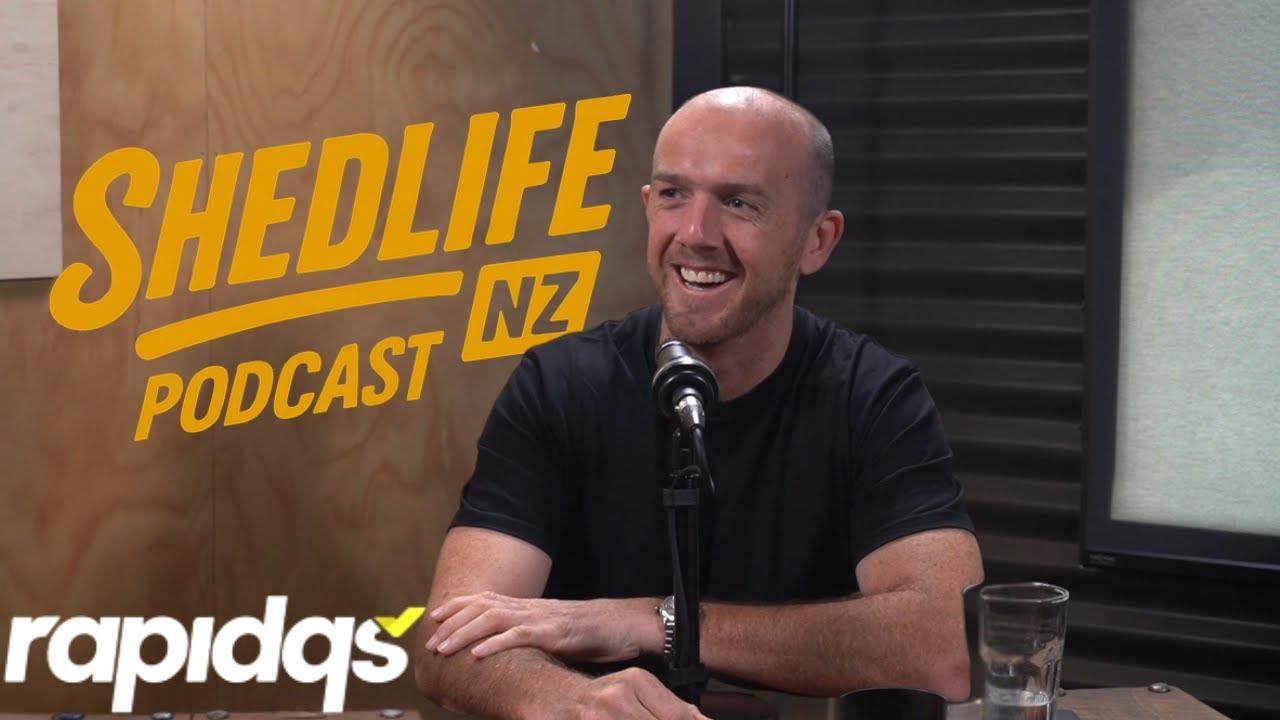
BMX · · 1 hr 53 min
Lulu Bejot: From Ski Jumping in France to BMX in New Zealand
Jason Davis and Mark Davis talk to Lulu Bejot about ski jumping from age five in France, taking up BMX in New Caledonia, moving to New Zealand in 2012, freezing at the FISE World Cup and building a YouTube channel.
Play audio here
Best bits
“I think it's more passing the fear and then really liking the adrenaline.”
Lulu Bejot
“Everything I do outside BMX matter more than what I do on a BMX.”
Lulu Bejot
In this episode
- 00:00Intro and how a Frenchman landed in NZ
- 02:16Ski jumping from age five
- 06:04Army reserve and BMX in New Caledonia
- 10:39Dishwasher to chef student in Auckland
- 17:41How ski jumping actually works
- 33:27Injuries and quitting at 16
- 42:01Browns Bay and the Auckland skate parks
- 50:44Scooters, skaters and park etiquette
About this episode
Lulu Bejot is a French-born BMX rider who has called New Zealand home since 2012, and he is also a head chef in Tauranga and a commercial pilot. Before any of that he was a kid ski jumping in a tiny village in eastern France. He sits down with Jason Davis and Mark Davis for nearly two hours and goes through all of it, from the 100-metre hills to a skate park in Browns Bay.
Ski jumping from five years old
Lulu's village sits next to Germany, with mountains, lakes and plenty of snow. He started ski jumping at five on a five-metre jump, moved to a 25-metre jump around eight or ten, then 45, 60 and 90 metres, and topped out at 100. Summers were for mountain biking and dirt jumping. He explains how it works: a coach at the top of the hill watches the wind and drops his arm when it is safe, and you go when he says. A headwind lifts you, and judges score distance and style, including the telemark landing.
It was a full-on childhood. He was travelling to Finland, Germany and the Czech Republic at 12 or 13, skipping school for weekend competitions, and eating strictly, with the coaches binning any sweets mum packed. On a minus 25 day at the top of a jump, he says, the job is less about being comfortable than getting past the fear. Several of his mates went on to the Olympics. He stopped at 16 after a double wrist fracture, a back injury and a few too many seasons ending in hospital.
New Caledonia and a first season on a BMX
At 18 he moved with his family to New Caledonia because of his dad's job. There was no winter any more, so he committed to BMX. He also spent three years in the gendarmerie reserve and worked as a pool cleaner, and with mates he set up an association that ran BMX shows. He credits his mentors there for helping the community, and later in the episode talks about the coaching that has come with BMX becoming an Olympic sport.
Messaging Jayden Leeming and moving to New Zealand
Seeing Jed Mildon land the triple backflip convinced him that New Zealand was the place to be. He messaged Jayden Leeming on Facebook, who was on Red Bull at the time. About a month later Lulu turned up with a bike and very little English, in September, and stayed with Jayden's family in Browns Bay. He did three months of English school, worked as a dishwasher for about six months, then studied to be a chef in Auckland, which helped him move from a working holiday visa to a work visa and then residency.
He also talks about the Auckland scene at the time: Browns Bay, Stanmore Bay, Devonport, the new Vic Park skate plaza and an indoor park with a foam pit. Mark joins in on how the sport has changed, from foam pits to inflatable landings, and on skate park etiquette when scooters arrived.
Contests, flying and the FISE World Cup
Lulu later moved to Napier to train at the skate park there and to switch flying schools. He did his first solo at Ardmore after five hours of lessons and has since done his private and commercial licences and instrument rating. On the contest side, he describes winning best tricks at Spa Jam with a 360 double tailwhip, in front of about 120 riders, when he had gone along just to chill.
The FISE World Cup story is the opposite. He entered the experts category in France, with roughly half a million people over four days, and only had a half-hour practice with 25 riders sharing the park. When he dropped in for qualifying he froze, rode almost nothing and watched the clip afterwards thinking it was not him. His coach back in New Caledonia told him it happens. He went back for another season and rode far better, then finished 18th of 20 at a C1 event in Switzerland.
YouTube, recovery and what is next
Lulu started making BMX videos around 2016 because nobody in New Zealand seemed to be doing it. His first videos took about a week to edit. He now has well over 2,000 videos and posts several Shorts a day. He says the point is to give people value, whether that is a tutorial or a shout-out to riders who deserve more views. He also covers his routine: daily stretching, sauna three or four times a week, a cold plunge and whole food. He closes with the Dirt Nationals and Big Air Nationals plans and a first trip to the South Island.
Why it matters
Lulu is a good example of how the NZ scene pulls riders in from overseas, and of how a ski jumper's discipline carries over into BMX, cooking and flying. For more on the scene, see the NZ BMX and action sports guide. Jed gets a mention throughout, so his guest page is a good next stop, and Mark's own story is in his episode from Waikato Sheds.
Questions people ask
Who is Lulu Bejot?
Why did Lulu Bejot move to New Zealand?
How did Lulu Bejot become a pilot and a chef?
Where is Lulu Bejot from?
What happened to Lulu Bejot at the FISE World Cup?
Mentioned in this episode
Transcript
Generated from the audio, so expect the odd wrong word or name. Timestamps open that moment on YouTube.
0:00Music Alright, welcome to ShedLife. We're in the shed Once again, everyone's welcome and we're getting the stories of good people working hard. This is a pretty cool one. Lulu Bejo, he has reached out to me and said, can I come on the podcast? And I was like, sure bro, let's do it. He's got an awesome story. He's the head chef at Bupa over in Tauranga, helping feed all of our people. But also he is a BMX legend, huge following. He's from France originally, so a Frenchman in New Zealand.
0:59Always a little bit exciting for us. Got a pilot license, got some cool stories and just a definition of someone just trying to fill their life, live their life to the max. So we came to hear some stories. We've got Mark, my bro, along for the ride because obviously he's been BMX for life as well. So they can fill in some of those scenes. And yeah, we're ready for a chat. So, but welcome in Lulu.
1:25Thank you. Thank you. Thank you. Thank you. Thank you. Thank you. All right. Let's just get into it. How does a Frenchman end up in New Zealand? Yeah. All right. That's a really interesting story. Well, before moving to New Zealand, I was living in New Caledonia. Yeah. All right. So, but before that, I was living in France. I had to move from France to New Caledonia. And then I decided one day to move in New Zealand.
1:59And so you were saying you moved from France to New Caledonia at 18 years old? 18. Yeah. 18. And so? Yeah. I pretty much finished all my study. But when I was in France, I was already doing some sports. I was doing ski jumping. Oh, yeah. So I started ski jumping when I was probably five, five years old.
Read the full transcript · about 90 min
2:20Ski jumping? Ski jumping. Yeah. Like the Olympic ski jumping, the big jumps. Really? Yeah. So that's why it all makes sense with the flying and the big jumps on the bike. Yeah. I was on a ski. I was also doing mountain bike before that too. Because wintertime was for ski jumping. Yeah. And summertime, it was for mountain bike and dirt jumps. So before moving on to BMX, I was already on a mountain bike.
2:48Awesome. So that they explained that. So where did you grow up in France? Is it somewhere like Queenstown for us or something if you had the snow in there? Yeah, that was a similar place. The mountains, the lakes, a lot of snow. Yeah. It's the east part of France. So it's next to Germany. It's like a very tiny village when there's not many people living there.
3:09Yeah. A lot of land, the countryside of France, right next to Germany. Oh, nice. So, and then I used to live after New Caledonia. And this is actually where I started riding BMX. Oh, cool. Yeah. They had a tiny skate park there. Yeah. And I started riding like all the time. And one day I was like, I either need to move to Australia or I need to move to New Zealand if I want to make it happen onto the BMX scene.
3:39So I always had in the back of my head to move to New Zealand to ride BMX. Especially the time I've seen the gentleman doing a triple backflip. Yeah. And that was the time when I was in New Zealand, in New Caledonia. Yeah. And I was like, oh, I need to move to New Zealand and I need to go either to Topo or somewhere close to actually meet that person.
4:01Yeah. And it took a little while to sort of make the connection with it. So at that time, when I was in New Caledonia, I contacted Jaden Leeming. I don't know if you guys remember that. Oh, yeah, Jaden. Yeah, I know Jaden. He was on the Red Bull at that time. So I messaged him on, I messaged him on, that was Facebook at that time.
4:22Yeah. And this is sort of how the story started with the French guy moving from New Caledonia to New Zealand. And this is where I moved to Browns Bay. Wow. To meet Jaden Leeming. So that would be 14 years ago, roughly. Yeah, that was 2012. So 14 years ago.
4:39And so when you moved to New Caledonia and started riding, 18, 19, which is quite late, like I assumed you'd been riding since, like most people, 13. Did you automatically fall in love with it then and knew you wanted to really progress?
4:56Well, when I was younger, I always had like, I had a garage with like mountain bikes. I had a downhill bike, a dirt jumps and a BMX on the side. So I always had a BMX since I was young, but I was never really using it. But yes, when I was in New Caledonia, I was like, okay, I'm going to focus on one sport because at that time there was no winter anymore.
5:17Yeah. So I was like, oh, it's just summer now. I can just ride BMX all the time. Yeah, cool. And this is where I started riding. And so you decided to move out of your small village in France because you just wanted more people, more experience?
5:33No, actually, I wanted to move out of France either to go to Canada. But my dad at the time had the job opportunity to move to New Caledonia. So this is where I was like, okay, I can either stay in France or move with my family in New Caledonia. And this is how I ended up being there.
5:52And is your family still in New Caledonia? No, they moved back in France now. That was just, it was in the Army Force. All right, cool. I was in the Army Force Reserve as well in New Caledonia for three years.
6:07And I was working in swimming pool cleaner as well. Right. So I had two jobs as well besides riding BMX. Okay, so you're in like the equivalent of the Army Reserves over... Yes, they call it Gendarmerie in France. So it's like the... Such nice. The Gendarmerie is like the special force of deployment for... That they send people from France to New Caledonia to help the local police.
6:36Okay. So that was that. But I was already doing small, like we were doing shows in New Caledonia. So we created an association to ride BMX and promote BMX. And actually talking about shout outs, my mates are still in New Caledonia at the moment. And I'm still in contact with them. So shout out to them. Like Brian Perachi is especially that guy.
6:58I found some mentors in New Caledonia that were really passionate about BMX. Yeah. And that helped the community. And some of them had to go back to France to get their study and training to be able to train the proper athletes. Since BMX became an Olympic sport. So shout out to them because... Well, they're still riding and developing the community over there to ride BMX freestyle.
7:25Yeah, true. And for people that don't know that might be listening, because it's a bit of a buzz. But New Caledonia is just one of the Pacific islands. Yes. Yeah. It's like three hours flying from here. Yeah.
7:38A little bit up. So it's a similar island that looks like New Zealand, but even smaller. Yeah. So... And it's sort of like in the same... It's the same tropical climate as like Fiji. Yeah. Fiji is now a... It's a really hot climate. Yeah. But I suppose the different... Yeah. It's been... Well, it would have been colonized by France, but the French still seem just much more involved over in New Caledonia.
8:02A little bit. Yeah. They had a bit of a civil war two years ago when they destroyed everything. So they had to send like 8,000...
8:14Not soldiers, but like help, like police... Yeah. Police people from France to help the situation. Yeah. That was a bit of a chaotic situation. They destroyed a lot of buildings and everything. Yeah. But now things are getting better for them. Yeah. That's it. I have no answers for that. I hope it all works out for everybody over there.
8:38Cool. And so were you... When you came to New Zealand, did you speak English? Nah. Nothing. You'd just seen Jed. You'd just seen the master do a triple backflip and you're like, I must. Well, I haven't seen... It took me like probably five years to make a connection with Jed. Yeah. That was Jed and Leming that I was with him in Bronze Bay.
9:00So we had a... We had good riders in Bronze Bay. I mean, at that time you were in... We were probably... Since you were in Auckland. Yeah. I would have been still in Auckland then because I used to ride with Jaden quite a bit. Yeah. Jaden Leming. Yeah. Like George. Like you mentioned, George and Lewis. So... Yeah.
9:16And the Auckland scene was massive then. That was... That was pretty... That was a different time. Yeah. It really was. It was a lot of riders. A lot more contests. It was like... Yeah. That was the New Zealand Extreme Games as well. Yeah. That was a long time ago. But I've done that one. We was riding... That was Pete.
9:36Again, shout out to Pete actually because he's the one that's been maintaining the BMX scenes, I believe, for such a long time. Who's this? So Pete used to ride... He's probably 10 years older than me. So sort of 50s. And Pete used to ride for Haro and runs BMX.co.nz. Yeah. So he's one of the only distributors in New Zealand that actually sell BMX products still.
10:01Nice. But also helps sponsor contests, sponsors riders, and keeps things going. So there's always just a few people in the New Zealand BMX scene that have sort of done it through the years. Like Jed's done a lot of contests. And then Mike Davies, that used to run Zombie BMX, run a lot of contests. And it's sort of always been these sort of waves, but of just core dudes making it happen.
10:26And Pete's always been there sort of making it happen. Awesome. So you got over to New Zealand. Did you need to work straight away?
10:40I had to find a job, obviously. I had to find a job, so I ended up finding a job with... At that time, I was living in a house, and my flatmate was like, well, I've got a job for you if you want to, and that person was actually a chef. Yeah. So I started working in the kitchen, dishwasher, pretty much for about six months.
11:05Yeah. And after that, I realized that, oh, I want to become a chef. You know, there's always a job for people, like... Yeah. For chefing, so the employment would be secure for me. Yeah.
11:17I've got food provided. Most of the places we work, too, at least we get to taste the food. Just for quality checks. You might go hungry, yeah. So, yeah, it is like... And I enjoy cooking, definitely. I enjoy food. It's something I really like. I'm French, so the food is part of us. And this is where I was at.
11:37At that time, I was on a working holiday visa. So that was also a good way for me to have an extra baggage to be able to stay in New Zealand. So I've decided to study here. Yeah. And I spent a year studying to become a chef in Auckland. Oh, cool. On Simon Street. Oh, nice. Full-time study.
11:57That was a part-time... That was a... Well, half full-time, half part-time. So that was the morning. Yeah. Morning and some days the afternoon as well. So that was a full-time. And then at night, I was going back to the actual kitchen where I started to work to make some extra. Very cool. So... And did that help you?
12:15So did that get you a permanent residency in New Zealand? Or never? No, that allowed me to get a work visa. Right, yeah. So I went from a working holiday visa to a student visa into a work visa. Mm-hmm. And at that time, I also had a partner, like a lady, that helped me a lot with having my visa.
12:38So I got my PR through that person. Wow, nice. Nice. And were you doing... Like, were you learning English at the school or anything? Or were you just picking it up in the kitchen? No, I went to... Well, I saved up a little bit of money in New Caledonia and I moved here. And as soon as I moved, everything was planned.
12:58So I had the school booked. I had a homestay family. Mm-hmm. Yeah, yeah, right. So everything was already, like... So I didn't come here with just a backpack and, oh, what do I do? Yeah. Everything was sort of planned-ish. I had my bike and with me and everything. And I was like, well, I'm coming to ride BMX, that's for sure.
13:14Yeah. But I also have to make a plan with that to make things working out. So I did three months of English school in Browns Bay. Mm-hmm. That was called Unique. Well, they changed the name by now, but it was Unique English School. Three months. That was 25 to 30 hours of English per week. Mm-hmm. So we had different...
13:37We got writing, reading, speaking, pronunciation, all of that. Five days a week. So that was just that. I was just learning English for three months. Mm-hmm. And after that, I had to pass some tests. They call it IELTS. Yeah. To be able to enter into the more national or international schools to be able to be a chef.
13:59Mm-hmm. Because then the rating, we need like 5.5 or 6 out of 9 to be able to enter to the schools. Yep. So I had to study that hard. Bro. Mm-hmm.
14:11And what did you find? What was it like coming over in your early 20s to New Zealand? How did you find New Zealand comparative to New Caledonia and France?
14:21Mm-hmm. Fresh. Yeah. The air. That's probably the first thing I noticed. When I arrived here, that was in September. Yeah. That was cold. That was frisky. The air from the ocean, like straight from the airport in Bronze Bay. I was not expecting that. I was thinking that it was like New Caledonia, hot weather. Yeah. I came here.
14:44I was like, oh, it's fresh there. Yeah. That was definitely my first thought. And I actually liked it because that's probably one of the main reasons why I left New Caledonia. That was the heat. Way too hot, too muggy. Everything is like humid. Yeah. And I moved here. I was like, ah, we can actually breathe here. Yeah.
15:01And the scenery, I mean, the beach, Browns Bay Beach was such a good spot. Yeah. That was just a little skate park. I don't know if you've been there before.
15:11Yeah. Oh, yeah. It was one of, when I first started, it was one of the only ones. We'd ride from Devonport to Browns Bay to have a ride. And it's such a good spot. Like, we got the beach and then the local shops. Yeah. At that time, the North Shore of Auckland was still, it was not as busy.
15:31No. And everything has been growing and developing so much into something I could not even imagine. I could see things building, but like fast and developing really fast. And then now if we go to Auckland, it's totally different from what I used to see 15 years ago. Oh, yeah. It is. Albany is just, that was just land.
15:56Yeah. And then now it's just cities with a petrol station and shops and hotel. And I'm like, whoa. Yeah. It's, yeah, it's been a dramatic growth. Yeah. Growing up on the shore. I mean, we, I mean, I bought over Denmark, but, you know, growing up in Devonport in the 80s, and then like watching, like Glenfield used to be sort of like the edge and then Albany was like rural.
16:20Yeah. It's the development of it. But also, because we don't have much tourism to the North Shore, it's such a beautiful area. The beaches are so nice and that, but it's not really portrayed as people, people don't visit it as much as I think it could have been done. There's not huge hotels on the beach. There's no, no, yeah, it's still, I mean, pretty, pretty suburbia.
16:44Yeah. For the fact that it's really like the Gold Coast of Auckland, if you were. Oh, yeah. Tegback Beach. Yeah. And then say Tauranga, all hotels, motels, like, but it's the same quality of beach, but just up in Auckland. Yeah.
17:05Sweet. And so how did the BMX, so you got the bug, you're loving the BMX. When did you start pulling out the tricks, like, and entering the competitions? Was that something that was a new calendar? Did you turn up over here?
17:21The competition, I mean, I've always been a bit competitive from ski jumping. That's for sure. I've been competing a lot when I was younger, like a lot of competition.
17:33I remember I've got a box of, like, handless amount of trophies and medals from ski jumping. Oh, really? Yeah. That was, like, pretty, I was pretty on to that.
17:44So talk to me about ski jumping then. So how does that work? Like, so you're, like, what's going through the mind and how do you, what makes for a good ski jump and what have you got to do to medal and trophy in it? Because I watched the Winter Olympics six months ago. I was like, who are these dudes and dudettes?
18:04Oh, yeah. Yeah, it is. It is insane. That's an insane sport. The thing is, is we started young, like really, really young. I was on ski probably at four or five years old and they pick us up. When I say pick us up, it's like we got coaches and teams. Yeah. And then we start ski jumping from, like, the same age, like five years old.
18:28So were your parents also, like, into ski jumping and into extreme sports or did they just think? No, I don't. I mean, dad is in the army. My mom was a nurse.
18:39No, they're just not, like. But did they ski? Like, did you go up when you were four or five as a family skiing or through school? My dad is pretty sporty. My dad knew how to ski. Yeah. I've still been skiing with him, like, that was, like, four years ago. He's about 60 now and he's still skiing.
18:57So he knows how to ski and doing sports. But back to the how do we start ski jumping or how do we get to that stage of throwing yourself into a 100-meter jump? Mm-hmm. Yeah. And into the ice. It's ice cold, too. It's not like snow. It's ice. Oh, really? The landing is ice.
19:19And, well, we started really young from, like, there's a different type of jump, literally. So we started with, like, a five-meter jump, which looks like a baby jump. It's still quite impressive. And then over the years, after you became, like, eight years old or 10 years old, they put you into a 25-meter jump. And so a 25-meter jump, is that a 25-meter run up to the jump or is that 25 meters high or you jump?
19:43It's a landing. Yeah. So we got, like, a 25-meter landing, which is a bit longer. It's probably 30 meters longer. Mm-hmm. Just you got a bit of a margin, so you don't land flat. Yeah. And you can also adjust the height where you jump from. Mm-hmm. So if you want to really boost yourself and go far, you start from the top.
20:00Yeah. But you know that if you start from the top, you're going to have so much speed at the takeoff. And then this way, you can land flat. So you have to adjust that.
20:09And, yeah, so 25-meter jump. It's already solid, but this is just for the people that are 10 years old. Yeah. And after that, you move to a 45-meter jump. So 45-meter, I was probably... So you're clearing 45 meters of space before you land. No, it's pretty much the jump that is the limit. You've got, like, a red line.
20:31Yeah. That would be the limit. Once you pass that line, the radius of the landing starts getting mellower. So you've got the takeoff. The maximum you could jump is 45 meters on it. And then you would start progressively going up the hill high. So your first jump, you'd jump at maybe 10 meters, whatever you're comfortable. Yes. And then you're like, oh, okay, that's how that is.
20:53Let's start a few more meters up and then build up to it. Okay. And then I imagine once you're jumping 45 meters comfortably, you get to go on to the next size jump. Next size jump. Yes, there's, like, different size jumps. So I think that's all sports and BMX. And any of you think, you think, how do you get into doing it?
21:10But you didn't just go, oh, I'm going to drop it and jump 100 meters. It's this gradual progression of building up to us. And it takes years for that. And it's not even you sending yourself into the jump. I mean, you're on top of the jump by yourself. But you always got a coach with you that lets you go, depending on the wind and your capability.
21:33Mm-hmm. So I remember I used to say, like, you're on top, you're sitting, you wait for him to say, he's going like, yep. He's like 50 meters down. So you can just see the guy and he's just doing, yep. And then when he puts his head down, this is where you throw yourself and go. Yeah. And if he doesn't put his head down, he just don't go.
21:53Okay. So everything is like, well, it's structure. Mm-hmm. It's not, and then you have to be part of the club and you have to be like trained since you're young. Yeah. 45 meters and then after you move on to a bigger jump, like 60 meters jump, you start becoming quite big. Yeah. And you've got a 90 meter jump and 120 meters jump for the Olympics.
22:14And then the even bigger one is 180 meters jump. That event on that, yeah. I just stopped at 100 meter. Yeah. And how do they assess you when they're giving out the medals or the trophies? It's distance. So it's how far you go. Yeah. The further you go and also the style. Mm-hmm. So for the style, you have to be the cleanest, like really clean.
22:37And when you land, they call it telemark. So you have to put one foot forward and one back a bit more. So for the style. Ah, yeah. And obviously if you fall, it doesn't count. So the jump doesn't count. Mm-hmm. And it's a great sport. Yeah. But for the mental part, it's a mental sport more than physical.
22:58Okay. Even though we were doing like specific training already at a young age, going into sports and stretching and start pushing a bit of weight. Mm-hmm. And we were already on nutrition and all of that really young. Oh, okay. Yeah. Because it's like you're basically training people to be Olympians. Yeah, that was that. That was just that.
23:19Teams. You get into teams from a very young and then we had a team and then we stay between teams. I used to go to Finland when I was like, wow, I was so young. I was like 12 or 13 years old. Mm-hmm. I went to Finland, Germany. Yeah. Czech Republic. But like every weekend, I was just, I had to skip school to do that.
23:40And after that, you can go to the specific school when you just spend morning at school and in the afternoon on the ski jumping. Oh, really? So that was, that's pretty cool. That was pretty cool. Pretty intense though. The, the, the life is, well, you spend your life in hotels and sleeping in the hotels and not spending time with families.
24:00Mm-hmm. And you still got friends from back to the village, but you don't see them often. But you got your friends from, from the team. Yeah. And the coaches and all of that. Yeah. Wow. And when did they, when do you start doing, is it all just about the jump or when do they start adding any flips or any of the sort of tricks into ski jumping?
24:20Well, that would be freestyle. Yeah. And so did, did you do the freestyle? No, I was doing ski like freestyle just as a hobby or when you're off the competition. Mm-hmm. And some of my mates that are doing ski jumping, we'll shout out to him as well. Yeah, man. Like, it's Anthony Robert. Yeah. And it's somebody I grew up with and he went into a ski freestyle and then he's been doing like, yeah, the triple front flips on the ski.
24:44Wow. But again, he was already doing front flips, double front flip at like 10 years old. And so, and it's, it's funny because we all sort of grew up together and we all had a different path into different sports. Yeah. And it seems like we all sort of succeed into our, our sport. Like one is doing rally and one is doing like ski freestyle.
25:04I'm doing BMX and we're always still in connection with them. Yeah. Okay. And it's sort of the same team, not all of them, but like a couple of people just really succeed in life and from ski jumping. And do you think that was the discipline, the structure, the mindset? Yeah. It's all of that. That helps so much.
25:22Yeah. Like, because there's something that your mind say, no, you, when you're on top of those jumps, it's just so big. And then if it's winter, because it's a winter sports, but we're trying in summer on the plastic jumps. All right. Yeah. But in winter, there was some days that was like, I remember one day that was literally minus 25.
25:42Wow. And it's just freezing. You just freeze, like everything freeze and you're on top of those jumps and there's a wind. And it's just like, I don't know if you've seen the movie, uh, Eddie the Eagle. I've seen shorts of it, but no. It's just that, that, that, that explained a bit of the, the mentality of it.
26:00It's a, it's one of the oldest skiing sports too. And the most dangerous one. Um, yeah. So you would, on a perfect day, you'd sort of get used to it and be all right with it. But because there's so many different elements playing at it, it wasn't, you're never fully comfortable. Uh, well it's, it's not being comfortable.
26:20I think it's more, uh, passing the fear. Yeah. And then, um, really liking the, the adrenaline. I mean, you can feel on your hands. Just thinking about it. I can feel already like the hands get moist and you just don't want to do it.
26:33But once you're on top and then you jump in and you let yourself go and then you realize you're down the bottom. You're like, for me, the only thing is what I wanted to go back up and do it again. Pretty much like a skydiving, you know, skydiving, you're in a plane. You're just waiting. You look at when they open the door.
26:50Have you ever done skydiving before? Yeah, I have. Yeah. So you open the door, your body doesn't really, you don't want to jump, right? It's just, that's not how it works. You look down, you don't want to jump. You don't want to die. Right. But when you went down the bottom. Yeah. As soon as you're out of the plane, you're like, this is amazing.
27:09This is so cool. Let's go again. And then you're down, you want to do it again. And it's exactly that. Yeah. And, um, and it's just for that. It's for the feelings. So how did you learn or what did they teach you to calm the mind to be able to go, okay, I can do this. Was there a trick or was there a routine that you would go through mentally to prepare yourself to do the best and be able to handle it?
27:34Um, yes, I guess. I've never really thought about that, but now that I'm thinking about it, it's pretty much when you get ready for it, um, especially like when you put your equipment on, well, you know, you're gonna, you know, you're gonna jump. Yeah. So from the moment you start putting your, your boots on and your gloves and your helmet and all of that, but you know that if you put your helmet on, you're gonna, you're gonna go for it.
28:00For me, at that time, I get mentally ready for going for it. And it would seem like when you're sitting there and you're nervous, but when your coach drops his arm, you know, you just got to go. You go. Yeah. You go. And then after all the time, because you do it since you're young and you've done it so many times, well, you know, everything is going to be fine.
28:22We're still checking your boots and everything on top. Like you check everything is attached because there's been time when you forgot to attach your, your shoes and then you're in the air and then you, your ski just got away and you just fall off and then you learn from that. Yeah. Because sometimes you're so excited to jump that you rush everything.
28:38And, and it's more the atmosphere. We're all on top of that massive jump. It's not just by yourself. You got all your bodies and stuff that you grew up with since you're young. So there's like, so they were pumping. Yeah. And oh, let's go. And if you don't jump, you're, ah, you don't jump. So you can't just walk, take the walk, we call it the walk of shame.
28:59If you will turn back and then take the stairs. Yeah. If you're on top, nobody does that. You have to jump. You got your bodies on top. The coach is right there waiting for you and he's putting his arm down. Yeah. If you put your arm down and you don't jump, but it's not even happening because you've done it since you're so young.
29:14You know that he put, when he put his arm down, this is where you have to go because you trust him. And he knows that's the exact time when he, when he should jump. Um, the wind, mostly because of the wind, if you've got a headwind, it's good. Yes. The wind lift you up. Oh yeah. It's a bit of a, for some people, it doesn't make sense that if you've got the wind facing you, it slows you down.
29:38But now it's actually create some lift and this is how you can fly. Yeah. Um, interesting. Yeah. He does. Yeah. Cause you spread, you lean right forward. So you're catching as much wind as you can. Yeah. The wind lift you up. So, so you need to, you want a strong headwind. Awesome. The stronger the headwind, the more you're going to, it's going to lift you up and you're going to go really high in the sky and fly down.
30:01Hmm. Cool. It's great. What was your favorite jump or your favorite competition that you did on the ski jumping? Wow. I've got so many. I've done like over like, I don't know, a hundred, 500 competition. That was every weekend for, since I was five to, I really, I stopped at 16 for injuries. I had like injury or almost every winter season.
30:27So I ended up in the hospital almost every season. Yeah. Cause if you fall on those jump, you, you know, you're going to hurt yourself. And most of the time you end up at the hospital. Yeah. Did you wear any pads? Were you guys wearing knee pads? That thing? No, we got like a, it's almost like, it looks like a wetsuit.
30:45Yeah. It's like a wetsuit that is probably two or four men. Yeah. And then you underneath, well, it was just like underwear. So in winter you, you freeze into that. Yeah. It's just, it's a wetsuit in winter. Yeah. And you'd be so skinny as well. Yeah. And the, the body type of people are really skinny. The diet was already, we were already on diet really young.
31:07Yeah. So no candies when we go on the trip. The coach opened the bags and if you see the candies, he put it in the bin. It's kind of tough. My mom was, mom was putting candies and cookies and stuff and the coach opened it. It's like, no, you can't have that. Like, that was just kind of like, that was a bit tough, but you know, and then us, we had to go to the shop and buy candies and cigarettes and stuff because we know we could not eat candies or sugar or like, no that.
31:33And then, but we were eating like proper food from young, like salad, lettuce and all the stuff. Cool. Yeah. It was a great time though. I'm still, I'm so grateful for my coach. Like they were great and they really have the mentality to lift people up as well. And so they make us, they make us champion like really into that, into that sports.
31:56I have so many of my mates, they became Olympians. They literally became Olympians. I watched them on TV winning the Olympics and Jason Lamichapri, like probably going to watch this podcast too, but as, and I became an airline pilot for Air France. Okay. So it's a great network. Yeah. That's awesome. Yeah. You can see the skill sets that a sport as extreme as that's going to teach you is being able to then enter into the business world and the rest of the world.
32:30It's just the mindset's elite and the discipline to do what needs to be done. Yes. Yeah, man. Who was the rally driver? Sebastian Rochat. Yeah. Sebastian Rochat. He's on rally now. Yeah. So he's world rally now. Well, local, really good local rally. And he has just, yeah, it's insane. Sebastian Rochat. I've got, yeah, Antonio Roberts, definitely this guy on, he's on next level on ski and he's still doing ski jumping just for fun.
33:02And it's just, he actually, yeah, he's probably the only person that do front flips on those ski jumps. Wow. Or with like normal ski. Because the ski we have, the huge, it's like super large ski, 2.50. So that allows you to actually fly.
33:20That's just, yeah, it's just great. Yeah. No, that's, yeah, that's super cool. So, so it was the injuries though that stopped you? Was that one of the things that got it? So at 16 or is it time to move on? Yeah. Just what, yeah, what, what was the mindset of being like, okay, I'm going to leave the ski jumping behind rather than going like, okay, I just want to keep potentially chasing the dream.
33:51Well, for some reason, injuries give me the power to, I got so frustrated when I got injured. Yeah. Like, and it's proper injuries. Like if you, if you can see my wrist there, I've got my wrist has been broken here. Yeah. I see it's a bit bent. Yeah. It was like this. I got like double fracture from those ones.
34:11It's probably the first fracture I got. Yeah. On the ski. Um, I got so frustrated because I could not, could not do ski jumping anymore for like a long time or a long time for me. That was like at least six weeks. Yeah. So my whole season was finished and then the time to recover and all of that.
34:27My whole season was finished. Like when you know you fall, you're at the hospital. Mm-hmm. Um, the doctors, they were obviously can't, can't jump with a broken arm and you don't understand why. Yeah. And the only thing is you want to do is go back on your ski. Mm-hmm. Maybe for some people they don't, they want to stop at this point.
34:44But for me, I was like, no, no, I need to, I need to do that again. Like. Yeah. And in my back, the same, I've got a, yeah, disc on my vertebra. I was a bit, um, snapped at some point. Um, the same, I got frustrated. I could not move anymore. And then I had to do that again.
35:01Mm-hmm. Well, it is painful, but when, what it should, but like when you, when you broke a bone, it's just painful on the moment or on the day. Yeah. Well, the next day, it's still a bit painful. But then after that, it's just, there's no more pain really. No, we forget pain so well. Yeah. Because otherwise you'd never do anything again.
35:18Yeah. But you just quickly forget it and remember how exciting or fun it was. So you're like, let's go back and do it. Yeah. I mean, that seems to be a common thing. I think a lot of people are more afraid of the injuries that have never been injured. It's probably that. Yeah. Then, yeah, I speak to so many sports people.
35:38Don't know, I've been injured so many different ways. You're just like, it's just, it's just part of the deal. Sometimes it's just like, hey, things are going to happen. You know, like it's a price to pay, but it's not as, it's not as bad as people would assume when you hear broken arms, broken collarbones, busted knees, torn tendons.
35:58You're like, oh my God, that must be so bad. And yeah, at the moment, in the moment it does suck. But hey, it rehabs and the human body's amazing. Somehow it just heals up and you're like, yeah, you're right. Good to go. Like, look at yourselves, you know, like people that have often had these injuries, you know, jeed and neck, they're still in great health.
36:17They're often healthier than the average, much healthier than the average person that's avoided all the sports and avoided the injuries. That has actually got a point there. It's actually so true. Yeah. Like, yeah. Yeah. Well, you look at yourself, you know, say 35, all the injuries and all the things that you'd have been through. And I know that you'd be so much fitter and healthier than the average 35, you know, that you're working with and dealing with that will maybe had a big bad bruised toe or, you know, something.
36:43So, all right. Ski jumping. That is awesome. I'm glad I asked about that one. But, um, was in, were you taking mountain biking as seriously? Was that summer sport? I was doing a, I've done like, no, five, literally five downhill competition. Yeah. Um, I did podium of them as well. Podium. Yeah. On downhill, just focus on, on them to win.
37:07Yeah. Um, downhill, I liked it, but what I like about the mountain bike was the jumps. Mm-hmm. And after that, that was more the, the tricks. Yeah. As well. So watching some mountain bike videos, like New World Disorder 4. Mm-hmm. That's what I've received that DVD from a magazine one day. And I was like, wow, this is like so cool.
37:30Yeah. So after that, New World Disorder 5, I was like, wow, this is even better. And New World Disorder 6. I was like, wow. With all the riders like Darren Bacroft and, and all the, yeah, that was, I don't know if you guys been watching those mountain bike videos younger. I didn't watch them when I was younger.
37:47I've seen some of them when I was older, but, um, yeah, I can, I know what you mean. It's just, that was insane. Yeah. So. And was there a particularly like different French European scene for mountain biking and other stuff that was more tied to that? Or was it the same sort of American scene and seeing the Kiwis and the Aussies?
38:07Like, was it completely international or. And mountain bikes? Yeah. Mountain bikes, ski jumping, or just in, just when you were growing up, was there, because it sometimes feels like there's a French world and then there's the English world, you know, like, was it different people that were doing it or you were just as exposed to the Americas?
38:26Because over here, we get quite a British, we, in New Zealand, you traditionally had quite a British influence on everything. And then thankfully the boring British sort of moved. And then it was a very strong American influence, you know, our TV shows, our culture, what we're doing, you know, all our music and everything. Yeah. Yes. Got a strong influence from, from the States, from the America.
38:49Yeah. Growing up, there was no internet. No. I was not internet. We had a TV with MTV on and, and in magazines from the US somehow, what is the channel called? I think that was Eurosports or ESPN. That was ESPN. The channel we had, there was that. And then there was X Games on it. Mm-hmm. X Games, BMX.
39:14Yeah. And it's probably, that's the only influence I've got from BMX. So, yeah. Watching Mad of Man, Dave Mirror, like those TG Laving's on, on doing dirt jumps.
39:27Ryan Nyquist as well. So, that's the only influence I've got from like watching sports. But yeah, but so the European mountain bike scene was massive. It was sort of always bigger than the American scene. So, a lot of Americans would go over and ride it. But the World Cup, say for downhill, was always in Europe. Yeah. And then slowly, they'd do a few in America.
39:50But genuinely, the American courses were never as good as the European side of it. So, it was more, I imagine it was more, you're just seeing the European side with a little bit of America influence. Right. Awesome. Yes.
40:08Cool. And then so, New Caledonia. Well, we've got to get into the New Zealand BMX scene. Yeah. So, basically. That's it, eh? Fast forward me, eh? I've been too curious about this ski jumping on this side. It is. We've covered all that, though. Ski jumping. You move to New Caledonia. Start riding BMX. Then message Jaden. And what did you message him?
40:33In French or somehow, yeah? Uh, somehow English. Yeah. But it was English with no Google Translate. Yeah. I was like, uh, like very abroad.
40:43BMX. I'm just like, I'm coming to ride with you and whatever. And he was like, oh, yo, that's so cool. And then literally, like a month later, I was just there. And then I was, yeah, I was with his. He probably host me. He host me, like, you know, I knew his parents. And I was in his house.
41:00And at that time, he was on the Red Bull. So, that was quite a, that was quite great to ride with him. Yeah. I could not speak English at all. So, he almost, I was doing English school on the side. So, but he was also saying that, no, you can't, I can't say that. We can't say that in English.
41:16It doesn't, it's not a word or something. I could not even pronounce the tricks, you know, like a 360. For me, that was like, how do you say like, that was a bit of a tricky part.
41:28Yes, they're not even the numbers. Because there's obviously a French phrase saying numbers as well. I could count, but I was like, really, I have to think every time I have to speak. Yeah. Now, everything came pretty naturally. I don't have to translate in my head going from French to English. I just speak. Yeah. Cool. All right.
41:52I hand it to you, Mark. You go through the BMX scene and the tricks in the world and how that works, because otherwise I'll interrupt with. Yeah. So, obviously, you get to New Zealand at quite a good time. You ride, automatically meet Jaden, who's one of the biggest BMXs in New Zealand and in the Auckland scene at that stage.
42:12So, what did you first start? Just start riding Browns Bay? Or do you get to get around a bit with Jaden and ride? What parks were some of the first parks in Auckland that you rid and sort of stood out to you? I probably rode all the parks of Auckland. I've been riding them. Yeah. All of them.
42:33Definitely Browns Bay with them. Stanmore Bay? Yeah, Stanmore was great. Stanmore Bay was great. Yeah. With the wooden quarter. Yeah. All the North Shore. Like Vic Park. And was Vic Park the old Vic Park or the new Vic Park? That was the new one. I never rode the old one. Yeah. But I remember as soon as I arrived in Auckland on the first day, we drove past the new Vic Park.
42:57And for me, that was like the best skate park in the world. Yeah. Because I've never seen a skate park like that before. And New Caledonia, that was like an old school skate park. Yeah. But that Vic Park was like, wow, a real skate park. Yeah. And it was one of the first new ones of that sort of size, that sort of flow.
43:16So that was like a big deal for me, especially with that box. That box was like a real box. Yep. Big jump. Yeah. But now, but going back into it, it's like so small. But and then riding with him, I was riding with Ollie Danford as well. If you remember. Yeah. Ollie.
43:35We had such a, there's so many people in Bronze Bay. It was. That was sort of the mecca of it at that stage with Jaden, Seth, his brother, Ollie. Yeah, Seth. Yeah. And so many other dudes that rode. But Zef, the same people, Zef as well, or Carl, Carl, is still riding on the scene. Yep. Liam Marchell.
43:59Yeah. He's still riding on the scene too. There's still so many people that are still on the scene after 15 years. Mm-hmm. But there was also an indoor skate park that was in Constellation Drive. And that was called Doiled. Uh. No. With the two big box jumps in the foam part. Yes, yes, yes. Yeah. Um, Rampage. No.
44:20You called it something like Ramp Attack or something. That was Ramp Attack. But that was another one that's been created in between. Oh, yes. Yeah, yeah. That was wrong. It had started in Hamilton and then moved up there. Yes, that was this one. I went to wrong in Hamilton too. Yep. And I spent so many. I had a year passed there as soon as they opened it.
44:38Yep. And I spent so much. Yes, I've spent my entire afternoon there almost every day. Yeah. A week. Right after the English school. Mm-hmm. In between.
44:48And then we had a few events. I've done an event with Jaden Leeming as well. We had an airbag and we rode a lot. Other skate park. That was Devonport. I went to Devonport a lot. Devonport skate park is great. The best skate park in Auckland. I get it. It is, yeah. Particularly locals. Yeah. Yeah, so that was the skate park I grew up riding.
45:10Devonport. Yeah. The scenery is great. The location is great. Yep. It's just in the middle of the park. Yeah. You can see the city from there. Yep. And it's so quiet. It's so peaceful.
45:22The Birkenhead as well. There was dirt jumps in Birkenhead. Yeah. Yep. And the little skate park. Just talk me through two things I'll ask. What is it like spending an afternoon? Like what are you doing spending an afternoon in like a indoor skate park or at a skate park? Like what does it sort of just involve? Just, it's, I heard somebody say this on the podcast.
45:43I'd go riding at Devonport for six hours on the way with George and Lewis. Yeah. And you'd ride for about two hours and then the other four hours you're just hanging around watching your mates ride. Very cool. Just talking about stuff. Stop, have a drink of water. Talk about it. Watch some more. Talk to the other dudes at the skate park.
46:03So it's, and I think it's, riding's a big part of riding, but it's also that that's all your friends. That's how you go and hang out. And I've certainly found that as getting older and a lot older dudes get this. You're like, I don't want to ride as much, but you don't want to lose that, still go, hang out, be part of the scene.
46:23Um, is that, that's it. It's like, it's not just, you're not like a lot of sports where you turn up to rugby training and you train for your hour and then you go home. You're like, you're sort of training, but you're just riding, having fun. Some days you feel it and you ride heaps more. Other days you sit back and talk more and watch dudes ride more.
46:48Yeah. Interesting. Yeah. That's cool. It is that. It's the community. If you go to BMX and you turn up by the park and you see somebody with a BMX as well, you, well, for me, I instantly go to see him and talk to him. Yeah. And it's something I've been doing naturally to all my life at every skate park or every time I've got a mountain bike or, um, yeah, it's just the community.
47:13Like you say, um, just having a good time. It's not like, like the race. You got the race and you turn up at the racetrack for an hour or two. And after you go home and you do other things, the skate bike, you can just spend the day there. And then it's like, I'd have my local, grow up, Deppinport was the local.
47:31You'd go there. And then you've got to unlock it. Cause especially in New Zealand, most parks built by different people. So they're not all the same. So you don't turn up and just be able to ride it. You sort of got to feel how does the quarter pipe work? What are the lines and all of that sort of stuff.
47:57So as you like Auckland, you just travel around all of them. You'd get to be able to ride them all really well. But there was always that sort of thing of unlocking, oh, how does this feature work? Or how does this work? And then yeah, you'd meet other dudes at other skate parks. Yeah. Awesome. And there's so many skate parks in Auckland.
48:18Yeah. I've counted 20 of them. Yeah. At least. There's like Barry Curtis, Manukau. This is like Auckland North, like the North Shore. Yeah. Well, there's probably five or six skate parks, but you got the town and then you got the Auckland South with like as many skate parks as the North as well. Yeah. In the West as well, like this West Auckland with T-Pi skate park.
48:40When there's so many people there, like shout out to Joseph Sink, actually. I don't know if you know that too, but it's just like, there's a lot of people that ride BMX in Auckland. Yeah. A lot. At that time, I was counting them like a hundred people, which doesn't seem like a lot for sports. You know, because if you count like skateboarders or soccer or cricket, there's probably like thousands of people.
49:01But for me, having 100 BMX riders into one city, it's a lot. Yeah. And we see that when we do the BMX national days, when everybody's going on the street and ride their bikes, there's like 50, 100 people on the street riding the BMX. Awesome. Yeah. It's very cool, Sam. That's it. Yeah. The close. As you said, it's tough because all sports I've often done, it's just revolved around a real specific core training.
49:26You know, and you just go and you train. Probably the closest I have these days is weightlifting, is being able to go to the gym. And I quite enjoy hanging out. I can sit down. Yeah. But I enjoy hanging out with the mates and I can, because you're just chatting in between sets. Yeah. You know, like, hey, let's do a set.
49:42Let's do some reps here. You know, what are we going to hit today? You know? Yeah. But then you've got heaps of downtime to just catch up, have a chat and that, which isn't really that applicable with hockey or boxing or something. Because you get hot and cold. So you just want to keep going. You know, you want to keep going.
49:59And you're in the year for like a set time. Yeah. They're hockey games however long. Oh, yeah. You've got to go. With BMX, it's like, it's as long as you want. It's like if the skate park's got lights, you can be there all night hanging out doing it. Indoor skate parks. What about, I'll throw it out there.
50:15What about the rivalries between different people at the skate park? Like the scooter people, skateboards, rollerblades, BMXs, was there, did you guys sort of just hang in the BMX crews or was there like scooter crews?
50:32I mean. Everyone just lives and lives. Like you got dudes. It's changed throughout the years for me. It is. I mean, it's not. I mean, there's some, sometimes it may happen, but that was more like for me, like back in the days when the, sort of the rollerblades with the skaters or the BMX. Obviously the first time I rode on the park, there was no scooters.
50:56Yeah. That's not, that was not a thing when I started and then the scooters came in. But when, when I look at it for me, um, was so many of my followers and subscribers, they're just scooter, scooter kids. Yeah. So, uh, I had the scooters in the garage when I was younger. No, I never really rode it.
51:14I probably could do some scooter, but skateboarding as well. I had a skateboard. I probably couldn't do a kickflop. Yeah. Uh, I've been watching like Tony Hawks videos and I played Tony Hawks pro skater. Yeah. On a PlayStation. So I have nothing. For me, it's on a, we all are the same location and we do an extreme sport.
51:31So I, I don't have anything against other people, um, at the park. It's like, it's a big, uh, it's a big friendly community for me. Yeah. Awesome. Um, I, I give my bike to them if they want to try BMX and. Yeah. Um, just gotta be careful with the odd Kiwi to be like, Hey bro, can I borrow your bike?
51:50Take it for a cruise? Yeah. I mean, it happened. Like so many people want to, want to try my bike. You know, as long as they bring it back. I think. I don't know, Mark, I know that you don't go into the deep, the deep dark past of the stories, but I think I personally think people have got friendly on certain seeds or, um, I've said on weightlifting as people have become less like, this is the only way.
52:15It's like, Hey, it's cool. If you're into calisthenics, that's cool. If you're into heavy, hardcore strongman, that's cool. But it used to be like this rivalry, like you could only do this. You could only do this, you know, skaters versus this versus this versus this versus people have got more of appreciation and will do a wider thing rather than getting too tribal.
52:37And yeah. So that's a, that is it got. Yeah. So the, the history sort of a, it was originally there was heaps of skater bike beef, lots of old school skaters that it's like, this is all ours. It's not yours. And then, but you know, like I grew up with my best mate, Bill would ride skateboards. So there was most of the time that wasn't really a thing.
52:59When scooters came on the scene, the issues with scooters was they were all little kids. They had no skate park etiquette. So if we're all sitting there at the skate park ready to drop in, you're running and you know who's sort of next to drop in. So if it's a skater suite, you go. If it's a rider, you go.
53:17Scooter kids would just go boom, boom, boom, boom, boom. And you'd never get a run. But as the sport's gotten older, there's now scooter kids that have been riding 10, 15 years. So they understand that etiquette. So a lot of that sort of dropped away. And then they can tell the younger kids, hey, you know, wait your turn.
53:35Don't keep on going. Let other people have a turn. So it's that birthing of a new sport coming into it. When now it's a lot more people just see it as wheeled sports. Whether you're on a skateboard, a bike, a BMX, a scooter, whatever. It's all wheeled sports. We all sort of like get the same buzz out of doing it.
53:57And the more of us, because like you say, 100 BMXs in New Zealand's a lot. There might be 5,000 people that identify as skaters. With all of us together, we've got a lot more push to get more skate parks, to get more things. So I think it's definitely changed over the lifetime of me riding to now what it would be like.
54:18We used to go to Devonport, get told you weren't allowed to ride. Well, you'd never get that at a skate park now from a skater.
54:26And then, yeah, as there's more older people and more people understand it, there's more of that etiquette can get shared that this is how you use a skate park. Very nice. Yeah. What would you guys say is good skate park etiquette? What makes for a good skate park etiquette if somebody's thinking, hey, I'm into it, or what would form it?
54:48Like a good skate park design? No, like how should you behave if you're just going to someone else's skate park? Or like I see it around.
55:00I mean, turning up at a local park from someone's local skate park, yeah, good behavior. Like saying hi to him and let him go first if he's here for first. And obviously, still some kids now, they create a bit of a mess, you know, with the rubbish bins or leave all the cans on the floor when they go.
55:20So having an appropriate behavior is probably a must, you know, avoid like the swearing and being like rude or getting mad or anything. Like if you go to the park, it's just to chill and have a good time and do your tricks. And I've seen people just getting mad at the park. I mean, I do get mad when I don't land the tricks, but I don't get mad at each other or other people, you know.
55:44Yeah. Just show respect. But it's like for new people turning up at a skate park, don't just stand right by the coping the whole time. If you're dropping in and riding, take a step back from the bowl because you want to use the whole bowl. Watch what everybody else is doing. So you're not just riding full pace to drop in when there's another dude that was obviously going to drop in.
56:06So it's just having that overall understanding your surroundings, what's going on. But there's also if you've been sitting there ready to drop in and you turn up, well, it's his go first. And then if there's a couple of other guys, well, it's their go. And then you sort of wait your turn. And you can say, hey, can I go next?
56:27And they'll be like, oh, it's him. Then you're next, you know, so you can develop that. But it's not the skate parks there for everyone. But they're sort of like everything. You wait your turn and you work in with it. But just not being standing right in the way, doing things like that is a big part of stand back.
56:46Watch how the whole system sort of works. Yeah. And then get in there. And then, like, I think more now than ever, it's go talk to people. Like, if you're a new BMXer, come up and talk to another guy. And they're going to be able to let you know what's going on and how you might want to approach things is the big one.
57:06And then, like you say, just be respectful, keep things tidy, be nice, you know, especially, like, on a Saturday down at the skate park. There's going to be little kids there. So, you know. Yeah. Clean language and all that sort of stuff. Yeah. It's all good.
57:23Yeah, it is so true. Like, knowing where everyone is, like, having a good city social awareness. I'm aware there's, like, we're all aware there's, as a BMX rider, we've got blind spot, too. Yeah. And I think, like, a spine. If you've got, like, a two-meter spine, well, sometimes when you jump there, you don't see what's underneath or what's behind it.
57:44And if you go full speed into it, you jump, and sometimes you're in the air, you know, you see it's a little Jimmy down the bottom or a little kid, and you're like, oopsie. Sometimes, like, crash is just inevitable. Yeah. But most of the time, it's just like you say, just make sure nobody's dropping at the same time as you go.
58:03Yeah. And everything is fine. It's, I usually cheer up people to learn the tricks. Yeah. You know, as a BMX rider, it's becoming quite unique when we jump and drop in, and other skaters seeing us, like, jumping above the coping, like, two or three meters, they're just like, whoa, guys, this is pretty cool what the guy's doing.
58:23Mm-hmm. Rather than, like, putting us down and. Yeah, well, you guys would be bringing out the biggest tricks in terms of the air and the skate park by an inch, isn't it? Yeah, yeah. Yeah. That's cool.
58:36What are the, and then, like I say to the vents, but what are the favorite, what would be your favorite tricks that you've either been pulled off over the years and that you love seeing?
58:45For myself or? Yeah, for yourself. Let's talk about for yourself. What would have been your favorite that you've worked on and done that you love to be known for? Probably flays. I've done a lot of flays or 360 tail whip. Mm-hmm. And now it's more like 360 double tail whip that I start pulling off quite often on events.
59:04Yeah. So, or tail whips in general. I do tail whips like. Mm-hmm. Like, I could do, like, I don't even have to think to do a tail whip. It just came naturally, just like, I don't know. I don't know how to explain that. It's like a second nature for me that tricks. Can you describe a tail whip for the people that might just be listening, Mark?
59:23Hmm. Cue the clip underneath. Yeah, I know. That's it. It's easy for the reels. It's easy for the YouTube. A tail whip's where you keep holding your handlebars and your legs come off and your whole bike goes right round. Wow. And then your leg's back on. So you can do that on a quarter pipe here. You can do it over a straight jump.
59:42So double tail whips when it goes around twice. Twice. That's it. And then, yeah, a 360's over a straight jump, one full rotation. So 720's, two 360's.
59:55Yeah. And then a flares, a backflip, 180. Yeah, there's that. So instead of a just straight backflip, you go up the quarter and backflip and 180 at the same time. Pew. And come back down.
1:00:08And there's a few different sort of variations on flares, but that sort of all just gets into style, whether you sort of do a corked one or a full flare. Yeah. And so when did it change to, I noticed, from just doing it onto concrete, like your high core onto ice with ski junk, onto big pads and these big, you know, like I said with Jet and these ones, when did the big inflatables come into it?
1:00:36Hmm. I don't know. Well, not long ago, actually. I was, at that time, I was fully riding in Napier. Mm-hmm. And I was, I can't remember if there was Jet messaging me to go to those, that was like the Big Air National or something like that. Yeah. No, I've seen one. I've seen the first event. It was like probably three or four years ago.
1:00:57And, no, actually, when I think back, it's, it's, well, really the first time when I met him, that was in Taronga, but I was, I can't remember the year, that was probably eight years ago. Mm-hmm. They didn't have inflatable at that time. No, it was for the Cure Kids. The Cure Kids, that's where I went to that event.
1:01:14Yeah, and they just built a giant scaffolding landing ramp with plywood. Yeah, and that's that eight years ago. So, sort of between then, smaller ones first came out, like little inflatable landings. The sort of, how it went was, like when you first moved to New Zealand, we had the indoor skate park and you had a foam pit.
1:01:34Yeah. So, that's just a big pit full of whatever foam they could buy, ideally blocks that are about that size. A foot by a foot. Yeah, a foot by a foot, blocks, and you just jump into that and then climb out and you learn that, but then your next step was just taking it straight to like a dirt fly out or whatever.
1:01:53And then they started having big flat foam, big airbags, but flat ones. Flat ones, yes. And they came from the stunt world where a dude would jump out of a building and land on them. And motocross guys and stuff would have those. And that's Jed learned the triple to foam and then set up the big flat airbag and did them to that.
1:02:18Yes. And then somewhere along the line, they started making the foam into an actual ramp that you could blow up. And land on it, yes. But they're quite recent. They've been popular for like five years, I would say, or really seven years realistically. But I mean, before that, I was dirt jumps. I was doing big dirt jumps on the BMX before that.
1:02:42Yeah. It's a bit more hardcore. And then I remember actually the big structure was on Big Boy Toys actually in Auckland. Yeah. So, I went to that like 10 years ago watching Jed, Mildon, and Jed and Leeming on those. At that time, I bring my bike with me and I saw the jump. I was like, nah, jumping that is way too big.
1:03:02Yeah. And the same for Kyo Kids. I was there at that time. I had my bike. I didn't jump. I was just filming. So, I've got some videos about it, but never riding it. Mm-hmm. And back to the Big Air National, which was that time on an airbag landing, which was at the Lake Carapiro. All right. Yeah.
1:03:20And it was like four years ago. Mm-hmm. And I went to that. And then I went on top of the truck. And then that was massive. That's a big jump. Yeah. On the BMX. And then I just gave it a go. I dropped in. And I remember I dropped in. I was like, I'm not jumping straight that jump because I'm not confident enough on a straight jump.
1:03:39So, I'd rather do a tricks first. Yeah. 360. So, I gave it a go first jump on the 360. And then I pulled it up. And I was like, oh, it's not that bad after all. And this is where I started riding that jump on the same day. And then the next day was the competition. Right. Mm-hmm.
1:04:02Here's an odd one. But you're talking about coaches all the time and ski jumping. Has there ever been coaches into the freestyle BMX world between you guys? Like, or is it all just the community and watching each other? Well, for myself, it's the community. Nowadays, the Olympians on the BMX freestyle, they have coaches. Yeah. But again, like, I mean, the coaches are not Olympians yet because the Olympic sport has been on for, like, it's recent.
1:04:36Yeah. So, probably the best coaches will be the Olympians that are riding at the moment. Like, could become potentially really good coaches. Yeah. So, like, the Olympic coaches that are currently there are all the most winning dudes. Like, Jamie Besswick, who just won every X Games for 10 years. Ryan Nyquist. But no, in New Zealand, there never was.
1:04:59There was sort of just that camaraderie. Like, I could say, tell George, oh, if you did this a bit different, that might work. George, do the same. Or if you were at a contest and you could see a line that I knew would work for one of them, you'd tell them. Mm-hmm. But that's what's really cool at the moment in New Zealand BMX.
1:05:18It's like, with Jed, with the Franklin Farm compound, and even with Spoonworks, with Hugh, they're starting to grow that sort of level of a scene more where it's like, not an official coach, but like, if you go to the Franklin Farm and want to learn a flip, Jed will help talk you through it. There'll be other dudes that will help talk you through doing it.
1:05:41So there's a lot more camaraderie around getting everybody to be better and talking about, like, okay, yeah, on the roll and you're scared, you're sort of hyping yourself up, but you've also just got to calm yourself down and do it. So there is certainly getting more of that now. And I think, because the sport's so young, it only really started in the 70s.
1:06:08In New Zealand, it only really probably started sort of in the 90s. But it's starting to get that depth that there are people that could sort of do more of that. That's awesome. Awesome. We're back. We're live. We're refreshed. We're emptied.
1:06:23Mark. All right. What were you going to say something there? I just handed it over to you. I felt like I might have said, Mark, literally, we're back.
1:06:36That's what I'd realised. I was like, well, let's go. Cool. So we've covered a lot. What I'd like to know more is, so when you got over here, what were some of the first contests you rode? And then how, what are some of your favourite contests? Just sort of talk about that bit of the BMX scene in New Zealand.
1:06:57Right. Yeah, I've been to a couple of contests, actually, in New Zealand. The first one I'm thinking is it's the New Zealand Extreme Games. I was in Auckland. That was a good one, but it's not my major one. I was not performing really well at that time. I was trying my best, but my level of riding was really not up to the standard at that time.
1:07:22But when I went actually back into it, it's pretty much when I decided to move in Népié, just to make a more serious training about my BMX riding, because they had that facility at that time. They still have in Basegate. So I can shout out to Basegate. It's such a great place. For me, that was like, and it's probably still is.
1:07:44It's one of the best parks in the North Island of New Zealand. They got like a fun box and quarters. So is this an indoor skate park? It's outdoor. Outdoor? Outdoor, owned by the council. Nice. They got a good park there, so it's great to train.
1:08:02And this is where we decided to organize a New Zealand BMX competition there. So you chose to leave Auckland and move to Népié due to Basegate? Yeah, pretty much. Basegate and from the flying too. So I've been transferred from Ardmore Flying School into Air Aux Bay. So that was like... And so that you, whilst doing everything, you also started becoming a private pilot as well?
1:08:32I got my PPL, the private pilot license, and I've done my commercial pilot license too. So I've got my CPL as well. And I've got doing an IFR flying as well, which is just the instrument. And I went into doing a flight instructor. I haven't passed the test, but I've done all my study for that. Awesome. And so is that something that you picked up in New Zealand?
1:08:52Had you done any flying in New Caledonia or France? No, that was just in New Zealand. I've done my first solo in Ardmore in Auckland. Awesome. After five hours of training, they said a solo after five hours.
1:09:08You've already been flying on the skis, flying on bikes. So that was like another thing to add, having an airplane in your hands. And then the takeoff is okay. It's okay to take off. The landing is a bit of a different story. It's a bit of a different story. It's a bit of a different experience. Yes. So back to the competition.
1:09:26That was the one we organized in Napier. And that was the X-Air. X-Air was actually probably one of the good events. I don't know if you guys heard about it. Yeah. In Tauranga. Yeah. So I read the original X-Airs down in Wellington. It started in Hamilton, came to those, and then, yeah, brought it back in Tauranga. So you read the first one of those?
1:09:49The X-Air, yes. The one that was like three years ago. Yep. And then the more recently one, which was last year. Yeah. The X-Air, the skate park, and the Big Air. Mm-hmm. So, yeah, the Big Air was great. I already wrote the Big Air jumps because that's the same from the Big Air Nationals. Yeah.
1:10:09I'm happy to learn those tricks, those competitions. It's a different mindset. For me, the competition, when you... On the day of the competition, there's nothing else to do. Mm-hmm. Because it's too late to train any tricks, so it's too late to start putting up new maneuver. Mm-hmm. So all the work has been done before. And then on the day of the competition, you just do what you're supposed to do.
1:10:34Yeah. Which is the cool tricks and the good vibes. Because that's probably the only time when we can meet all the people again and all ride together. Yeah. For myself, like, having so many riders together. We all saw your bodies. Mm-hmm. And it's such a great weekend. Every time I say that because every time I say that, the weekend is so cool because it doesn't happen often in New Zealand.
1:10:54We got, like, probably five or six major events per year. Mm-hmm. But every time it's so great, you know. And then after that, we caught, like, the Gospa Jump, which was, like, three weeks ago. Yeah. All those events are so cool. Everybody is pumped and cheer-ups. And this is the moment where we can meet everyone. And do you go into a contest with tricks that you know you want to try?
1:11:20Or does that sort of environment help pull out the tricks out of you? It depends. Like, the base kit one, I wanted to win. So I just trained for that and do the same one-minute run because it's a minute or 45-second run. That was my local pack. So I did that over and over and over to make sure that was the winning run.
1:11:42And I sort of know if I pull this run, it's a winning one. So different mindsets sometimes. Like, the Spat Jump, for example, I didn't go to win the best tricks. I was going there. I had a bit of a lot of shift in my legs before, so I was a bit tired. I was like, I'm going to the Spat Jump to chill, to have a good time and see what happens.
1:12:05I don't want to do anything crazy. I just want to chill this weekend. And I ended up winning the best tricks somehow. So I was surprised myself, actually. Yeah, because you won with, what, a 360 double tail work. Yes, yes. And then, you know, I've seen you just doing 720. The Cork 7. But that's the cool thing about a contest.
1:12:30Everybody's riding. Everybody's doing well. So it often helps push you to think, oh, well, I'll do a bit more. Yeah, I do a bit more. I see the others doing, like, well, that was Joe Simpson, too, on that day. He's such a good rider. And I see him, and he's doing, like, he's doing a cool 360. And I'm like, oh, yeah, oh, that's cool.
1:12:48But, I mean, I can do a 360 double whip, so I may give it a go. Because I know I can do them, and it's not, like, it's all right. It's fun and stuff. It's dirt. Yeah. So I'm like, okay, I'll just give it a go and somehow put it up, which is, well, that was pretty normal for me because I've practiced that trick so many times.
1:13:08That was not, like, well, I was still nervous, but I knew I could do it. Same with the Cork 7. So Cork 7 is, like, what's, like, two spins in the air but slightly off axis. Oh, yeah. Because, like, sometimes, well, we're supposed to spin, like, I don't know how to explain. You spin sort of flat so your wheels start the same.
1:13:28Yeah, exactly. With a cork, you pull your front up more. Yeah, the front up more, and then your body is a little bit more leaned, like, either back or a little bit more on an off axis. Yeah. So it's, like, almost upside down, but it's not really upside down. It's, like, sideways.
1:13:45And, yeah, it was such a great time. I mean, it's the tricks I've been practicing. Another shout-out is to my mate because I went back to France and practiced those tricks on a march jump, too.
1:13:58So it's how I practice my tricks. It's either on an airbag or on a mulch jump. Mulch jump is great for me. It is where I can send all the tricks, and I know I'm not going to get hurt. What's the mulch? Mulch. Oh, mulch. Mulch jump. So it's just wooden. Yeah. Big dirt jump. And then they have mulch on top of it all.
1:14:20And then you, like, really rake it all up so it's as soft as a big mulch can be. And shout-out to Michaud. We call it Michaud. And it's one of my base mates as well in France. We grew up together. And now it's got a backyard with massive jumps. So I spent an entire season just training every day on that jump.
1:14:41And so shout-out to you, man. And, yeah, I've been practicing my tricks so much. Like, it doesn't look like it. Sometimes we just, well, we see the guy doing the tricks and we're like, how do they do that? Yeah. But it's simply hard work and just doing the tricks over and over again. And then sometimes we fall and then we do it again.
1:15:01And we've been doing that, like, so many times. Like a 360 double tail. I've done it so many times. So I was not really surprised to put a lot on that day on the tricks. But somehow other people got really happy with that and surprised and gave me the best tricks. I was not expecting that at all.
1:15:18I was probably the most surprised out of everyone. But other people said it so much. Like, I'm thinking, like, the Pluck Boys as well. The Pluck Boys. Harry, little Harry. He's, like, 11 or 12 years old now. And he's doing, like, a backflipped hair whip as well. He's done, like, insane tricks. So for me, I was like, it's so massive.
1:15:40It's going to... Well, I was not even thinking about best tricks. I think I did not even know that was a best tricks contest. I was just riding there anyway. Just like we had a normal session with my mates. But other people were shredding it. Like, Brad Webb as well. Brad Webb has been doing, like, a flier, no hinders.
1:15:58And everybody... Like, Brookie, BMX Brookie did the massive tricks. Riley Nelson did, like, a front-flat bar spin on a jump. So for me, I was like, oh... They were, like... It's insane. That was only since day. And how many people turn up on that day? We were, like, 120 riders. Wow. So that was probably one of the most crowded BMX events we ever had.
1:16:22It's one of the most crowded events I've never participated in New Zealand. That was that weekend on the Spa Jam. And there were so many people watching it, too. And the vibe was really there. You know, Brookie going huge. That was the one hosting this event. BMX Brookie is another... It's another level, too, compared to me, honestly.
1:16:43Like, they're way better than I am. And, yeah, everybody's great. How is it, then... Is it impacting the sport positively? And I want to talk about you on social media.
1:16:58If... Is it bringing in more riders? But it's bringing in more of the fans with the amount of people that are going to be able to see cool stuff on Instagram and Instagram, YouTube, TikTok, you know, like... I suppose just spreading what's actually happening in the BMX scene. How... Yeah, I suppose... Better question. When did you... Because you've got a big following.
1:17:18I think 39,000 plus on Instagram. 17,000 on YouTube. When did you start getting into the social media and, you know, putting your tricks and putting yourself out there? Well, it comes with the videos. I always did videos since I was young. Like, really... Way before internet. I had the cameras and I was recording. Like camcorder. Yeah. But old camcorder.
1:17:38Awesome. On a mountain bike. And, like, really old videos. Like, way before internet came in. And I had blogs when I was young as well. And then... So, I had different YouTube channels with different names. Mm-hmm. Like, probably from the start of YouTube. From, like, 16 or 15 years ago. Yeah. And when it actually really kicks in is...
1:17:59That was, like... I think 2016. 2016. So, that was still four years after I moved in. Yeah. That was, like, I want to make YouTube, like, a real thing. Mm-hmm. And then the thought behind that was that I was starting to watch YouTube videos from... That was Harry Main at that time. He was doing YouTubes. Not even Scotty Kramer.
1:18:24But there was some people in the US or UK that were starting to do YouTube BMX. Yeah. Specifically. Yeah. Because before YouTube was just... That was, like, just, like... There was, like, people doing jokes on it. Yeah. Like, random videos. A bit of everything. Yeah. Nothing very specific. No. Right? And then I realized that, well... I was here in New Zealand.
1:18:48I was riding BMX. I could see people doing that overseas. And I was picking up. That was really growing. Mm-hmm. And I was like, well... In New Zealand, we got so many skatepacks. There's so many BMX riders. And I was like, well... Who is doing BMX videos in New Zealand? Yeah. And I was like, there's no one.
1:19:06There was nobody. Yeah. Literally. So I was like, well... I've got to do it. I've got to start it. Mm-hmm. And I already knew how to make videos. Yeah. You know, it's probably one of those times when you're stuck in your head and you realize where you work. And you write down what you really want to do in your life.
1:19:21Mm-hmm. And you write down everything you like. And you're like, okay, well, there's BMX. There's videos. There's sports. And there's, like, community. And there's other people. And there's inspiring people. Mm-hmm. And all of that. And you just think. And you go outside. You keep thinking about it. Mm-hmm. And you're like, wow. And you just think about it.
1:19:39I'm like, well, it's the videos. It's the YouTube videos. It's got to be that. Mm-hmm. So I already had a camera anyway. I already had a computer. Yeah. The software. I already knew how to edit. So it's just a matter of creating the right channel and trying to find the right name for that. Mm-hmm. And, well, for me, that was just.
1:19:58I just put Lulu Bejo as a brand name or as a name for YouTube. And it's what I kept doing. And this is how I started doing the YouTube videos. I remember my first webisode. I called him webisode. Webisode number one with Jaden Lehmig. And there was Nick as well that is doing podcasts and YouTube videos as well.
1:20:21He probably still does. Mm-hmm. His name is Nick. I can't remember his full name, but it was Nick. He's holding so many Facebook pages and he has a YouTube channel. So I'll probably hook you up with him, guys. Because you probably heard about him, actually. Mm-hmm. And a webisode with that. And I started doing BMX webisode pretty much the normal day.
1:20:43So we filmed ourself at a skate park. Yeah. And riding and that. And after that, I was that webisode I'm picking up, but not so much. Like, it's growing so slow. Yeah. Like, you know, you need to get 100 subscribers. It's like, oh, it takes a long time. I think it took me two or three years to get 1,000 subscribers.
1:20:59It was like, oh. But I keep doing it. And after that. How did you just, I just asked there is, how did you keep motivating yourself? Because people think that it's hard to film yourself. But the actual effort of editing videos, uploading videos, writing titles, descriptions, tags. It's like, there's a huge amount of work that goes into putting up a YouTube video.
1:21:22And then you're like, 10 people watch. 100 people watch. Yeah. It's just, for me, that was more two things. Probably believing that it's going to work and it has to work. And it's going to work anyway. Mm-hmm. And I know it. In the back of my head, I sort of know it's going to work. Yeah. Somehow. And the second thing is, it's something I'm doing anyway.
1:21:41Yeah. I ride my bike anyway. It's something I do. Mm-hmm. And, you know, I'm on day off. And I'm like, well, what do I do? Well, I know I'm going to ride my bike. My BMX. It's what I do anyway. Yeah. And in filming myself, it's what I've been doing anyway. Mm-hmm. For me, the real struggle was, yeah, the actual editing.
1:21:57Yeah. Because especially when your computer is so slow and lags. Yeah. So, I remember the first few videos, that was a week of editing. Mm-hmm.
1:22:08Probably three or four hours filming. Even more if it's an edit. Yeah. Like, probably three months of filming, six months of filming. Mm-hmm. And editing, depending on the videos. I remember that was a week. So, 30 hours of editing. Mm-hmm. You know, the time to put everything onto the computer, into the software. Oh, yeah. Trim everything. Putting the audio, the title, all of it.
1:22:28Like, proper editing. That's 30 hours. Mm-hmm. Just for one video. Yeah. And then uploading it, doing the subscription. It's a real work that was like, I treated like a part-time job. Mm-hmm. That you don't get paid for. Yeah. The editing and all the extra work. So many people ask me, who is editing your videos? I'm like, well, it's me.
1:22:49I'm doing it. Yeah. And that's for YouTube. Instagram brought from the start. Mm-hmm. Within the first year or first two years, I was like a thousand subscribers every week. Yeah. I could not believe it. I was just like, wow. And I was like, I wish my YouTube can pick up like that because it's what I wanted to do, not my Insta.
1:23:11Somehow, I just grew up a lot faster. But my YouTube is a lot more steady. Mm-hmm. It's been growing up slowly, slowly, slowly, and it's steady. Yeah. And my Insta, it's just all over the place. Yeah.
1:23:24So that became like the passion. And then nowadays, it's a different, I mean, a bit of a different story. I treat it like a little business. Mm-hmm. You know, like printing stickers for marketing and then constantly uploading. Yeah. Especially the shorts. I've been doing the shorts, so no more editing. Mm-hmm. I just do a clip at the back.
1:23:45Yeah. We film it. Cool. It's five seconds. And I upload it, and then it goes. And it goes pretty much all the time. Yeah. I'm at six videos per day. Yeah. You're putting up six. Yeah, constantly. Like, oh, I mean, it seems like a lot, but three in the morning, three at night. Yeah. That's what I do.
1:24:01Yeah. No, no. Yeah, we get it. And like I say, we've tried to put up a lot for ShedLife. I mean, Waikato Sheds that's behind this. Mark's got other ones. Hilux Life, NT Pie Reviews. Because you can put out so much content. You don't know what it's going to be. If the fans want it. You know, if people want to watch it, go for it.
1:24:19But people are spending, oh, God knows what my daughter must spend on her phone each day. Bless her. And she's awesome. She's doing school and sports and work and that. But it still somehow fits in like 12 hours of screen time.
1:24:33And so, yeah. I've got to give them something to put on their screen. I mean, yeah. And it is like the different type of people. There's the people that watch the content. And there's the people that created the content for the people that watch it. Yeah. And I want to be part of the people that create the content for them.
1:24:47Yeah. Another main reason, there's so many reasons. Like, it's for the memories. Yes. You know, when we get older, I want to be able to be at home, put a TV on and watch all the videos we've been doing with my mate. Yeah. Because there's like over 2,000 videos on my YouTube channel. Rekid. So, well, now it's mostly short, but there's at least 1,000 videos, like proper videos that are like some are five minutes, some are half an hour.
1:25:09And sometimes I watched them back and I was like, wow, that was such a good day. And you can see all my mates and then there's the name underneath. Yeah. And it's like hundreds of people that have been like filming them as well and doing some little edit for them. And so they can watch them as well.
1:25:24And I know they do because I can see it. There's still being views on it. Yeah. And also for my parents and my family because they were wondering what I was doing in New Zealand, you know. It's like, well, what do you do in New Zealand? I'm like, I'm riding my bike. Like, no, but it's not the job or you can't do that every day.
1:25:40I was like, but yes, it's what I'm doing anyway. And they didn't really believe me. And I was frustrated about it. So I was like, well, I'm going to film what I'm doing and then put it online so they can see what I'm doing.
1:25:51And then they saw it. They saw the videos. Oh, yeah, you're right. Yeah. And then now they still ask me, oh, what are you going to do on your days? I'm going to ride my bike. I can make videos. Yeah. And that's the main reason for that. That's awesome. The tutorial as well. I've been doing so many tutorials that helps other people to learn new tricks.
1:26:10Oh, wicked. You know, like how to backflip on a BMX. But I didn't do once. I've done like three or four how to do a BMX. I have to do a backflip on a BMX. All the tricks literally like there's probably 60 or 70 how to. So a tutorial. Yeah. How to 360. Yeah. Those often go really well.
1:26:32How to flare. It's probably one of the most famous ones if you haven't watched it. Yeah. So what would be the most famous video that you put out? What's been the most popular video you put on YouTube? It is actually one for Scotty Kramer. Yeah. So that was like not even for myself. I did an edit for him when he crashed.
1:26:49Scotty Kramer was a really good BMX rider in America. Yeah. And he was doing YouTube videos. That's probably one of my biggest inspiration. Mm-hmm. Because he was such a good rider. And he was doing those YouTube videos too. So I was watching out. And then one day he had a crash. Mm-hmm. When it makes him not being able to ride anymore.
1:27:11Oh. So I did a video for that to help him like with his recovery. Mm-hmm. Because he needed support at that time. Yeah. And then that's probably one of them, my most famous video. Mm-hmm. Otherwise, it's probably some, it's the out of flair. I think it's me explaining how to do a flair under a minute. Mm-hmm. With a lot of energy.
1:27:31Yeah. That was at Stenmore Bay. I don't know if you've seen that. Yeah. A lot of energy. And then at that time I was playing with my French accent too. Yeah. Because I knew there would be a thing that people would comment on that. So I was playing with keeping my French accent when I speak. Yeah. You've still got it.
1:27:50I said, yes. You know. No, that was great. My YouTube is like such a great journey. Yeah. It's still going and I still uploaded like six videos this morning before coming here. Yeah. And I found it easy. Now I'm on my phone. I'm just in the bed and I can just look all the clips I've got on my phone and I can just upload one.
1:28:09Edit them. Trying to make them viral. Because the video is something I watch anyway to improve myself. It's a great way to watch the video. Yeah. And to just promote other people too. I started uploading videos of others that deserve recognition and more views. There's so many people on, for example, on Instagram. They're really good writers. Yeah.
1:28:31But they don't have like the visibility they deserve. Sometimes I can do silly tricks or something that is not that hard and it gets like so many views and I'm like, well, it doesn't make sense. Yeah. Like so many people deserve like the actual recognition or having a bit of visibility. Yeah. I love that. I love two things about that.
1:28:54One, I love that YouTube has given us the opportunity to have our own TV channels or our own chance for Lulu, Mark, myself to go and produce content that people can go and see. What I love even more though is then you've taken that opportunity to go and shout out and show off all these other people and go, hey, I'm going to spread the love around.
1:29:16It's not just about that. Like, how do I show off all these other cool people? And it's really cool to see, you know, just using it to rise up multiple people, you know, rise up everybody rather than just trying to keep it all to yourself.
1:29:30It doesn't surprise me either that the most popular videos, A, is something that's nice about somebody else, but there's also the how to is giving the information away. And saying, hey, this is how you can do something is so cool. It's like people will watch a, they'll watch other stuff, but people want to improve it. And probably something there that you would have said a little bit maybe earlier is you thought to yourself, if someone else can do it, you can do it.
1:30:00And I think there's a huge, powerful human thing there is you're like, when humans see somebody else do it or something, you know, hey, well, if they can do it, why can't I do it? I might have to do it slightly differently. I'll do it in my own way or my own take. But it's like, hey, man, if Lula can do it, if Jace can do it, Mark can do it.
1:30:20You're like, we're not that special. You know, you could do it. And so what's cool also is your YouTube, your Instagram. It's all Lulubejot. L-U-L-U-B-E-J-O-T. Yeah. It's like that. Yeah. So. Pretty cool name. Pretty cool handle. Handle and sort of easy. I had a thought about it right before I started. It's not something I started just like that.
1:30:46Yeah. So, yeah, I thought about the names. But you're right. Like giving value to people, it's probably what matters the most. If you do, if you just make a wife, if people want to start a YouTube channel and you just start your own little video and just for yourself and you don't bring anything to the others, then what they can't relate it to that.
1:31:09Yeah. You know, if you do a vlog and a day in my life, or if you do a hundred days in your life, like it may not bring as value as you think. Yeah. You know.
1:31:21However, if you do like a tutorial where people are learning from that and then they watch the videos and then learn from it. Yeah. People want value. And if you make a channel, you have to think about how can you bring value to other people. Yeah. You know. I thought about that. When I make those videos with my mates at the skate park, well, the value will be when they're older, they're going to watch the videos too and remember that that day was such a good time.
1:31:49You know. Just pretty much like now. I mean, we're making a video and it will be in the past in a few days, in a few weeks and that moment will be a great time. You know. Absolutely. And then even further, in 20 years, I'll look back and be like, whoa. Yeah. I was at that stage. We look at it.
1:32:07Mark and I have been putting out videos on Coromandel Time's probably the oldest one that's out there, but there's a few other channels. And it's fun to look back on the jokes that we were telling and the skits that we would do seven or eight, nine, ten years ago. I wish more of the videos that were done.
1:32:23We did all of ours. And I think it's cool that you picked YouTube because that's the right one to pick is we picked Facebook. So about 10 years ago, we were producing lots of videos and we uploaded them all to Facebook and they went quite well. But they're just lost in a deep, you know, like they're obviously there, but they never get in.
1:32:44There's no views. No one sees it. It's never shown off. Whereas on YouTube, something that's five years ago or 10 years ago, they'll keep showing it to people and it keeps coming. And so for people that might be listening and thinking, where do I go? I, you could sort of do it all, but YouTube's probably be not probably, but YouTube's by far the best.
1:33:03If you really want to give it a go of creating videos that add value and want to be remembered and do something, YouTube's the number one and then use the other channels to sort of point it back to YouTube. It is. It's definitely the way to do, like, like you say, like it's little video. They can come back and pop up from, from somewhere, somehow.
1:33:23Yeah. Um, Facebook, it's, it's, it's a bit different. And Instagram, it's the same. They get lost. Yeah. Um, yeah. It's all about what's new on there. On YouTube. It's like each video is a little assets that just keep, keep going. It's probably from the algorithm. It's, it's on the Google. So if you type any, anything, any research on Google, you got YouTube coming up.
1:33:45Yeah. So. Well, and then people use YouTube, like we used to use Google. I'll often just go to YouTube and put something in if I want to find something out. Yeah. So it's, yeah, more people search. It is. So, um, yeah, I was, otherwise, I mean, I've been writing in Toronto with, with good mates, like got Brandon Larson's.
1:34:08It's pretty much, I went to France and I came back from, no, I was in France. And then, um, I was like, I need to come back to New Zealand. Yeah. Call him. I was like, oh, I'm going to move to Taronga because, well, you're there. And I know there's Riley Linson and it's not too far from Jed's house or Jed Mildon actually.
1:34:23Yeah. And, um, moved to his house and we started writing. And, uh, that was great because living with the same people that share the same passion, right? Yeah. And at that time, another dude came in because we had a room. And, um, as a, he wanted to start writing BMX as well. And I'm going to shout out to him too.
1:34:42It's a Sean Turner, which was actually his birthday yesterday. Happy birthday, Sean. And I'm sure he's going to watch this video because it is a little bit on YouTube too. And he started BMX like, well, now it's a year ago. Well, the level he has been taken within a year. I've never seen that before. And then each day I was talking with my mate, Brendan.
1:35:01And I was like, honestly, like the, the, the pace that he has on writing, like the, the learning curve that he has, it's just insane. Like within a month or two, like his level increased. And then now it's, it's pretty solid writer. So. Let's see, he got a YouTube channel. Uh, he has, but he was doing gaming, so he doesn't do that, but it started on, on Instagram.
1:35:24So he's got videos on Instagram. I'll see. Well, I reckon we're pretty much where we are is wrap it up. Um, we're, so, I mean, we've already said it, but is anybody else you want to shout out or any other thank yous? Um, and then before we wrap up the, um. I have one, one question though. Um, it's about BMX contest.
1:35:48So when you were in France, is that when you got to ride the Fizz course? Oh yeah, I went to the Fizz, yeah. Yeah, so how did that, how did that come about? Because I remember seeing that and was like, whoa. World Cup, yeah. Um, yeah, I forgot about that too. Um, well I was in, I was in, uh, in APA at that time.
1:36:06So I was training for, for, for event and competition. And then, um, uh, well at that time my partner was doing scootering too. So she's a World Cup champion, well she was, well she still is, but she's not my partner anymore. Yeah. A World Cup champion on the scooter. And, um, decided to go to the World Cup event in, in France, the Fizz.
1:36:23So I did the experts, uh, category. Um, it's a massive ramp. It's a different story. And so you were able to just enter from New Zealand and get into, like, to try to place to get into the main contest. Is that how it worked? That was always a bit of a tricky for, for me because I got dual nationality.
1:36:46So I got two passports. Yep. So for the first one I was participating as, um, as French, but from the city of Napier, New Zealand. Yeah.
1:36:57So nobody really understood that. In France they were like, ah, it's French, but from Napier, New Zealand. And I was like, um, but I was able to enter and compete on those events. Um, you have to get a license, a UCI license and, um, didn't go as plain as, I didn't think the course was that big at the time.
1:37:16And I got like, from the first time my body freeze to that event. So that was, that's just a strange feeling I've got there, but there was a lot of people. It's a kind of event when this probably the biggest in the world when you got 500,000 people off to offer over four days, half a million people, it's like a massive crowd and the, the park was huge.
1:37:36And in those events you got half an hour to practice and then it's like qualification. So you don't write the course. Yeah. And then when you practice, you got 25 people at the same time in a skate park and they're all hungry for the wind. So it's just like, everybody's crossing each other's and there's, there's no order.
1:37:52It's just like chaos. So you, you pretty much never practice and you just drop in on your qualification run. And when I dropped in, I was, I had no clue what tricks to do and which line to take. So you just get lost and you just ride, but you ride, but your mind is somewhere else. And after I watched the clip and I was like, it's not me riding this.
1:38:10There's no, there was no tricks. I did one flare, I think, and one tail whip on the quarter in under one minute. And then second run, there's something similar. And at that time I had a coach that, well, my mate from New Caledonia, Brian Perucci, that was coaching me as well via the phone. And then you say, well, yeah, that happened sometime.
1:38:30And then I've learned from that. And so this way I wrote the fees. I've wrote different events in Europe, in France as well. Most, some are on the invite. So you just receive the message or you can receive a phone calls and you can do those. And after I came back here, wrote a bit more in APA and then went back again for another season where I went to the fees in France as well.
1:38:58But this one went way better. Yeah. Way better mindset. Way better mindset, better tricks. Everything was settled down. Like way, way better. And then after that, I went to the one in Switzerland as well. There was a C1 competition. So this is the one when you accumulate 0.4 for the Olympics. The level was just insane though. It's like competing with a world-based class.
1:39:23I finished like 18 out of 20. So it's not that great. But the level is so high. So when you come back to France after competing in Europe, when you come back to New Zealand, I mean, well, the level is not as big here.
1:39:45And yeah. Yeah, no, no. That's interesting. That's sort of what I just would have wondered how it would have come to that. Yeah, the mindset. And then like you say, though, so different. Like every other country in the world has basically one of those parks set up for their top pros to ride. And we're in New Zealand.
1:40:05We don't have one. So it's like nobody in New Zealand could ever go to the Olympics at the moment because we can't get points in these contests to rank to go.
1:40:17So yeah, I get where you'd be. Like the first time you look at that stuff on TV and it's big and then you'd get there. And it's just like, oh, this is you get lost in it.
1:40:27We're there all getting to ride them all the time to get there. So no, it's interesting. Yeah. But it's definitely rideable. So Spark, I've been riding them after and after getting used to it. It's not that big, actually. Yeah. Compared to the jumps we do at the moment in here with Jedha. Yeah. That's huge. That's like, it's completely, it's another level as well of different style of riding.
1:40:49There's skate parks and big gear. It's huge. And then back to your question on in which, how to get the license. I've been researching the UCI cycling or the New Zealand cycling, New Zealand. So I've sent multiple emails like how to get the license and that. Yeah. So we'll say. It is a great thing. I mean, competing, it's great.
1:41:18I like the competition too, but a good session at the skate park. Like it's, I'm always so happy when I do a competition and I'm so glad to be back on my back the next day or the day after that to be riding chilled with no pressure.
1:41:34I mean, we haven't talked about it, but there's a lot of gym working out as well. Like you mentioned calisthenics earlier. It's something I've been doing recently.
1:41:45Not doing the weightlifting anymore as much, but the calisthenics, it helps a lot and keeping your body fit. It's, you know, the cold branch, the having a good sleeping pattern and the food and the nutrition and something I've been doing daily lately. You know, I've been passing my parties like a long time ago now and just focusing on having a perfect lifestyle just for the BMX.
1:42:08And that's been drastically changing my riding. That's probably the main thing is everything I do outside BMX matter more than what I do on a BMX. You know, if I want to ride at the skate park for four hours like fully and having a really good session, well, everything I do before and after the session matter more than the session itself.
1:42:29So what, I can't resist. Tell me a few of them. You know, what do we got? Is there stretching routine? Stretching. Heaps of stretching. Like, yeah, it's stretching. Like stretching when I wake up and when I go to bed and at the gym after a good workout, I stretch for longer than the workout. Yeah. Stretching is huge.
1:42:50I love doing yoga, Pilates, stretching. Oh, yes. I don't understand why I'm constantly saying people like, oh, stretching is soft or weak. I'm like, no, it's not. All the toughest and the most elite athletes and they all stretch. Stretch, yeah. It's that weird one. That's great.
1:43:08Joe Rogan, it's a martial art against yourself often, stretching and yoga. Is it like you're constantly on the edge of your own pain barrier and what you can do? Yes. And only you can see it. Only you can feel it when you're bending forward, touching toes, doing any of these things. It's a completely internal battle that looks super peaceful from the outside.
1:43:31People are like, oh, look at them. They're just sitting still. It's so painful. It's just when you stop doing it, it's like, oh, it's so good. Yeah.
1:43:41Cold plunge. What's your sort of cold plunge routine or how have you incorporated that in? Well, six degrees water. I've got the health and support center in Napier. Oh, nice. In Toronto. Yeah. It's called Aspire. It's like a massive center. We've got like huge, like three level. We've got like massive gym. Yeah. There's a workout session, like almost like a street workout session.
1:44:04Mm-hmm. And there's a swimming pool. Swimming pool. I use that for the recovery. I like swimming. I've done one swimming competition. I can swim 1K under 15 minutes. Nice. So, it's quite a good swimming pace. Yeah.
1:44:20Sauna. Mm-hmm. So, sauna, probably three or four times a week. Nice. Back in the house where I grew up, we had a sauna in the house. So, it's something I've been doing since I'm really young. Mm-hmm. The cold plunge, I love it. I probably stayed like four minutes into a six degree cold water. Like two days ago, I did that.
1:44:42Yeah. Awesome. Cold. And sauna. Yeah. Sauna spa. Mm-hmm. Supplements? Nah. Stay clean? Yeah, stay clean. I did a few supplements when I was younger, 18 or doing some proteins or. Yeah. Nah, just water and then actually like good diets. Well, as a chef, I eat like the right stuff. I eat what I need to eat. Mm-hmm. You know, a lot of pasta, a lot of rice and salad.
1:45:14Yeah. A lot of nuts. Mm-hmm. I've got the daily routine like morning, oats and water with nuts and raisins. Yeah. With peanut butter lately just to add the extra protein. Nice. The tuna sandwich. Yeah. The classic tuna sandwich at the skate park. Mm-hmm. I always got food in my bag at the park. I eat at the skate park most of the time.
1:45:35Yeah. Sandwich and chicken. A lot of chicken. Mm-hmm. Like a really good diet. Yeah. Something that makes me feel full. Mm-hmm. Like bananas and all the fruits. All the real quality products that we need. Whole foods. That whole food like. Yeah. Nutriment. Like actual nutriment and calorie. Yeah. Calories like for the day. And clean tea feel good all the time.
1:45:59Yeah. You're not crashing and all over the show. Waters. Probably too many energy drinks. Yeah, yeah. It's something I probably go too hard on it sometimes. Especially for events and competition. Mm-hmm. And energy drinks. Yeah. I know it's not the most healthy things, but they give you a good amount of sugar and they give you a bit of a buzz.
1:46:18Yeah. If you can balance it, hey, there's always a room for a little bit of something. But I mean, yeah, clean food, clean protein. Nice. You know. You just can't go past whole food. You know. Fruit. You too, yeah. Fruit. You know, fruit, fish, meat.
1:46:35Awesome. Well, that was worth getting into. It's, I think that's been really cool and that's been podcast, YouTube, and that is that people have figured out, but there's a pretty clear protocol, stretching, sauna, cold plunge, you know, weightlifting, do some level of cardio, you know, cardio in the food. But you do that and it works, man. I feel better and younger now than I did 10 years ago, you know, like, because it's the same thing.
1:47:01I like sauna, cold plunge, you know, eat right, stretching. Stretching was massive. It's so important. And you look at it and yeah, you can, you're obviously aged, but you can really put back the effects of it, even with all the injuries, if you just, if you not just, because all these things are challenging. But if you do these things, yeah.
1:47:23Awesome. We'll wrap it up. So actually, many sponsors, shout outs. I was about to do that actually, because a bit of shout out. Yeah. Thanks for the people that helped me actually for my equipment, because that's something what we haven't talked about. Yeah. And especially Matt from Mini BMX. He lives in Coromandel too. So he owns the one with like, he imports the Mini BMX in New Zealand.
1:47:48Yeah. So. So Mini BMX. It's a Mini BMX.co.nz. Yeah. And at the time, he provided me like full BMX as well, like full Chromes. And I had all the parts needed at some point. Awesome. With helmets and all the gears. Shout out to Stux before they provided me the gloves. I needed like, like a lot of gloves.
1:48:08Yeah. Enough for like years. Yeah. So thanks for that. Where do you, where do they find Stux? Is that S-T-U-X? S-T-U-X, yeah. Stux New Zealand. Yeah. Um, there was Balance as well. The, they helped me a bit with my post and collaboration. So they helped me a lot with that. Um. Who's Balance? Balance. It's in New Zealand.
1:48:28They, they, they imported like product for like, like nutrition product. Ah, Balance Nutrition. Yeah. Nice. Yeah. Nice. And, um, and, um, as that, I, I, I, I've been keeping my, um, my collaboration pretty, pretty tight and neat. Yeah. Nice. Because I want to focus on my own, uh, little. Yeah. Community. But. Yeah. They're here. And so the best place to find you is Instagram, YouTube, Lulu, Beijing.
1:48:54Yes. Yep. Uh, streamlined a lot. You know, we all had like TikTok or Snapchat at some point and all of that. But I'm like, no, I just got to keep it tight. Yeah. I don't even have a website just near YouTube, Instagram for now. Yeah. Awesome. And, um, and a Facebook as well, but it's all under the same name.
1:49:10Yeah. That covers the, I mean, that, that covers the best two places. You know, long form and then the short form and the immediate. Yeah.
1:49:20Anything else, Mark? Who, if you were going to just give us two names of who would you want to see on the podcast from the New Zealand BMX scene? Uh, or, well, for the BMX, uh, um, but before I go to that is a shout out to Walter Nelens as well. Yeah. Walter Nelens, uh, he was working on sticky TV and he helps me a lot with YouTube videos.
1:49:42I don't know if you guys heard about it. I mean, uh, and I'm still in touch with him. He's doing actually BMX too. So not as much now. So him, he will be a great talker for, for you guys. That's for sure. That's what I'm thinking about him. Walter Nelens. Mm-hmm. Um, otherwise, um, well, I think Brendan Larson really, probably the one that deserved that.
1:50:03He's really focused on, on his BMX riding too. Awesome. Um, he's been improving extremely fast as well on, on his riding. So, um, Brendan Larson, I believe will be him. Um, yeah, Walter or Brendan Larson will be. All right, guys. Put in touch. We'll make it happen. You know? So that's it. Instagram DM us. That's it. It's easier to get hold of me on Instagram on ShedLife than it is to contact me via my construction company.
1:50:30I have multiple barriers to stop. Um, Jack D, producing. Questions? Um, do you have any, like, upcoming BMX comps? Uh, yes, actually, yeah. I've got comps and I've got tricks I want to work in. Um, some tricks I don't want to call them because, well, I don't know, if we call them before and you sort of have to do them or like, but there's definitely tricks I'm working on at the moment.
1:50:55Competition, yes, there is the, oh, it's the Dirt National that's going to be this year. Mm-hmm. So it's pretty much going to be like the Big Air National, except that now it's not going to be on an airbag anymore. They're going to bring it back to dirt. So the Big Air is going to be on a Big Air Dirt Jumps.
1:51:12So it's... And the Park National is going to be the 21st of November at Tower Post Skate Park? Yes. So I'm secretly training on that. It's something I've been doing lately. It's secretly training. So I don't... There's some clips I'm doing. I'm never posting it and I just wait for the comps to do it. Yep. I should not say that.
1:51:29But I'm going to train extra hard on the gym for that. When's the Dirt Nationals? He hasn't released the date yet. No, yeah. It sounds like it might be at Hughes in Cambridge, but he hasn't released a date for when they're going to do that. So that's in the works. And then the Big Air Nationals is in the works.
1:51:48That will probably get held at the Franklin Farm on the set up. And like I saw Jed the other week, he's sort of planning a few things over the summer to do the year to... Yeah. There's that. And I'm thinking about H-Fest next year as well on the South Island. The H-Fest is like a major Dirt event as well.
1:52:09And I've never been to South Island, so I've been here for Ginty. It's been 15 years I'm in New Zealand. I've never been to the South Island. Yeah. Because I know if I go down there, I will never go back up here. So I'm like, oh, I'll just stay here. Yeah. But like next year... Don't tempt yourself, eh?
1:52:25Yes. And that X-Air, if they bring back X-Air, I'm always ready for the X-Air. It's on the invitation too, so I cross my finger on that. But usually my name is on the list because I've been riding pretty well the previous years.
1:52:40Otherwise, every event that comes up, I'm trying my best to be there. Spa Jam 2027, I'm probably going to be there again. A few events, yeah. Yeah.
1:52:52Overseas, I want to go overseas as well, like Australia, just to give an extra push before I get too old. So Australia, it would be nice.
1:53:03Awesome. All right. Thank you so much, eh? Nice. Thank you, bro. Thanks. Awesome. All right. Cheers. Well, that's a wrap. Go follow.
Get ShedLife World every Friday
The week's episode, Sport, Garage and subscriber deals, free. What's in it