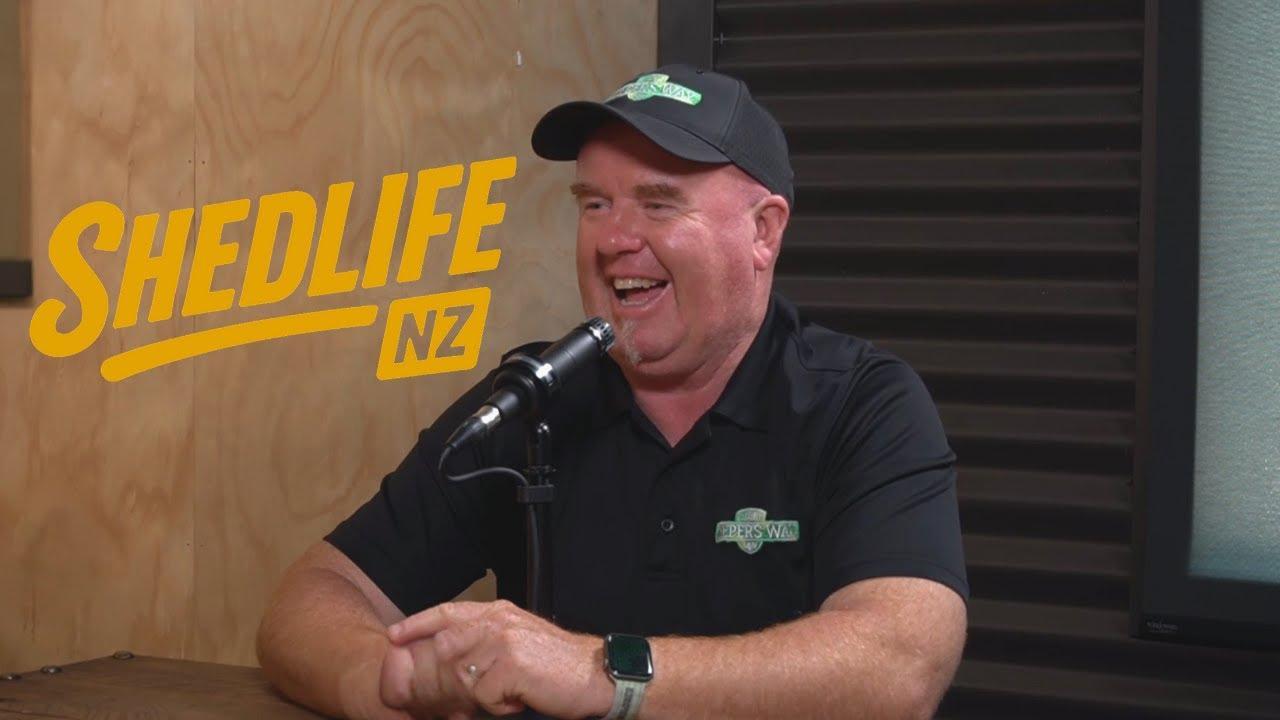
Seddon Park is Hamilton's cricket ground, and for a lot of Waikato people it is one of the great summer places: a sunny afternoon, a long day of cricket and the feeling that something could turn on any ball. It has hosted Black Caps matches for years and is the home of Northern Districts cricket. Most of what we know about it on ShedLife comes from one bloke, Karl "KJ" Johnson, the head groundsman who has spent about 25 years looking after it.
This guide to Seddon Park is built around KJ's stories, with a few practical notes for anyone planning a visit. For anything that changes, such as fixtures, tickets and parking, we point you to the official sources rather than guessing.
What Seddon Park is
Seddon Park is a cricket ground in Hamilton that hosts international cricket and Northern Districts matches. If you have searched for "seddon park stadium", you are in the right place, although the rugby ground in the city is a different venue: FMG Stadium Waikato, which has its own guide. The two grounds sit close to each other and share a turf team, which is why people often treat them as one place.
As a Hamilton cricket ground it suits the long game. Test cricket, one-dayers and T20 matches all have a different rhythm, and Seddon Park has hosted all of them. KJ, in his Seddon Park episode, argues that its floodlights and solid record of hosting international cricket make it a fair candidate when the new New Zealand T20 franchise competition launches.
The man behind the grass
The reason Seddon Park looks and plays the way it does comes down to people like KJ. In The Man Behind the Grass for the All Blacks, Black Caps and Chiefs, he sits down with Jason Davis at Shedquarters for just under two hours to talk about what it takes to prepare a world-class surface.
Most people only notice a pitch when something goes wrong. KJ explains the science, the detail and the obsession behind a good outfield and a good pitch, and what it feels like to know the whole country is watching your grass on test day. His line is that the best groundsmen think like high-performance athletes. He is also a volunteer firefighter, so the pager can go off in the middle of a match week.
If you are interested in the turf behind the cricket, the same turf team looks after the rugby ground, and the FMG Stadium Waikato guide goes into the work in more detail.
How a Test pitch is made at Seddon Park
Before the Black Caps played England in the third Test of their series, Shane and Glenn from Waikato Sheds took a camera into Seddon Park to grill KJ, who is also the company's brand ambassador, about the strip in the middle. It is the clearest plain-English explanation of pitch preparation we have seen, and it pairs well with the man behind the grass episode.
A Test pitch normally gets a ten-day recipe, from wetting it up through to play. With 12 days between the last Plunket Shield game and the Test, KJ started slow rolling about 20 days out. Every day the crew cut plugs from the block, dry them in a microwave and weigh them. The numbers tell them how much moisture is in the base, how hard the surface is and how much air is in the profile, which tells them when rolling will do the most good. Rolling happens early in the morning, before the heat changes the grass. Nobody talks in dates; it is all "match day minus".
The aim for a Test is a fair contest between bat and ball on day one, with the surface wearing over five days so the spinners come into it at the end. KJ calls it a fine line between getting it right and getting it wrong, and says a Test is the ultimate in his job because he is tested for five days too.
Some of the detail surprised the visitors. The block holds ten pitches at different stages, planned out for the whole season, and the strip beside a Test pitch cannot be used next because five days of batters running up and down wrecks it. The wicket was being cut at 13 mm, the same as the outfield, which is mown every day. For short formats the crew do not shave the grass; they roll fast under the sun so the leaf bruises and changes colour. The whole thing is 20 metres by three, and the whole country has an opinion about it.
Seddon Park, KJ says, is a batting ground more than a seamers' ground. When captains ask how it will play, he tells them to look up, not down: the overhead conditions and the humidity do more for swing than the pitch. New Zealand wickets are green because they run live ryegrass for pace, and visiting Asian teams regularly ask whether his mower is broken. The clay is Patumahoe, the same as the Basin Reserve; Hagley Oval uses a darker Kakanui clay and plays quicker and bouncier.
Eleven people look after Seddon Park, FMG Stadium Waikato, the Chiefs' training ground at Ruakura and some of Claudelands, seven days a week, because pulling covers on a wet, windy day is a job for a crowd. Once the toss is done the ground belongs to the umpires, who can ask for a footmark repair at the end of play, which KJ describes as panel beating with a sledgehammer. And yes, there is a Crusaders flag in KJ's office.
Twenty years of Seddon Park stories
The second KJ episode, about the greatest moments at Seddon Park, is the best single introduction to the ground. It is a long, funny chat, and you can watch the whole thing here. A few of the stories stand out.
The 2007 Chappell-Hadlee win. KJ says this was the standout match of his career. Matthew Hayden made 185 not out with a broken toe, and Australia posted 346. New Zealand were 41 for four after 10 overs and people started leaving the ground. Then Craig McMillan made a century, Brendon McCullum got 80-odd and the Black Caps won. Scott Styris rang KJ afterwards and told him to bring his boys to the shed with some beers.
Ross Taylor's centuries. KJ says Ross Taylor scored 10 of his 40 international centuries at Seddon Park, a quarter of his career total. When Taylor retired, KJ cut out a piece of the last pitch he played on, framed it and presented it to him that night.
Shane Warne and the World XI. A World XI toured to replace a cancelled Sri Lanka series after the 2004 tsunami. On the morning of the game, Warne climbed up on the roller with KJ and asked what he would do if he won the toss. KJ said bowl. Warne won the toss, batted, and his side was bowled out for 82.
Tim Southee's last test. After Southee played his last test at Seddon Park, both teams stayed out on the outfield, had beers on the pitch and played touch rugby until late. Joe Root stopped KJ in town the next night to thank him.
Trent Boult against India. In overhead conditions, Boult swung the ball so sharply that New Zealand bowled India out for around 90 before the floodlights were needed. Everyone with a corporate day-and-night package ended up with just an afternoon.
There is also the night someone stole the roller, hot-wired it and drove it onto the road, which is the sort of story you only get from a ground that has been around a while. The chat is worth the whole listen for the way KJ tells it.
KJ also says the ground is a place for sportspeople to enjoy themselves, not just compete. The Southee night, with both teams on the outfield and touch rugby until late, is the kind of thing that does not happen at every venue, and it says something about the way the Seddon Park crew run the place. It is one more reason the stories from this ground travel so well.
Ken Rutherford and Northern Districts
Cricket in Hamilton has plenty of other voices, and one of the best is Ken Rutherford. In Ken Rutherford on batting with Martin Crowe in 1992, the former Black Caps captain, who played 56 tests, talks to Jason and KJ about the 1992 World Cup run, captaining New Zealand and life after playing.
Ken also says the hardest job he has ever had was being CEO of Northern Districts Cricket, the team that calls Seddon Park home, and he does not hold back on how over-governed sport in New Zealand has become. It is a candid look at the ground's home team from someone who has seen the game as a player, a captain and an administrator. His appearances are on the Ken Rutherford guest page.
Going to a match at Seddon Park
A few general tips for a visitor:
- Check the official page first. Match dates, gate times, bag rules and what you can bring in all change. New Zealand Cricket and Northern Districts Cricket publish the details for each match.
- Buy tickets through the official channel. Fixtures, prices and ticketing change every season, so we leave those to the organisers.
- Plan to walk. Seddon Park is close to the middle of Hamilton and near FMG Stadium, and a lot of people walk in from town rather than hunting for a park. If you do drive, look up the parking advice for the day before you leave.
- Dress for the day. Cricket is long, Waikato weather can change and there is not always much shade. Sunscreen, a hat and a layer for the evening are never wasted.
- Be there early. Seeing the pitch before play, and watching the groundstaff do their work, is part of the experience. It is also the best way to appreciate what KJ describes.
More Waikato cricket stories
All the cricket episodes sit together at NZ Cricket and Waikato Cricket Stories, and everything KJ has done on the show is on his guest page. Together they tell the story of a ground that rewards the people who stick around.
If you have a Seddon Park memory of your own, as a player, a volunteer, a groundstaff member or someone who was in the crowd for a famous day, we would love to hear it. Have a look at how to be a guest on ShedLife.