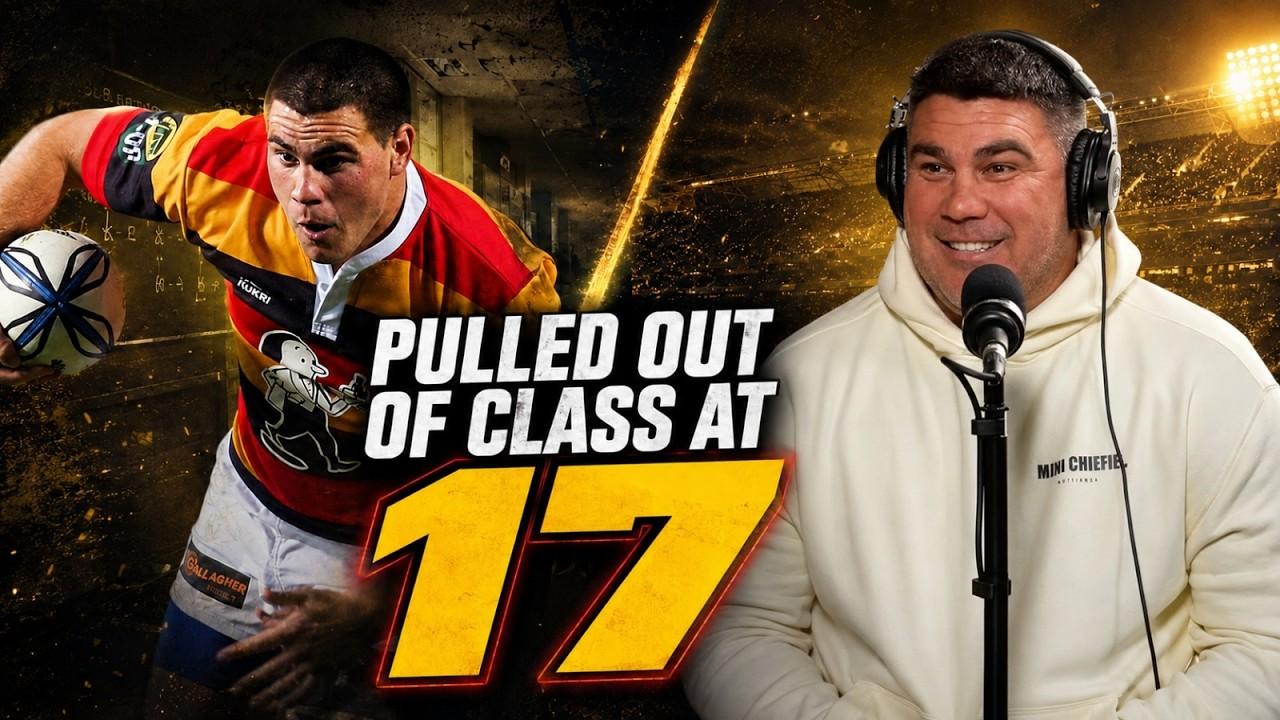
Rugby · · 1 hr 38 min
Leon Holden: Coaching Rugby on Four Continents and Coming Home to Waikato
Waikato NPC coach Leon Holden on the road from Hauraki North club rugby to a Heineken Cup final with London Wasps, years in Japan, the toll of coaching overseas, and why grassroots clubs still matter.
Play audio here
Best bits
“Guys, you're sort of signing up for a gang for life here.”
Leon Holden
“You have to be doing the stuff that people don't see.”
Leon Holden
In this episode
- 00:00Opening: the Heineken Cup final line-out
- 05:01Growing up in Ngatea and Whangamata
- 12:41Knee injuries and a year in France
- 14:54Teaching history and coaching the first 15
- 18:21Landing the first Japan job
- 20:16Two weeks with London Wasps, then the job
- 27:34Tokyo, Nagoya and burning out
- 30:17Whangamata's first premiership
About this episode
Leon Holden is the Waikato NPC rugby coach who got there the long way round: club rugby at Hauraki North, a first 15 coaching job at Hauraki Plains College, years in Japan, a Heineken Cup final with London Wasps, and then home. He sits down with Jason Davis and KJ for the best part of an hour and forty minutes, and it is a coach's view of the game, with plenty of laughs along the way.
From Ngatea to Hauraki North
Leon grew up in Ngatea, and his parents moved the family to Whangamata when he was eleven to run a bus company. He left school and went straight into the senior team at eighteen, playing at about 90 kilos and trying to grow a moustache so he looked tougher against Coromandel. A move to Hamilton for Polytech led to Marist Colts, helped along by a policeman mate, and to a funny story about hiding in his uncle and auntie's back room while John Mitchell knocked on the door trying to sign him for Fraser Tech.
Later he played for Hauraki North under Norm Pratt, then a year in France. Three knee reconstructions ended it, and at 25 he took the Marist under 19s and got hooked on coaching.
Teaching, then coaching on the other side of the world
He got a history degree, and Norm Pratt hired him at Hauraki Plains College on the condition he coached the first 15. Leon coached Marist's premiers to a title, then Thames Valley, before a connection through John Plumtree opened the Japan door. He spent months learning Japanese and how to hand over a business card, and the club later told him that preparation won it. A scholarship trip then took him to London Wasps, where he rang Warren Gatland, stayed two weeks and ended up being flown over for a job interview.
London Wasps and the Heineken Cup final
The key question at his interview was how he would work with Shaun Edwards. Leon started as an assistant and was probably Europe's first line-out coach, designing about sixty line-outs early on. Wasps had three weeks off before the final against Leicester at Twickenham, in front of 85,000. His team set Leicester up with a call to Lawrence Dallaglio, who they hated, and Raphael Ibanez ran 22 metres untouched, with a similar move later giving a second try. He watched about 80 hours of footage to find it, and says he doesn't know how his rugby experience could be any better.
Japan, Ma'a Nonu and the cost
Ricoh in Tokyo came after the earthquake in 2011, and Ma'a Nonu flew in two days after the World Cup, living next door. A second spell followed in Nagoya, where by 2019 he was washed out and watching old shows on YouTube with the curtains pulled. Family had come second for twenty-odd years, and he missed his wife's brothers' and sisters' weddings.
Coming back to the clubs
In 2020 he coached Whangamata to their first premiership since the club started in 1963, then went back to Marist, then helped Thames Valley's Swamp Foxes win a title in 2024, with KJ and his crew getting the Te Aroha ground ready. He also describes the Goldfield School visit that Thames Valley players do each season, and a donation that has reached around $150,000 over seven years. Back in Waikato, he has held monthly pizza sessions with non-Super players and wants them to play their club semis and finals.
What makes a good player
Asked what he looks for, Leon says honesty and habits. Teams put mantras on the wall, but you have to live them, and the difference between a high-performance athlete and the rest is the work nobody sees. He also talks about the gap between English and Kiwi rugby when he was at Wasps, where forwards just wanted to be told which ruck to hit, while Kiwi players looked for the loophole in every drill.
Why it matters
Leon's message is simple: rugby is about far more than 80 minutes, and community is what keeps it alive. For more from the same world, hear KJ talk about looking after the grass for the All Blacks, Black Caps and Chiefs, or Dwayne Sweeney on twenty years with Waikato. The Waikato rugby guide has the Mooloos, Chiefs and clubs in one place.
Questions people ask
Who is Leon Holden?
Did Leon Holden coach Ma'a Nonu?
Why does Leon Holden say club rugby matters?
What did Leon Holden do at London Wasps?
How did Leon Holden end up in Japan?
Mentioned in this episode
Transcript
Generated from the audio, so expect the odd wrong word or name. Timestamps open that moment on YouTube.
0:00A short line-out was called. This is a move that I believe you've set up. Short line-out. Warren Gatlin is the head coach. No. No head-going by then. Had he? Siri McGeekin was the... See though, what I love about this is you know exactly what I'm talking about. I do. Can you share further? Yeah, that was... I often thought about that moment, KJ, and it's...
0:24And I still think, I just don't know how my rugby experience could be any better than that day. You know, it was 85,000 people at Twickenham. We were the underdogs. Leicester had won everything. They'd won the league, the competition. They'd won the... Like the FA Cup, they'd won that competition as well. And we hadn't had a great year.
0:45We'd had three weeks between our last game and that Heineken Cup final. Three weeks. And that was... That's a big... You know, everyone thought we were going to get absolutely steamrolled. But we held our own scrum time because Leicester are very... You know, they used to... We used to call them Leicester mutes. They were very 10-man rugby, try and bash you to death.
1:06We were the city boys and, you know, everyone thought we were the fancy fellas and all that stuff. But we had that defence of Sean Edwards. So we noticed that Leicester in their games were defending the prop at the front of the line out.
Read the full transcript · about 80 min
1:21The prop in the channel. Yeah. You know, normally the nine stands there these days. The hooker in the traditional halfback space. Oh, yeah. And we... Leicester had a very good line out. And, you know, we had Simon Shaw and Lawrence DiLaglio and those guys. And they hated Lawrence with a passion. They always knew that if... They'd try and always dominate us at line out time.
1:41We actually set Leicester up. We called one to Lawrence early on. And they hate him so much that they set up their pods around just to steal anything that was thrown to him to humiliate him. We sort of did some backwards movements where we, you know, we did one, they stole it. And then we did another one.
1:58But then we had the halfback coming through that five-meter channel. Oh, yeah. And Raphael Ibanez, who coached the Teams Valley for a year as well, just underhand straight to him and run 22 meters untouched. Because they had those big front rowers in those channels. Yeah. But we did a similar one later on as well on the other side of the field.
2:19And so we actually got two tries from that sort of same movement, but then a little addition to it. So it was... And in big games like that, when you just have that sort of, well, not luck, momentum, that's enough then to close the game down. But the cameras did zoom in on you, eh? Yeah, I think so.
2:39Yeah. You know so. Yeah. I missed the first one because I was looking at the computer. But then, you know, then you feel and hear all the noise. And it was actually a bit of a shame because a week before I'd just signed a new contract. And I thought, shit, I should have waited another two weeks. I could have got more.
2:55Yeah, yeah. But that's, you know, that's life. But we had one hell of a night. All right. Welcome to ShedLife. We've got an awesome episode coming at you today. As you know, everybody's welcome in the shed, even KJ.
3:10We're telling stories of good people working hard. We've got Leon Holden. He's all the way from Hauraki North to now the Waikata Rugby NPC coach. So we're going to be getting into all sorts of stuff about the rugby journey, coaching, what works, what doesn't, adventures along the way, traveling all around the world with it. But welcome aboard, Leon.
3:33Thank you. KJ, brother. Hello, mate. Nice to see you. Thanks, KJ. Legend. Yeah, mate. Hey, listen, I just want to just put a little plug in here for me. The man in front of us today. Yep. Fantastic coach. We know that. But, you know, there's just good people out there. Yes. This is a good man. And what I love about Leon is it's just, he said yes to you and I to come out and do this for a start.
3:55But no, he's a guy that is willing to help. And, yeah, I've seen him, well, we've known each other for many years, Leon. Yes. You know, you work at Marist and all that. But just the stuff you do for the people of Waikato, mate, is I'm proud to be a mate. So it's an absolute honor to have you here today and massive welcome.
4:14Thanks, KJ. That means a lot. That's what we're all about. Case. It is. I thought we would just go back. I was stoked. KJ message, hey, we're going to be doing the podcast and we bring on Leon Holden. And then I started doing my deeper research and I was like 1992, Holraki North. And I was like, I'm a North supporter.
4:37I played hockey with all the old boys for 10 years. It's now often our kids are playing out there. So I got my latest supporter shirt only a couple of weeks ago on the sponsors. I was like, got to wear this. The guys love it.
4:51But maybe just take us back to the bit. How do you go from Holraki North to, yeah, coaching Waikato rugby? And how did you end up there? Yeah. Well, I think probably the best way is to start with the playing side of things and how that merged into the coaching side. So I grew up in Ngātiya. Yep.
5:12Mum and Dad moved over to Whangmatā when I was 11 to run a bus company. Nice. So that was quite a big shock for me because I had a lot of good friends in Ngātiya and the Herakī Plains at that stage. Fleming Shield was the big, a bit like the Gwynn Shield used to be here.
5:30And I'm talking about the David McCullums and Gavin McCleavers and the McFetridge brothers and Aaron Taylor and all these sort of guys. So I had to leave them behind and I knew they were going to transfer into the famous First 15 at HPC.
5:46Coached by Norm Pratt, who I know very well. Probably the second and most successful First 15 coach in the country behind Nigel Hotham, winning the Colder Cup 12 years in a row. Wow. Yeah. I was very envious I was going to miss out on that and go to a beach town where if we had 15 people at China, it meant the surf wasn't up.
6:06Right. And that used to kill me, you know, who just loved rugby. So that was okay going to school there. And then probably the senior team was only ever in the third or second division in those days. So again, going to watch them was very, was hard because I couldn't understand as a youngster why they weren't in the premier grade.
6:29In those days, the Ngātiya's, the Pāra West had five teams each. Yeah. Wow. Whongta only had one. Wow. You know, Pāra, for example, had Pāra West and Pāra Old Boys with five sides each. That's 10 rugby teams in Pāra. And now they've got one. We'll probably maybe talk about that later on. But obviously leaving school and leaving school as a young seventh former, went straight into play for the senior team in second division.
6:57How old? Just turned 18. Playing senior rugby. Playing senior rugby at 90 kilos. Yeah. I remember going to play Coromandel one weekend and, well, in the season and trying to grow a moustache. I would look tougher. And that, as you know, towns like that, it's old school rugby too where there's a fight every five minutes. Yeah. You learn how to dodge pretty quick.
7:26So that was that. But then obviously then decided I better sort my life out. And so headed over to Hamilton to go to Polytech in those days. Did business management and failed everything.
7:39I was playing cricket for Waihi in those days. And that's when I got mixed up with the famous Kneebone family from Hamilton. Of course you did. And Ross Kneebone obviously was a new policeman in town at Waihi. And rang up Brian Kneebone, who was coaching the Maurits Colts, and said, you better get this guy into your Colts side.
7:57Like, I didn't know at that stage that Hamilton Maris had just avoided bankruptcy back in those late 80s, early 90s. Because at the beach, we had a lot of time together with John Mitchell. He obviously was a Fraser Tech man. And he had arranged for me to go to Fraser Tech as well.
8:14Luckily in those days, the Maris trainings were Monday and Wednesdays. So Brian picked me up Monday. Yeah. Went to Maris training. Went to the Hillcrest Tavern and the rest is history. And John Mitchell arrived to pick me up on Tuesday. And I hid in the back room, my uncle and auntie's house, trying to avoid this big bloke banging on the door.
8:34So, yeah. So played there for a year for Colts. And then luckily I played for the Premiers when I was 19, 20. Who was playing for them then? Well, in those days, the Maris senior team had got last the year before. Oh, wow. They had played Franklin in a promotion relegation game.
8:54And Brent Anderson actually had the kick to put Maris into the second division for Franklin, but he missed it from halfway. The following year, the club took about 11 of us Colts up to the Prems. And that's the Murray Drivers, Gleam Metcalfe, those sort of guys. And then we had the rival of Matthew Cooper and Rob Gordon back from France.
9:17Brent Anderson swapped over and the rest was, as you say, was history. So we had a very young side and we didn't have a club rooms in those days. Was this at Claude Lunds? This was at Claude Lunds in the old trotting club. Yeah. The sort of place where at the end of the night they got the hose out to hose down the concrete.
9:36But it's amazing how it forged incredible friendships not having a club rooms because we ended up having, I guess, this sort of band of brothers sort of feel about us that we were the rejects of the city. So it was actually very good.
9:51So I was lucky enough to make the Waikato Colts that year. Had another year to go after that. But Dennis Brown from the Plains was coaching Thames Valley and talked me into going back to Thames Valley to ensure I got a New Zealand Colts nomination.
10:08I probably shouldn't have gone, you know. Why? Well, I got injured for a start. But I should have stayed where I was. Had another year at Waikato Colts. So Dion Muir and Aaron Hopper basically took my spot in that team. And that was the Rhys Duggins. Oh, yeah. I think John Bowe was the coach. And then all those guys went through that 90s together.
10:31Some big names. Yeah, yeah. Yeah. It was a good side. So, yeah. Going back to play for Thames Valley, then I needed to find a club to play for.
10:43That old, and it comes up in every union, I'll be back home to live with mum and dad at the beach. But Fong Matar was still in the second division. And Mike Davis is on your T-shirt there. Oh, yeah. There it is. There you go. He knew my father and he came around at the beach and said, come and play for North.
11:03And a big regret of mine, I should have stayed and played for Fong Matar in the second division and tried to lift them up. But I was 20 and I probably didn't have the, not the confidence, but I guess I wasn't arrogant enough to try that.
11:19That was a big regret of mine. So, anyway, I meant to play for North. But the problem was dad was basically just about a life member at the Ngati Rugby Club.
11:29And North was a big thing for him to take, but he took it all right. How was Christmas lunch when you... Yeah, quite. But Norm Pratt, who had coached Ngati for five years as well as coaching the first 15, had swapped over to coach Harricky North. Mm-hmm. And he'd taken all those guys I mentioned at the start of this, all the guys that I missed out playing with.
11:53They were all Harricky North boys and I really wanted to play with them again. Yeah. So, it was a very young side. Whereas the Ngati team was very, was old. You know, Irvine Campbell, Mark Dara, Ian Burke, Glenn Dalgity. You know, they're all 30-year-old farmers, if you know what I mean. We were all 20, 21 and full of it.
12:13But, jeez, it'll be a good old battle against those boys. I remember we played them once. It was nine all at the Ngati domain there. And I swear there must have been 1,500 to 2,000 people there. Wow. Yeah.
12:25Famous old saying at halftime, they threw the ball on. Because it was seven kilometres separate the two clubs. And in those days, Ngati were probably the better team and the better club. So, some good old battles there. So, yeah, no, that was the progression. And then, obviously, when I got injured, missed that New Zealand Colts stuff, trials.
12:46I sulked and went to France for a year. And then came, obviously, came back to New Zealand after that. And then hurt my knee pretty badly, really. And that's three reconstructions later, I had to give it away. Can I just ask, though, how does a boy from the Haraki Plains get to France to play footy? Like, back then, it's not like a… No.
13:10No, I was pretty lucky because Rob Gordon, who was, you know, at Marist in the Prem side, he came back from France. He'd been there for five or six years and was fluent. And he was in the All Blacks that year.
13:24There was a couple of times at Rugby Park. I was ready to run out as a number eight foot Marist Prems and Rob would arrive and… Take over. …the jersey would literally be taken off my back. Yep. And in those days, once you're in the reserves, then you were in the reserves for the rest of the game and you never got on.
13:38Correct. But I didn't care. Warm the pine, eh? Warm the pine, they call it. Yeah, Rob let us hang around with them at night time. So, it's always for going.
13:46But he, obviously, had gone back to France and so gave me a call and said, I've got a club. I've got a… It was, well, supposed to have been amateur in those days, but it wasn't. So, for a young 21-year-old, it was a paid trip overseas. Let's give it a crack. So, it was exciting. Yeah. It was good.
14:04It was. So, yeah, it was in the 90s when my knee really started to play up and a great man, Stu Nickel, a lot of us will probably remember him, talked me into going to Coach Marist under-19s because I was out for the whole year. So, how old are you at this stage?
14:2125. So, a young 25-year-old coach in a rugby team would be… That wouldn't have been very… Wouldn't have been the norm, was it? No, it wasn't. We had Mark Van Gisbergen was in the side. Oh, yeah. Craig Stewart, who's coaching with Dave Rennie in Japan now. But I really enjoyed it. Really enjoyed it. And that got me hooked.
14:43So, I thought I'll… I tried to play again the following year, played all year and then busted my knee again in the semi-final. And that was 1997. That was time to finish up, really, which was sad. So, in 98, I went to Teachers College, got my history degree. And then, 99, I needed a job. And Norm Pratt, who was the principal at HPC, said, do you want a job?
15:07I've got 72 applicants. I'll give you the job as long as you coach the first 15. Nice. And I probably was the dumbest of those 72 as well. But, you know… I loved teaching there for four years. And Norrie Harris, I heard you mentioned it before, was my mentor.
15:25Great lady. The lady I respect the most in the world. Wow. So, it was great to be there with Norm. He'd coached the first team for 12 years. He retired from coaching in 98 to coach Tim's Valley.
15:39And, unfortunately, a father took over, but he got killed in a car accident. And so, 98 was when the 12-year stretch was broken, basically. Tim's High School won it. So, 99 came back in and managed to win it three years in a row again, which was nice. And it was that stage I realised that I liked coaching.
16:03I had a few second-year sevenths. Yeah. You know, you work hard to, you know. Yeah. I really enjoyed that side of it, the culture of First 15 rugby. And that set me up pretty well. So, when that finished, the Marist Prem job had come up in 2002. And in those days, Marist had won probably the first round for seven or eight years in a row.
16:30And it never… Last time we'd won it was 94. Chokers was a term chucked around a lot. Yeah. And, look, I took over a great side, and I won't deny that. You know, I had the… Jono and Chris Gibbs were the locks. Wow. Marty Holler, David Dillon were the flankers. Oh, yeah. Paul Martin was a Highlander prop who started our grand final on the bench.
16:52That's how much depth and… That's how strong club rugby was in those days. We had provincial… We had 17 or 18 provincial players, either Bay of Plenty or from Waikato. So, it was a great side. So, we… Anyway, we were… I was lucky enough to win it.
17:08So, then I thought, this can either go two ways in my second year. Yep. In that stage, Thames Valley had also been relegated from the second division to the third division. They lost… Didn't win a game in that 2002. So, I applied for that job, and at 32, I was lucky enough to get that. In the meantime, New Zealand had changed the criteria and bounced Thames Valley back into the second division.
17:32And in those days, to coach a second division side, in those days, you got $50,000. That was the… New Zealand rugby paid that. Right. Nice. I think third division was, like, obviously less than first division. It was obviously a lot more. Yeah. Again, did that for a year, and we managed to finish fifth. Uh-huh. Lost to Manawatu, 13-12.
17:53Oh. In Pora, in the wet, when we missed a conversion in front. That's a coach, Calif. It was. Especially when Neil Douglas, who was the seventh former at HBC, who I'd called up and scored the match… I thought was the match-winning try.
18:08That was pretty tough. But things didn't go too well after that with the union. There was a bit of… A lot of stuff hit the papers about contracts and stuff like that. And in the end, I decided perhaps I was best out of it. And that's when I was, again, lucky enough to… I bounced on to Japan for the first time.
18:27So how do you do that? Yeah. Well, again, I was very lucky, and I liked our rugby a lot because all that previous time I was talking about… Even when I was in Thames Valley, the union still put me through all my coaching papers, so to speak. So I got to… And this is something that's probably lacking in rugby at the moment.
18:44It seemed like to me every month I was down in Palmerston North at the Rugby Institute or in Wellington for a course. So I was hanging around people like John Plumtree and those kind of guys. And Plumtree said to me one day when this drama was going on with Thames Valley, I've got a mate who's with a club in Japan.
19:06They're looking for a head coach. What do you think? So, you know, that's an introduction you need. And the guy came to New Zealand to meet the coaching candidates. Tom Coventry was one.
19:21I'm not sure Tom was too keen on it, and I was another one. So I spent months preparing for that, learning Japanese and talking to the Japanese teacher at HPC on protocols, on how you hand a business card out and all that stuff. Business card, the two hands. All that stuff. So I did all that. Wow. And he said to me later on, that's what nailed it for him was that preparation.
19:41Wow. So that was good. So yeah, it was a one-year contract. Aaron Penney was the coach before me. He'd just finished 10 years, I think, in Japan. So he was moving back to run Spates Haley, I assume.
19:59Yeah. So that was good. And then, you know, I was lucky enough, again, in that time period to get a scholarship, high performance, Prime Minister's high performance scholarship. And part of that scholarship was going to spend two weeks in the UK. So again, I needed somewhere to go. So literally searched online, saw that Warren Gatlin was at London Wasp, rung him.
20:25He said, no problem, you can stay with us. So again, lucky enough to go there and spend two weeks with London Wasp and Warren. And they had just won their second or third premiership at Twickenham.
20:41So yeah, then after that. What a great connection, though. Again, going back to the Wakata, right? You know, Gaddy's from here. So you just ring him up and say, hey man, can I come over? Yeah, start my house. Yeah, yeah. Well, that's pretty actual. It was sort of connected because, I don't know if you remember, but in 1995, Warren coached Thames Valley as well.
20:59Oh, did he? No, I didn't know that. When they won the third division, he'd just finished playing and he helped Willie Hitaraka, who was a Nātiya policeman, coached Thames Valley. I bet he knows you, being the policeman, eh? Not anymore.
21:14And obviously played against Gatz when Maris played Telpery and Johnny Gordon, a good mate of mine. Gatz's best mate's Steve Gordon. So again, it's all that, you know. Connections, eh? You know, you catch up with each other at Waiya Beach and through friends. So I'm forever in debt of Gatz for that and caught up with him two weeks ago and Warren's only shouted him eggs on toast and had a good two-hour chat.
21:41It was nice. So look, I'm forever indebted to him. So when the Japan gig came to an end, Warren was leaving to come back to coach Wakata in 2006, 2005. And so he said to the club, got this young guy, remember him? He came.
21:58Wost had the worst line out in England at that stage. So they flew me over from Japan to London for the interview. Their main question was, how will you work with Sean Edwards? Oh, yeah. Because Sean's a different character. Right. Best coach in the world, but he's a very unique man. Very unique. And I must have said the right things because then obviously got a three-year contract with them and then extended that to five years, yeah.
22:26As the assistant coach or as the head coach? Started as an assistant coach and then moved to Ford's coach. And then when we finished, well, finished and came back to New Zealand and then I went back two years later as the director of rugby when things started to decline for them financially, yeah. So I was lucky to spend those years with Sean and Ian McGeacon and those guys over there.
22:50And it was, yeah, look, it's pretty hard to live that experience again. You know, we were the kings of Europe really. You know, and you're bouncing around a place like Italy and France for games. And, yeah, I owe my wife a lot for that because she brought up our son by herself in England with no support.
23:14And at the time I probably didn't really appreciate it, but, you know, I do now. Wow. Yeah, nice. Yeah. So that was it. And then before, can we just, there's so many things. Yeah. I would like to just ask more about the difference between London and the Wasps and Waikata Rugby. But I'm just going to be remiss if I don't throw out a few names and see if you recognise any of them.
23:35Brilliant. Just from the planes. Were there anything to do with Kyron Backs when he was Thames Valley? I'll give it a moment to see if they registered. Matthew McInnes.
23:50He might have been at the HBC at the time, playing for the first. Just Brent Aichenson, Stephen Bull. Yeah. Any of these dudes. Yeah, Matthew McInnes. He was in the same year as my stepdaughter. Yeah. I was a stepdaughter. And he was a very good hockey player. Yes.
24:11He didn't play first team in the fifth or sixth one. I'll use the old terms. Yeah. Go for it. Because that's what they were in those days. He wouldn't have made it anyway, to be fair. You know, we had five rugby teams in those days at the college. Incredible. You know, and most of my teams was, you know, 16 of the players were either seventh formers or second year sevenths, you know.
24:35Yeah. But in the seventh form, Matthew decided he wanted to play rugby. So, I put him in there. He was good enough. But, you know, rural school, his mates were in it as well. Richard Tafts and those sort of blokes. So, yeah, he did really well.
24:53Yeah. Well, shout out, man. He was still killing it. He still kills it on the hockey turf. Like, out of all the, we call ourselves a senior management. Yeah. He by far still keeps up with all the younger players and still has the skills. Yeah. Well, I don't know if he's told you, but in two, my second year at that teaching at that school, the first 11 hockey team won the ranking cup.
25:13Right. So, the New Zealand champions. Oh, wow. Probably down to the fact that the turf had been in five, six, seven years at that stage. And us at the first 15, we ended up playing in the Waikato comp because we were probably just a little bit too good for the Thames Valley one. And we used to regularly beat St. Peter's and St. John's and St. Paul's and all that.
25:34I think we got second in the Waikato First Division in those days. Oh, yeah. Boys High was still out of it, but everybody else was in it.
25:42Yeah. So, it's a great sporting area, the playing. Yeah. What about Dion Lawson? Dion Lawson. Oh, well, we've got to go backwards. Oh, sorry. We've got to see where the backseat comes up, but then a H.O. Brent H. I'm just some of the dudes that literally I played hockey with on Monday night. Yeah. They're all great Northmen.
26:00Yeah. Bully. Yeah. Look at you too. Oh, look. It will be remiss if they see this. You know, how rich they will. Absolutely they will. Yeah. Shout out. Wayne Kowalski was there. Yes. Yeah. Oh, Wayne. I played golf with him last year at Carl's charity thing in December at the golf course there. Oh, it's so good going back and seeing those guys.
26:28You could walk into the North Club rooms and it's just like walking back into yesterday. But you've been back. You went back to coach over that way, didn't you? A long ago. Didn't you go to Whangmatara and then with Thames Valley? Yeah. So when I got back from London then, it was around 2011 when I went back to WOS as the- I did 18 months as a real estate agent at Lodge.
26:54Did you? To the worst- The knee bones, right? Yeah. Yes. Through the worst real estate period in New Zealand's history. I did it right, but not, you know. And then the WOS owner rung me in the middle of the night and said, I'm sacking the director of rugby tomorrow morning. I want you here tomorrow night.
27:11And I don't even think I talked to my wife about it. Right. I just said, you need to drop me at the airport in Auckland tomorrow. And then I told her what was happening and she was all right with that. So I did that for three, four months whilst we're heading towards the bottom of the table. And at that stage, the earthquake had just happened in Japan.
27:29And my agent had managed to sort something out with RICO in Tokyo. And so flew over there for the interview and all that stuff and then managed to be there for three years, which was a great period as well. Very lucky with RICO. It was a very inner city club. We literally lived in a house and so it wasn't like an apartment.
27:53We used to bike to training, which was 300 metres down the road. So it was. That's cool. Yeah. My son went to all Japanese primary school. Oh, yeah. You know, one blonde head, 999 Japanese. So he learned Japanese pretty quick. So it was a great period.
28:09So then that finished after three years. And we had some good players, you know, like Ma Nonu and Roy Kinikinilao and Colin Burke and Tamadi Allison and all those sort of guys. It was a pretty good side.
28:21Bounced back to Hamilton and then did the director of rugby role at Waikato Rugby for three years. 15, 14, 15, 16, I think. And then back to Japan again to Nagoya to take over Toyota Shocking, who were also in the top league. So that was another three years.
28:41Probably wasn't as enjoyable, that one, because Nagoya, where we stayed, was a bit, wasn't probably as nice a city. It was in a setup.
28:49And then in 2019, I was finished. I was washed out and mentally, mentally very, very low. It was almost like it was 25 years or whatever. All that time of, it is pressure. Yeah. You know, my wife's got five brothers and sisters. I've missed all of their weddings. You know, like it's all that stuff. And after a while, I must have been late 40s.
29:14And then you start to think, well, okay, it's been good fun. Got a little bit of money saved away. But what am I? I've only got 20 summers left on this earth sort of thing. Do I need to start to give a bit back to my family who sacrificed a lot, a lot? Because people always saved family first, but I never had that for 20-odd years.
29:35They were second. Because I was pretty ambitious and I wanted to do well for them. Because I wasn't brought up with a trust fund or a farm to take over when mum and dad handed over. We were very middle class and proud of that. So I was like, well, I've got to forge my own family and wealth, I guess.
29:56So I had a year off and didn't do anything. Just worked around home out at Kaipaki there. Lucky to have that home because I guess Japan and all that paid for that, you know. But then I thought, you know, it's, as usual, we get bored. And I thought, I just started to, wanted to coach for the love of it.
30:17So I went back in 2020 with Whangmatar and we had a bit of a town meeting, I guess. They'd never won the premiership since 1963 when the club had started. That's how young the club is. And so we won it in that year. And I was lucky Dave Dillon, a very good mate of mine, was back from Japan and COVID.
30:40And he came and helped us in the last half of that season. So it was great to coach with Mel, mate, again. And Kevin Flynn was involved? No, he wasn't involved at that stage. No, no. Wayne Smith was coaching Waihi. Was he? Yeah. So when Waihi played Whangmatar, it was all on. It was all on, mate. There was people everywhere.
30:58And then after that, I thought, well, the next challenge for me was Marist. They dropped to sixth in the local competition here. So I went back and coached them for two years.
31:13Obviously went from sixth to fourth to third. Felt good about giving back to them as well because they'd done so much for my career. And then after that, then David Harrison, who I used to teach and coach at HPC, was the Swamp Fox coach and said, can you give me a hand? So again, okay, let's do it.
31:36So two years. And then again, we were lucky enough to win it. Yeah. In 2024, I think it was. At Te Araha. Yes, it was.
31:47This is a funny story. It was obviously the very last minute where the final was going to be. And so. Because it should have been, Mid-Canterbury got beaten, didn't they? They got beaten. Which really, they were the top team. We finished third. And so we went to Whanganui and played them and. Upset. Not upset them. We thrashed them.
32:09But that is an upset though, right? So we were second and we were in the aftermatch watching the one play four. And so Mid-Canterbury were four. Correct. South Canterbury. That's right. We were one. Yeah. And then next minute, Mid-Canterbury are one. And then the whole room went silent for about five seconds until everyone then realised that because we were two and they were four, the final was going to be in Thames Valley.
32:32That was an incredible week because then where do you host the final? Because Thames Valley is not like a poverty bay which has got Gisborne or, you know, South Canterbury's got Timaru. We've got five towns, six towns who are all great towns. So there was one publican offered $50,000, I think, to host the game in his town.
32:52That sort of stuff started going. What's there? Oh, this is brilliant. But it was shows, I think New Zealand rugby might have said, look, to be fair to Mid-Canterbury, don't put them up Coromandel. I was awake. Because I've got to come from Ashburton to Christchurch to Auckland to Hamilton to. Yeah, true. So it was decided to be in Teara.
33:11But then we thought we've got to put a show on. So, you know, the scaffolding goes up and then the field has to be marked properly. And I don't want to be disrespectful, but we thought, right, let's turn and put a show on here. So I ran KJ, I think, on the Monday and said, what are you doing tomorrow?
33:28Long story short, good man he is. He packed up the trailers and about five staff and spent about two days making the place look magnificent. But there was a few clashes with the local council staff and there was a bit of either you go or I go. Yeah, correct, there was, yeah. Can't deny that. KJ won.
33:48But there was a great… Well, to be fair, Thames Valley won, right? They did. It was a great day. And it was special. It was. It was really special. Great for… Just great to see all the kids there. Yeah. Because I remember growing up, you know, watching that Thames Valley Shield Challenge against Auckland in 1989. I think it might have been at Pyral.
34:08You know, there was 7,500 people. That was Terry Wright and John Kerber. Oh, yeah. Jack Hanley and Kevin Hanley scored the famous try and gave the bird to the Auckland players as he ran in behind the posts at Pyral there. So it was good to feel like you were a part of that. Yeah, and then so last year, the FBC stuff came up.
34:28Old mate Ruben Samuels rang me up and said, can I give a hand with that? And so I was happy to do that. And, yeah, we were lucky enough to beat Canterbury in the final. And then that year, Ngātia Rugby Club was its 50th year. And Dad, obviously, was part of the group of fellas that started that club up in 1975.
34:48It'd gone into recess in the late 60s, I think. I think it was called Herakie College Old Boys in those days. They were in their 50th year and they were not going to fold, but they had one team that was in the second division, but they couldn't get a coach. And I said, oh, I can give you a hand for a couple of weeks.
35:07And that turned into the whole season. And, oh, look, I loved that. Some great people. And just, I used to drive home, great admiration for, there's so many great people there in that club who are doing it, not doing it tough, but they don't have the resources and the support that a lot of the other bigger clubs in Thames Valley or New Zealand have.
35:30But guys like Rangi and those guys, they just keep on trucking and it's just incredible. A bit nervous when we went to play Herakie North in the second division at Waitakaruru. Peter Mitchell gave me a bit of grief. You'd need security to get out. But they were very good, actually. Those men you just talked about. We shook hands and we were lucky enough to beat them.
35:55And it was a great day, too. I really enjoyed that. So I sort of felt at that stage, I'd gone full circle and without being corny, I'd given back to all the places that had helped me get where I'd got to. And that made me, I guess, feel good, you know. And then that was it. And then obviously this next position came up, which I thought, this again suits me.
36:19I don't really want to leave Cambridge. So, yeah, that's just suited my life situation, I guess. It is amazing, though, how you've gone back to your roots. You know, you've been back to coach. And I talked about it as a mate. You know, you'd want to help people out, which I do love. I've done a little bit of homework.
36:42You've got a moment on social media that you're very proud of when you're in the Wasps. A short line-out was called. This is a move that I believe you've set up, short line-out.
37:00Warren Gatlin is the head coach. No. He'd gone by then. Had he? Jerry McGeekin was the... See, though, what I love about this is you know exactly what I'm talking about. I do. Can you share further? Yeah, that was... I often thought about that moment, KJ, and it's... And I still think... I just don't know how my rugby experience could be any better than that day.
37:27You know, it was 85,000 people at Twickenham. We were the underdogs. Leicester had won everything. They'd won the league, the competition. They'd won the... It was like the FA Cup. They'd won that competition as well. And we hadn't had a great year.
37:44We'd had three weeks between our last game and that Heineken Cup final. Three weeks. And that's a big break to have. And so we thought, how are we going to do this? So what we did is we actually played an internal game. Oh, yeah. A's versus B's, basically, the Henley. Yeah. And boys knocked the hell out of each other.
38:08A few scraps and, you know, all that sort of stuff. It was good. One of our props who was... We were going to start... Got caught in traffic and missed that game. And so we promoted a young guy called Tom French who was effectively like our eighth-ranked prop. Prop played in that game. And we ended up playing him in the final, marking Julian White.
38:28Incredible. You know, like everyone thought we were going to get absolutely steamrolled. But we held our own scrum time. Because Leicester are very... You know, they used to... We used to call them Leicester mutes. They were very 10-man rugby, trying to bash you to death. We were the city boys and, you know, I thought we were the fancy fellas and all that stuff.
38:47But we had that defence of Sean Edwards. That was our DNA. We were incredible defenders. Yeah, so we looked. We had three weeks to prepare for that game. So we noticed that Leicester in their games were defending the prop at the front of the nine out.
39:06The prop in the channel. Yeah. You know, normally the nine stands there these days. And the hooker in the traditional halfback space. Oh, yeah. And we... Leicester had a very good line out. And, you know, we had Simon Shaw and Lawrence Delaglio and those guys. And they hated Lawrence with a passion.
39:26And they always knew that if... They'd try and always dominate us at line out time. So we actually... We had to prepare for that.
39:38So we actually set Leicester up. We called one to Lawrence early on. And they hate him so much that they set up their pods around just to steal anything that was trying to him to humiliate him. Yeah. He's such a champion bloke and such a strong man. He didn't care. He took that. So we sort of did some backwards movements where we, you know, we did one and they stole it.
40:05And then we did another one. But then we had the halfback coming through that five-metre channel. Oh, yeah. And Raphael Libinies, who coached Thames Valley for a year as well, just underhand straight to him and run 22 metres untouched. Because they had those big front rowers in those channels. Yeah. But we did a similar one later on as well on the other side of the field.
40:30And so we actually got two tries from that sort of same movement, but then a little addition to it. So it was... And in big games like that, when you just have that sort of, well, not luck, momentum, that's enough then to close the game down. But the cameras did zoom in on you, eh? Yeah, I think so.
40:51Yeah. You know so. Yeah. I missed the first one because I was looking at the computer. Yeah. But then, you know, then you feel and hear all the noise. And it was actually a bit of a shame because a week before I'd just signed a new contract. And I thought, shit, I should have waited another two weeks.
41:05I could have got more. Yeah, yeah. But that's, you know, that's life. But we had one hell of a night. I can tell you that. Brilliant. It was brilliant. Yeah. Brilliant. Special times, all right. And we've got a reunion for that coming up in six months. And we had one after 10 years in 2017. And they fly us all back from around the world to London.
41:26Do they? To London, yeah. They flew myself from Tokyo. And they flew Joe Ward and Mark Van Gisbergen from New Zealand back for it. So it's a pretty well-win three days. But you can't say no to that. No, you haven't.
41:41Yeah. Man, there's so many things. There's so many little threads that I want to pull on this one. I'll chuck out a name just so if you remember him from the HVCD. Johnny Garrett or Johnny Jay. Yeah. I don't really know him too well, but I do know the name. Oh, that's good. I was just thinking of all the goods that paid north.
42:03And I just said, who might I have missed from the dugout on Monday night? You've got to be careful because some of those guys I probably taught. Yeah. Mr. Holden? Yeah. That's a good honour. I taught the way I was taught too. Oh, old school. Old school. Was it? Yeah. The only thing that was missing was the cane.
42:20Yeah. We had the cane still in the staff room in those days. I'd say the cane would have been really useful on the hold acuplanes. Did you ever get caned? No. I did. No. Did you? Yeah. You would have deserved it. Our whole cast got caned. Really? Yeah, in PE. Was it your fault? No. I was an angel.
42:36Yeah. Yeah, the old cane. Yeah. People won't know what it is. Sorry, I butted it in there. No, man. That's cool. I wanted to just touch on the, how did you find it, the Tennis Valley relationship I've always admired with Goldfield School. Oh, yes. Yeah. Oh, incredible.
42:57Do you know about this? No, I don't. Yeah. Matt Bartlett, I believe, set this up in 2017 when he took over the Swamp Foxes. I think in, you know, that 2006, 2016 wasn't a great period for Thames Valley rugby.
43:13More often the bottom half of the table and the top and, you know, et cetera, et cetera. And Matt came in and he really deserves a lot of credit. He changed a lot of things and he introduced, and we often talk about it, how you've got to give, I guess, a player's a purpose, but you have to make them understand that, well not make them understand, but, you know, we're very privileged positions to be involved in sport.
43:38Right. Yeah. You know, it's. Yeah. Only. Like a game of footy has taken you all around the world. Yeah. But for another way, it might not have, and nine other blokes might have done the same thing. And you can't think, or be arrogant enough to think that you're that special. Yeah. Sure, you have to work hard and make your own luck.
43:57But, yeah, and it was, and so David Harris and Joe Murray had carried that on, that relationship with Goldfield School. So that's a school in Pyro and lots of children from around the area go there every day.
44:12And, gee, we used to go in, and it's a tradition now, the players, you know, at the start of every campaign, go into the school, spend sort of two or three hours there. And we used to do things like paint their swimming pool and stuff like that. Oh, yeah. And, you know, sit with the kids and all that stuff.
44:31These are kids of serious medical issues, you know, like they, some of them, or most, a lot of them are in wheelchairs and things like that. Oh, wow. You know, it's very humbling. Yeah. And then every year, the club, the team do something charity-wise and then donate back a cheque to the school. Normally, it's around that $20,000 mark, I believe.
44:52That's awesome. So I think over the seven years now, it's up to 150-odd, thousand dollars. Goldfield, isn't it? Yeah, Goldfield School. Gold, so yeah. Yeah. I think it's, yeah, like a special needs school. And you always see it in the paper, you see it around, you meet the kids, but I just think it's such a cool way that they've done.
45:11And, yeah. Yeah. To explain the privilege of not only being like a semi-prior athlete, but just getting to be an athlete is, it's very easy to take for granted how awesome it is to, you know, have all your arms, legs, be able to get out, do what you want, and then go, oh, not everybody gets the same.
45:29You know, I think, and that's too much these days. It's like, yeah, not everyone starts on the same place. No. On the running track. No. And you realise, hey, when you're often in our positions, we started, you know, 90 metres down the track, you know, like, so. That's right. And the people I admire there are the teachers and support people, credible people.
45:48You know, you think, wow, I wouldn't last a week doing what they do. It's incredible. Surely it must bring the players back to earth. Oh, it does. And I don't know if you remember that game in Finianga when, I can't remember his name, I think it was Harper, ran the ball on at halftime. He did the flips.
46:06Oh, yeah. He's from Goldfield School. Is he? Yeah. There was a superstar. Yeah. Seven News or whatever. Yeah, it was. Seven Sharp. Yeah, it was. Yeah. But the highlight for him, you know, that is his Olympics, right? Yep. But how cool and how hard was it to do? Yeah. Come back. Yeah. There was nothing. Yeah. No time at all.
46:27So, yeah, you're dead right. It's a very special relationship in Thames Valley. And Matt and Joey and David deserve to be patted on the back for that. Will you do something similar with your coaching these days or with your players? Do you go and do that? Yeah, we're looking at how we can do something similar.
46:47NBC's obviously very short and sharp. The hard thing for us planning, KJ, is we don't know when we're going to get the players back. Because it all depends on when they finish Super Rugby.
46:58And we've got, you know, 15 to 18, I think it is, sort of, players in those Chiefs, Crusaders, Hurricanes, Highlanders. You know, so it's a bit difficult. But it's something that, yeah, I'm always conscious of. Even to the point of, even just going back to clubs, you know. Yeah. A lot of these guys now don't. A lot of them are still very staunch club people.
47:22You know, George Dyer loves Fraser Tech. And that's great. But as time goes on, less and less of them have an attachment to club rugby. So it's something that I think, if we can keep close, helps them. And it helps rugby. I think that's, it helps rugby so much. It's so fun listening to the story and how intertwined it is with the local Thames Valley clubs and Thames Valley.
47:46And I've read this chat with you, KJ, and I think it's often like the Heartland Championships getting some support. But you can, there's a direct association between, you know, junior clubs, school, seniors and your team. Yes. You know, whereas, and there is still is with the MPC, and I think, but it needs to be explored more and sort of promoted more.
48:07It's like, hey, where did you play, you know, where are you playing your cup of footy? Who's in it? So that, hey, this is just the pinnacle of our local area, you know, and the local region. And it's pretty special to get in and support. Yeah. Because I just look at you two now, like you're just talking about where you're from, right?
48:25Yeah. Just to see the passion in it. It's awesome. Well, and it's fun knowing people. Yeah. Connecting the dots. And I think that's just been a little bit lost sometimes in rugby. It's just at that real elite professional level and people feel like, hey, do I really know these kids if they're just, you know, bless the kids, but they're superstars and just gone through academies and pathways and they've been picked up.
48:48Yeah. And you're like, that's not the old way. And you touched on before we were live on this was about we've lost the Kiwiana or the sort of stuff, right? And, you know, I'm from Waimati, South Canary. I can remember as a kid, every Saturday going to watch the Prems play. I'd play my junior rugby in the morning.
49:05Yeah. You go there and in the club rooms, it would be chocky. You know, my grandfather was involved. You know, and they were, I'll never forget it. So, for us, we're obviously tied up with the Maris, our boys, but we love going there on a Thursday night, train and have dinner there because it kind of brings back to where I'm from.
49:20It's sort of that. Yeah. Well, I like it because I've got three. Well, I've got heaps of clubs because I'm actually a North Shore boy. Are you? Oh, you've said that live. I know. But that's it. The pride. Yeah. So, that's how I play. But, you know, it was the same. Played the seniors and then, yeah, watched the seniors.
49:37If I can, I'll go over to the show and watch those guys. But I love Holtap because Quinton's there, so I support Quinton. Nice. Then I've got North. I pretty much would support every team. You know, like I'm promiscuous with my love of watching sport. But it does tie it all in. I mean, I'm just pumped for the NPC this season to be on free to year.
50:00I think that's just going to be so cool to get it back is the kids can watch, the people can watch, you know. The sort of community that's playing rugby and provides all our players, you know, is going to be there. And I think that's going to get a real parochial thing about it.
50:18I wanted to ask, and there's heaps, is what was the difference between going from Waikato club teams and then this London Wasps team in terms of the finances, the training regimes, and what you were looking at? Because it sounds pretty full on. It sounds like pretty champagne rugby, right? It was. I had to not make it up, but there was no manual.
50:49Yeah. You know, and I think I was the first line-up coach. I possibly could have been in the world, but definitely was in Europe. It wasn't a big thing in those days. You only had two coaches, and we were probably one of the first clubs to go to four coaches. Now it's, you know, for the Chiefs it's now up to seven or eight.
51:07So I had to try and find, you know, I remember very early on I designed something like 60 line-outs, you know. And Sean Edwards taught me so many lessons in that. But I was very lucky to have that background of teaching. Yeah. And Nairi Harris on how to prepare and plan. Nice. You know, a little bit often.
51:30You know, like Nairi taught us, she taught the teachers at school, not at teachers' college. Mm-hmm. You know, at the start of every lesson, have something on the blackboard it was in those days. So when the kids come in, so I teach social studies, for example, the question would be, name as many South American countries as you can, for example.
51:51So the kids come in, they don't have to wait for instructions from me. Start thinking. They start, they're told, obviously, and at the top of their book, they start writing down as many as they can. So the whole point was to get them focused and working individually. And then after two or three minutes, you know, then I could start.
52:08And then after that, there'd be the aim of the lesson, and then at the bottom there'd be the homework. You know, so your 60 minutes was all structured out.
52:17So having that, I didn't at the time didn't realise it, but that sort of stuff was valuable. You haven't got 30 minutes to wander off task because then your next 30 minutes really cramped. So things like a little bit often, you know, and then Sean said to me one day, you're overcoaching, you don't have to justify your salary by trying to, just because it makes you feel good.
52:41I said, what's it doing to the players? And then, you know, as a young 33-year-old coach, I don't know. I don't care. But you should do, you know. So you talk to them and they're like, yeah, no, it is a bit too much.
52:55So then, you know, then you think, okay, well, how can I, how can I, how can I? Less is more, eh? Yeah, but then it's like, well, okay, now how do I, how do I make some advancements? You know, because it was all about stats. You know, I was paid a certain, you know, if our line-out operated at 80%, I got a certain bonus.
53:13If it was 90%, I got a certain bonus. Were you? So, you know, like, so then it was like. So pressure on, right? So it's like, well, how do I? How do I get better at this? So it's little things like, how often do you see the ball in a line-out get overthrown? Yeah. And the guy at the back throws his hand up as a reaction and knocks it on.
53:31Yep. Yes. So it's like, right. So we're losing about 10 of those a season. So what we'll do is we'll stand with a player with a tackle bag. Sorry, a big, you know, big tackle bag. Hold it up high. Have someone throw the ball towards the tackle bag, but then pull it down. So the player behind only sees it in the last.
53:51Oh, and then still. But you can only catch it with one hand. And so like that lesson I talked about, you know, when you come into the classroom. So, for example, our sevens, Johnny O'Connor and Joe Worsley, for example,
54:04you guys start with that for the first five minutes. You don't need me to walk onto the training field and say, Joe, go and, you know. So all of a sudden, instead of losing 10 a season, you're only losing five. So then my percentage goes up. Oh, nice. You know, all that. Start the payback. So that's that sort of stuff that you start to really get right into, you know, like you talked about, those line-out moves in the Highland Cup final.
54:23I would have watched close to 80 hours of footage to find that, you know, and that's the detail you really, really want to get into, and it's similar to business. You know, you've got to not cut costs, but you want to improve efficiency and all that sort of stuff. Yeah, true. You can't just roll up and say, what are we doing here, boys?
54:44Let's get into it. No. I want to check in then. You've been a teacher. What is it about being a teacher? Because there's some pretty famous coaches in all codes that have been teachers first. Do you think that's a must for a coach? I don't think it's a must.
55:03But with teaching, you literally, say, for example, if you're a secondary school teacher, you get five practices of it a day. Yeah. You know, and like you could, like HBC is a very good school, but you could have a class that's quite, you know, all over the show. There could be a couple of kids that are naughty and, yeah.
55:25But, you know, you have to learn how to give instructions. You need to learn how do I calm them down without yelling, you know?
55:34What tricks can I employ? And when you start to get experience as a teacher, you start to almost practice on them a little bit, you know, the odd pause, see what they do, you know, and then slowly they, you know, or the stare or the glare, you know, like you learn how to work that one out.
55:53And I'm probably ashamed to say probably a little bit of bullying back in my day, but I like to think I'm better than that now as a teacher. But, you know, like there's lots of different ways to do it. And so you do have to be, it teaches you how to be prepared. And going back to that England stuff, in those days we had five to six forwards were in the England squad and they'd get released back to us on a Thursday to train to play on a Saturday.
56:18So it's very hard to practice lineouts when you've only got four people because half your team's for the England side. So we had to come up with ways on how do we do that. And so we'd work on the front half of the lineout. And then when the DeLalios and Simon Shores and those, you go to the back and hopefully they won't work out what we're doing until it's too late, you know?
56:38So again, you've got to consistently work on the go. And I think that's something in Europe, there's no, I had no PD, no professional development for five years. There's no Mike Cron coming in to help us when our scrum was struggling. Craig Dowd was our scrum coach. It's me and Dowdy have got to sort it out.
56:58You know, look, and that's something New Zealand do very well. You know, we've, Johnny Gibbs is very good. You know, I go to watch Chiefs trainings every now and again. You're always welcome and you, you know, but there's nothing like that over there. Nothing. We used to meet the England coaches for coffee, but it had to be off campus.
57:15We wouldn't let them come into the training ground. Oh, why? Well, because they might. Grab something. They might grab something and then tell someone at Leicester, you know? But when your jobs are on the line. Yeah, that's fair. And you can get sacked overnight. Yeah. But, you know, that's why I was so surprised what happened to Scott Robinson because that's just not, you know, New Zealand doesn't operate like this.
57:34But when your mortgage literally is hanging on the line. It's not quite as bad as soccer over there, but you become very insular, you know? And, but on the good side of it, you have to solve the problems yourself. Mm-hmm. And so that makes you, it makes you skid. I want to understand then, earlier you talked about the stress that you went through.
57:59So your family, so Di and Harry and that, how did they cope with this? Because this must be tough on you, which they would, I mean, they would see it, right? They feel it. Yeah. Di was very good. She, she didn't, she'd leave me alone, you know? I thought I was quite good at not showing it.
58:25I remember, and it's funny, you become, it's quite hard when you're teaching, when you're coaching overseas because you're paid to be there. But it's not your Hurricane North or Fomata or Tim, you know, it's not your absolute passion, passion. Mm-hmm. And it, and it, and it started to worry me towards the end of my lost career. We would, we would, we didn't lose very often, but when you did, you know, we lived 20 minutes from the stadium and we'd drive home.
58:53And the time I pulled into the driveway, I was over it. Now, when I was coaching Marist Premiers, I used to still be in shock six days later to the Friday, you know? My whole week was ruined and everyone around it, everyone around me copped it because of that. Um, so you do become very, very used to, uh, um, putting it, putting it in a separate box in your head.
59:18And especially when you're in Japan, very much so too. And that starts to eat away at your soul, you know? And, and I used to, I used to find myself sometimes standing in the middle of a, of a field. Because, you know, in Japan you go for these two week training camps in the middle of nowhere, you know?
59:35And it's hard. It's real hard. Um, and you find yourself standing in the middle of the field going, how much, how much have I earned today?
59:45You know, that's quite a, you know? And you're doing it to save your sanity almost a little bit. And so when you're starting to think like that, you're thinking, oh, wow, this is starting to get hard. You know, I'm not bouncing into training. Yeah. I'm starting to really treat it like a job, if that makes sense. Yeah, yeah.
1:00:03And for people like us, Kiwis, and who've grown up in sport and rugby at a young age, that's quite hard, quite hard to take. So, um, you know, I used to say, I used to say to the foreign boys when they used to go to Japan, you know, you'd call them into the office and you'd say, you have to remember, this is not like the rest of where you've come from.
1:00:24You know, you, you, you, Japan's a totally different country. You're in this country because back in New Zealand, you were good at rugby. This is different here. So don't, basically, I don't want to hear from you for the next two years, you moaning about this and that and the language and the food. You've signed up to it and there's probably only one reason you've sold up to it.
1:00:45So shut your mouth and get on with it, you know, and it's, it's quite a hard concept to get, get your head around at times. When you got into those times when you potentially questioned what you were doing, did you have someone you went to or you could talk to or mentor or back home or no one?
1:01:06No, no, no. Well, it's a typical old Kiwi, not, not admit you're, you're hurting or you're weak or you're vulnerable or whatever, you, you just suck it up. So you just did it hard? Just did it hard. Yeah.
1:01:21Yep. I used to do things when I was in Tokyo, no, sorry, Nagoya, Di and Harry stayed back home and they'd come over in the school holidays and I'd go, I'd, I would design our schedule around school holidays. Yeah. But I was finding myself going back on a Friday night, coming back Sunday, you know, I ran into Beaver a couple of times, they'd be going back home to, to fish.
1:01:44We'd see each other at Narita at six o'clock on a Friday night and then we'd see each other at six AM on a Sunday morning going back. But you're going home for, for effectively one night, but you're doing it because I've just got to do it to save my sanity. Sanity, you know, not sanity, it's probably a bit harsh, but I need to get home and, you know, go for a swim in the pool or feel the grass under my feet and just kind of a beer with an old mate or whatever, you know.
1:02:14That's why sometimes in Japan I used to, I used to get coaches that I knew because I, I needed that and for the family too. It was, and that was good to have a mate that you can just talk to as well. Is that why there seems to be such a strong Kiwi connection across all these Japanese clubs with players, coaching staff and that, that it's just provides a level of community amongst it all there?
1:02:39Yeah, definitely. And more so now it's probably as, you know, I was talking to Hofty, Carl Hofty the other day and he was catching up with, you know, Dave Dillon and Scotty McLeod and those guys, all different clubs, but all close.
1:02:53Be used to find that a club was a South African club. There'd be four South African coaches or four Australian or four Kegos. Yeah, yeah. And I used to unashamedly say I'm not signing a South African or Australian. Yeah. I can't be, I cannot be, I can't, I can't deal with having to put up with, not cultural differences but.
1:03:14Straight out differences, right? Yeah. It's just need, the job's so hard, having a Kiwi bloke behind me that knows when I talk about country calendar, they know what I mean. Yeah. You know what I mean? Yeah, yeah, yeah. Just the banter as well. Yeah. It's like, if you're going to be there deep into the trenches with someone, you're like, oh, I don't need to hear another sheep joke.
1:03:32Yeah. I need it. Exactly right. Jason, I'm blown away by what Lengon's telling. You know, I don't know about you, but we see these athletes, coaches flying around the world. You know, you look at it and go, wow, what a great job that would be. And we'd probably all go, yeah, I'd love to be doing that. But when you hear what it's really like, heads off, eh?
1:03:53Oh, 100%. Yeah. Look, I would never say I was depressed or anything because, well, maybe it was, I don't know. But, you know, I remember my last gig, I used to, I remember the old program Cold It's? Cold It's? Black and white program from miles. Oh, you're way, way older than me. But I used to watch the whole lot on YouTube.
1:04:13Did you? Every night, get home, curtains pulled. We'd have three days off, we wouldn't leave the apartment. You know, because we had supermarkets just young. So you get your supplies and then you're watching Super Rugby on TV.
1:04:24And remember Prisoner, the old Prisoner? I watched all those on YouTube because you just, it's like you almost mentally want to not go back to your childhood, but go back to something that you- Familiar with that. Familiar with? Yeah. You know?
1:04:39I even watched some old reruns of Coronation Street. Wow. You know, so you- Wow. And then after, you know, you- Then it wasn't not until you go home and then your wife says to me, you look very grey. What's- And you're like, do I? Oh. Because you don't know your- What's happening, mate? What's happening, you know? Um, but you know you're doing it for the right reasons.
1:05:03But, yeah. But the reasons are different to what I thought they might be though, right? It's for money, eh? It is for money. There's no doubt about it. Wow. Yeah. Yeah, it's interesting. It seems so familiar, actually. I've got a few mates that work fly-in, fly-out into the lines. Yes. And talking to a couple of the, like, yourself, actually, we're in Japan, we ran into Dave Dillon because obviously the nate and the kune- But it seems- It's very similar to the fly-in, fly-out.
1:05:32Yeah, very similar. And that at the beginning, everyone's sort of, you know, like, oh, shit. You know, like, and it's not so much the work, the work's work, you know. People often, you know, don't mind doing it, but it's, yeah. Yeah. The two and a half months old. It seems very familiar what you're saying there when I've talked to my mates that do the fly-in, fly-out, and it's, yeah, it's that.
1:05:55And I think that can be, yeah, the case. So I suppose when we do it, I think that's just trying to be grateful about wherever you are. Yes. And I think that's, I think sometimes it's so nice if you can stay in your own town or country or city and you get to stay there. That gives such a, there's a huge amount of benefits and cool things that happen of just not having to travel.
1:06:17Yes. And then, because most people that if you are just not stuck, but you're just in the same place, oh man, it'd be so cool to be traveling all the time. I've said that to people over the years and earlier part of my career, I used to travel relentlessly for work, you know, sales management roles where you travel up and down the country to people.
1:06:34They're like, oh, it must be so cool to travel all the time. And you're like, it is a first. Yeah. But you're not with your wife. You're not with your kids. You know, I think you're just sitting in another night at another motel or hotel where you're taking yourself out for dinner. Yeah.
1:06:49So I talked to Dave Dillon about this quite a lot and envious of, for example, when Nadi have their Santa Parade. Yeah. I've never been to one. Wow. You know, as an adult.
1:07:01I've never been around for one. But just to do that and then go to the pub with your mates that you went to school with and have a couple of pints. That to us seems like pure heaven. Or get out and have a run around on the footy field a couple of weeks ago. Yeah. Well, it'd be silly.
1:07:16But it's that community. Yeah. I think that, and that's New Zealand so much as that. You know, I grew up in great communities and you just, you want that feeling and that's what you miss. So that's the sacrifices. Yeah. Okay. The money's the other side of it and you can advance yourself.
1:07:35You can't have both almost. Unless you're Carl Davis, of course. Yeah. He's self. Endless. He's like the number one rural. Well, of course he is. Of course he is. But that kind of ties back to your new gig now, though. Like, you're a professional coach, you're in your home province, it's kind of like it's come round back to something that where you started, like, I don't know, it just seems so special.
1:08:03Yeah, it does. It does. And that's why, on Saturdays, I love going to watch club rugby. Start with the first 15 game at lunchtime and then, you know, my wife says to me, why are you going to watch that for? You're not coaching them. It's like, oh, but, you know, I might see someone and I might see a young woman.
1:08:17Look at the smile on his face, eh? You can see, eh? You know, it's great. Yeah. And we talked about, you talked before about North Shore and every club in New Zealand's a great club. Yeah. I love going to the Ojo. I'm a rugby club. Oh, yeah. It's great. You know, you walk in there and, you know, you've seen the same guys for 30, 40 years.
1:08:35You don't really know each other's names, but you do the old eyebrow rows and a bit of a chat and it's just great, isn't it? Isn't it? It's just such a good feeling. And every club's a great club. We've got to remember that. People have their bias and all that sort of stuff, but. Yeah, I think. But that's a rivalry that we want, isn't it?
1:08:50Yeah, it is. Like, I think we need that. Oh, 100%. Now, rugby needs it. I mean, I'll say it. League's going so great, isn't it? Mm-hmm. Because you're either a Warriors supporter or you're not. Mm-hmm. You know, and I think that's what we, what the Ojo needs. But, yeah. I said it. There you go. On air.
1:09:07Oh, I think, yeah. I mean, it. Yeah, it's just getting behind the players. I could, I mean, you've broken down the difference between league and union for a while now. I think they just need to be able, people need to know what's going on and get in behind the individual players and the clubs again is a little bit what's been missing.
1:09:30I think, anyways, it became too obsessive with the Black Jazz. And we all love the Blacks. Yes. But I became too obsessive with that and not enough of just about what's going on in the local club, how are their kids playing and getting excited about a guy making senior prems and then making the MPC. And I actually, I like to say this, and realising how special that is.
1:09:55Mm-hmm. Yeah. I think this is the big thing. I never made it past my first 15. You know, I was pretty stuck. But, you know, I'm happy with that. Whether you can make it as senior prems, senior bees, is in rugby we're not recognising or we don't go, hey, that's actually a really big deal to play for.
1:10:14Old Tapper. Or how much it matters. Like, you actually nailed, you know, you've done really well. Hey, it's a really big deal if you can make. Why could it? Like, it's actually not a really, it's a huge deal to make. Why could it? Like, it's not this constant pushing for it. I just saw it last year at the season's launch.
1:10:32And it was a little bit, I was like, oh, look, you're on a journey. And it was for the ladies FPC team. It was like, if you could do well here, you'll make it to the Chiefs and to the Allbacks. I'm like, man, you've already made Waikato FPC. Like, where's the, this is the dream. And I just think that gets a little bit caught up.
1:10:47Whereas in league, the dream is to often just make it. If you make the NRL, you've nailed it. So many more people have hit it. Like, and so there's, I don't know, there's 20 teams now with like 24 people currently on the roster. So, you know, like when they do it, there's like 600 players probably a season that have made it.
1:11:05So it's just easier for people to get in behind. Whereas if we, if you sit in New Zealand, if you made either Heartland or NPC, you've, you've definitely nailed it. Well, it's interesting. And then suddenly you've got a thousand players and you're like, that's a thousand players that have got families that are supporting it and saying, hey man, my kid made the team.
1:11:24You expand that up to the women's and you got 1500, you know? And you're like, well, you know, like get in and just not being as obsessive. Like, hey, we want the Allbacks to win, but it's not everything, man. It's like, because I'm experienced at the moment, like it's, it's like there's pressure on rugby, on people to play rugby, right?
1:11:45And to do well. And my oldest son, Zach, he's playing, he's in the first 15 in St. George's. He's a 15 year old, which is pretty young. But the step up into first 15 rugby, it's, it's like it's NPC level, you know, like this video analyst, there's, you know, like it's so full on. And I just wonder whether we've lost the having fun, you know, like it's like there's pressure on every week, you know, I've got to make sure I'm at the gym 20 times a week.
1:12:17And, you know, like, I don't know, are we getting the place in sport where you're just going to have some fun and enjoy being with your mates? Like you talked about you wanted to be with your mates as a coach.
1:12:29Yeah, I think, I think you're right. It's, rugby's in a very interesting position at the moment. You know, it's, it's, you look around the country this year with the amount of clubs that have pulled out of the premier grade and it's almost every province. Yeah. I see the Hawks Bay lost two premier sides that dropped down a level.
1:12:53It's, it's, maybe it's a society thing as well. You know, I always say the, the clubs that are the most successful and, and only, I only say successful as far as championships are normally the ones that have the most people that care. You know, you look at clubs like Hurricane North, they've got a lot of people that care.
1:13:08And that's why that club in a town with the population of about 170. Yeah. Waitakarui was about 170, I think. Wow. Still fields, three and a half rugby teams. Are they? You know, like, because the. Yeah, senior A's, senior B's, they were the first ones to have a women's team in the valley, the Diamonds.
1:13:29And then they share an under-21s with Maramora. That's incredible. Yeah, that only works because they've got a lot of people that care, you know, and, but it's not all judged on championships, is it? It's, you know, you go into some clubs and it's just a great vibe. Yeah. Kids and parents and, that's what we saw in that charity game a couple of weeks ago.
1:13:48Yeah, that's a special one. Or I see, you know, there was, I don't know any people were there, but the, the, the feeling was just good. There was people there that weren't really rugby people, but that's what we do it for. Yeah. People coming together at an event. Yeah. To be honest, it wasn't about the, about the rugby, right?
1:14:04No. It was about seeing you out on the park, running around, seeing Matthew Cooper and, and his tight white shorts. And that, but it was, that was what it was about. But to be honest, the biggest reason was about racing. That's right. So it's about people. So I kind of think we've lost a bit of that. I want to just ask a couple of ones.
1:14:21One is how is, you've seen him, Ma Nanu, how is he still playing professional rugby? And what sort of mindset has he brought into it?
1:14:30It's just your experience of dealing with a dude like that. Cause I just, I've got Brad Thorn's book there. I'd love to read Ma Nanu when he released it, but there's just dudes that just keep going. Yeah. He's, he's incredible. So he came to us, it was actually around that hurricane stuff that blew up with Mark Hammett.
1:14:49Yeah. If you remember that. And at Rico, the head, the most, I don't know what he was. He wasn't the chief executive. He was the highest man in the Rico company was retiring and he wanted us to do well. And he wanted a high profile player, the highest profile we could get. So I quickly thought, right, just that had just broken with the Mark Hammett stuff.
1:15:14And so we got hold of, of me, flew over to Tokyo, went up to dinner and all that sort of stuff. Hell of a nice bloke. And so he came two days after the 2011 World Cup, turned up and the next minute he's living next door to us. You know, it was quite surreal.
1:15:33Very generous man. And what really struck me with him was that early on he broke his finger enough to be able to go, well, that's it.
1:15:44You know, I'm injured. I'm out for, you know, eight weeks and just collect the paycheck, which was considerable. But he strapped it up, kept on strapping it up, injected. And this is for a team he didn't know from a bar of soap, you know. And he just kept on playing, kept on playing.
1:16:05I had to have a word to him because he kept on trying to always put the Japanese into holes and let them score the try, you know. Oh, nice. I said to him, listen, mate, can you just score the try because I want a contract next year and I don't really care at the stage you score.
1:16:23I don't care if you run over five of them, just run over five of them and score it. I'm so good this has been recorded. So I can go home and sleep well tonight. Brilliant. But he was incredible, mate. Because we live so close to the training ground, we used to have recovery sessions, for example, on a Sunday.
1:16:39And so we'd go down at nine o'clock and, you know, the ice baths and all that sort of stuff. And I remember one day we went down and the juniors had started up. This is about 500 of them. And I thought, oh, this is – I thought going down, I thought, no, this is going to be terrible.
1:16:55Well, sure enough, he turned up and it was just like a mob attacked him. He stood there and signed autographs for about two and a half hours, then did his ice baths and all that sort of stuff, and then went home. And then later that afternoon I took Harry down to practice him learning how to ride a bike.
1:17:13He turns up at about four o'clock in another ice bath session stretching by himself. So that's – he didn't have to do that. Yeah. You know, that wasn't scheduled. No one would have seen it. You know, he wouldn't have. But I guess at that stage, 15 years ago, he was looking after his body so he can be playing in 2026.
1:17:35Right. And this is the sort of thing you try and say to the 18 and 19-year-olds in the academy at the moment is, you know, stretch and all that. And they look at you like, what are you talking about? I feel good, you know. And you do at that age, don't you? Yeah. You can play rugby on Saturday, league on a Sunday and touch rugby on a Monday and you're good as gold, whereas we try and do anything and it takes three weeks to walk again.
1:17:55Yeah. But they don't realise that by doing that sort of stuff when you're 18, 19, does make your career go longer and longer. But, you know, youth's a wonderful thing. It's a shame it's wasted on the young, isn't it?
1:18:10100%. Great quote. What are you going to do in terms of instilling a culture? It must be pretty exciting, but coming back into Waikato is like, how do you honour the culture that's been there previously, whether it's in a different club and take on that, but then how do you also bring in what you want to do and what do you want to see in terms of the culture?
1:18:36Okay. That's a great question. So the last three or four months I've had, myself and the coaches, we've had sort of monthly pizza sessions with some of the players that are in Hamilton that are not super rugby players. Yeah. So talking about the Hamilton Burrs and the James Tuckers and those sort of guys. Is he still playing?
1:18:57James. James, yeah. Is he? Yeah. He's a legend. No, he's a Christchurch boy. Christchurch boy. He's another one whose habits are so good. Yeah. But, you know, we're referring to, so we've had a range of young, old, experienced and experienced players, about five or six of them. We've been continually just posing questions to them, what do you think, and all that sort of stuff, because we don't really want to touch the super boys too much, because they're in their own campaign.
1:19:24So. You haven't got any old first five still hanging around, have you? No, but some very good young ones around. Nice. And that goes back to your point before, Jason. We really, it is a community team. Mm-hmm. And look, there's times when you do sometimes have to call in an experienced player or whatever, but, and this might come at the cost of results, maybe.
1:19:48But I do believe, and this is why the boys are playing semifinals and final rugby this year. Mm-hmm. I think that's important. Coming from a club rugby background, I do think that's important. And you know, I might lose a player. Can you just clarify that? So they are available to play for club semis and finals? Yes. Because that hasn't happened before, right?
1:20:09Well. No, no. I think it's because of the way that it was structured and that sort of stuff. But the clubs have been pretty good. They've helped. They've moved a little bit. And yeah, it means after the grand final, we play Hawks Bay in our first pre-season game six days after the grand final. And then six days after that, we start the MPC against Bay of Plenty.
1:20:28So the runway's pretty short. Yeah, for sure. So, and look, in that grand final, you know, we might lose a player. But on the other side of it, seven or eight of them are playing in it, we'll be more battle-hardened, ready to go. They're playing footy. They're going to get injured, right? It doesn't matter what the plan is.
1:20:45Yeah, that's right. So, you know, we'll just see. You're also honouring what's got there, which I love. Is that you're honouring, hey, this is the pinnacle of club rugby. Yeah. Let's not pull our players out of that for the next one to then pull our players out of that for the next one to pull our players out of that for the next one.
1:21:03That's right. That is the rot that's in 15, 20. You know, whenever we pull, I can mark it as a disservice. When we pulled the players out of the Super Rugby to rest them for the Rugby World Cup, and it just sent this message that, hey, that's not that important. It's only the All Blacks that are important.
1:21:21Yeah. And I think it's pretty cool that you're sending the message back is like, hey, no, club rugby is, you know, like, we've got to send the message back down the chain. It's like, yeah, of course All Blacks are important. They're always going to be important. Yeah. Yeah, 100% right. Because otherwise they'll, and the young people these days, to be fair to them, they're pretty good.
1:21:38But all the young guys I know in the province, they do love playing club rugby and they love their clubs, which is great. Yeah. But you're right, mate. If we start to keep doing that, eventually it's going to be, do I really have to go and play club rugby? Yeah. Yes, you do, because you haven't achieved anything yet.
1:21:55Yeah. You know, you do need to play. So, and as soon as we lose the club's fabric of the game, we're gone. Yeah, correct. We are gone. So, yeah, back to that question on how do we get it going. And it's very, it is difficult because, like I say, 70% of the players are coming back from super rugby who have got their own campaigns, their own theming.
1:22:18Mm-hmm. You know, and we don't want to be trying to copy or do a poorer version of it, you know, because those super sides have two to three months to get ready. You know, I've got six days. Yeah. So I can't spend three of them talking about linking something to the First World War, even though I'd love to.
1:22:36Yeah. And courage and all that, you know, like it's, and there's an element too that a lot of those players have not had enough of that stuff, but, you know, perhaps they just want it to be a little bit more fresher and a little bit more real. And Nathan White and Jackson Willis and my assistant coaches are great men and we're all on the same page of, I guess it's that connection, that's the modern word, but little things like just having lunch together.
1:23:04Mm-hmm. You know, what's wrong with that? Yeah. So important to have. Having a talk. Oh, my God. You know, and over, you're scribbling on, you know, this might be a scrum move or whatever and just that stuff. And so we want to make the provincial team a place of, not safety, but a place where they can just come back, be themselves.
1:23:23Game plan wise, we probably won't be as, you know, have 400 sheets of paper on, this is what we're going to do. You guys are good rugby players, you know, like. Go and play footy. Just go and play footy. You know, enjoy it. And we'll work hard. Don't worry about that. We'll all work hard, but we won't stress the little stuff.
1:23:42And I think if we have that attitude, I think we'll be okay. Yeah. I really do. Well, and I think it'll be fun. Yeah. Me and my mates that are all, you know, sports. You're crazy, you guys. That's what it is. Yeah. Well, we love it all. But what I just said is there was a lot of love last year for the MPC, actually.
1:24:04And it's just like, hey, we can just see that the guys are enjoying their rugby out there. It's a little bit more free-flowing. It's a little bit like, hey, actually, this looks like Kiwi rugby. You know, like, let's score some tries. Obviously, we're trying hard on defence, but we're not. This isn't 10-man English rugby. No, no. We're not that concerned about that sort of rugby.
1:24:21Like, yeah, just go out there and, yeah, show the kids what's going on. Yeah. Nice. Yeah. That's right. And laughing back the skills. And that might actually link back. How different was that in what you've seen? Because this is what I hear, but you'll have actually seen it, is one of the gifts of New Zealand rugby is that every kid's just throwing a ball around.
1:24:42So, just so much more skill, playing touch in the summer, playing footy, playing late, you know, like playing it all. Or, whereas, you know, you see the English and they're much more structure, lifting weights, you know, like it's almost athlete first, rugby player second. Yep. Yeah, we definitely, that was definitely our approach back in those days. And James Haskell was an interesting case.
1:25:06You know, when he was 17 at a Wellington College in England, Gatz said it the other day. He said, remember this? James came in and we literally locked him in the gym for six months. And now I look at him and he's like, he's got a physique like. But that's, I'm not saying that's wrong. That was right at the time.
1:25:24Yeah. But I do think, yeah. It's interesting it was every, you know, I'd try, I'd do some warm-up games and things like that. Stuff that we do as Kiwis. Kiwis have a very low, get bored very quickly. Oh, yeah. Very quickly, you know. And you design a game at training and the Kiwi will try and find the loophole in the rules that the coaches said, you know.
1:25:51Guys like Ricky Flutie and that. Oh, yeah. And they'd start, and you'd be like, what are you, you didn't say not to do this. Yeah, true. Jeez, yeah. You're right, yeah. Yeah. But with the English, we'd try and do even the basic things like touch rugby at the start of training. And every time, especially the forwards, they'd basically say, Leon, look, we don't want to do this stuff.
1:26:12Just tell us what ruck to hit and we'll hit it. Yeah, 100%. That's our job. They're literally, you know, like nine to four. What's all this flowery stuff we're doing? You know, can we just get into it? Just because we just want to get into our drives and our scrums and. But it shows on when they play.
1:26:31Oh, well, that was, this is obviously 15, 20 years ago. Yeah, but it's good. But now I'm looking at, I love watching English rugby now. I don't know if you've seen Northampton versus Bath. The rugby's great. But it's because people like Chris Boyd and that have got over there. It took Boyd a long time to change the thinking.
1:26:47He said he came close to being sacked a few times because, well, not sacked, but the players, you know, they kick back on that stuff. But now you watch Northampton play. They are beautiful. Yeah. Their skills are incredible. But that's the different mindsets we had. And, you know, I think it's often talked about over there, the weather is a part of it.
1:27:09Mm-hmm. You know, the average Kiwi kid gets so many hours of sunshine and that a year compared to a kid that grows up in Wigan or Sheffield. You know, we're on the grass all the time, whether we're playing cricket or rugby or force back. Yeah, true. You know, the average English kid, you know, the schools don't have any grass, half of them.
1:27:28You know, all the Japanese schools, they're all pebbles and stuff. So it's natural that the Aussie and the Kiwi boy and girl is going to have better skills, I think, just through that. Just natural stuff. Over time, from when you're five to 15, you literally have more hours on the ball than the kids in other countries. It is a factor.
1:27:46Yeah. So I'll ask them at the same time, then you can ask them, what did club rugby teach you about the values and the people? And then comparative to Japanese and English rugby, like you've been across three different completely worlds of it, but what did it teach you about the values and success for the rugby?
1:28:06Yeah, well, club rugby, I think that's one of the things that we need to get right, New Zealand, the benefits of young people being involved in club rugby is such greater benefits than just the 80 minutes, you know, and I often say to guys in club land, especially, you know, under 21 sort of teams, is, well, guys, you're sort of signing up for a gang for life here, you know, and the benefits are incredible for you.
1:28:37You might probably realise them right now when you're 19 or 20, but when you're 34 and you need someone to do a house inspection for you, there's that bloke that, you know, and if you're a mechanic and that bloke that you played with for the last six years, you know, he'll do it for free, but then you've got to go and fix his clutch when that breaks down on the side, you know, but you get more out of it and it's very hard, I know, when you're young to understand that, but those are the things that we need for society.
1:29:09We need to make sure that keeps on going. Yeah, and in Japan and English rugby, obviously it's not probably still that, but I, you know, I think that is worldwide, those sort of values. It's more that connection thing, eh? Yeah. And I look at young people these days that don't belong and I think, gee, your life's going to be boring, isn't it?
1:29:29What I think would be great, and I'm going to sort of segue this, the March past again, but it's open to all junior clubs, is I'd like to see how that rugby can become more open. And I don't think it does it deliberately, but that everybody can support it. You don't have to be an ex-player. You don't have to be an ex-player to go down to the local club and support it.
1:29:55I've noticed that, like, Andrew Corington, good mate, he supports North all the time, he came down. But, you know, like, you don't need to be an ex-player to go along. But even for the kids and that, because there's so many that just want to support the team and they're like, hey, man, I'm not going to necessarily be able to play for North or not, you know?
1:30:11But I want to go along as being able to do it, and they did, like, a beer pong on the weekend, but it's like making them a little bit of a hub for the community again and getting it in, because it's only, the truth is it's only probably going to get more competitive and hardcore. It's everyone's lifting weights, everyone's doing video analysis, which is going to mean, have you got the genes?
1:30:31Have you been pushed through, you know, like, to be a rugby player? And if not, chances are, well, that's cool, play hockey with a match, play football or something else. But the heart of the community is still the rugby team and the rugby, and, you know, so it's being able to bring everybody in more as, like, hey, you're welcome in as a supporter and, you know, being part of the team in the atmosphere.
1:30:52I think rugby in New Zealand, rugby clubs, you know, you go back to those, to the clubs that I know, you go back in the club rooms, and if I didn't get grief or banter or abuse, I'd be disappointed. There's something wrong. Yeah. You know, I did the, when Hamilton Maris had the 100th year, 2022, I did the history, you know, obviously, with that teaching back, did the presentation for 10 minutes on the club's history.
1:31:22How do you squash 100 years into 10 minutes? But, you know, you do the PowerPoint in this. But I made a special point of, in that 10 minutes, not mentioning one person's name. And I think that is very important. Not one, not Matthew Cooper, not a president, nobody, because everyone's the same. Yeah. As soon as you have that sort of hierarchy or that, well, then like you said, mate, the people, well, I don't feel like I belong here.
1:31:51Yeah. Because, oh, I didn't play for the seniors for 10 years, or my dad wasn't a life member. President. Or whatever. You know, all that stuff that's a bit. So, you know, that's the strength of rugby, is having that where anybody should be able to go along and still be able to stand next to that ex-All Black and get served before him.
1:32:11Yeah. You know? Yeah, yeah. That's what I believe. Where are you going to be in five or 10 years? And would you want to coach your ex?
1:32:22That's a good question, KJ. Yes, I would like to coach the All Blacks. But I obviously understand now that, you know, the road I took early on probably cut me out of that a little bit because I did go overseas, the Europe, and maybe you could argue the money way, and I've missed the boat because, you know, super rugby, you tend to, guys tend to go with, like we've talked about, with friends or associates that I've played or coached with.
1:32:53So, I know that ship's probably sailed for me. Five or 10 years? It's funny, I've talked about potentially, you know, I could be in somewhere like Dax, little second division club, training Tuesday and Thursday, but still, you know, coaching, but still have a nice lifestyle, and the kids are all gone, and they've got a base to go to.
1:33:18I could see myself still doing that in 10 years' time. So, still coaching? Why not? Still coaching. I think once you've got it, you can, look at Graeme Henry. Yes. You know, you just, I bet you he's, it's put another three years onto his life probably. The excitement of waking up in the morning must be incredible for him.
1:33:36It's awesome, isn't it? And the ex-teacher, eh? Ex-teacher. Yeah. I think that, I love it. I mean, people ask that, it's like, how do you find time to go and coach with the girls? And I'm like, before that it was the boys and that. I find it just gives me, you know, hanging out with the youth keeps me more youthful.
1:33:52That was interesting, mate. It's just like, tell me the jokes, make me laugh, just laugh at me. You know, like, I'll dance, I'll do whatever, I don't care. It's like, have a laugh at my expense, because at least we're all laughing. And then that makes, you know, like, that solves a lot of work problems. What's that saying about the best thing you can give someone is your time or something?
1:34:12Yeah, that's that. Whatever the quote or something, that's that, isn't it? And a little bit of, you know, good people look after good people, right? Yep. 100%. I might finish it with that, if there's anything. No, but I just want to say is, across all the players, everything, what are the traits that make for somebody that would succeed either in the playing?
1:34:30But mainly it's just the players. Like, what traits did, you say, I ask a similar question to Nairi. You know, like, what mantra, what traits do you look for and say that, hey, that's what leads to a successful player that does well, is well-liked in the team, has a good life.
1:34:49I think that honesty. Yeah. Honesty inhabits, you know, teams have mantras and things on the wall and like, but you do, you have to live it. Yeah. You know, I don't want to sound like quotes and stuff, but you have to, you have to be doing the stuff that people don't see. That's, that for me is the, is the big thing.
1:35:10You know, with sports now, with Huddle and all that, you can actually see how much time people have watched Huddle. You can, you can check that, you know. What's Huddle? Oh, it's like a sports analysis tool. Oh, yeah. Yeah. So games get filmed. So your, your son's St. John's games will be filmed.
1:35:29I'm on that, I'm on their page. So they get filmed and they get put into the software and it'll show all the St. John's, scrums, line outs, all your son's tackles, missed tackles and all that sort of stuff. Very handy to know. But it'll also have your opposition next week's games as well. So you can watch that and see, you know, who's slow to come around the corner and all that sort of stuff.
1:35:48So you can see who's watching and how much. So that's actually like a real live example. But yeah, I think it's those things. And the honesty is the big one, you know, like, you know, some players, their grandmothers died four times and all that sort of stuff. Yeah. Really with us. Yeah. Is that attitude? That seems the opposite of Manonu when he's over in Japan and he's injured and he's just going to show up and do it anyway.
1:36:15That's right. And do you, you know, okay, you might have an appointment at four o'clock, but do you really need to leave at two? Yeah. Couldn't you leave at three? You know, that sort of stuff. That is the difference between, I guess, a high performance athlete and one that's not. But everyone's got their own. Yeah. Well, you have some strict states.
1:36:38Yeah. So, anything from you, KJ? I just want to say thanks, mate. I mean, I know you well, but I didn't know you well enough. Just the little insights that you've given us and your stuff overseas is, that's blown me away. But yeah, just thanks for your honesty. I wish you all the best this year for the season.
1:36:56Look forward to seeing you plenty of times down there. And just thanks for just being a good bugger, mate. No, no worries. Thanks for having me. I really, actually really, really enjoyed it. I was a bit anxious, you know. You're not quite sure. But I know it's been even really, must have flown along. And that's cold. Yeah.
1:37:13But it's great to talk, the talk all day. It'd be great, wouldn't it? Yeah, man. It would be. I'm just going to mention it because you did. And I've had this come up. Is everybody is anxious. If there's young people like listening now, as you think, Leon Holden, why KJ? He's anxious to come in and chat to dudes like me and KJ.
1:37:31Is we all get anxious all the time. It's perfectly natural. So if you're worried about something, that's just perfectly normal. It is normal. No, it's just, it's normal. And it will just, it never goes away. Because if you're not anxious about school, your mates, you know, it'll just be. So it's just, learn to sit with it. It's a good, you know.
1:37:52It's not necessarily a good thing. Like, it's just an absolutely normal thing. But you just sort of push on and find that it's not as big a deal.
1:38:02Yeah, thanks, bro. It's been awesome to come in. It's been awesome to read it. I was pumped to see the whole thing. I knew a level of it, but I think that was just awesome to hear all these stories.
1:38:15Yeah, it's going to be awesome with Waikata. I'm pumped to be, you know, we're going to be there and supporting. It's awesome. And I'm just looking forward to what you'll do with the team and the club. But just, I believe, just doing it the right way. You know, like, that's what we want is just, everyone's so proud in the region of the Mulus.
1:38:37And it is, but it's, yeah, it's their part of the culture of the Mulus. And they're proud of the culture of being a Waikato and a Valley, you know. Part of the wider Waikato. You know, good Valley people, good Waikato people. And good luck against Ken little bit of pleasure, mate. Thank you, mate. Appreciate it. See you, bro.
1:38:57Thanks, man. Thanks. Thanks, quantia. Thanks, man. Thank you.
Get ShedLife World every Friday
The week's episode, Sport, Garage and subscriber deals, free. What's in it