Community · · 1 hr 46 min
Graeme “Mintie” Mead: Tiger Woods at the Speedway, Rugby Commentary and Real Life Lessons
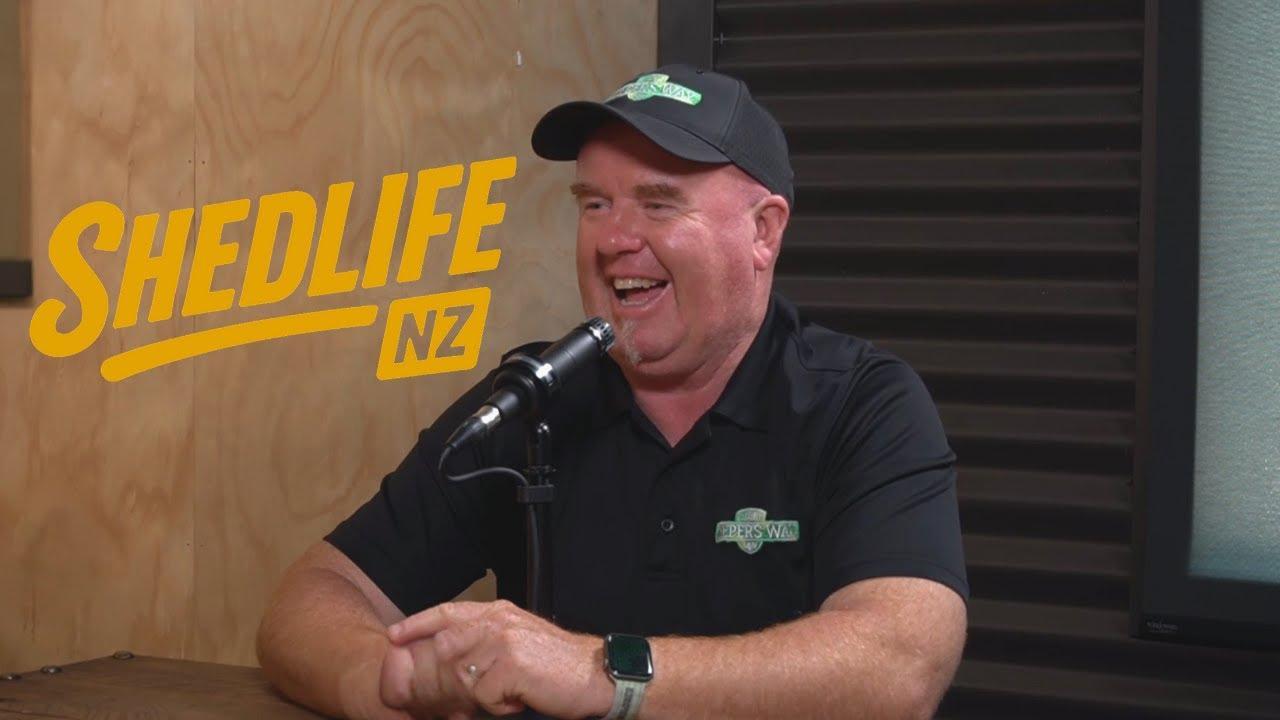
Graeme "Mintie" Mead, the voice of the Chiefs, Waikato Rugby and speedway, tells Jason Davis and KJ how he commentated Tiger Woods at the Huntly speedway, plus stories about his father, giving first, a Datsun mechanic career and the three Karens.
Play audio here
Best bits
“Dad taught us from a young age, and so did my granddad, if you don't give, how can you expect to receive?”
Graeme "Mintie" Mead
“Don't care what it is, if you can get a trade, you've got it for life.”
Graeme "Mintie" Mead
In this episode
- 00:00Intro and a Chiefs commentary opener
- 02:55Raglan farm and a father who gave first
- 09:03Lawyer dreams and a Datsun apprenticeship
- 17:35The three Karens story
- 21:09How he got the name Mintie
- 22:45Handed the microphone at Huntly speedway
- 24:28Falling into rugby commentary
- 29:22The hardest part of commentating speedway
About this episode
Graeme "Mintie" Mead is the voice of the Chiefs and Waikato Rugby, and for 25 years he was the voice of speedway at Huntly. In Episode 6 he sits down with Jason Davis and KJ for nearly two hours, and the Tiger Woods story that gives the episode its title turns out to be one chapter in a very full life: a Raglan farm, a lawyer's dream swapped for a Datsun apprenticeship, three failed hip replacements, the YMCA and, now, a seat on Hamilton City Council.
A Raglan farm and a father who gave first
Mintie was the youngest of four, raised on a farm near Raglan that his dad first took on as a rehab block after the war. The country school had 27 kids in total. His father served in Egypt, Italy and Sicily, came home with shrapnel in his leg and spent years doing welfare for the RSA, with Mintie tagging along to drop off sheep and firewood to war widows. Both his dad and his granddad drilled one line into him, and it has run his life ever since: if you don't give, how can you expect to receive?
Lawyer dreams and a Datsun apprenticeship
He wanted to be a lawyer. The early seventies downturn put paid to Mount Albert Grammar, so he went to Fraser High instead, finished School Certificate and came home to be told he started at Allied Farmers on 15 January as a mechanic. His dad had already sorted the apprenticeship. He worked on Datsuns and Peugeots, did night school twice a week and later turned down a trip to Japan to look at the Nissan rally team because he had just got engaged and bought a house.
The romance is a story in itself. He went to school with three Karens, rang one after a few too many drinks, and when he turned up the next night to pick her up it was a different Karen. They have been together since 1977.
From the Huntly speedway mic to the Chiefs
The name Mintie came from his own speedway days, when he raced a street stock numbered 38 on the roof in the shape of a lolly and threw mints to the crowd. In 1998 Paul Wade threw him the microphone at Huntly speedway because they were short of a commentator, and the track kept him for 25 years. Rugby came by accident. He helped Nigel Yeldon answer phones on a Newstalk ZB Saturday morning show, ended up co-hosting it, and a Thursday call asked if he fancied doing Waikato at FMG on Saturday. Since then he has called the Dave Rennie years at FMG, Super Rugby finals and his first All Blacks test. He says nobody taught him: the job is painting a picture for people who cannot see the field. For the teams he calls, the Waikato Rugby guide is a good starting point.
A beer with Tiger Woods
Mintie commentated the speedway meeting at Huntly that Tiger Woods attended, and they had a beer afterwards. Tiger drank a Waikato, nothing flashy. Later a friend's dad, very ill with cancer, dreamed of walking a golf hole with Tiger. Mintie rang Tiger's caddie Steve Williams, and when Tiger played in Melbourne the man walked six holes with him. That night Tiger came down to the casino and had a drink with the group. Mintie's take: a normal bloke who was always on guard because someone always had a camera.
The hard parts and the giving back
He is open about the low points. Two deaths at the speedway, and a mate who took his own life, whose funeral he conducted in front of 1,500 people. Three failed hip replacements that ended his travelling job as Michelin's earthmover tyre manager. He talks about the black dog that still visits, and what helps: barefoot walks on the grass and lessons from pain psychologists.
Out of that came the YMCA, where he turned after-school care into the biggest programme in the country, about 900 kids a day across 14 schools. He has married around 170 couples without charging a cent, trains apprentices, and campaigned for council on the cost of speed bumps. At 65 he says he will keep giving until he cannot.
If the speedway side grabbed you, the NZ speedway guide covers the classes and the summer season. KJ's own story is in The Man Behind the Grass for the All Blacks, Black Caps & Chiefs, and everything Mintie has done on the show is on the Mintie Mead guest page.
Questions people ask
Who is Graeme “Mintie” Mead?
What is the Tiger Woods speedway story?
What did Mintie Mead do before commentating full time?
How did Mintie Mead start commentating?
How did Mintie Mead meet his wife Karen?
Mentioned in this episode
Transcript
Generated from the audio, so expect the odd wrong word or name. Timestamps open that moment on YouTube.
0:00And it's Ratama. Ratama gets up to the halfway line. He looks to his left. He feeds out to Mackenzie. Mackenzie does a double-double round. Gives it to Tapaya. Tapaya goes straight through the middle of the defensive line of the Blues. Looks on his outside. Anton Lina Brown ranges up. Takes a beautiful pass as Tapaya goes to the ground. He puts it out to his left. Imoni Noara picks it up and he screams down the left wing side. Scores in the corner. It is 5-0 Chiefs.
0:24Woo! Wow! I don't know about you, Jason, but I just felt like I had my eyes closed and I was at FMG Stadium Waikato. It's in my absolute pleasure to introduce today's guest. It's Graham Murray Mead, better known as Minty. He is, I guess, the voice of Chiefs rugby and Waikato rugby in the Waikato. It's a pleasure to have you here, Minty.
0:50And Jason, thanks for having us here. And I'd love to hear a little bit about ShedLife before we get in here a little bit more about Minty. Awesome. All right, Minty, cheers to have you on, brother. KJ, it's awesome. Welcome to ShedLife, everybody. We're here. We're just having chats in the Shed Quarters bar and we're going to have some fun chats.
1:12We had so much fun on the last one, KJ. Why don't we make a bit of a segment of it? And first up, you've got, well, you're the sidekick.
Read the full transcript · about 88 min
1:23You've got the main event. Story of my life around Minty. Yeah, give us the intro for Minty. That was epic. It was so cool. I heard see the players running down. You can feel it, eh? You can smell the liniment. But anyway, look, Minty, we will find out throughout this podcast where Minty come from. But I guess really we need to start right from the absolute beginning.
1:49Well, should we just hit the highlights, though? Minty, so... Oh, you're true. Sorry. Yeah. Cool. That's it. Help me out here. Yeah. Well, Hamilton City Councillor. That's it. We'll get to that at the end. That's probably not what everyone's holding their breath for. No. Commentator. Commentator. What sort of commentary? Where are we going to find it? Waikato, all sports, breakfast.
2:08Correct. You're going to help me out there. Obviously, the Chiefs here, Waikato Rugby. Chiefs, Waikato Rugby Commentator. Man about town. Yeah. Husband. Nice. Mate of many, many people. Well-connected. Come out of the YMCA world, so they would like to know a little bit more about that. Speedway, absolute massive part of his history, from what I understand. So, yeah, so he's sort of done a lot, but really interesting, though. He's actually a blazer.
2:38So, we've got a classic good bokeh here, and we're going to have some awesome sports chat. We're going to have a bit of chat, YMCA. I saw some outward bound in my show notes as well in there. And we're just going to find out where it began, and, yeah, go from there. So... Where did it begin, Minty?
2:58Raglan Hospital. To be honest, it's now an old folks' home, so I've got the chance of being born there and being dispatched from there too. I'll do the full circle, but we farmed at Waitituna, and Dad had that initially as a rehab block back from the war. It was all gorse, and he broke it in by hand and slowly built it.
3:16Did the old man come back from the war? Yeah, Dad went away to war. He was, as a farmer, he was in the Divisional Cavalry. Yeah. And they held them back from going to the war because New Zealand had a lack of farmers, and he was conscripted with the army to go around New Zealand shearing sheep, building fences.
3:36And because so many had gone overseas, we were short of people to farm. He was also one of the people that was taken onto the wharves, and when the wharves shut down in the war, he was one of the army that was put into the wharves to break the blockade. Yeah, pretty frightening, actually. So, Mitty Raglan, brothers, sisters?
3:56Yeah, I'm the youngest of four, the baby, the most spoiled, they tell me. I think it's the best, but I've still got a sister in Raglan and another sister down south and a brother at the bottom of the North Island who farm. And my sister has got a farm at Teyuku still, and she's been a teacher at Pukiri School forever.
4:15She's just retired. Nice. So, yeah, pretty tight family, very tight community out there growing up. We had a million aunties at local parties and things. Kids all got together, families got together, rode everywhere on a push bike, and we didn't do that. We used to chase goats around the hills just for fun until we caught them. Very fit.
4:37Had a really cool upbringing, but primary school, you came home, worked on the farm. Dad tried to teach me to shear. He told me I was useless, and he taught just about everybody in the district to shear except me.
4:49Yeah, we had a really, really cool upbringing that we got to do everything, play sport, do stuff. I was going to ask, you know, back then, was sport a part of your life? Oh, yeah. Or where did the sport, I guess your, you know, your love of sport, where did that begin? From Dad, really. Dad played hockey in the New Zealand Army against Egypt, I think, in the war.
5:11Oh, really? He was also a guy with his hobnail boots on. So was he serving over? Yeah, he ended up going, once the war got going, he went across, he served in Egypt, Italy, and Sicily. Oh, wow, yeah. And in Italy, I think, when the Germans were retreating, they blew up a munitions dump, and he got a face full of shrapnel.
5:30Dang. Came back, was rehabbed in hospital, and then went back to war. Yeah. And he still had shrapnel in his leg. Wow. He died at, what, 94?
5:42Tough old route. Yeah. That's good. Lost both his little fingers due to, they had to get cut off because they went all manky, and he was a hard bugger. Great dad, but a hard bugger.
5:53He ran the Wairi Tuna Golf Club, greenkeeper for the Raglan Golf Club. Was he? One of the founding members of the Raglan Club. Did all the welfare for RSA from the war, going back to all the wives of people that didn't come back. So he would be there to knock on the door with them? Yeah. Wow. We'd take sheep, and he'd cut up sheep.
6:15We'd take firewood, and fright from when I was being a little tech, I remember going with dad and delivering stuff. So it sounds as though the love of the community that I know you have started back then, right? Yeah. Very much so. Dad taught us from a young age, and so did my granddad, if you don't give, how can you expect to receive?
6:39And that's been pretty much me. Your granddad was a war veteran. Wow. Mum was born in Rhodesia. Wow. So yeah, pretty much always horses, and I never rode horses. I fell off a couple, knocked myself out, and that was mine. My horse, Cree, had gone. But yeah, we grew up with really cool friends. At school at Warituna, there was 27 of us.
7:02That was the whole school. And my good mate and I went from Prima 1 to Form 2. Yep. And we were the only two in the class. Wow. Lucky you were mates. Yeah. Well, yeah.
7:15Yeah, but after you've got no mates. Lovely. Who's your mate? Well, we don't have any left, but running was big on our case. Yeah. We ran everywhere. We're hellishly fit. We just ran. Yeah. Rugby team, to make a rugby team, we had to have Warituna, Te Uku, and Te Mata had to combine to make one rugby team.
7:33Sometimes with the girls playing too. Yeah, nice. It's all that stuff. It's just, it's good memories. It's great memories. What about high school? Fraser High.
7:41Is this where your love of Fraser Tech comes from? It might have been. It could be. I actually got one of the very first sports blues at Fraser High for being a rep at Babington. Oh. Played Babington as well. Yeah. So, it was a rep at Babington and played a lot of Babington around the countryside.
8:01Did athletics, gymnastics, cross country, rugby, a lot of shooting, a lot of hunting. You name it, we tried it. And mum and dad, even though we live way out in the sticks, made sure that we got to all these sports. It was just, I don't know how they did it. I really don't know how they did it.
8:22What were you like at school? As in, in the... Very, very quiet. Stop it. I was. Very subdued. You were not. Going to Fraser was a culture shock. Yes. Going from a class of 27 to a school of 1700. And you come from the farm, you know, like, well, look at my auntie's from the farm. Yeah. And I was six foot two at 13.
8:46Wow. And you were one of the biggest kids at school, tallest. There was a couple taller than maybe you had to stand up for yourself in a hurry. Yeah. I took a few cloutings before I realised that I'd never been in that confrontational sort of thing. Mm-hmm. So you learned. You learned. What year did you get through to in your schooling?
9:08I'd had a dream. Initially, I know this sounds corny, my brother went to Mount Albert Grammar. And I wanted to go to Mount Albert Grammar. Why? I wanted to be a lawyer. You wanted to be a lawyer? I wanted to be a lawyer. So was your brother boarding up at Mount Albert Grammar? Yeah, he boarded up at Mount Albert.
9:24He's got, had belts at home with all the notches and from all the canes. And he had a lot of them. But yeah, it was in the early 70s when everything went crash and poos within the world. Yeah. And dad said, look, we just can't afford it. Mm-hmm. So you're off to Fraser. So was that be, I'm just trying to try to place it and for some of that, would that been when England joined the EU and the, was that when the farming money sort of like the wool price?
9:52Yeah. Because I think New Zealanders, people, it was virtually one of the richest countries in the world. It was. And up into, like into the 60s, like just on the back of the back of sheep, really. Yeah. And then early 70s, it started to hurt a bit. And so I went to Fraser and still had dreams of being a lawyer.
10:11Yeah. And finished school C. Mm-hmm. And came home to dad and we were sitting down having a yarn. And he said, oh, you start in Allied Farmers on the 15th of January as a mechanic. I've got your apprenticeship. Off you go.
10:29This is out of the blue. Yeah. It was a bit of a blue for a few days. It was. Yeah. I just, I had dreams of being a lawyer. I don't know why.
10:39A lawyer to a mechanic. Yeah. A lawyer to a mechanic. That's a big change. Ah, look, it was, it is what it is. I worked for Datsun back then. Oh, did you? And Peugeot. The old Datsun 120Y? No, before that. What? 1200s. Oh, the 12, that was weird. And 1600s. And then the 120Ys came out. And then we got to the Datsun Sunnies.
11:03Yeah, they were cool. And it was a cool company to work for because Allied Farmers then was one of the huge. It had well drilling. It had produce. It had supermarkets. It had all those things right in the center of town. And so I did my apprenticeship there. We'd be leaving home at six in the morning, drive to town, work all day.
11:22And then we had night school from seven till nine twice a week. So I'd get home at 10 o'clock at night twice a week to do my trade. Wow. If I could go and mint it, what do you think? Because your father must have thought something like, why did he decide I can get you a, you know, he's got school cert, year 11 for those newer.
11:45Instead of being a lawyer or going down that path, I can get him an apprenticeship here. Do you know what was going through his mind? Did he just sort of like, hey, I think that's going to set him up? Or he knew you? Or are you? I don't know. I think dad decided I was probably blue collar, not white collar.
12:02Yeah. If that's the right terminology. It wasn't something that was huge on the agenda around, you want to go be a lawyer? Yeah. We're farmers. Mm-hmm. And that's how things went. Yeah. And at that stage, you know, mum and dad, we had to talk about it and I was pretty ropey for a few days and I said, oh, well, I'll start work.
12:20Yeah. And away we go. 61, 1961 VW, six volt and away we went. You had a, they had a chat with you. They told you, right? They had a chat with me.
12:32It's always so insane that there's always a choice and everyone has a choice and sometimes it's not. It's obviously you must be 15, 16 at this point. You can always just pack bags, see the world, you know? Like do it all. But you thought, nah, they probably have some. Once you'd got over the initial, did you think, oh, no, my parents probably got the best in it for me or I'll give this a go.
12:52I'll go and see what it was, you know, see what it's like. Yeah. Well, the fact that I was playing with cars and I was playing with motorbikes and I was doing all those things. Ah, yeah. So they'd noticed, so you'd already had a bit of a, like you were good with the mechanics? I wrecked a lot of stuff on the farm.
13:06I had to play with stuff and build stuff. And yeah, it was, I think one of my first projects was a 105E prefect that I shoehorned a console four-cylinder motor in and made a paddock basher. The dad got so slacked off with one time he ripped the doors out, turned it upside down and turned it into a culvert.
13:27That's awesome. I come home and my car's gone. And so were you just finding whatever was being left around the farm or in the district and giving that a go, fixing it up? No, it was more the, up the road there was the Williamson family and they've got the Cone Hill on the other side of the deviation and their oldest son, Roddy, was a very, very clever engineer.
13:49Yeah. And they had the workshop and they built stuff and we all had then motorbikes and we used to go riding together and we were pretty tight as a, as a group of mates. Yeah. And up in the hills of the Hart Cremadas, once we all got bikes, we'd carry up fuel and hide it all through the hills up there and we'd go riding up in there for days.
14:09We'd camp up there and just ride bikes and do things that 16 and 17 year olds probably shouldn't do. Right. Um, I remember, oh, I don't know how old I was, probably 15 and we used to go to Babington at Tiyuki Hall on a Friday night and we'd sneak the quart bottles a DB. Yeah. Big bottles? Yeah, the big bottles.
14:31Yeah. Well, what we'd do is you'd take the lid off really carefully and you'd go and drink the beer and you'd bring the bottle back and fill it with water and put it back in the croats. Oh yeah. So until they were shearing and they needed a beer after shearing and bottles of water had been cooled. Oh yeah.
14:46Yeah. Yeah, that wasn't clever, eh? I got caught. So you're doing your apprenticeship or your trade? Are you playing any sport around that time? Yeah, I was still running. Yeah. Cross country, used to train around the farms by jumping the seven wire fences. Yeah. If you missed, you got your foot in a bit of barbed wire. So they were still running, still Babington.
15:09I was doing Babington probably three, four times a week in between night school and then moved to Fraser Tech under-19s and played for them. Um, also had the motorbikes. Um, yeah. We had full lives. Like, it was, it was full on. Um, great mates who just went and did everything. So I'm hearing just outside doing stuff, right?
15:38Yeah. Not stuck inside on a device. No, no. We didn't, didn't have devices. But, um, um, my mate had an old pump, old holding that we called the pumpkin. It was blue and it was green and green. And it had, the whole roof was done with double brown tear tabs. That was the roof lining. And we used to cruise into Hamilton and, yeah, we're probably 17, 18, 19.
16:01Um, yeah. Caused a lot of trouble. No. No, I do remember being put in a cell in Raglan. Oh, there you go. And then thrown on the floor at four o'clock in the morning. I rest my case. But it was only 16 in the pub. I thought I was safe.
16:18So to move forward a little bit then. Yeah. What did life look like once you finished your trade? And, you know, what did you, what did you go and do then? Because obviously you do your apprenticeship and then you're looking for a job or does. Well, um, I met Karen in the fourth form at Fraser. In the fourth form.
16:35Yeah. Nice. We started dating in 19, on the 1st of October, 1977 at Woodstock Hall. We got married on the 7th of March, 1981. And we've been together ever since. Nice. How many years is that? 50. Does she know that you get a lot less for murder? Yes. She's got a life sentence. Yes. Nearly 50 years. Yeah, together.
16:59So you met in the fourth form? Yeah. Wow. How did you meet? School. Yeah, I know. Well, you didn't just. Well, we sat in maths class. She likes soccer. Hey? Yeah, she likes soccer, football. She played football. I played rugby. And for some reason we had a Scottish maths teacher who loved football. And he was an idiot as well.
17:18So we had a bit of, what's the right word? I just gave her crap. Banter. Yeah. Banter. And her mother thought I was lovely because I played badminton with her mother. Oh, no. Competitive left and phrasing. It's getting sick now, isn't it? And we got set up. Now, if you want to know the real story. Ask Karen.
17:36No, no. I went to school with three Karens. There was a short one. I've heard this. This is a great story. There was a middle-sized one and a tall, really sporty one. Now, I happened to drink too much one night.
17:50And I rang Karen up and asked her for a date, which was good. And then when I ran to pick her up the next night, it was the wrong one. Oh, sorry.
18:01It was the short, mouthy one with the tall, sporty one. And we've been together ever since. So you invited the wrong Karen out. Yeah.
18:14I did. So did you go on a date with that Karen? Which one? The right one or the wrong one? The wrong one. Yes. I took her to Woodstock Hall in my VW.
18:23And we've been together ever since. So then, obviously, that Karen wasn't the one you wanted, right? Seemingly not. That's cool. Well, that is, isn't it? That's a brilliant one. But that's the dangers of drink.
18:39Yeah. Well, drunk dialing existed back in the 70s. I don't think I've run the wrong Karen. But anyway. No. Wow. 50 years. Nearly 50 years. Yeah. That's amazing. Yeah. That's awesome. So what does Karen do? What did she?
18:52Karen came out of school. And she lasted a year longer than I did. And then she went and initially worked for a company called Vincent Smith's Exchange in Franklin, who then turned into tractor accessories and parts. And she, that was an importer of automatic tractor parts. Oh, yeah. Massey Ferguson, Ford, like genuine parts, but on a pirate package.
19:12And she worked for them for 38 years. Oh, nice. Yes. That was basically her only job in her whole life. Yeah. And family? Yeah, kids. They're all in Brisbane now. They've all abandoned me. But yeah, we've got Rebecca and Aaron in Brisbane. Grandson, Daxton, and her granddaughter, Sutton. We've got Jessica over there with her daughter, Ollie, and her partner, Pete.
19:39And Matthew, my son, he's a bricklayer, blocklayer, who ran out of work years over there with his partner, Tess. And I've got a daughter in Matangi that's got a granddaughter, two granddaughters, a grandson and a great-granddaughter now. Oh, true. So yeah, granddaughter's a nurse up at the hospital. The other one's in Sydney as a cook, and grandson's an electrician.
20:02So yeah. Nice. Broad spread of family, just good family people. My daughter in Australia last week, she's a bit, I don't know where she gets it from, but she's been running a charity for Hummingbird House over there for hospice kids. Nice. And they raised $47,000 last Friday night that she arranged. Wow. I don't know. Where's that coming from?
20:23I don't know. I don't know where the community's spirk. I don't know. It just makes me so proud when you see kids. Yeah. We always brought them up to say, learn something new every day, be polite, open a door for a lady.
20:35Good values, right? Yeah, I hope so. I hope so. Right. I'm going to ask a question because I know lots of people want to know.
20:44Where did Minty come from? Because people don't know your name, right? No, they don't. You are Minty. Counselor Minty. I think they call you Counselor Minty. Yeah, they do. Remember? Yeah. Nice.
21:01And even they forget the counselor sometimes. I'm very comfortable with just that's where it sits. Nice. Um, Minty came from Speedway. Um, I got involved in Speedway in 1977, um, at Kiki with my cousin Ian Quayle. He was North Island TQ champion. So, and then I was, you're still doing the apprenticeship then? Yeah. Yeah, yeah, cool. Yeah, and I make some spare time.
21:23Yeah. Um, and then from there, I think when I retired from Speedway a few years ago, Kiki gave me a 46-year participation award. Um, and my cousin had a super, uh, street stock race team. And I won't mention where it was because it was rather an unusual sponsorship. They used to have a purple tow truck floating around Hamilton for many years.
21:47I reckon a few listeners or not. Yeah. Um, and he won. I was doing a lot of work with him. I was accruing for him and he just dropped a car in my driveway one day. And it was a bit of an old beaten up thing. And so I rebuilt the street stock and went racing. And the number on the top of my roof was number 38, but it was the cut in the shape of a lolly.
22:05So I'd go and buy minties and throw them out of the crowd, which was a really cool thing to do. Like you go to the lolly scrambles and I threw my minties out and they, the commentators give me a bit of stick and there's, there's minties.
22:17And, um, I decided to build some new cars because these ones were overweight and pretty manky. So put the engineering hat on and we built some cars and, uh, two of them and we took them up to a guy to finish and, um, that we thought we could trust. And he disappeared with the cars. We did get them back.
22:36We did do some repossession, but Paul Wade used to be the owner of Foster's, uh, heavily involved. It's one New Zealand, um, super stock driver said to me one night, um, we're short of somebody on the microphone. Would you have a go? And he threw me the microphone at Huntley Speedway. And, um, that's where it began. Yeah.
22:54That's where it began. What year is this? Uh, 1998. Yeah. 1998. Yeah. That might be a bit before, somewhere around there before 2000. So you're throwing the microphone. Yeah. At a live speedway event. Yeah. And just told to talk. Yeah. How'd you go?
23:12Oh, it must've been all right. They kept me for 25 years. Um, we went through the days where you wrote all the driver's names down on a piece of paper. You didn't have any electronic lap scoring. You knew everybody, every driver's name by number and car. Yeah. You'd say, oh, the 88M, that's Kevin, 88H. That was Kevin Narcay and the, this one and that one.
23:32So you knew them. Um, and then from there, um, yeah, I did Kiki. I did, um, I think we counted up when I retired after 25 years. I think somewhere in the vicinity of about 140 or 150 New Zealand titles. Wow. One Speedway Commentator of the Year twice. Did you? Was nominated four times, I think, for, in the final of Best in New Zealand.
23:55Um, also did commentary at the Night Wars, the very first Drag Night Wars. I'd do that on the way home from Auckland. Um, Kiki, all over New Zealand commentating. Motocross, karting, anything with sport, basketball, and then rugby. It's, um, I got a bit lucky, eh? Well, how did the rugby thing, because obviously you're doing Speedway. Now, there's a, there's a big difference between commentating for a Speedway meet in comparison to a, to a Damien McKenzie running down the sideline.
24:26How did you get into the rugby sort of thing? Well, it was a bit of an accident, actually. Um, Nigel Yelldon used to do the Saturday morning breakfast. Yeah. On Newstalk ZB. And I used to do a, a weekly thing for Speedway. With the night, on Nigel. With the night show, yeah. So I'd ring up. And he was in a mad panic one day, because he couldn't do the phones and produce.
24:45And you've seen what it's like in there when it's going. I'd, answering phones, ringing people. So I said, would you like a hand? I'll come and answer the phones for you. So I did.
24:56And I'd answer the phones and queue up all the interviews. And he'd yakety yak, and away we'd go. And then he got the gig for Radio Sport. True. So then Peter Murphy, who was also in the studio down there doing a fair bit of football stuff around for years, him and I took over the Saturday morning show.
25:14So I ended up being on radio, by default, with the training of zero. Yeah. And then we broadcast the club final. And it was over at the Vatican.
25:27And it was on the back of a Hilux-like truck. Yeah. And there was Nigel, me, and Vince Martin, Paul Martin. And we went live. And the three of us did a commentary. And somebody in Auckland said, hey, you're not bad.
25:44And with Nigel going away to the All Blacks, they said, do you fancy doing Waikato? And that's how it happened. I got a call on a Thursday and said, you're doing your first Waikato game at FMG on Saturday.
25:59Bang. And so what year was, what year places was this starting off in the rugby commentary? Oh, 15 years ago. Yeah, 2010. Yeah, about then. Yeah. Might have been a bit before, around then, around 2010. So late 90s, starting on the Speedway. Yeah. So Speedway all through late 90s, early 2000s, and then rugby. No, Speedway right through to 2021.
26:25Yeah, I say Speedway the whole way through. Yeah. Work it. And then a couple of questions, actually. Vatican, I don't know. Is that a Marist situation?
26:37So for the listeners, I'm very Marist. Yeah. He's very not. Yeah, fair enough. So we have some great banter around. Well, you've got to understand that Kirioni had green and white first before St. Mary's, that later became Marist, took green and white.
26:55Wow. And I played for the OG green and white North Shore rugby. Did you? That's where my juniors are. Fair enough. There we go. Love it. Yes, there's a bit of friendly banter with Marist. All the clubs, I love sport. I don't care where, who, what, why, when, how. Yeah, cool. Sport is community. Community is sport. It's just, it's people.
27:14Yeah. And for me, I suppose I got to meet so many people all over the country, through Speedway, through other things. I turned down in the late 70s a chance to go to Japan to look at the Datsun rally team, or the Nissan 240 RS rally team. I turned that down because I just got engaged and just brought a house at 18, not 19.
27:40Yeah. But eventually ended up managing and rallying with Cameron Bates, Sabari team, and Dean Sumner and Mitsubishi ITM team out of Rotorua, and won national title with them, a junior driver. So I ended up crew and crew chief for rally teams for about seven or eight years. One of the things that amazes me about you, Monty, is your ability to know a lot of sport and ask good questions, but you have very little notes or anything.
28:12Is that like your style? I mean, is that something that you're just accustomed to? Yeah, look, I read a lot, and I just follow sport. And the thing is, when you interview someone, you don't talk about their sport. You'll know from what we do. So we can talk to someone about rowing, and we might have mentioned one day's training, but what about them?
28:32What do you do when you're not rowing? Where are you from? What's your interest? What are the things that have challenged you? Because everybody knows they're a rower, but what makes up the person? And I've always been something that, what's the person? Tell me about you, and then we'll find somewhere in common. And I suppose that's made me quite lucky with who will talk to me at any time.
28:55Dave Rennie would always talk to me, still does. Molling Tarua picks up the phone if I ring him. Now, those sorts of people trust me to have a guard. And there's a difference between Monty when he's in media and Monty when he's not in media. And we've got a very strict differentiation between that. With rugby teams, with sports teams, I'm not here as media today, say what you like.
29:15I'll tell you when I am. And you've got to respect that. Respect people's privacy, eh? What has been the toughest thing about commentating? Two deaths at Speedway. Two deaths. Yeah.
29:34While you were commentating? Yeah. People you knew? Yeah. Yeah, that's tough. Yeah. See what I love about you, mate? You're an absolute people person.
29:48Hardest bit of that was calling the meeting off. Yeah. Because I had to announce it. True. Yeah. It happens. Well, let's be honest. It happens on the roads. It happens everywhere. It just happened to happen in Speedway Track in front of me. Mm. And, yeah, it's a life thing.
30:08It's a, you have to, you know, take some deep breaths and do a job. But, yeah, that'd probably be the toughest ones. I mean, it's more than a job, isn't it? It was a passion. It's your life. It was a passion. Yeah. It still is. I would say, if I just ask, though, when you get thrown into a situation like that, fight or flight, you know, like, you've got to announce, like, how do you take over and stay calm, stay professional?
30:38Like, is there training that you had? Like, what was that, those sort of moments? Because I think that's having to operate under that level of pressure. And we're talking about, you know, commentary and somebody, obviously, horrific car crash has happened. A lot of them, you don't know what the accidents happened. Yeah. Right? You've seen a bad accident.
30:58A car's upside down. It's through the fence. It's on the wall. Mm-hmm. The first thing we'll do is we'll tell the people to stay back. Yeah. Kids run. Like, if there's an accident. So, everybody stay back.
31:08We'll, we've got radios. So, we'll know what's happening down there a little bit. We'll have it in our ear. Yeah. Quite often, then, you'll throw some music on or you'll get something at the other end. You'll talk about what's happening down there. I look down there. There's a bit of a queue down at the pie cart or the, you'd pick on one of the sponsors or do a distraction.
31:25Mm-hmm. And most of the time, if there was a, not a bad, bad, like a, like a death situation, but a bad accident, they'd pick the car up and they'll take it out away from the track. Right. Which happened to be just below where we commentate from. Mm-hmm. So, you saw both, but then what you did is you just diverted.
31:44We went back racing or we went back doing whatever and you just carried on. You just looked at that, said, okay, they're dealing with that. I've got to deal with what my job is up here. And that's, and getting people to enjoy themselves. A bit of stuff, a bit of talk, a bit of laugh, a bit of whatever.
32:00How does Minty deal with that post the event? Badly. Talk us through what that looked like for you. Oh, look, probably the worst bit of Speedway was when one of my good mates who was a TQ champion, he committed suicide. Mm-hmm. And I did his funeral for him.
32:26And that was in front of 1,500 people and up at Mount Smart. And that was probably the most traumatic thing I'd done because he checked out and I wasn't, you know, why, how, who? And luckily I had a couple of mates who picked me up the next day and took me out and we got, just had a day out.
32:50And that's the one thing that is just some mates. Mm-hmm. But yeah, look, you've got to deal with stuff like that. You've come across accidents, KJ. You've gone to accidents where there's things that aren't good. And how do you deal with it? You don't. But you do actually deal with it. It's traumatic. It's terrible. It's unanswered questions.
33:09It's all those sorts of things. But you say, hey, I'm still here. And what can I make a difference in the people that are here? Because sometimes we just get that bad. They check out. And I don't know why.
33:23So let's take you to more pleasant days in your commentating. Could I just jump in, though? I just thought there was just two things I wanted. One, I wanted to ask you about the commentary on Speedway and Live. But it's also, it's already come up in a few of these podcasts is something traumatic happens. France had his father passed away.
33:44I'm sure Ben brought up. I don't know how much everybody's brought up. There's someone's passed, and then that's made a choice in their life. But I think it's just, again, what you've brought up, and for anyone, is that choosing to, okay, I'm still alive, I'm still lucky, is how can I make sure I make the most of this time whilst I'm here?
34:07And then if you're giving and you're going out there and continuing to serve and support others, that can sort of fill the time. I mean, I was just sort of thinking when you were saying that, I mean, God, what must have your old man and, you know, my old grandfather must have brought back from the war. I mean, shrapnel in the face, shrapnel in the leg, rehabbed, sent back out there.
34:27But obviously you had the moments. But he's thinking, okay, how can I give to the community? How can I do all of these things? So I think that's it. It's filling the spaces. Instead of necessarily dwelling on people that have passed or what's happened, it's like honouring them by living. Yeah, and look, and that's dead right.
34:48We've all had challenges in our life where your brain goes a bit west. Mine was because I've had three failed hip replacements. First one was completely wrong. We blood clotted, nearly died. Yeah. Second one, they forgot. They redid it but forgot to glue it. The titanium spear broke in half in my leg but didn't break my leg.
35:11And then the third one, Neville Strick, spent many hours taking out titanium and strapping all leg back together. Drain pipe, it's femur. You know, take the top off the femur, pick the bits out. Yeah. And then sort of have to relearn to walk back in about 2017.
35:26Yeah, and that's left me with no feeling in the feet and pain in the back. So you live with pain. Yeah. And I've just learned to do with that. Suck it up, princess.
35:34You feel sorry for yourself for a while but there's a lot worse. Yeah. I've played cricket badly. I've done things, a lot of things because I wanted to. Yeah. Because I, and you can sit back and say, okay, I've been dealt a pretty stink blow because I was national mining manager of a company traveling all over New Zealand doing mining work.
35:53You suddenly can't do that. Yeah. So change of role, change of life. Yeah, a whole lot of challenge. You can say, well, is this going to beat me, beg me, or am I going to stand up and just try and get myself a little bit better? And it was hard. It really was hard when you have your ability to walk and work taken away.
36:11Yeah. It's just my life's finished. Mm-hmm. And it felt like that. We had a couple of really major breakdowns. Mm-hmm. You know, the old go missing thing. Yeah.
36:23Just wheels ran off. But now, yeah, I'm pretty good. You know, I know things are going the wrong way and what you do. But, yeah, I've been very open about that. I've always have been. I've been, I'm saying, look, the black dog sometimes runs up, smacks me in the head, and I, you get up. And it shouldn't be doing that to a 65-year-old, but it's been doing it for, when did I have my first op?
36:482007? Yeah. So 18, 19 years like this with a leg. Mm. Crap happens. Yeah. I think it's powerful that you speak of it, because I think that's, I've spoken to a few people about sort of just anxiety on sort of a lower level lately. But it's like, how do you deal with it? Is everybody suffers from it.
37:10I think this is the thing, is everybody suffers from the human condition. And the human condition is just ongoing. Yeah. The levels of anxiety, what am I doing here from the big questions? What's my purpose? What's the point? Does anybody like me? Are they all talking about me? It's like, so it's very common. But then, so how do you, have you developed any sort of little habits or rituals that you will try and call on?
37:37Yeah. One is dropping my shoes and socks off and going for a walk on a ground before I do a commentary and ground myself. Nice. I just walk around on the grass. Yeah. If things are going bad at home, I just go for a walk on the grass and bare feet in or out to the beach or somewhere and just ground yourself.
37:52It's just, yeah. Yeah. Unwind. That's powerful. It's just, yeah, because you're part of the earth. You come from the earth and you walk on the earth and you return to the earth. So there's something joining there and that, I found that really calming for me. Interesting. And mind relaxation, meditation. Mm-hmm. Because your brain is dumb things. If you whack your finger with a hammer.
38:13Yeah. Your brain goes, that's going to hurt. Mm-hmm. And it sends a pain thing all the way back to your head and your head goes, yeah, that really hurts. So it starts doing this backwards and forwards. Yeah. And that's what I've got when the pain gets bad. So I say, thank you for making my leg sore. I acknowledge that it's sore, but you're not going to drive me nuts about it.
38:30Yeah. And away we go. And that's teachings from some really good psychologists. Like, there are some amazing pain psychs in New Zealand. Yeah. And it's just how you deal with it. Mm-hmm. And I've had to learn that. Karen's had to learn with putting up with me being broken. For 50 years. Yeah, for 50 years. For 50 years.
38:49Wouldn't change much. Maybe. Might. Yeah. Could. But yeah, look, life's given you just so many opportunities. It does. If you want to go find them. Yeah, it does. They run out and they smack you in the face and they go, look at that. What did I miss? I don't know. Would I change anything? Not sure. You want to join Maris?
39:10No. So then it takes me to what's a match that really stands out or a piece of commentary or something that you have done in your speedway or the rugby that you kind of go, if that was it, I've nailed it. I commentated the Tiger Woods meeting when you were at speedway at Huntley. Oh, wow. Did you?
39:30Yes. Steve Williams? Yes. So yeah, still talk to Steve reasonably regularly, now and again. But yeah, commentated the Tiger Woods meeting, met him, had a beer with him. Had a beer with Tiger Woods. Yeah. Hang on a minute. You had a beer with Tiger Woods? Yeah, just a bloke.
39:47And then- Just a bloke. And then- What did he have? What drink did he drink? In Waikato. He did he? In Waikato. He had Waikato. Did he? Nothing flashy and Huntley. We did from there though, had a good friend whose dad was very, very ill with cancer. Yeah. And he had a dream to walk a golf hole with Tiger.
40:08Wow. And so I rang Steve. Steve talked to Tiger. And when Tiger played in Melbourne, he flew over. I was across there as well working. Mm-hmm. And he walked six holes with Tiger. Wow. And that was cool. And then that night in the Melbourne Casino, we're having some drinks with Steve. Mm-hmm. And Tiger came down and had a drink with us.
40:33Yeah. Which was super cool. Yeah. But all the security people in that wandering around, it's just having a beer. And- So you've had two drinks with Tiger Woods. Well, probably more than that. Yeah. But he also didn't get sometimes, if you buy me a beer, I buy you a beer. Yeah. Wasn't quite used to that. Yeah. Like the New Zealand way.
40:53Yeah. But you know, he's just a normal bloke. He was a bloody good golfer. Mm-hmm. Yeah. We just, yeah, we just, he was there. He unwound. Mm-hmm. But he was always on guard. There was always a presence of somebody with a camera or this or that. And I'd hate to be in that monocle. Mm-hmm. That you can't do anything.
41:15And I suppose he did a couple of things not so well. But yeah, just a bloke. I suppose that's the one commentary of Speedway. Rugby, Dave Rennie's reign at FMG. Yeah. You know. 13, 14? Yeah. Just, yeah. Yo-ho. Yuki kai yay. What's the difference between Dave Rennie's era and someone else? Well, we were winning. Oh.
41:44That old chestnut. Yeah, that old chestnut. But I suppose, yeah. And then my first all-black test is a sideline. Yeah. And that was Fozzy as assistant coach for Katoa. I think they played Argentina. Mm-hmm. And I was out in the middle doing interviews for Radio Sport NZME and trying to take selfies. And they took my phone off me.
42:04And I've got selfies. Oh, you know, buggers. But yeah, those sorts of things stick in your head. My first black ferns test is lead commentator. My first all-black test is lead commentator. Mm-hmm. I've seen the Randfield Shield come. I've seen the Randfield Shield go. Quickly. Eh? Quickly this time? No, a lot of years ago. We held it for a while.
42:25I was on commentary at Miriamir Drags and saw the first street legal car without a cage in it go under 10 seconds. All right. And they put it on the trailer and sent it home because it was dangerous. Mm-hmm. We've watched cars go down there at five and six seconds.
42:41Just different things. When you're doing the commentary, just for the Speedway commentary, is it a little bit more like your MCing? Because you're also talking, the crowd can hear you? Yeah, the crowd, we had an FM system so they can hear us. Plus it's also streaming. So they can hear it through the radio? Yeah, they can put an earpiece on.
42:57But it's not. Ah, okay. So it's not actually going out on the speakers. Yeah, it is. But cars say bloody loud. But I was just sort of thinking to myself, oh, okay. But that's a different level of entertainment when you're speaking to the crowd that it's actually there. Because when you're commentating rugby, you're not really commentating to the crowd that's watching the game there at the stadium.
43:15You're commentating to everybody at home. Yeah. It's a real difference between Speedway and then Speedway started becoming televised as well. So we were doing crowd and camera. Yeah. So you had to change what you were doing a little bit. But on rugby, I've got to paint a picture. Yes. Because you want to know. You know, Ollie Norris picks it up on the five metre line, five metres in from the left wing side.
43:36Yeah. He goes forward a little bit, puts the ball to ground. Forwards go across the top. You know, Rowe picks it up, feeds it to his right open side. Mm-hmm. And, you know, then you've saw McKenzie's tackled behind the advantage line. So now you know. And they're now back on the 10 metre mark. 15 in from the left wing side.
43:53Chiefs territory. And you'll say, I pretty much know where that is. So I've got to paint a picture to you to say where it is. You can see it on TV. Mm-hmm. But you want to know where the ball is. Mm-hmm. What direction it's going. Who's caught it. And then we've got the referees comms as well. And KJ's been up there with me and seen what I've got written up on there is time, place, position, score.
44:12Time, place, position, score. And we've got targets we've got to hit as commentators. So we've got KPIs that we get functioned to and all those sorts of things. What about, I think of the Fiji Durer. Yeah. There's no Smith, Brown or Jones that play for the field. You noticed. How do you commentate names that are difficult or how do you get your mouth and your head around those difficult names?
44:40We'll get the teams on a Thursday. So by Friday morning, I've written them up. And I should know most of the local teams off by heart. Like you can run through a team and say, what was the last Waikato home game? And it was, you know, it could have been, if you want to go back, last Chiefs game, Aidan Ross.
44:58We had Samasani Takiaho. We had on the other side, Ollie Norris, who are the props. And you'll probably still go through that with a bit of brain thing. But with the overseas teams especially, we'll have pronunciation guides. I'll also ring team managers. I'll use my son-in-law in Australia, who's Tokolawean. And he's got a Samoan sister. And I'll use Greg Smith.
45:20And I'll make sure I phonetically spell it. So if you look at Jacob Ratamutu Waiki-Nipkins, the ratu would be R-A-R-T-W-O, ratu. My, M-Y, Ratamutu Waiki-Nipkins. And that's how I am. And you're doing it now. You did all that stuff for me at the New Zealand School Boys this year. You provided the sheets. I don't know, before I started with you, the commentating, I thought, how hard can it be?
45:49You know, like, it is incredibly difficult. And what I get amazed by you, Minty, is that you just, it rattles off as just like you're having a conversation with us now. Look at the way you started this today. You know, I felt like I was there. Which is kind of what the role is, right? Yeah. And I love the fact that you think about the person listening, whereas they've got no idea on the field where it is.
46:14So someone's had to teach you that, though. Where did you learn from? Or who did you learn off? No one. What do you mean, no one? No one. No one taught me. No one said, this is how you do it. Nobody said, here's a plan. This is how you line it up. I got sort of told, you need to hit these benchmarks.
46:34And when I started. What do you mean by that? Well. Was this in Speedway? No one taught you? No, Speedway. Definitely not. Yeah, yeah. But in rugby and other sports, no. No, nothing at all. Even basketball, I've tried commentating it. I'm terrible at basketball, by the way. I got no idea. But they thought it was funny when I was doing this cast.
46:51But raw, I got rung up with a quarter of an hour's notice and went live on a basketball broadcast. It was broadcast. Yeah, I like to prep. Look, for me, I like to be able to prep and say. Does it help the understanding of the game? Yeah. How long did you play rugby for? I played rugby for until I was 27, got concussed, and then refereed for about 16 years.
47:14Okay. Refereed touched a national level as well. So that's a deep rugby knowledge. Because we sort of missed that, actually. You know, apprenticeship, got into Speedway, and then we pretty much jumped forward from the early 80s till the late 90s. So we just, we should recap. Because some people are going to, I'm curious. And then we've got somebody that is listening along.
47:33As a recap, it just hit the highlights or the broad overview. But, you know, so apprenticeship finishes. Yep. Engaged, buying a house in Hamiltron. Married. How much was a house? People always love to freak out. How much was a house in the late 70s? The house was a unit. It was one of five units on 84 Lake Road.
47:51Yeah. And we brought the back one, and it was 11 grand. Nice. It was a two-bedroom unit, and it was just down the road from work. It was cool. Yep. Wow. Nice little cinder block type thing? Yep. Little cinder block house. Dad found it. Yep.
48:05So your dad's got you a job, and he's got you a house. Well, no. He found the house because it was his lawyer's daughter, or the lawyer's employee's mother, or something said it was for sale. And yeah, he came home, and we'd saved some money to go on a cruise. And I think that disappeared as my deposit, so I didn't go on the cruise with the boys.
48:24Oh, nice. So Dad's always looking out at us. He's had a hard life. He's like, no, you're good with me. You're good with mechanic. You're good with engines. You can be a mechanic. You'll always be sorted. Going on a cruise, that looks more like house deposit money to me. So I've got a picture in my mind. Most young Kiwis traveled overseas, right?
48:45Yeah. You haven't traveled? You've stayed in the Wakato? Pretty much. Your whole life? Yeah. Karen and I did a bit of a tour just after we got married. We went overseas. Nice. Made a bad decision. You know, like, everything looks good overseas. Let's go. Yeah. Yeah, didn't need much in the way. The contract didn't need much in the way of looking at things.
49:03Where did you go to? Norfolk Island. You went to Norfolk Island? Yeah, to fix boats. Oh, yeah. Had you fixed boats before? No. Ha, ha, ha.
49:13And then from Norfolk Island, went to Brisbane. Lord Howe Island, then on to Brisbane. Yeah. And then came back home because we had a house here. Yeah, cool. So, yeah. Dumb decision. Look, I'll put that one up as dumb decision. Came back and did a bit of mucking around, did a bit of diesel time. So went from petrol to diesel, heavy earth mover.
49:33And then started selling, got a job for an NCR, National Cash Registers. All right. So what year was that? Roughly when you were- That was early 80s. So early 80s. So you've got kids now married with kids? No. First one was born 1985. Okay. So just before kids though, but you just thought, okay, I've done my time on the tools.
49:52I wanted something different. Yeah. I wanted something. Yeah. I go give it a try. So I walked into an American company called National Cash Registers in a beige suit, brown shirt, and no tie. Yeah. And this guy employed me. And he goes, you've come here for a job like this with no tie. I said, well, I don't own one.
50:07And he employed me. And that set me on sales thing from there. So I went through selling for NCR. And then into working for the company. Karen went to VagMatic. And were you cold calling for NCR? Oh, yeah. A hundred percent. It was door knocking. Yeah. And you learned how to sell. Absolutely. And from there. So when, how do you learn?
50:28I loved, I did door little sales for a few years. I think it's, it's great. It's almost a pity that it's been a lost sort of art. They don't do it anymore. They're lazy. You know, over in New Zealand. Like, it's one of those ones is everybody looks back and it's like bad times and exploitative behavior and all of this.
50:46But then it teaches all these skills that have made so many successful people. It does. You get knocked back more than you want. Yeah, absolutely. But you've got to be persistent. I'll never forget the one was Ralph Littlejohn, the ex-all black manager in Whakatane. He owned the International Harvester tractor dealer. Yeah. And I called on him every three weeks.
51:05Walked in, Ralph, what can I sell today? Nothing. Ralph, don't you talk about rugby either. I believe. Yeah. Next month I'd come back, Ralph, what can I show you today? I hear something. No. And we did that for nine months. Yeah. Nine months, Ralph chucked me out basically. And after nine months he said, you're not going away, are you?
51:24Yeah. No. Okay, let her come and do some business. And that told me if persistence pays off. Yeah. And that's pretty much where it went from there. We ran, I owned a couple of companies, printing companies and different things like that. And again, the same thing, cold calling. Yeah. So here in Hamilton? Yeah. Trigon Packaging was one of my big customers.
51:43And that was because I got to know the receptionist very well. She told me who was coming in and out of my opposition, introduced me to the right purchasing managers, and suddenly had all business. Because I've always figured out a person on the front desk knows everything about the company. Absolutely. And that's where you start. Yeah. And from there I sort of did a degree when I was what, I managed, worked for South Pacific Group of Companies, which was Pacific Dunlop and Repco and Corey Frazes.
52:12Was regional manager for them, then set up Repco Teamuru. Mm-hmm. Worked for them for probably six years and set that branch up from there. About a six or seven year time as a manager. Yeah. Ended up sort of being a forensic type manager where I'd go in and fix broken companies. Mm-hmm. Wow. Did a degree in retail marketing at a Monash University by correspondence.
52:32Wow. When my, I don't know how old I was then. I don't know. You've done a lot you haven't done. Mm-hmm. And then from Repco we went into, what fired Repco? I went and helped a mate out in Auckland for a month with a company and that ended up 18 months of driving to Auckland every day. Yeah.
52:48Didn't you somewhere you can involve with tyres? Yeah. Yeah, I ended up working for Michelin New Zealand and I became Earthmover manager. And we provided, I don't know, I remember the day that I rang the boss from Stockton down in Westport and said, I've just taken half of Bridgestone's business. And that was with lots of zeros. And I mean, that was lots of zeros.
53:14So, yeah, but I travelled all over New Zealand doing mines, port tyres. There were two of us trained, one from Bridgestone and me, and cutting tyres open and tyres in New Zealand. I was one of them. Oh. So, yeah, that failed. When my leg failed, that job disappeared. Which leads me to another little industry you got into, the YMCA.
53:33Yeah. So, this was post the tyres. The second operation. Mm-hmm. And I didn't know what to do. And I saw this job at the YMCA because the… So, this is six years ago now? Yeah. This was, what, probably 10 years ago? Oh, 10 years. Yep. But I just sort of go, because I think lots of people these days, probably in all times, get pretty obsessed with their career.
53:56You know, like, am I on the right path? I've been chatting to a lot of the, like, young guys I know, which is for other kids, but, you know, 18, 19, 17. And they're pretty concerned that they don't have the life plan mapped out. And, like, there's no way that you could map out the Graham Mead life plan.
54:12There's no way you could map out the Jason Davis life plan. And, but then it's also hard to sometimes say, it's like, hey, man, if you work hard with a positive attitude and you just keep trying every day, try and say it'll turn out. Right. Because they sort of think that there should be more to it than that.
54:28But what would you, if you were saying to somebody that was starting out now, like, what was made for the keys, you know, just a few of those keys to success? For me, with trades, blue collar trades, get a trade. Yep. Don't care what it is. Mm-hmm. If you can get a trade, you've got it for life.
54:45If it's a welding, if it's mowing lawns, if it's building sheds, if it's whatever, get a trade. You've got a certificate that sits with you forever. Mm-hmm. Then you can do whatever you like. Yeah. And from so many sports people I've met, they can be okay. Yeah. Eric Murray was an okay rower. Mm-hmm. Then he decided to get good.
55:05Yeah. And you start looking at the sports people I'm meeting and talking with and the youngsters. Mm-hmm. And I always say to them, you know, the only thing holding you back from being the best you possibly can is yourself. Mm-hmm. You can be a world champion if you want to. Yeah. If you decide you want to be the best builder in the world or the best salesperson in the world, you can do that.
55:26Mm-hmm. But you don't have to have a plan. Right. Because you say, I'm going to only build sheds. Well, what happens if somebody asks you to build a $6 million house? Yeah. We can do that. Mm-hmm. But I think we hold ourselves back. And New Zealand's really good at knocking people over. Mm-hmm. Look at you. You're doing really well, Jason.
55:44You've got this podcast and you've got to. Ooh. But it's just a human. Yeah. I've always said, we all sit on the toilet the same way. Yeah. That's it. To be dead honest. It is. And it is just often giving it a crack in that. But when you do talk to the sports people and you can see somebody that has made it to the very top and maybe give some examples like Eric Merr, is obviously there is a mental switch that they've chosen to do it.
56:12But what do you see? Is that just like they're going to commit to that training so they're going to do it? Or do you genuinely think that there is like, because I think there could be both. I think you can train, but I think there's also a belief switch in your mind sometimes that you can switch on.
56:27Got to have some basic skill to start with. You've got to have a focus. Mm-hmm. And you've got to be prepared to, oh, you talk to the rowers. Yeah. I'd hate to be a rower. Yeah. We jump in the boat and we do 20Ks up and down the Carapiro. We climb out of the boat and we hang it up.
56:44We then do another two hours on the erg. Yeah. And then we go for a bike ride in the afternoon. And that's an easy day. Mm-hmm. And they're doing it seven days a week, but they've chosen to be the best in the world. Mm-hmm. Don't have to be. They've chosen to do that. And you've only got a short window.
57:01Mm-hmm. Same with rugby players and those sorts of things. They, you can see it. You can see it, KJ, that the way they hold themselves when they walk onto the field, their presence, their stature, their focus, a whole lot of things. And for me, I barked on for years about how good Simon Parker was going to be, didn't I?
57:18And he didn't believe me. And I said, this guy, if he can get injury-free, will probably be one of the best sixes we'll ever have. Mm-hmm. But he'll never walk past me without saying g'day. Yeah. Shake your hand. Come and say hello. Well-grounded. But, man, he had something in there. And they laughed. You didn't laugh at me, but you said, nah, it's not going to happen, Minty.
57:35Yeah. Didn't you, you sods? I do. But, yeah, I see a lot of good players. Yeah. I get frightened when they're coming out of first 15 and chucked into seniors. Mm-hmm. We see a lot of kids getting hurt. They get hurt. Their bones aren't strong. Mm-hmm. Look, let's say he took Zach and he come, your boy, comes out of St. John's, first 15, 18, playing first five or whatever he might be, and the first person he runs into tackling him could be a Sam Kane.
58:02Yeah. What's Sam going to do to him? Smash him. Cut him in half. Yeah. And we've got to be careful about playing them too soon. But some neat people in the world, every time I look, I'm just privileged. Yeah, my privilege. The YMCA, we fixed that up. That went from being broke to the biggest after-school care. So what was your role with the YMCA then?
58:20I was centre manager, waketer manager. Here in Hamilton? Yeah. Took it. And it was losing squillions. Oh, about 300 or 400k a year. Yeah. So you can't do the tyres anymore? No. So you can't travel around? No. You're broken. The legs, not? Working.
58:36You didn't think, oh, I can ACC or sit on the sickness? Or like, nah, I'm just seeing you. Well, ACC were helping, but I couldn't cope with that. Like, sitting at home, my wife was going to murder me. I don't think we were going to last another year. Yeah. I think we'd run out of patience. Yeah. And this job came up and I took it.
58:51And it was a challenge. By saying you took it, but did you like that they, like… No, I applied for it. Yeah. That's it. I always, like, yeah. So you took the opportunity to send in the CV. Yeah, I did. And it was a pretty rough CV. And Peter Ferguson, the good Howtappy man, was the CEO. Yeah.
59:06And we walked in there and said, okay, what do we do? Yeah. And the one thing they had going for them was after-school care. So within 18 months, we turned that into the biggest after-school care program in New Zealand with about 900 kids a day across 14 schools. Oh. Like it. Employing 130 people. Yeah. So what did you have to change around?
59:26Like, when you walked in there? Yeah. Mindset. So mindset of the staff. Yeah. Mindset of the staff. And what was the mindset when you turned up in there? It was… It had come from being in council. It was pretty average because they'd been hammered. Yeah, like, we need money and we just brought it back and we want funding.
59:43We want this, we want that. And I said, well, I've always had a policy of my door's always open. Yeah. And any employee I've ever got, family comes first. Mm-hmm. And if you have to take some time off, I will pay you. Yeah. If you have to go to your family, I will make sure they're there first.
59:59Mm-hmm. And family first. Yeah. And entrusted staff to make good decisions. Mm-hmm. You make the decision, I'll back you. Yeah. Make it a second time. If it's wrong, we'll have a discussion. Make it a third time, we might have to have a deeper discussion, but I'll back you. Yeah. And they just got passionate about what we did.
1:00:17We looked after them. Yeah. We made sure we did things like if they had kids, they came to the programs for nothing. Yeah. We made sure they could bring them to holiday programs. We made sure that they felt valued. And then once we got to the schools, the big sell point was the teachers. Mm-hmm. They had their kids for their meetings.
1:00:33Yeah. Send your kids over. Yeah. And we'll look after them while you're having your meetings. And we had some great relationships with schools. Just brilliant. And we just grew and grew, even next door to your house. We took that one over.
1:00:46I took Pukitaha school over and did the after-school care there. Mm-hmm. But we had, I remember at Endeavour, they were having a school meeting and they came out and stopped their teachers meeting to see what the hell was going on. And the Waikare general manager was in there playing crocodiles, chasing kids all over the paddock. You know, it was just fun.
1:01:04Yeah. It was really fun. And when I was there, I did my fitness degree as well. Mm-hmm. So I became a qualified trainer. Nice. Talked boxing. Not much you've done, eh? I don't know. It's a full life. They're the best lives, though. But they are. Yeah. No regrets. Some regrets. Yeah. Can I go down the Hamilton City Council route?
1:01:25Yeah. You've just been elected onto council. Yeah, I need my head read. Yep. Why put your name in the hat? I suppose I've always been community-driven. That's just a thing Dad's left with me and Mum's left with me. So we were, Rex Pedersen and I were having a beer in Dinsdale one day and he said, let's form Dinsdale Community Action Group.
1:01:50Mm-hmm. So we did. Because we felt Dinsdale was getting a little bit left out and we wanted to be one point of contact, which the council wanted, so we formed it. Mm-hmm. And we got some things going down there and I saw some other things I wanted to do and I was asked to stand twice in the last two elections.
1:02:09Not this one just gone, but twice before. Mm-hmm. I said, ah, politics. And then Karen said to me, about March, if you don't stand, will you have a regret? Mm-hmm. Got me. Yeah. So I did. And I did. That's exactly what I did. I stood for council. What did you feel you could offer the city or the people of the city?
1:02:41Me. And their voice. Yeah. Too often you see things say, I'm going to do this, that, or the other thing. I'm going to cut rates. I'm going to do this. I'm going to do that. I'm going to do something else. You don't. You can't. No. You just can't. So I've got to be their voice. They've elected me to be there, even though low turnout.
1:02:59Mm-hmm. I've got to be that person that's going to be their voice. And that's whether you've got a disability, a handicap, you've got a sports club, you've got a problem with, and I tell you, I think everybody in the Hamilton community's got a problem with the road at the moment. They've all emailed me. And I'm trying to email them all back, but some days, 30, 40 emails.
1:03:19Mm-hmm. And they've all got a specific problem, so a lot to learn. Mm-hmm. But you've got to give back. Again, it's coming back. If I don't give back, how can I expect to take? This is my home. This is where I live. This is me. It comes through, doesn't it? Oh, definitely. You know, you were raised here.
1:03:38You're schooled here. You've met Karen. You've met all the Karens here. Kept one. Yeah. You know, your jobs, your careers over the years, you've got to evolve the sport. You're now continuing what your dad taught you, haven't you? Yeah. To give back. Yeah. And like, I'm a JP as well. So there's the lawyer thing come through. I got to there.
1:04:00Why no? I'm a registered celebrant, but I have never charged for a wedding in my life. I do them for nothing. So just that's, what's some of the, during the wedding celebrant, I mean, it already seems like you might have a couple of funny stories, so feel free for those ones. But any lessons or anything that you would say where you're like, oh, these guys are going to be good?
1:04:23We've had three failures that I know of, and three of them are friends. And I said, I don't think this is going to work. Yeah. And I was right. But I still did their wedding. What was it? Was it a gut feeling or was there something? Yeah. Just didn't look right. But for me, if I'm doing a wedding, I'll go and meet with a couple.
1:04:40Yeah. And after every wedding, I'll throw away the old wedding. So I start from a blank piece of paper and let me talk about how you met. Yeah. What do you like doing? What are the things that brought you together? And that's what I'll build into the wedding. So the wedding's for them. And I've always done it part forward.
1:04:54Mm-hmm. So probably 170 women I've married. I haven't kept, I've only kept one. And I've done a few funerals. I don't like the funerals, but mainly for friends. And that's probably the biggest thing when a wife or a husband rings up and says, can you? Yeah. I find it very hard to say no. Yeah. I'm on the board of Brain Injury Waikato as a volunteer because that's sport into there and that's a hell of a good organization.
1:05:21Mm-hmm. And on the JP board, on the Community Grants board as well. So. For all those people that you've married or when you see them come in through, and obviously it's just caught 50 years, you know, is what's the keys to success? You know, what have you, you know? Yes, dear. I'm going to take the notes on this one.
1:05:43Look, no marriage is easy. No. And Karen and I have had all sorts of problems and challenges throughout our life because of, you know, health, homes, all sorts of things. Yeah. Sometimes just arguing for the hell of it, for not seeing eye to eye. But I think now is we did something a few years ago was we just made sure that we had a date once a week.
1:06:03Yeah. If the kids came, that was cool. If it was just us. But somewhere we just did that time. Hang out together, right? Yeah. Like we still walk down the street holding hands. Yeah, nice. It's only so she can't get into a shop to spend, but we do hold hands. Yeah, yeah. No, she's really good. And that's probably, I suppose, the one thing.
1:06:21Mm-hmm. It's just taking that time. I might throw it. You can chuck it in, KJ. And this might be a bit of a, I think a lot of the people, I don't know, let's just go through it. You know, whether it's the first five years or 10 years, it seems to be like either the young kids often throws the first spanner in the works, crying babies and all of these.
1:06:43Then it could possibly be the teenagers. By the time you get to that point, you've sort of haven't actually spent any time together, even though you're there, but you're just sort of looking after them. Yeah. But were there any times that you thought, oh, it'd be easy to end this and go separate ways, but the harder option was actually staying together and working through it?
1:07:01Yeah. Heaps of times. Yeah. Heaps of times. Like a lot of my job took me away a lot. Yeah. So sometimes Karen was two weeks out of four, she was it. Yeah. Mum, dad, household, kids doing all those sorts of things while I was all over the country living to work rather than working to live. And I thought I had to climb.
1:07:21You know, when you climb the corporate tree, you've got to get to the top. You've got to be the best you can. You've got to be competitive. And I've been all of those.
1:07:29And... But was that pressure from your mates and people? No, it was pressure on myself. Yeah, it was pressure on myself. Just putting pressure on myself because, you know, I'm a mechanic. Yeah. I haven't... And it was even in the council elections. Yeah. Everybody's been to university. They've all got degrees. And I'm Graham Mead. I'm a mechanic.
1:07:46Yeah. But I worked my way to national management of companies. Mm-hmm. And I suppose I'm quite proud of that, but I'm very hard on myself. Mm-hmm. You know that.
1:07:57You'll come in and say, geez, that was a great commentary. And I go, ah, that was thick. Mm-hmm. Yeah. Isn't it? You've seen it? Yeah, yeah. Yeah. I mean, you... Again, it just flows from you the passion you have for people and for people to enjoy listening or being involved with you. And that's something that I, you know, I see it every time.
1:08:20But, you know, you want to make sure that Jason's listening. He feels as though he is out on the paddock with the team or, you know, or your weddings, you know, that you obviously make it where it is a very, very special occasion, so... Yeah, look, and I don't... The thing is, I'm funny at weddings. I don't take my photo with the bride or groom.
1:08:37Mm-hmm. It's not my day. Yeah. It's their day. That's fair. And I suppose the toughest thing in the last three weeks is resigning from one of my jobs I do as contract, which is teaching apprentices in the motor industry. So I teach 14 trades. Right. And I teach kids who have probably challenges with learning and literacy. Mm-hmm.
1:08:56Right. And I think probably 160-odd apprentices I've got qualified over the last seven years, but it's just not going to fit with the work with council as well. So... Mm-hmm. But we'll sit with them and I'll teach them, train them, go to the workshops with them.
1:09:11All that stuff. We've had them. We can't get to trade schools. I've paid for them to go to trade school. I've paid for them to get clothes. They come from some pretty tough backgrounds. So give them a start. And they still ring me. We've got people that ring me probably from 20 years ago that I've trained. That's cool.
1:09:28They just get, what should I do here? Oh, what are you asking me for? So you're kind of giving dad advice, aren't you? Yeah. You spend more time with the apprentices giving advice as a dad and a mentor. And they call us a mentor. So it's as much about their lives as it is about their trade. Man, some of the kids out there have some crap lives.
1:09:47Oh, yeah. So the council life. Yeah. You've only been in it a few weeks now. Yeah. Is it what you thought it was going to be? No.
1:09:58It's a lot of reading. It's a lot of going into regulations. It's understanding what's going on and how things will work. Karen will quite often give me a stir up and say, look, you're still up at a purpose line in the morning reading. Mm-hmm.
1:10:13I want to know. I need to know what I'm into. I'm loving it, though. I really am. It's a new challenge. You go through, you say, I'm 65. I turned 65 two weeks ago. And the only pensioner on council, I'm taking on a new challenge. Mm-hmm. That's why I said I need my head read. Yeah. But I don't.
1:10:34It's, I think I'll keep giving until I can't anymore. Mm-hmm. What would you do is, you talk about the kids that have the crap life, and we can't wave a magic wand and make crap lives wonderful lives, unfortunately. As much as I think we'd all wish that you could, I think, this might be not the current vibe of the month, but it's almost like the human condition type thing, that I think there's always just going to be that.
1:11:01But what do you see that, and would you tell those kids or somebody else, what turns a crap life into a good life? Like, what do you see when you're somebody, what decisions do they sort of have to make for themselves, and what sort of, you know, steps could they put in place to get through it? Because you must have seen so many come through.
1:11:20It's a sense of belonging. And I, somebody asked me at a training the other week, if you could wave a magic wand, what would it be? And I said to put everyone in a home. Yeah. Because if you've got a home, you've got something to hang on to. Mm-hmm. You've got a purpose. You've got a base. You've got some sort of belonging.
1:11:39Mm-hmm. And we did a lot of work with, um, at-risk 12, 13, 14-year-olds. And we fed them when we took them on adventures, and we set up our charity, and we had a ball with them. But they went home to problems. Yes. Mm-hmm. So it's a generational thing. Mm-hmm. And it's been through generations, and it's not just, um, ethnicities.
1:11:58No. It's everybody. Mm-hmm. And it's how do you get on that home start thing? How do you get to that first house? Mm-hmm. How do you get that first step up? And a lot of them say, what can I do? Yeah. Well, you can do anything you want to. Mm-hmm. But again, sometimes they just fall through the gaps at school, or they, um, don't want to, or haven't seen the light.
1:12:18Mm-hmm. When they do. Yeah. It's like, yee-haw. Yeah. But, um, and it's hard. If I've got a way of a wand, I'd put everyone in a home. Mm-hmm. Warm in a home that they owned or paid off or something. So then we've got an established, um, I belong. You know, if you don't belong somewhere.
1:12:36Yeah. And, um, Robbie, ni ha, on the council with me, just another awesome sportsman. Um, him and I have the same sort of thing. You know, we, we need to find a place that spins these kids' wheels. Mm. And a value. Do you think there's a way of, I completely agree with the home side, and hopefully we can see it, is that it shouldn't just be an elitist aspiration for only half of the population to own a home and the rest just have to be somehow settled for renting.
1:13:08I think we live in an awesome country with huge resources and a huge amount of land. And there's no reason why easily we can't house everybody. Like, and that doesn't mean, and I think when you say house everybody, it's, it's the wrong way of looking at it. You know, like people not from almost your parents' generation understood by what housing everybody gave people the chance to own what would be almost considered a shack today, but people would have pride in it if it was their own.
1:13:33And now if it's not yours, you'll never have it. But I might just say this to both of you guys, is I just get drained by people talking down that wonderful country. You know, like if they don't feel like they belong and it's not, we're all part of the team. It's like, how do you, how do we change that around that people feel like they proud of the Waikato, proud of Hamilton, proud of New Zealand, proud of Aotearoa?
1:13:58You know, it's like the names are irrelevant to me. I'll use either or. It sort of does my head in this sort of divisive nature of it.
1:14:07Look, it's. How do you see that? Because obviously you've come from. I love this place. I love Hamilton. Yeah. And we're an hour from everywhere and we've got the coolest country. I can be at the beach. Yeah. I can be at the snow. Yeah. I can be at the pools. I can be on a golf course. I can be wherever I want.
1:14:25Yeah. But if you go to Brisbane or Sydney or London or New York, you'll take all day to get somewhere and still end up in nowhere. Yeah. And I don't think we realize, if you haven't been out of the country, a lot of people don't realize how good it is. Mm-hmm. So it's a bit taken for granted.
1:14:41Yeah. And we did the old tall poppy thing. We were really bad at pumping our own tires. We're terrible at it. Yeah. You know, you're probably one of the best groundsmen in the world with the people you talk to. Steve Hansen. I'm not. Best groundsman in the world. It's interesting, though. You know, like, as a nation, and I'm going to use rugby as an example, everybody's having five cents worth, say, right?
1:15:06Yep. Ten cents, maybe. And you're 20 cents. But where did that come from? Because it wasn't like that. We were passionate All Black fans. We hurt when we lost, but we never throw it at our people. I don't know about you, but who would want to be the All Blacks coach? Oh.
1:15:30Who'd want to be the netball coach? Yeah. Who'd want to be the netball? Who'd want to be the CEO of New Zealand Cricket? Yeah. And the problem with that is where it comes from, and there's a couple of Americans that started Facebook, Facebook and social media. Because you can have whatever name you like, you can do whatever you want, you can cut lunch of people.
1:15:49Yeah. You know, TikTok, Instagram, Facebook, Twitter, and it's all become social media stuff, and we're all bad at it. We all are involved in it. Totally. Whereas we don't sit around like this and talk. Yeah. You know, we sit around and have a yarn about life. Mm-hmm. And if we got that honesty out there and said, sometimes.
1:16:09And you kind of go, if there's an issue, like I heard Ken Rutherford say, you know, why don't you grab some big bottles of space, go in the changing room, and carry on drinking until you've got the issue solved, then come out. And you kind of go, that's old school how we did it right. Mm-hmm. But you kind of go back to some old school values to be able to get over some of the things that we're dealing with.
1:16:34Yeah? We're too afraid to offend. Mm. You might offend someone. Very PC, aren't we? Well, I think it goes. There's two, because I'll tell you that, because it's almost, you've said two diametrically opposite things, which, you know, two things can be true at once. Is we're too afraid to offend in real life, and then there's a huge propensity to be uber offensive.
1:16:57Yeah. On the online world. So the stuff that people would say on the online world, and I cop it a bit already just on like the Shed pages and that, you know, like, I would be surprised if you would say that in real life. And you're like, you'll get it. But yeah, I think that's it, is people have lost touch, and if they hear it, it's like, would you say that in real life?
1:17:18And then if you are in real life, it's sometimes called Spade a Spade, and be like, bro, what are you doing? And bet you they wouldn't come and talk to you face-to-face, right? No, and that's it. But I think that's sort of, that is taken away at sports, and people feel like they can just have a go at these people.
1:17:35Yeah, I mean, I've got some great mates in the huge Warriors fans, and I've had a few pretty hard chats. Like, man, can we just pretend like you're, you know, if you're following the kids team, and then this isn't a great example, but I do say it. It's like, you've just got to support the team. Because people will often give me stick about following the Warriors.
1:17:51It's like, oh, they're losing. You know, it doesn't worry me. Like, it's like, I prefer it when they win. It's more fun when they win. But I go and support them like I support my kids' sports teams, and they're all playing sports. In some seasons, you get a great season, and you win everything. You feel like the destiny, here comes Olympic goals.
1:18:09In other seasons, when you're just going along to support, and you're like, well, I'm sure the other team's enjoying this. But that's just sports, I suppose. So, yeah, I would say it, though. So I think, you know, there's a level on it with the social media. There's a level on it with people just losing touch with manners, I think.
1:18:27And it's interesting, because in the podcast that you did with myself, my trip to the Masters at Orcesta, I talk about the highlight being the fact that I wasn't allowed a cell phone or a camera on there. And so what that meant was, you know what? People had to talk to each other. And it was amazing just getting to meet strangers and chatting.
1:18:47And, you know, all day long we're on this golf course. And people talked to each other. It was phenomenal. And you're right, it is. It's all it's about. Like, for me, like, I've got overnight talk back to do with ZB starting over Christmas as well. Just another thing to add. Just another night to dawn. First show this Friday morning sort of thing.
1:19:05But I always finish up in the morning and say, look, when you go out today, can you do something for me? Yeah. I want you to share a smile with someone as you walk past them. It costs you nothing. Yeah. And it may change their day. Yeah. And I suppose, I'm bloody nuts, to be honest. Yeah. See, everybody says I should be slowing down.
1:19:22I'm actually speeding up. Mm. But more in control of what I'm doing. Yeah. Because if I stopped tomorrow, what would happen? I just couldn't. You know I couldn't. Yeah. You couldn't. You couldn't give up any one of the many, many things you do, could you? No. Not at all. You'd be terrible.
1:19:43We might not make 51 years. So you think about the community that tune into you every Saturday morning. For two hours, a lot of those people, they look forward to your two hours, right? All the poor buggers.
1:19:59That's a good way of thinking about it. But you make a difference to so many people in so many different ways. But do you ever stop yourself to smell the roses and kind of go, hey, some of the stuff I'm doing is pretty cool.
1:20:17Maybe. No, not very often. No. No, no. I don't. Look, something really cool happens. Yeah. Brilliant. What's next? Mm. What's next? What's the little challenge? I've got to keep challenging myself. I've got to, like, dumb enough to go out on Sunday and throw a shot put after 50 years. That was dumb. That was really dumb. But it was just pig-headed.
1:20:41But there's always something. There's something. I'd love to be a builder. I'd love to be a better painter. I'm not. I hoard stuff. I'm a blinking hoarder. I have got boxes and boxes of sports kit. You're a Teemu fan.
1:21:01I might be. Only because you don't like my 60s flowery shirts. I reckon you've kept Teemu going and you've got to be a good idea. I probably have, but, um, look, I really love life. Mm-hmm. End of the day, um, life's dealt some good stuff, some tough stuff, but I'm still upright and still going forward. And every day I get up and go, hey, look, the day I don't wake up, I won't worry anymore.
1:21:28Yeah. But I'll make sure that I've done enough during my life that there's something left behind. It's an epic way of looking at it. Um, I'll just go through, just rounding it out, but some of the highlights, so you get to call it when the Chiefs won the Super Rugby Finals? Yeah. So what was that like? Like, what's it like calling those or give us a bit of an insight is to calling some of those, you know, calling a, calling a Super Rugby Final.
1:21:54How do you, do you let a little bit of a parochialism get in there or are you keeping it cool? You can answer that. It's terrible. No, he's passionate. Yeah. And I got Steve Gordon next to me who's even worse. Yeah. Um, yeah. You, your emotions to get away. Look, when you have a win, you, it's almost euphoric.
1:22:19Yeah. When you have a loss, it's completely flat on it. You, you, you walk back upstairs and there's Gordie and I just about crying in her hankies. Yeah. Because that's the passion that we have for our sport. You live in the moments of the, you know, you're sharing the moments of these sporting heroes to a lot of people listening in, right?
1:22:40Yeah. And Malcolm, Malcolm Jordan, he says, you get a little bit excited and loud, Minty, when somebody's scoring. I said, well, yeah. But you'd be in your crescendos. Yeah. Like, you want to be going. And the ball's come to the left side. They've made a couple of meters forward. They're laying on the ground. Right-em has gone and got the ball.
1:22:58Give him a little bit. McKenzie comes through and he's got a run at the score. And you've got to do that. And that's, that's where it goes. Yeah. And people go, Ooh, what happened? And you've got to take that passion to people. And that's my everyday passion as well. Not just sport. It's just. Oh, it is. Without the commentary though, it's like you put on the rugby and you put on a mute.
1:23:21And I know that I would last like a minute or two and then I'm like ADD out of there. You know, like I'll wander off. You've got to have the commentary going on and telling it. And I mean, I think that's why.
1:23:30I'll set you a challenge. Turn the volume down and commentate it yourself. Yeah. That would be fun. And get somebody to record it. It's easy. It's not easy. I've given commentary. I've commentated a boxing event. I did that earlier this year. And it was infinitely harder than I thought. We gave it a good go of it. And then I listened back on it and I was like, whoa.
1:23:59All I use are filler words. I was like, oh yeah. And go. Go boy. Go. Oh. It was good. We did a good, you know, people had good feedback. But yeah, the challenge of doing that is extreme.
1:24:13One of the famous commentary, can you really love it? It's famous commentary moments from it. Like things that you look back on and what comes to mind that you're like, man, that was cool.
1:24:24Oh. Saying dumb things. Yeah. Something just falls out. It was like the new winger for the Chiefs. All black. No. Eh? No, no. The other one. The short one made the all blacks this year. Carter. Yeah. He scored a try and he did a great, he ripped through the middle. I said, he's jumping around like a rabbit on heat looking for a friend.
1:24:45And Steve Gordon's looking at me going. What have you done? And he's fallen off the chair. Yeah. I remember another day I was doing commentary about cramping my bucket hip. Yeah. And I fell on the ground. Oh. And Steve Gordon just looks around and goes.
1:25:01So he started commentating and he's trying to pick me back up. And, um. Well, what about the moment though, doing the radio show on a Saturday morning and I'm, you have texted me and said, help. Oh, yeah. You need to come and take over. And I've turned up and the studio is pitch black. Yeah. He's lying on the floor with a migraine.
1:25:21And he said, you've got 15 seconds. You're going to be talking to Eric. And I'm like, I've got nothing. But you were, you had migraines from your eyes. Yeah. And it was, what is it? Yeah. I've had, um, a massive migraine in my retina attached that day. During the show. It just tore for some reason. And, um, I'd done most or bit of it.
1:25:40And I got back up and did a couple of interviews with you. And I just let you go. I just did. So I stayed to the end and then went home. Yeah. But. But, I mean, it's live radio. The show's got to keep going on. It does. You can't turn it off like it. No. Thank goodness you're in town.
1:25:53I don't know what I would have done. Otherwise, we'd just sort of played music and tried to get through it. But crap happens sometimes. Yeah, yeah. It does. It's just. Yeah. It's good. It's not good. Have you done hockey commentary? Yeah. So. Yeah, that's. I just rather watch hockey. It's so damn fast. How do you commentate something that goes that fast?
1:26:13Mm. It's. Yeah. There's players running on and off. And you can't know who's playing where, what, how. Mm-hmm. But, yeah, hockey's a great sport. Yeah. They've got a great centre down there. Yeah. There's some cool sports. Yeah. All sports cool. But. Oh, yeah. What other sports? What other ranks up there? And, yeah. Obviously, you've talked to rowing.
1:26:33So have you commentated the rowing or just interviewed rowers? No, maybe interviewed rowers. Been out to the centre out there. Yeah. And you get to meet world champions. Yeah. They're just humans. They're humans that love the grind. My daughter did rowing and I've been involved for, did a few years with the rowing at Hauraki. It was cool.
1:26:50I did some of the strength and conditioning and I was just blown out doing a couple of workouts. It's just. It's cool. What they will put a 14-year-old or a 13 or a 14-year-old through in the rowing program. And think, although that's just a junior year. Is you would struggle to put a professional athlete through in most of them.
1:27:06But, man, she's a key to success. Actually, Aidan, when he came on here, I was like, what really changed your rugby career when he was at Hamilton? Aidan Johnson. And he was like, I did a couple of years rowing. You know? Got big, strong. You know, like he was already big, but he got strong. He got fit.
1:27:21Yeah. Discipline. Well, you would have done a Hauraki. You would have worked with Campbell Clayton Green. Yeah. He was an apprentice under me at Detson. Yeah. He's a mechanic by trade. Yeah. And he was the stroke for the New Zealand Rowing Aid. Yeah.
1:27:35That's the small world of the Y-cat. So he married, oh, Williams. I can't. It'll come. Delwyn Williams. And so Delwyn's father grew up in the house that I'm in. And her grandfather built that original house, which will be somebody mentioned. Don't they say a small world, I'd hate to paint it? Oh, yeah. And he met, I think he met Delwyn young too.
1:28:01Yeah. I think they've been together for years. He was, I don't know how he did the rowing and mechanicing. His training program to represent New Zealand and work was just insane. So then you're such a busy man.
1:28:16You're 65. Yeah. Most people will be starting to think about playing golf or playing bowls or whatever. Well, you won't take me to play golf. No, that's fair. Yep. Taking on the counsellor thing. Yeah. What do you want to achieve on the counsellor? Like what, obviously I can sort of get some of the passion, but what, there's one thing to just take it on and maybe I'll set the scene and maybe, oh, that's why I did it.
1:28:38But, you know, I want to keep rates low. You know, like, I don't like, I don't know, dogs in this park or I want dogs in that park. You know, like, what did you think? Because I've thought, like, people are, oh, you know, like, it's just, you could run for counsellor. Or you could do this. And you're like, oh, I wouldn't want to go through the, honestly, I think, anyway, I'll say it, is it's not nearly as run by the counsellors and the mayor as it was run by an unelected bureaucracy.
1:29:06And then you're going to be up against the unelected bureaucracy that, at this point, generally looks after, you know, like, they do it and bless it, you know, they're going out to do the service. But sometimes if you're just caught up in your own world, I know, somehow the YMCA I was tucked into is people can lose track of the service or how much you can actually get done in a day.
1:29:28Well, first thing I did, most important thing, was walk into the reception and garden place and go and introduce myself to all the receptionists. Yeah, nice. Took them donuts. Yeah. And I say g'day every morning and goodbye every night when I go in there. I'm not going to change the world, but I may be able to redirect the ship a little bit.
1:29:46And a lot of it around Jamie Strange, Robbie Nihau and I are very sporting, very community. So it looks like we're going to be working together to look at sporting venues, community venues, looking at hubs. Yeah, nice. We need a lot of work to do with our tainui and the iwi and hapu to make sure that there's interaction there.
1:30:06There's a lot of money to be spent, but I think there's a lot of money to be saved too. So yeah, it's just, we're very different. We've got a really good crew. Look, to be honest, we're a real, probably for the first time ever, there's a whole lot of different mindsets in there that are coming together. We've got a similar ideal, but yeah, I suppose being the old one, I don't know if that's good or bad, but I need to ask.
1:30:29What? Go on. I know you as a mate. Yeah. But your campaign to get on council. Was vicious. Yeah. It was horrible. So where did, why, how did that come about?
1:30:45I mean, it didn't seem like the minty I knew. No. And that was a plan because of the fact it's harder to get on than it is to get off. Mm-hmm. And I had to stick a line in the sand and saying, I don't like some of the spending. Right. And I just kept banging on about cost.
1:31:04Mm-hmm. This is the cost. This doesn't make sense. And that was the only campaign I possibly had. And I went and spoke to somebody about campaigns and he said, you need to be a difference. Mm-hmm. But you've just got to remember when your election's over, everybody's the same. It's forgotten about in about two minutes. It was a vicious campaign.
1:31:25I had signs that were different sizes. I made different colors. I did stood on roundabouts. I delivered pamphlets. I knocked on doors. I did 20Ks of walking a day some days in between work. And if I didn't give it a really good go and I didn't get on, I wouldn't have worried. Yeah. But yeah, it was pretty angry.
1:31:48I had my Facebook page shut down by complaints. I had all sorts of stuff. You know, I suddenly found what politics was. Yeah. It was bloody awful. I missed all of this. So this is all good news to me or interesting news.
1:32:03So was it a choice like to focus on the spending or did you genuinely think, man, these guys are spending willy-nilly? Or do you think, hey, that's something people actually care about if they can associate. Hey, I like me, Minty. You know, I know Graham me, but he's focusing on something I care about rather than saying that I don't.
1:32:23What were the three worst things in Hamilton about driving around? What do you hate most about driving around around in Hamilton? Hitting speed bumps. Yeah. Hitting speed bumps and hitting speed bumps. See, I'm easy. I'm from Auckland. I was like, how are it so easy to get around? But people hated the speed bumps. Yeah. So that was my focus.
1:32:41Yeah. And I got costings for them and said, this looks silly. Ah, yeah. And that's what I based on. What's the speed bump cost? You don't want to know. No. I'm now a counsellor. A roundabout with four speed humps, 1.25 million. Yeah. It's crazy. Isn't it? And that's what I sat on. Yeah. So people said, oh, maybe he's got a point.
1:32:59I don't know if I'm going to change it, but I had a point. I think we can. How would you change the point? Because I could speak for the insight word. You know, we do hundreds of consents and that, and I think that they're trying to do it. But the desire to ever just get more engineering reports, more consultant reports.
1:33:16I think I saw a little clickbait-y article, but they were paying $525 an hour, like three or four years to some consultant for ticketless public transport down in Wellington. You know, like, have you guys ever heard of F-Box? I want to be a consultant when I get older. When I grow up, I want to be a consultant.
1:33:37Yeah. Look, you're right. We're risk-adverse, and you know from the industry you're in, everybody you deal with for a consent is risk-adverse. Yeah. I'm all about saying, look, to the staff, and we're working on it now, is make a decision.
1:33:56Let's stop putting contingencies in. Make a decision. If you think you're right, back yourself. We're frightened to do that. Yeah. We are, as a country, frightened to make a decision in case it's wrong. Interesting, too, you know, you get an email from somebody around a decision or something, but it's CC'd into a thousand people. Yes. You know, like, that's the way we've got to, isn't it?
1:34:16You want to be in council. Yeah. They're just trying to catch out. And it's not catch out. It's just covering their backside. And councillors are, and it's not just in council. It's all sorts of businesses. And, yeah, look, for me, I think it's a challenge. I want to do two terms. Yeah. I actually want to do two terms.
1:34:33Yes. You want to be my boss for two terms. Yes. What are you? Yeah. Did you put any wish lists through? And you're like, damn, I wrote a word into the top. What are you looking? New irrigation system. But you look there. New John Deere tractors. New John Deeres. Well, we got into trouble for that, didn't we?
1:34:49We were going mower racing the other day and using the John Deeres, but we probably got caught. So if you were to finish two terms. Yeah. What would be one thing you'd want to leave the impression with the people of the city that you have achieved? That we have a 20-year plan for community and sporting facilities in Hamilton that will work.
1:35:12And that's enough indoor court space, enough swimming pool space, and enough spaces for kids and adults to get out there and do stuff in hubs or however it might be. But we need to take the community and sport together because they are the things that are holding our glue together. And we need to avoid working seven days a week and forgetting to have a good time.
1:35:33And, you know, it's that five minutes a good time. I'll put it through. I'm going to put this anyway as a little bit of an ask. When it comes to the community facilities, and, you know, for an occasional one, it needs to be a masterpiece. But for 95% of them, if you just look what's worked for the last 50 years, is they're just a gable building?
1:35:53You know, I'm not saying we have to do that, but it's just like, as you can keep them simple and they can be pretty cookie cutter. And then the costs are probably 20% fair. And I'm with you. We looked at pool. We can do a tilt slab pool that we did in America with the YMCA. Up goes the concrete.
1:36:11Cross goes the top. In goes the pool. And it's not a showpiece. It's not the Hilton. No. But if we had sheds that were fitted out, that were big enough to have a couple of basketball courts in it and a couple of community offices, and they didn't cost the earth, how many could we build? So many. I mean, I think they're actually doing it in their sun and trying to do it for the healthcare thing.
1:36:33But it is. It's like if Gore or Gordington or, you know, Whangamata, they all need a covered netball court or a covered thing, is you should be able to pretty much go, hey, that's it. Because we know, we've all been in. You know what works. You need a court. You need some changing areas. You need a little bit of a storage space.
1:36:52I think, Jason, and I apologize for cutting in on you, but in New Zealand, there's a bowling club at every little town. There's a golf club. There's a bridge club. There's a croquet club. But we actually need to bring communities together and have a hub. Yeah. Well, I think that's it. But you get, I mean, we send us on the planes, man.
1:37:12We're getting deep into politics. It's so hard, though, because you've just got so many people that are going to go, oh, but the rugby club doesn't agree with the football club.
1:37:24But that's the challenge. Everyone's trying to keep facilities going, trying to build, grow their memberships. There's not enough people, not enough people. People don't volunteer to run clubs anymore like they used to. Back in your dad's day, they would have done everything, right? Well, you've been president and chair of all sorts of different things like I have.
1:37:42Coach, baggage boy, all that stuff. Because you did. You have to. I mean, that's what, yeah, to me, that's what we should be doing around our communities. I think so. But that's if you can get that, you know, if you can get to and from. If you're lucky enough to be able to work one job, ideally, you know, like got time after work and you can be able to do it all.
1:38:04I think we should. Just most memorable races you've called. You said Tiger Woods. Yeah. What are the highlight races? I just want to, I would just like to finish like the fight. We'll just have to resist the urge to talk local body politic. We'll go away from that. That's it. Let's just talk. Speedway would be Stratford when there was the New Zealand stock car champs down there.
1:38:26And after the two nights of qualifying and the three heats, there were three cars who were equal on points and they had a three-way runoff. Oh, wicked. So it won the New Zealand title. And that was, oh, who was? Yeah, it was won by a fellow from over the Mount. But the three of them crashed each other for four laps.
1:38:42That was probably one of the best meetings I've been to. Can you give us an example of a Speedway commentary if you're commentating that? Because I love this.
1:38:51Take me into the moment. I feel like. I need a pie. No, no, not quite. You've got a screen in front of you with all the names on them. And if you go through and say, hey, it's Rotorua and it's World 240s. Yeah. And there's 26 cars on the grid and they've all got screaming V8s in them.
1:39:09So very noisy. But you'll get very difficult to call them in the first corner. You might have the first two or three, you run through the grids and you'll say, look, the 14R is Steve Axens. He's sitting on the front row on his outside is a 971 of Jaden Ward. And then into the first corner, they've gone.
1:39:23The 26 cars and it's a freight train. The outside cars are up the wall. There's one or two upside down. Ross Ashby and the 38Ms are on upside down. He's in for ended the big tank. Oh, there's cars on top of each other. The red lights are on. It's a bloody mess. And that's probably the first corner of a Speedway race.
1:39:37And that's at the Worlds. You have used your hands. Like you get right into it, don't you? Oh, yeah. I talk with my hands. Sorry. No, it's great. But it's really cool to see, though, that just as soon as you start commentating, like at the moment, you're not using your hands to talk to us. As soon as you go into commentator mode, you're like, you're there.
1:39:55You're in the moment. Yeah, a lot of great world champs at Rotorua. They've been awesome. They're just two nights of insane stuff. My skill probably became a little bit more than commentary. I became a bit like the V8 supercar guy who does all of the technical shit. Yeah. Oh, yes. So I'd go around with the cameras and we'd talk about types of diffs.
1:40:15We'd talk about how they change diff ratios, how they change gearboxes. Even down to the stage of tires, I'd have a heat gun. And the sun would change tire pressures because you're critical on tire pressures. Yeah. And then I started telling these guys and showing them the differences in tire pressures. So they were putting wet rags across tires to stop the tires over-inflating and blowing off the rims when they were getting hot.
1:40:38All those sorts of things. All that technical stuff of how does a car work. Look at you getting excited again, Mitzi. I'm sorry. But it's about suspension. It's about setup. It's about making a car go fast or doing things different to somebody else. And there's some neat people. But, yeah, they let me into their lives because I'd jam a microphone in their face, tell me about your car.
1:41:02Big crash. Yeah. A lot of damage. Angry. I've seen people chase people through the pits with crowbars trying to hit each other. Yeah. Just stuff you remember when you're sitting like this talking stuff comes back in your head. Can I ask you a question though, Jason? Sure, man. What do you want to do? You're here as a manager.
1:41:21You're doing podcasts. You're giving back to a thing. Is there something you said somewhere along the line, what could I do if I had a chance? What would I do? In life in general? Yeah. Why not? Well, that's good. I'm part owner now on Waikido Sheds. Brilliant. So that takes care of the career side. It takes care of a, I want to do something productive with my life.
1:41:44And I don't think there's much more productive thing you can do than actually just building buildings in New Zealand. Because it's whether it's for someone's private cars and that. What I like about it is where I live, which is Camelcate and Greens and this sort of thing, is the Williams family originally built the house. And then Granddad Williams with his kids built all these sheds that I'm still living in and using today.
1:42:06And so I think if we do the job right, people like KJ's shed, it's KJ's, well, one day won't be there and it won't be his shed or somebody else's shed. But if you do it right, that shed will be there 50 years. Probably if somebody cleans the gutters in that, why not 100 years? Like the structure will be there.
1:42:25So that sort of takes care of it. Then by being able to do well in business gives me the opportunity to help out the boxing club. You know, and then it's helped out the league club. Then it's helping out like the rowing. So please don't send me more requests, but it's like help out the hockey. So you're helping out all these things.
1:42:43And that's led to the podcast. And I've thought, I've listened to lots, but it's mainly Americans, you know, and I bless them. But they're talking to people and I got so much out of it. And I was like, there's so many good Kiwi stories. It's how do I uncover them locally and then have them, you know, so just people can get to hear it and share with it.
1:43:02And then just take every day. On one hand, I'm like, that'd be great. And hopefully I get to see out at double innings, you know, lift it, you know, forever. But then if it all ended tomorrow, I'll be like, well, I'm happy with where it's at. You know, like, yeah. You're just like me. Yeah. You really are.
1:43:22And we're not different. No. We all have the same values and the same ideas. Yeah. And it's really cool when you get to sit around with people and it's not like-minded. You just realize a lot of people are so the same. Yeah. And if you get an opportunity, take it. That's it. It may not always work. No, but then I think one thing leads to another.
1:43:44Or if you get an opportunity, give it a crack. Give it a go. And then if you put your best effort on. And so if you try, if you just try better than before, but if you just try to do your best every day, you can't really fail because one job might lead to it. Like you've done it with the sales career.
1:44:01I've had a similar, you know, like multiple roles. Being a salesman is like being a professional rugby player or something. A few people get the luck of being in the same club forever. Most of us get to change club every couple of seasons. And then the coach is the sales manager. They're changing even more regularly.
1:44:18Yeah. But if you're working hard, you're doing the right thing, you're being good. You know, I've certainly seen it. When you feel like one door slammed in their face, you don't realize what the next one will be that will open up into it.
1:44:31Yeah. So that would be cool. Yeah. Look, it's nice. Life's cool, eh? Life is cool. I think we'll probably be... I feel like we're wrapping up. Yeah, I think we should probably wrap up. Well, I think Minty, mate, thanks so much for the time. I've learned a huge amount about you. You and I are pretty close, but there's stuff today.
1:44:49And I really did love the fact, tough for you to talk about it, but, you know, the speedway loss, you know, that stuff. But really nice to see the real Minty.
1:44:59You're a good bastard and you've got a lot of contacts. You've been very good to me and my family. We treat you like you are part of us and I'm so thankful for that. What you do for the community is, you can be so proud.
1:45:19You really do... You're a community man through and through. And you know what? So cool that that come from your dad. I think that's really special. Yeah, it's... Thank you, mate. Got a legacy to leave, eh? Yeah. A little footprint somewhere.
1:45:37All right. Now what you've done to me, look. Yeah, well... There's dust in your shed, Jason. Dust in the shed. There's dust in your shed. The boys need to clean it up. Well, thank you to dad. Thank you for the service. I don't think that Kiwi's given up, but, you know, thank you to all the people that are serving out there.
1:45:51We've got the Keeper's Way. If they want to find more Minty, where are people going to find you? Waikato Sports Breakfast. Where's that at? Yeah, Waikato's all sports breakfast on Facebook. You'll find Graham Mead, Hamilton Councillor. You'll find Can I Marry You, Wedding Celebrant. Nice. You can Google search and find about 9 million pages of stuff I've done.
1:46:16But most of all, pretty easy to find. If you want a coffee, I'm always open for coffee. Awesome. And if you want to follow more, KJ, Keeper's Way.
1:46:27That's that. Keeper's Way.co.nz. Keeper's Way.co.nz on Facebook. And also, keep an eye out on ShedLife. ShedLife. Because you've got some exciting people that we're looking to get on board as well. Yeah, we've got more guests, more people coming, and it's just more fun. That's more fun. These chats are great. Awesome. All right. Thank you, guys. Thank you, Manfred.
1:46:44Thank you, mate. Thank you, Jason. Thank you, KJ. Thank you, Manfred.
Get ShedLife World every Friday
The week's episode, Sport, Garage and subscriber deals, free. What's in it
You might also like
Declan O'Donnell: Hat-Trick in the Wellington Sevens Final on Debut
Declan O'Donnell ·